Category Archives: Pathogen

RASFF Alerts – Aflatoxins in Pistachio Nuts

RASFF – Aflatoxins (B1 = 24; Tot. = 27 µg/kg – ppb) in roasted pistachio nuts from Turkey in France

RASFF Alerts – E.coli – Enterobacteria – Aflatoxins – Mussels – Beef – Duck Meal – Maize

RASFF – High count of Escherichia coli (330 MPN/100g) in chilled mussels (Mytilus galloprovincialis from Spain in italy

RASFF – Shigatoxin-producing Escherichia coli in chilled boneless beef (Bos taurus) from Argentina in Germany

RASFF – Too high count of Enterobacteriaceae (<10; <10; <10; 5000;<10 CFU/g) in duck meal from France in Belgium

RASFF – Aflatoxins (B1 = 32.1 µg/kg – ppb) in maize from Ukraine in the Netherlands

RASFF Alerts – Salmonella – Frozen Turkey – Duck Legs

RASFF – Salmonella Hadar (presence /25g) in frozen turkey breast with white pepper from Brazil in Sweden

RASFF – Salmonella Newport (present /25g) and Salmonella Saint Paul (present /25g) in frozen turkey meat preparation from Poland in Estonia

RASFF – Salmonella spp. in frozen duck legs from France in Finland

Australia – NSW – Cryptosporidium in Swimming Pools

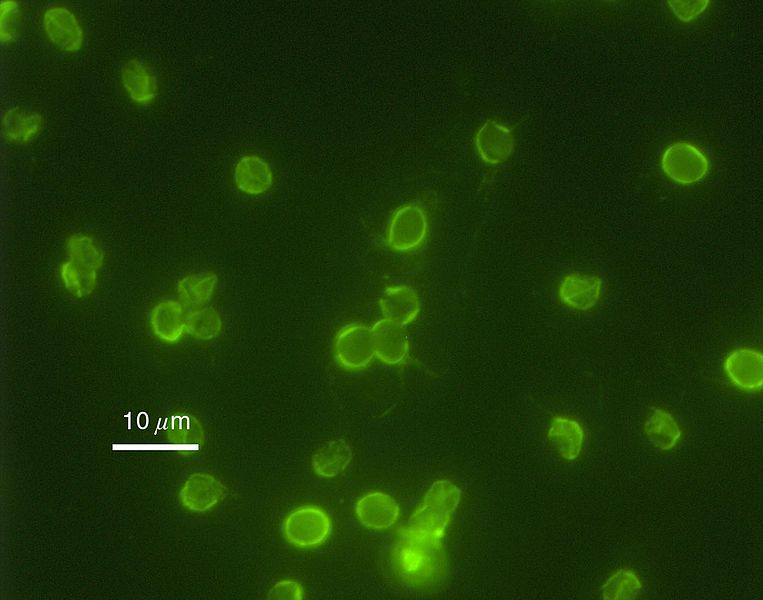
NSW763px-Cryptosporidium_parvum_01

NSW Health is urging people who have had diarrhoea not to swim in pools until at least two weeks after they have fully recovered following an increase in cryptosporidiosis in NSW.

There have been 484 cases of cryptosporidiosis reported to NSW Health to date this year. The highest rates of infections are in children under five,” Dr Jeremy McAnulty, Director, Health Protection, said.

This is the highest year to date figure since 2009 when there was a large outbreak with more than 1000 notified cases.

226 cases were reported in February which is a significant increase on the 5 year average of 121 cases. So far, 126 cases have been reported in March.

“Cryptosporidiosis is a diarrhoeal disease caused by a parasitic infection of the intestine. The most common symptoms include diarrhoea, stomach cramps and sometimes fever, nausea and vomiting. There is no specific treatment for the condition and symptoms may last a few weeks in some people,” Dr McAnulty said.

Among the cases, a range of possible risk factors have been reported including swimming in pools. However the outbreak has not been linked to a specific pool. In previous studies other risk factors have included contact with farm animals and drinking untreated water.

USA – Natura Pet Food Expanded Recall – Salmonella

FDASalm

Natura Pet Products is voluntarily expanding its recall of dry pet food because it has the potential to be contaminated with Salmonella. No Salmonella-related illnesses have been confirmed to date.

Salmonella can affect animals eating the products and there is risk to humans from handling contaminated pet products, especially if they have not thoroughly washed their hands after having contact with the products or any surfaces exposed to these products.

Healthy people infected with Salmonella should monitor themselves for some or all of the following symptoms: nausea, vomiting, diarrhea or bloody diarrhea, abdominal cramping and fever. Rarely, Salmonella can result in more serious ailments, including arterial infections, endocarditis, arthritis, muscle pain, eye irritation, and urinary tract symptoms. Consumers exhibiting these signs after having contact with this product should contact their healthcare providers.

Pets with Salmonella infections may be lethargic and have diarrhea or bloody diarrhea, fever, and vomiting. Some pets will have only decreased appetite, fever and abdominal pain. Infected but otherwise healthy pets can be carriers and infect other animals or humans. If your pet has consumed the recalled product and has these symptoms, please contact your veterinarian.

Sampling conducted by the Michigan Department of Agriculture and the Georgia Department of Agriculture confirmed the presence of Salmonella in additional dry cat food and a cat pet treat. In an abundance of caution, Natura is also recalling product made in the surrounding timeframe. This affects dry foods only; no canned wet food is affected by this announcement.

The affected products are sold through veterinary clinics and select pet specialty retailers nationwide and in Canada, Hong Kong, Korea, Japan, Malaysia and Costa Rica, as well as online. The dry cat food expiration dates for this expanded recall range from 1/1/2014 to 3/24/2014. The dry cat treats have expiration dates from 7/1/13 to 9/27/13.

Consumers who have purchased these pet foods should discard them. For additional information, consumers may visit www.naturapet.com2. For further information or a product replacement or refund call Natura toll-free at 800-224-6123. (Monday – Friday, 8:00 AM to 5:30 PM CST).

The included lot codes are: Expiration Date: 12/14/13 thru 3/24/14

USA – CDC Confirms Multistates E.coli O121 Outbreak

Food Safety NewsEcoli Istock

The U.S. Department of Agriculture Food Safety and Inspection Service has posted a distribution list of where affected products were sent. That list includes Wal Mart stores nationwide, Winn-Dixie stores in Florida, and a variety of retailers in Michigan.

At least 24 people in 15 states have fallen ill with E. coli O121 in an outbreak traced back to Farm Rich brand frozen pizzas, quesadillas, philly cheese steaks and mozzarella bites, the U.S. Centers for Disease Control and Prevention has confirmed, following initial reports Thursday evening.

Seven people have been hospitalized in connection to the products, which were sold nationwide. One patient has developed hemolytic uremic syndrome.

CDC

  • A total of 24 persons infected with the outbreak strain of Shiga       toxin-producing Escherichia coli O121 (STEC O121) have been       reported from 15 states.
    • 78% of ill persons are 21 years of age or younger.
    • 33% of ill persons have been hospitalized. One ill        person developed hemolytic uremic syndrome (HUS), a type of kidney        failure, and no deaths have been reported.
  • CDC and state public health officials are interviewing ill persons to       obtain information regarding foods they might have eaten and other       exposures in the week before illness.
    • Information available to date indicates that        consumption of Farm Rich brand frozen food products is one likely source        of infection for the ill persons in this outbreak.
  • Testing conducted by the New York State Department of Health,       Wadsworth Center Laboratory, identified the outbreak strain of STEC O121       in an open package of Farm Rich brand frozen chicken quesadillas       from an ill person’s home.


Research – Livestock to Human Transmission of MRSA Confirmed

Food Safety NewsStaphylococcus

Using whole genome sequencing, scientists have found conclusive evidence that a type of methicillin-resistant Staphylococcus aureus (MRSA) that caused human infections in Denmark came from livestock – adding to concerns that food animals are a significant MRSA reservoir for human infections.

While previous research has suggested that MRSA transfers from animals to humans, including a U.S. study last year that looked at “pig-MRSA,” the study published this week in EMBO Molecular Medicine provides the strongest evidence to date that this phenomenon is occurring and provides fodder to those advocating for greater limits on antibiotics in agriculture.

Canada – Recall – Gelfite Fish – Clostridium botulinum

CFIACIFA

The Canadian Food Inspection Agency (CFIA) and Central-Epicure Food Products Ltd. are warning the public not to consume the Central-Epicure brand Gefilte Fish, Ready to Serve, Sweet and Savoury, described below because they may be contaminated with Clostridium botulinum.Toxins produced by these bacteria may cause botulism, a life-threatening illness.

There have been no reported illnesses associated with the consumption of this product.

The manufacturer, Central-Epicure Food Products Ltd., Toronto, Ontario, is voluntarily recalling the affected product from the marketplace.  The CFIA is monitoring the effectiveness of the recall.

USA – Norovirus Suspected – O’Hare International Airport

Daily HeraldNorwalk_Caspid

The stomach ailment that grounded a group of Scandinavian tourists likely was not a Chicago souvenir, officials said Tuesday.

Seven members of a tour group fell ill Monday night before boarding a Scandinavian Airlines aircraft at O’Hare International Airport and were taken to nearby hospitals around 11 p.m

Later, two other travelers took sick after boarding Flight 944, which led the pilot to require all members of the group to leave the airplane before it departed for Copenhagen, Chicago Fire Department spokesman Larry Langford said.

“The pilot made the decision not to have anyone on the tour on his aircraft as he didn’t want anyone becoming violently ill over the ocean,” Langford said.

The Norwegian tourists numbered about 52 people, authorities said, and were on a bus trip from Memphis. Tenn., to Chicago.

Chicago Department of Public Health investigators are checking with food vendors and others with whom the group came into contact. It’s thought the bug was contracted outside of Chicago, spokesman Brian Richardson said.

The preliminary diagnosis is the norovirus, a contagious virus that can cause vomiting and diarrhea. It’s spread through contaminated food or from contact with infected people and surfaces.

USA – Chicken Quesadilla – E.coli O121

Ecoli BlogEcoli Istock

Rich Products Corporation, a Buffalo, NY firm, is recalling approximately 196,222 pounds of frozen chicken quesadilla and various other heat treated, not fully cooked frozen mini meals and snack items because they may be contaminated with E. coli O121, the U.S. Department of Agriculture’s Food Safety and Inspection Service (FSIS) announced today.

The U.S. Department of Agriculture’s Food Safety and Inspection Service (FSIS) was notified of a multistate investigation of E. coli O121 illnesses on March 19, 2013. Food samples were collected from an ill individual in New York as part of this investigation, and tested by the New York State Department of Health Wadsworth Laboratory. At present, the cluster includes 24 cases in 15 states. A sample of a Farm Rich frozen chicken mini quesadilla product from a New York case tested positive for the outbreak strain of E. coli O121. Eight cases in Michigan, Mississippi, New York, Ohio, Pennsylvania, Texas, and Virginia report consuming Farm Rich products. FSIS is continuing to work with federal and state public health partners on this investigation, including the New York State Department of Health, New York State Department of Agriculture & Markets, Food and Drug Administration, and Centers for Disease Control and Prevention.