Category Archives: Pathogen

Research – Impact of Temperature Abuse of Leafy Greens in Transport – Safety Impact

Ingenta ConnectEurofins Food Testing UK

Temperature abuse during commercial transport and retail sale of leafy greens negatively impacts both microbial safety and product quality. Consequently, the effect of fluctuating temperatures on Escherichia coli O157:H7 and Listeria monocytogenes growth in commercially-bagged salad greens was assessed during transport, retail storage, and display. Over a 16-month period, a series of time-temperature profiles for bagged salads were obtained from five transportation routes covering four geographic regions (432 profiles), as well as during retail storage (4,867 profiles) and display (3,799 profiles). Five different time-temperature profiles collected during 2 to 3 days of transport, 1 and 3 days of retail storage, and 3 days of retail display were then duplicated in a programmable incubator to assess E. coli O157:H7 and L. monocytogenes growth in commercial bags of romaine lettuce mix. Microbial growth predictions using the Koseki-Isobe and McKellar-Delaquis models were validated by comparing the root mean square error (RMSE), bias, and the acceptable prediction zone between the laboratory growth data and model predictions. Monte Carlo simulations were performed to calculate the probability distribution of microbial growth from 8,122,127,472 scenarios during transport, cold room storage, and retail display. Using inoculated bags of retail salad, E. coli O157:H7 and L. monocytogenes populations increased a maximum of 3.1 and 3.0 log CFU/g at retail storage. Both models yielded acceptable RMSEs and biases within the acceptable prediction zone for E. coli O157:H7. Based on the simulation, both pathogens generally increased <2 log CFU/g during transport, storage, and display. However, retail storage duration can significantly impact pathogen growth. This large-scale U.S. study—the first using commercial time/temperature profiles to assess the microbial risk of leafy greens—should be useful in filling some of the data gaps in current risk assessments for leafy greens.

USA – FDA – Recall – Curly Parsley – Salmonella

FDASalmonella

ROTH FARMS Inc. of Belle Glade, Fl , is recalling its “ bunched Curly Parsley” because it has the potential to be contaminated with Salmonella, an organism which can cause serious and sometimes fatal infections in young children, frail or elderly people, and others with weakened immune systems. Healthy persons infected with Salmonella often experience fever, diarrhea (which may be bloody), nausea, vomiting and abdominal pain. In rare circumstances, infection with Salmonella can result in the organism getting into the bloodstream and producing more severe illnesses such as arterial infections (i.e., infected aneurysms), endocarditis and arthritis.

The recalled “Curly Parsley” was distributed in South Florida distribution centers.

The product comes in a 3 Wire Wooden Crate with the lot # AG01GN on the outside tag.

No illnesses have been reported to date in connection with this problem.

The potential for contamination was noted after routine testing by the company revealed the presence of Salmonella in some Curly Parsley samples.”

RASFF Alerts – Norovirus – Cooked Clams

RASFF-Logo

RASFF -norovirus in frozen cooked clams from Vietnam in Spain

RASFF Alerts – Listeria monocytogenes – Smoked Fish

RASFF-Logo

RASFF – Listeria monocytogenes (310 CFU/g) in smoked sprats (Sprattus sprattus) from Belgium in Franc

RASFF Alerts – Salmonella – Laurel Leaves – Chicken – Minced Pork – Onion Powder – Seasoning Mix

RASFF-Logo

RASFF -Salmonella in laurel leaves powder from Turkey in Italy

RASFF-Salmonella enteritidis (presence /25g) in frozen raw chicken meat from Poland in France

RASFF-Salmonella enteritidis (presence /25g) in frozen poultry meat processed in Poland, with raw material from the Czech Republic in Poland

RASFF-Salmonella in minced pork from Germany in Sweden

RASFF-Salmonella spp. (presence /25g) in onion powder from unknown origin, via the Netherlands in Sweden

RASFF-Salmonella spp. (presence /25g) in seasoning mix from India in Finland

RASFF Alerts – Animal Feed – Salmonella – Aflatoxin

RASFF-Logo

RASFF -Salmonella Rissen in corn gluten meal from the Netherlands in Sweden

RASFF -Salmonella spp. in pet food from Mauritius in Italy

RASFF -aflatoxins (B1 = 4.8 / B1 = 28.4 / B1 = 55.9 µg/kg – ppb) in organic soy beans from Kazakhstan in Denmark.

USA – Green Chillies Recall – Listeria monocytogenes

Listeria Blog

Bueno Foods has announced a voluntary recall of its frozen non-ready-to-eat green chile.

According to the company, the measure is being taken due to the possibilty of low levels of the listeria bacteria being present in the product.

Research – Brasil – Risk of Infection by Salmonella and Listeria from RTE Vegetables

Science DirectEurofins Food Testing UK

The current study was carried out to estimate the risks of infection due to consumption of RTE vegetables contaminated with Salmonella and Listeria monocytogenes in Brazil. The risk assessment model was composed of five different modules comprising the retail-consumption steps. Scenarios were simulated using prevalence and concentration levels reported in RTE vegetables in Brazil as well as considering values 10 times lower. In addition, scenarios in which temperature during transportation and storage are maintained below 5 °C were also evaluated. Models built in Excel spreadsheets were run (100,000 iterations) using @Risk software. The two outputs were risk of infection per month (probability of infection per month due to consumption of RTE vegetables) and number of infections per month (number of people that consumed RTE vegetables and get infected per month). The QMRA models predicted that the mean risk of Salmonella infection per month is 5.7E-03, while the mean risk of infection for L. monocytogenes was 8.1E-06 per month. The reduction of prevalence of Salmonella from 1.7% to 0.17% resulted in a decrease of risk of infection per month by about 6 times. In the case of L. monocytogenes, the reduction of prevalence from 2.2% to 0.22% resulted in decrease of risk of infection from 8.1E-06 to 1.0E-06. The risks and number of cases predicted in scenarios in which temperature was kept below 5 °C were reduced for both pathogens studied when compared to scenarios where this was not the case. The scenario where prevalence and concentration of pathogens was reduced and where temperature was <5 °C led to the lowest number of infections due by Salmonella and L. monocytogenes (187 and 3.3E-05 cases, respectively). The results suggest that effective mitigation strategies need to be adopted. The strict control of temperature during transportation, storage and consumption was more effective to reduce risk and number of cases due to L. monocytogenes than to Salmonella. More data is needed to improve the accuracy of risk assessment models developed.

Norway CO-OP Recall Frozen Wild Berries – Norovirus

HACCP EuropeNorovirus

Coop Norway is recalling Coop Wild Berry (Coop Skogsbær) because some of the batches may be contaminated with norovirus. Norovirus can cause acute onset of nausea, vomiting, abdominal pain and watery diarrhea, and in addition, some flu-like symptoms such as fever, muscle and joint aches and headaches. The symptoms usually last from one to three days.

The recalled product is frozen Coop Wild Berry (Coop Skogsbær) packed in 300g packs with packing dates: 30.10.2013 , 13.11.2013 and 20.11.2013.

For more information consumers may contact Coop: ph. 22 89 95 95.

Coop Norway is recalling Coop Wild Berry (Coop Skogsbær) because some of the batches may be contaminated with norovirus. Norovirus can cause acute onset of nausea, vomiting, abdominal pain and watery diarrhea, and in addition, some flu-like symptoms such as fever, muscle and joint aches and headaches. The symptoms usually last from one to three days.

The recalled product is frozen Coop Wild Berry (Coop Skogsbær) packed in 300g packs with packing dates: 30.10.2013 , 13.11.2013 and 20.11.2013.

For more information consumers may contact Coop: ph. 22 89 95 95.

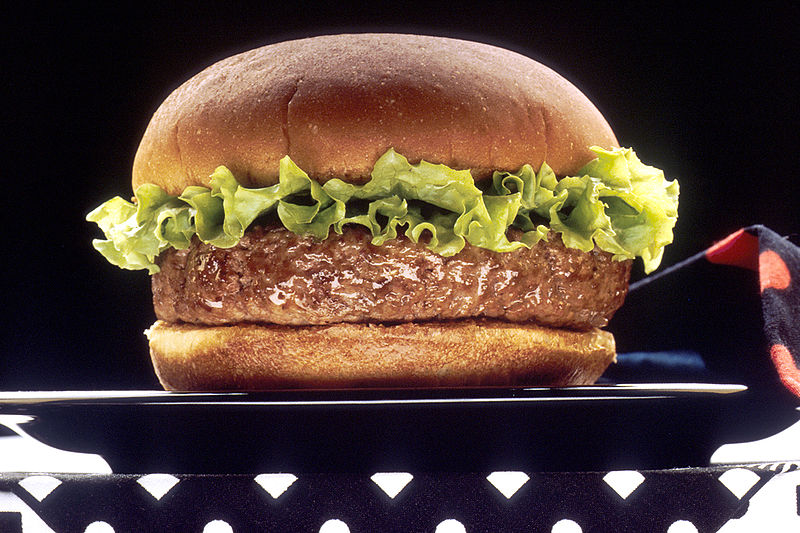
UK -Four more E.coli O157 Cases in Scotland Linked to Burgers

STV NewsBurger

Four more cases of E coli have been linked to the SSE Hydro in Glasgow, health bosses said.

The new cases bring the total number to 15 and are all linked to events at the venue on January 17, 18 and 19.

An investigation by NHS Greater Glasgow and Clyde (NHSGGC) alongside other public health bodies has indicated that burgers sold at the Hydro could have been the cause of the outbreak.