Category Archives: outbreak

USA – Conoco View Dairy Raw Milk Campylobacter Outbreak in PA

Food Poisoning Bulletin

A Conoco View Dairy raw milk Campylobacter outbreak in Pennsylvania has sickened at least 11 people, according to the Pennsylvania Department of Agriculture. Officials are warning consumers to immediately discard all of this milk.

The Department ran tests after 11 reports of illness in December 2023 and January 2024 were received. Campylobacter contamination was confirmed in the dairy’s products.

The press release states that, “While the source of the bacteria is clear, every specific production date could not be pinpointed. All products, including those in consumers’ freezers, should be discarded.”

USA – Outbreak Investigation of Listeria monocytogenes: Peaches, Plums, & Nectarines (November 2023)- Is Over

FDA

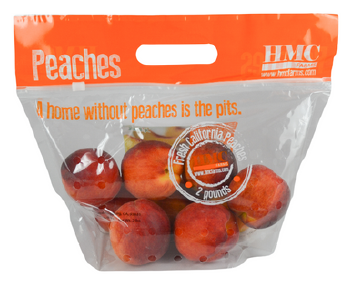
HMC Peaches

January 30, 2024

The FDA and CDC, in collaboration with state and local partners, investigated an outbreak of Listeria monocytogenes infections linked to recalled peaches, plums, and nectarines (stone fruit).

As part of this investigation, FDA initiated an inspection and collected environmental samples from the facility that packed the recalled stone fruit. Two environmental sub-samples collected from the facility were positive for Listeria monocytogenes. Whole Genome Sequencing (WGS) analysis confirmed that the strain of Listeria found in the positive sub-samples matched the same strain of Listeria making people sick in this outbreak.

As of January 30, 2024, CDC announced that the outbreak is over. CDC reports a total of 11 illnesses in seven states. There has been a total of 10 hospitalizations and one death attributed to listeriosis. The last specimen collection date was August 16, 2023. FDA’s investigation is complete.

USA – Nearly 600 with Salmonella, 225 hospitalized and 15 deaths linked to Cantaloupe

Food Poison Journal

In the United States a total of 407 people infected with one of the outbreak strains of Salmonella were reported from 44 states: Of 362 people with information available, 158 (44%) were hospitalized. Six deaths were reported.

In Canada a total, 190 laboratory-confirmed cases of Salmonella Soahanina, Sundsvall, Oranienburg, and Newport illness were linked to this outbreak. Sixty-eight (68) individuals were hospitalized, and nine deaths were reported.

EU – Zoonoses, foodborne outbreaks and antimicrobial resistance guidance for reporting 2023 data

EFSA

This technical report provides guidance for reporting countries on how to submit their isolate-based quantitative antimicrobial resistance data, and data on the prevalence of zoonoses and microbiological agents and contaminants in food, food-borne outbreaks, animal populations and disease status. To collect these data, EFSA has created the Data Collection Framework (DCF) application. This report includes data dictionaries to guide the reporting of information derived from 2023 under Directive 2003/99/EC, Regulation (EU) 2017/625, Commission Implementing Regulation (EU) 2019/627 and Commission Implementing Decision (EU) 2020/1729. The objective is to explain in detail the individual data elements of the EFSA data models that are to be used for XML data submission through the DCF. In particular, it explains the data elements to be reported, including information about the data type, a reference to the list of permitted terms and any additional business rules or requirements that may apply.

France – Norovirus suspected in large Airbus outbreak

Food Safety News

Norovirus has been determined to be the suspected cause of a large outbreak at Airbus in France in late 2023, according to public health officials.

The Loire-Atlantique regional health agency (ARS) believes norovirus was behind almost 700 people falling sick at the Airbus Atlantic Christmas lunch in mid-December. Findings are based on the clinical symptoms in patients and the time it took for them to appear.

Sick people reported suffering from nausea, vomiting, and diarrhea after the event in Montoir at the company’s restaurant. Testing of food leftovers was negative for norovirus. No detail was given on whether patients or food handlers had been tested.

The varied menu is said to have included a cheese plate, a starter with scallops, a foie gras terrine, beef in sauce, and a lobster dish.

Research – An outbreak of Salmonella Typhimurium associated with the consumption of raw liver at an Eid al-Adha celebration in Wales (UK), July 2021

Cambridge.org

Abstract

In July 2021, Public Health Wales received two notifications of salmonella gastroenteritis. Both cases has attended the same barbecue to celebrate Eid al–Adha, two days earlier. Additional cases attending the same barbecue were found and an outbreak investigation was initiated. The barbecue was attended by a North African community’s social network. On same day, smaller lunches were held in three homes in the social network. Many people attended both a lunch and the barbecue. Cases were defined as someone with an epidemiological link to the barbecue and/or lunches with diarrhoea and/or vomiting with date of onset following these events. We undertook a cohort study of 36 people attending the barbecue and/or lunch, and a nested case-control study using Firth logistic regression. A communication campaign, sensitive towards different cultural practices, was developed in collaboration with the affected community. Consumption of a traditional raw liver dish, ‘marrara’, at the barbecue was the likely vehicle for infection (Firth logistic regression, aOR: 49.99, 95%CI 1.71–1461.54, p = 0.02). Meat and offal came from two local butchers (same supplier) and samples yielded identical whole genome sequences as cases. Future outbreak investigations should be relevant to the community affected by considering dishes beyond those found in routine questionnaires.

Sweden – Cryptosporidium outbreak (Sweden December 2023–)

Folkhalsomyndigheten

Since 15 December 2023, 68 people from 14 regions have been reported infected with Cryptosporidium in Sweden. Most of the disease cases are from Halland and Jönköping. Of the disease cases, 72 percent are women, the average age is 41 years and 79 percent are in the age group 21-60 years. Based on the available data, the latest case of the disease contracted on January 3 (see figure). Typing of a selection of samples shows that 13 out of 18 belong to the same type of Cryptosporidium, which indicates that the disease cases have a common source of infection.

Affected infection control units, the Swedish Food Agency and the Public Health Agency are investigating the outbreak to identify the source of infection, which is suspected to be fresh food. Information about what the outbreak cases have eaten before becoming ill is done via interviews and the collection of questionnaires. The answers are then compared to what people in a healthy comparison group indicate that they have eaten to assess whether there are foods that the outbreak cases have eaten to a greater extent than the comparison group.

USA -CDC – Salmonella Outbreak Linked to Cantaloupes is Over.

CDC

Fast Facts
  • Illnesses: 407
  • Hospitalizations: 158
  • Deaths: 6
  • States: 44
  • Recall: Yes
  • Investigation status: Closed   (first posted on November 17, 2023)

All recalls that resulted from this investigation are listed on FDA’s cantaloupe recall website. Recalled cantaloupes are no longer available for sale and the use-by dates have passed.

USA – Outbreak Investigation of Salmonella: Cantaloupes (November 2023) – Update

FDA

Products and Stores Affected (Updated on 1/19/2024)

Recalled whole and pre-cut cantaloupes and recalled product containing pre-cut cantaloupes were sold or distributed from September to early December 2023 and should be past shelf-life. Consumers who froze cantaloupe products should check if they are part of the recalls. If you are unsure of where your cantaloupes are from, you should discard them.

Recalled whole cantaloupe from the following brands:

  • Whole fresh cantaloupes with a label on the cantaloupe that says “Malichita” or “Rudy”, “4050”, and “Product of Mexico/produit du Mexique”.
  • Retailers and wholesalers would have received recalled whole melons from Sofia Produce doing business as TruFresh in boxes labeled “Malichita” or “Rudy”, or from Crown Jewels Produce in boxes labeled “Malichita/Z Farms”, or from Pacific Trellis in corrugated cartons with certain lot codes.

Recalled pre-cut cantaloupe and products containing pre-cut cantaloupes (products made from recalled whole cantaloupes) can be found on the Major Recalls Page.

Symptoms of Salmonella Infection

Illness usually occurs within 12 to 72 hours after eating contaminated food and usually lasts four to seven days. Symptoms include diarrhea, fever, and abdominal cramps. Children younger than five, the elderly, and people with weakened immune systems are more likely to have severe infections.

Status

Ended

Recommendation

  • Consumers, restaurants, retailers, and wholesalers should not eat, sell, or serve recalled cantaloupe or recalled products containing cantaloupe.
  • Recalled whole and pre-cut cantaloupes and recalled product containing pre-cut cantaloupes were sold or distributed from September to early December 2023 and should be past shelf-life. Consumers who froze cantaloupe products should check if they are part of the recalls. If you are unsure of where your cantaloupes are from, you should discard them.
  • Anyone who purchased or received recalled cantaloupes should follow FDA’s safe handling and cleaning advice and use extra vigilance in cleaning and sanitizing any surfaces and containers that may have come in contact with recalled products to reduce the risk of cross-contamination.
    • Pre-cut fruit manufacturers should ensure proper cleaning and sanitizing of food contact surfaces and evaluate the need to recall additional product due to the potential for cross-contamination in the processing facility.
  • Contact your healthcare provider if you think you may have symptoms of a Salmonella infection after eating recalled cantaloupe.

Research – Outbreak Reports: A Large Acute Gastroenteritis Outbreak Associated with Both Campylobacter coli and Human Sapovirus — Beijing Municipality, China, 2021

China CDC

Campylobacter is a significant foodborne pathogen that leads to global outbreaks of acute gastroenteritis (AGE) usually affecting less than 30 individuals. Human sapovirus (HuSaV) is an enteric virus responsible for sporadic cases and outbreaks of AGE worldwide. In a study conducted in Beijing, HuSaV detection ranked second after norovirus.

What is added by this report?

We present a discussion of the first large-scale outbreak of AGE caused by both Campylobacter coli (C. coli) and HuSaV. The outbreak involved a total of 996 patients and exhibited two distinct peaks over a period of 17 days. Through case-control studies, we identified exposure to raw water from a secondary water supply system as a significant risk factor. Among 83 patients, 49 samples tested positive for C. coli, 39 samples tested positive for HuSaV, and 27 samples tested positive for both pathogens using real-time polymerase chain reaction detection. Furthermore, whole-genome sequencing of 17 C. coli isolates obtained from 17 patients revealed that all isolates belonged to a highly clonal strain of C. coli.

What are the implications for public health practice?

Outbreaks of AGE resulting from multiple pathogen infections warrant increased attention. This report emphasizes the significance of ensuring the safety of drinking water, particularly in secondary supply systems.