Category Archives: outbreak

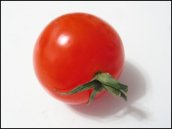
Sweden – Cherry tomatoes may be lined to Salmonella outbreaks in Sweden

Barfblog cherry-tomato-pristine-variety

SVT reports people have been sick with diarrhea between August 29 and September 14 with Salmonella Typhimurium. Anders Enocksson, infection prevention consultant at Region Halland.

In all, 11 counties are affected. Most cases are in Halland together with Dalarna, Jönköping and Västra Götaland, which P4 Halland was the first to tell . The infected are in all age groups, but just over half are 60 years or older. There are slightly more women than men.

The source of infection is not yet known, but there is suspicion of tomatoes, and cherry tomatoes.

Research – Belgian Salmonella outbreak traced to tartare sauce

Food Safety News


A Salmonella outbreak that sickened almost 200 people at a Belgian school was likely caused by eggs used to make a tartare sauce, according to authorities.

The Agency for Care and Health (Zorg en Gezondheid) and Federal Agency for the Safety of the Food Chain (FASFC) investigation detected Salmonella in the freshly prepared tartare sauce. Findings from an online survey of students and teachers also reached the same conclusion on the source.

The Agency for Care and Health had previously received information about a number of students from the school complaining of gastrointestinal illness.

Since Sept. 14, no new cases of illness have been reported so the Spermalie Hotel and Tourism School in Bruges has been allowed to resume normal operation.

About 200 students and teachers from the school became ill from Sept. 6 onward. Laboratory analyses of stool samples revealed students and teachers had been affected by Salmonella.


Latvia – Sigulda Regional Council turns to State Police regarding Salmonella outbreak at local kindergartens

The Baltic Times

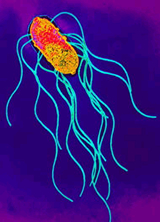
Salmonella kswfoodworld

Image CDC

RIGA – The Sigulda Regional Council turned to the State Police (VP) about the infection of four kindergarten children with salmonella, Sindija Brikmane, deputy head of the Public Relations Department of Sigulda Municipality, informed LETA.

Investigating the causes of the disease, the Center for Disease Prevention and Control (CDPC) has received information from a laboratory that four children from local kindergartens in Sigulda Region have been diagnosed with the salmonella bacterium.

The CDPC explains that the symptoms of Salmonella-related diseases are nausea, vomiting, seizures, diarrhea, fever, headaches.

A spokeswoman for the municipality said all four children had not been attending kindergarten for a week, but the CDPC said the infection could have occurred at different times, beginning on September 7. The children are currently undergoing medical treatment under the supervision of a family doctor.

RASFF Alert – Foodborne Outbreak – Listeria monocytogenes – Fried Pork Belly

RASFF-Logo

RASFF – foodborne outbreak suspected (Listeria monocytogenes) to be caused by fried pork belly from Spain in Spain

USA – FDA Partners with the University of Arizona, Wellton-Mohawk Irrigation and Drainage District, and Yuma Area Leafy Greens Stakeholders to Enhance Food Safety

FDA

The U.S. Food and Drug Administration has launched a new initiative with support from the Arizona Department of Agriculture, and in conjunction with the University of Arizona Cooperative Extension, the Wellton-Mohawk Irrigation and Drainage District (WMIDD), and members of the Yuma area leafy greens industry to better understand the ecology of human pathogens in the environment in the Yuma agricultural region. This initiative will be a multi-year study which will focus on how these pathogens survive, move and possibly contaminate produce prior to harvest.

The launch of this initiative follows the largest E.coli O157:H7 outbreak in the United States since 2006. The outbreak, which was linked to romaine lettuce grown in the Yuma region, began in the spring of 2018 and resulted in 210 reported illnesses from 36 states, 96 hospitalizations, 27 cases of hemolytic uremic syndrome (HUS) and five deaths. In response,  FDA led an Environmental Assessment (EA) of the Yuma produce growing region in collaboration with Centers for Disease Control and Prevention (CDC), the Arizona Department of Agriculture (AZDA), WMIDD, and state partners from June through August 2018.

While the EA was useful in narrowing the scope of the outbreak, many questions remain unanswered regarding the specific origin of the pathogen, the environmental distribution, and potential reservoirs for the outbreak strain. The findings made clear that further collaboration among leafy greens stakeholders and FDA is needed to better understand potential sources of microbial contamination, the prevalence and persistence of human pathogens in the ecosystem near growing areas, and the best management practices to prevent future outbreaks from occurring.

Throughout this initiative, FDA will work in partnership with water quality, food safety, and agricultural experts from the University of Arizona Cooperative Extension, representatives from the WMIDD, and members of the Yuma area leafy greens industry. Research teams will be collecting and examining samples from the environment such as surface waters, canal sediment, and dust. The team will also be collecting scat samples to assess the impact that animal intrusion and native wildlife may have on the growing environment.

Shiga Toxin-Producing E.coli (STEC), of which E.coli O157:H7 is a strain, causes roughly 170,000 people to become ill every year. This generally happens through the consumption of contaminated food or water, or close contact with STEC-infected animals. Between 2009 and 2017, FDA and our partners at CDC identified 28 foodborne STEC outbreaks with known or suspected links to leafy greens. Like a lot of fresh produce, leafy greens are often eaten raw without a kill-step, such as cooking, that could eliminate pathogens that may be present.

The Yuma agricultural region, which encompasses Yuma County in Arizona and the Imperial Valley in California, is a leader in the production of leafy greens in the United States. The findings from this study will contribute new knowledge on how various environmental factors may influence bacterial persistence and distribution in this region, and how those factors may impact the risk of this commodity becoming contaminated. Results from this collaboration will lead to improved practices to prevent or mitigate food safety risks, and ultimately enhance the safety of produce grown in the region.

For More Information

USA – University of Maryland – Salmonella Outbreak

Health UMD

kswfoodworld Salmonella

Image CDC

As of today, we are aware of three UMD students who have been identified with Salmonella, two confirmed at outside medical facilities and one at the University Health Center. The source of the infection is not yet clear – two of the three individuals have eaten at a variety of campus dining facilities and one has not eaten on campus at all.  The three students who were identified with this infection have fully recovered without incident.  The Prince George’s County Health Department and the Maryland Department of Health are looking into these incidents to form a better understanding of any potential source.

USA – Philadelphia mystery E. coli outbreak adds 19th Victim

Food Poison Journal

ecoli

Image CDC

According to Food Safety News, Philadelphia officials have added more people to the patient list in an E. coli outbreak that is associated with “shared restaurant exposure.”

Earlier this month the Philadelphia Department of Public Health reported the outbreak but did not name a specific restaurant or restaurants. The department continues to decline to provide that information.

“A total of 19 cases were identified in this cluster. The last report was received on Sept. 6, and our investigation into the source continues,” department spokesman James Garrow told Food Safety News.

Outbreak investigations typically involve interviews with patients to find out what they ate and where they ate it in the days before becoming ill.

RASFF Alert – Foodborne Outbreak -Listeria monocytogenes – Milk Products

RASFF-Logo

RASFF – foodborne outbreak suspected to be caused by Listeria monocytogenes (240 CFU/g) in milk products from France in France

RASFF Alert – Foodborne Outbreak Norovirus (GI, GII) – Live Oysters

RASFF-Logo

RASFF – foodborne outbreak suspected to be caused by and norovirus (GI, GII) in live oysters (Crassostrea gigas) from France in Denmark

RASFF Alert – Foodborne Outbreak suspected Salmonella – Chilled Raw Minced Horse Meat

RASFF-Logo

RASFF – foodborne outbreak suspected (Salmonella enterica ser. Bovismorbificans) to be caused by chilled raw minced horse meat from Romania, via Belgium in France