Category Archives: Moulds

RASFF Alert – Mould – Frozen Raspberries

RASFF-Logo

RASFF – frozen raspberries from Ukraine infested with moulds in Poland

RASFF Alert – Deoxynivalenol (DON) Noodles

RASFF-Logo

RASFF – deoxynivalenol (DON) (1178 µg/kg – ppb) in noodles from China in Switzerland

RASFF Alerts – Moulds – Pit Bread – Dream Cake

RASFF-Logo

RASFF – pita bread from Greece infested with moulds in Denmark

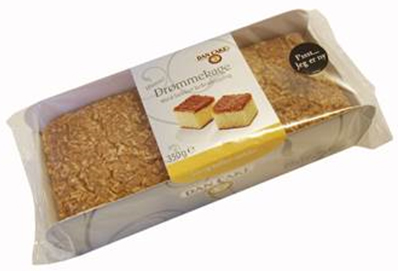
RASFF – dream cake from Denmark infested with moulds in Denmark

RASFF Alert – Aflatoxin – Chestnut Flour – Groundnuts

RASFF-Logo

RASFF – aflatoxins (B1 = 4.3; Tot. = 7.7 µg/kg – ppb) in chestnut flour from Italy in Italy

RASFF – aflatoxins (B1 = 27; Tot. = 27 µg/kg – ppb) in groundnuts from the United States in the Netherlands

Iceland – Mould in the cake – Drömmekage

MAST

Matvælastofnun draws consumers’ attention to the recall of Drömmekage from Denmark by the company Ásbjörn Ólafsson ehf. imports. The recall is due to the possibility of mold in the cakes before the last day of sale. The company has recalled the cookies, in consultation with the Reykjavík Health Inspectorate.

The recall only applies to the following four batches:

  • Brand: Dan cake
  • Product name: Dream cake with delicious coconut topping
  • Net amount: 350 g
  • Best for dates: 28/8, 2/9, 22/9, 28/9 (2020)
  • Bar code: 5709152018462
  • Manufacturer: Dan Cake A / S, Hjortsvangen 15, 7323 Give, Denmark
  • Importer: Asbjörn Ólafsson ehf, Köllunarklettsvegur 6, 104 Reykjavík
  • Distribution: Stores all over the country

Recall of cake due to the risk of mold

Consumers who own the product in question are asked not to consume it and discard it. Further information on the recall is provided by Ásbjörn Ólafsson ehf. at 820 1146.

Related

Pakistan – Aflatoxins: A peril which limits the export of maize crop from Pakistan

Cabi Blog

The agriculture sector is one of the most climate-sensitive sectors of Pakistan’s economy. It responds to temperature, precipitation, soil radiation, etc., which are directly associated with climate change. Rising temperature, uneven distribution of precipitation, floods, droughts, and other climatic disasters have affected human life along with socio-economic sectors of the world.

In Pakistan, maize is one of the important cereal crops which contributes 2.2 percent to the valued added products and 0.4 percent to the GDP. It is grown on an area of 1251 hectares with production of 5901 tonnes. In recent years, some mycotoxins, which we refer as Aflatoxins have been detected in maize crop grown in Pakistan. It has limited the export of Pakistani corn which causes losses in the economic benefit for all the chain actors linked with maize.

On the other hand, its consumption in the domestic market has been increased dramatically as Pakistani feed industry process/mill thousands of tons of maize every year to surge the demand of poultry sector. To address the issue of aflatoxin in maize crop, USDA and USAID joined hands with Pakistan Agricultural Research Council (PARC), Rafhan Maize Products Co. Ltd and CAB International to implement a programme namely ‘Aflatoxin Control in Pakistan’ using a cutting-edge USDA biocontrol technology.

USA -Hostess Brands, LLC Issues Voluntary Recall of Certain Hostess® Raspberry Zingers® Due to the Potential for Mold

FDA

Company Announcement

Hostess Brands, LLC (“Hostess Brands”) is voluntarily recalling certain Hostess® Raspberry Zingers® because the product may develop mold prior to the best by date.

This recall applies to the following Raspberry Zinger® products:

Product Item UPC Batch Best By Date
Hostess Raspberry Zingers (Multi-Pack fresh) 888109110604 H061224000 08/26/2020
H061324000 08/27/2020
H061424000 08/28/2020
H061524000 08/29/2020
Hostess Raspberry Zingers (Multi-Pack frozen) 888109110604 H061524000
Hostess Raspberry Zingers (Single-Serve fresh) 888109010089 H061224000 08/26/2020
H061324000 08/27/2020
H061424000 08/28/2020
Hostess Raspberry Zingers (Single-Serve frozen) 888109010089 H061424000
H061524000
Hostess Raspberry Zingers (Single-Serve grocery 3 count) 888109010089 H061224000 8/26/2020

The products were sold to mass merchandisers, grocery stores, distributors, dollar and discount stores, and convenience stores throughout the United States.

Consumers who have purchased the affected product are urged to discontinue consumption and contact the place of purchase about returning them for a full refund.

This recall does not affect any other Hostess Brands products.

Consumers with questions may contact 1-800-483-7253 Monday through Friday from 8:30 am to 4:30 pm Central Time.

Hostess Brands, LLC

Hostess Brands, LLC is headquartered in Lenexa, Kansas and operates bakeries in Emporia, Kansas, Chicago, Illinois, Columbus, Georgia, Indianapolis, Indiana and through its Voortman Cookies Limited subsidiary, Burlington, Ontario.

For more information about Hostess products and Hostess Brands, please visit hostesscakes.com. Follow Hostess on Twitter: @Hostess_Snacks; on Facebook: facebook.com/Hostess; on Instagram: Hostess_Snacks; and on Pinterest: pinterest.com/hostesscakes.

Contacts


LAK Public Relations, Inc.

Marie Espinel, Katie Lewis or Hannah Arnold, 212-575-4545 mespinel@lakpr.comklewis@lakpr.com or harnold@lakpr.com


Company Contact Information

Consumers:
 1-800-483-7253
Media:
Marie Espinel
 212-575-4545
 mespinel@lakpr.com


Research – Effects of post‐packaging pasteurization process on microbial, chemical, and sensory qualities of ready‐to‐eat cured vacuum‐packed Turkey breast

Wiley Online

Ready‐to‐eat (RTE) cured vacuum‐packed turkey breast was pasteurized (80°C, 5.5 min) and stored at 8°C (like supermarkets refrigerator temperature). After 42 days (current shelf life of this product), in control group (RTE cured vacuum‐packed turkey breast), the number of mesophilic, anaerobic, lactic acid bacteria, mold and yeast, coliform, and psychrotrophic increased 5.82, 6.85, 5.85, 4.75, 1.49, and 5.57 log CFU/g, respectively. However, in the pasteurized samples, the number of mesophilic, anaerobic, and lactic acid bacteria increased 1.86, 2.12, and 2.28 log CFU/g, respectively, and mold and yeast, coliform, and psychrotrophic bacteria were under the detection limit. The effects of post‐packaging pasteurization on the reduction of total mesophilic, anaerobic and lactic acid bacteria counts on Day 42 of storage was 7.04 ± 0.33, 4.73 ± 0.11, and 5.58 ± 0.11 log CFU/g, respectively. Sensory quality of treated samples was significantly better than the control’s ( < .05). Post‐packaging pasteurization (PPP) significantly inhibited the reduction in the pH and the increase in TVB‐N, TBARS, titratable acidity, and drip loss ( < .05). This study shows the effectiveness of PPP on microbial, chemical, and sensory quality of cured vacuum‐packed turkey breast during cold storage.

Research -Exposure Assessment of Multiple Mycotoxins in Black and White Sesame Seeds Consumed in Thailand

JFP

ABSTRACT

This study was conducted to determine the occurrence of 16 well-recognized and emerging mycotoxins in black and white sesame seed samples sold in Thailand and to evaluate possible health risks to consumers. Samples were extracted and cleaned with a modified QuEChERS procedure. Multiple mycotoxins in sesame seed samples were analyzed with a validated liquid chromatography–tandem mass spectrometry method. The risk of mycotoxin exposure via dietary intake of sesame seeds was evaluated based on the hazard quotient, margin of exposure (MOE), and quantitative liver cancer risk established by European Food Safety Authority, the Food and Agriculture Organization of the United Nations, and the World Health Organization. Of the 200 samples, 21.5% were contaminated with mycotoxins, 19.5% were contaminated with a single mycotoxin, and 2% were contaminated with multiple mycotoxins. Although 9% of total samples were contaminated with aflatoxins (AFs), only one black sesame seed sample and one white sesame seed sample were above the regulatory limits for the European Union (2 μg/kg). The MOE values derived from consumption of black and white sesame seeds were generally <10,000, especially in the group consuming the most. The number of liver cancer cases over a lifetime associated with AFB1 exposure based on the upper bound values for the group consuming high level of black and white sesame seeds (97.5 percentile) was estimated at more than 1 case per one million persons. Therefore, a potential risk to consumer health exists through the consumption of black and white sesame seeds and subsequent exposure to AFB1. However, further evaluation with larger sample sizes is necessary for more accurate calculations. Continuous monitoring of mycotoxin contamination in sesame seeds with risk assessments is recommended.

HIGHLIGHTS
  • Beauvericin, sterigmatocystin, and aflatoxins are frequently found in sesame seed samples.
  • Mycotoxin contamination in most samples was below European Union stipulations.
  • A potential risk to consumer health exists through consumption of sesame seeds.
  • Evaluation of mycotoxin contamination is important to maintain consumer safety.

RASFF Alerts – Moulds – Turkish Bread – Croissants

RASFF-Logo

RASFF – Turkish bread from Germany infested with moulds in the Netherlands

RASFF – croissants from Germany infested with moulds in Greece