Category Archives: Microbiology Investigations

Research – Main Groups of Microorganisms of Relevance for Food Safety and Stability

NCBI

Microbiology is important to food safety, production, processing, preservation, and storage. Microbes such as bacteria, molds, and yeasts are employed for the foods production and food ingredients such as production of wine, beer, bakery, and dairy products. On the other hand, the growth and contamination of spoilage and pathogenic microorganisms is considered as one of the main causes to loss of foodstuff nowadays. Although technology, hygienic strategies, and traceability are important factors to prevent and delay microbial growth and contamination, food remains susceptible to spoilage and activity of pathogen microorganisms. Food loss by either spoilage or contaminated food affects food industry and consumers leading to economic losses and increased hospitalization costs. This chapter focuses on general aspects, characteristics, and importance of main microorganisms (bacteria, yeasts, molds, virus, and parasites) involved in food spoilage or contamination: known and recently discovered species; defects and alterations in foodstuff; most common food associated with each foodborne disease; resistance to thermal processing; occurrence in different countries; outbreaks; and associated symptoms.

Research – Evaluation of microbial contamination in cold dishes and Prevalence of food-borne pathogens in the Jilin Province

Journal of Food Protection

In this study, we evaluated the microbial contamination status of cold dishes consumed by residents of Jilin Province and investigated to determine the incidence of four pathogenic bacteria in cold dishes. A total of 300 samples of cold dishes including meat, vegetable and mixed products, were collected from three different purchasing places: supermarkets, farmers’ markets and mobile vendors. Live bacteria were isolated using conventional culture methods. After separation, a quick and easy polymerase chain reaction (PCR) was used to detect Listeria monocytogenes , Staphylococcus aureus , Enterotoxic Escherichia coli and Salmonella . The results showed that the total number of microbial colonies in the vegetable samples exceeded the standard rate of 8%, and the total number of microbial colonies in the meat and mixed samples did not exceed the standard. The total microbial colony count exceeded the standard in all three different procurement sites, with the highest exceedance of 7.4% in the mobile vendor sites. The detection rates of Enterotoxigenic Escherichia coli , Staphylococcus aureus , L. monocytogenes and Salmonella among the four pathogenic bacteria detected in all samples were 4.3%, 3.3%; 3.0%; and 1.0%, respectively. This study can be used to qualitatively assess the microbiological quality associated with cold dishes. It provides data to support the detection of possible food safety problems.

Research – The Changing Face of the Family Enterobacteriaceae (Order: ” Enterobacterales”): New Members, Taxonomic Issues, Geographic Expansion, and New Diseases and Disease Syndromes

PubMed

Entero

The family Enterobacteriaceae has undergone significant morphogenetic changes in its more than 85-year history, particularly during the past 2 decades (2000 to 2020). The development and introduction of new and novel molecular methods coupled with innovative laboratory techniques have led to many advances. We now know that the global range of enterobacteria is much more expansive than previously recognized, as they play important roles in the environment in vegetative processes and through widespread environmental distribution through insect vectors. In humans, many new species have been described, some associated with specific disease processes. Some established species are now observed in new infectious disease settings and syndromes. The results of molecular taxonomic and phylogenetics studies suggest that the current family Enterobacteriaceae should possibly be divided into seven or more separate families. The logarithmic explosion in the number of enterobacterial species described brings into question the relevancy, need, and mechanisms to potentially identify these taxa. This review covers the progression, transformation, and morphogenesis of the family from the seminal Centers for Disease Control and Prevention publication (J. J. Farmer III, B. R. Davis, F. W. Hickman-Brenner, A. McWhorter, et al., J Clin Microbiol 21:46-76, 1985, https://doi.org/10.1128/JCM.21.1.46-76.1985) to the present.

Research – Controlling Listeria monocytogenes Growth and Biofilm Formation using Flavonoids

Journal of Food Protection

The aim of the present study was to investigate the ability of natural plant-derivate (flavonoid compounds) products to reduce and/or inhibit the biofilm-forming ability of Listeria monocytogenes. A collection of 500 synthetic and natural flavonoids were tested on strains of L. monocytogenes for their antimicrobial and anti-biofilm activity. L. monocytogenes biofilm inhibition by flavonoid compounds was tested on i) stainless steel coupons using crystal violet staining and ii) glass slides using confocal laser scanning microscopic (CLSM) imaging. The flavonoids were tested against a L. monocytogenes cocktail of 5 strains at a concentration of 100 µM to determine their effect on planktonic growth. A total of 17 flavonoids were chosen for further study due to their ability to significantly reduce the growth of L. monocytogenes in BHI broth, while 2 flavonoids were chosen because they actually increased growth. A lower concentration of flavonoid compounds (50 µM) was selected to investigate their effects on L. monocytogenes biofilm formation using i) stainless steel coupons to quantify biomass and ii) glass coupons to observe the biofilm architecture. The 19 flavonoids showed various levels of L. monocytogenes growth inhibition, ranging from 2% to 100%, as compared to the respective positive and negative controls on stainless steel, after 48 h of incubation at 22 o C. In addition, in comparison to the control, most of the 19 flavonoids significantly (p ≤ 0.05) inhibited biofilm formation, with at least one of the L. monocytogenes strains or at one of the tested temperatures. In fact, when grown in BHI broth with 50 µM of the 19 selected flavonoid compounds for 48 h at 22 o C, there were visible reductions in L. monocytogenes biofilm formation on the glass coupons. Overall, we found multiple flavonoid compounds to be promising anti-biofilm and antimicrobial agents against L. monocytogenes .

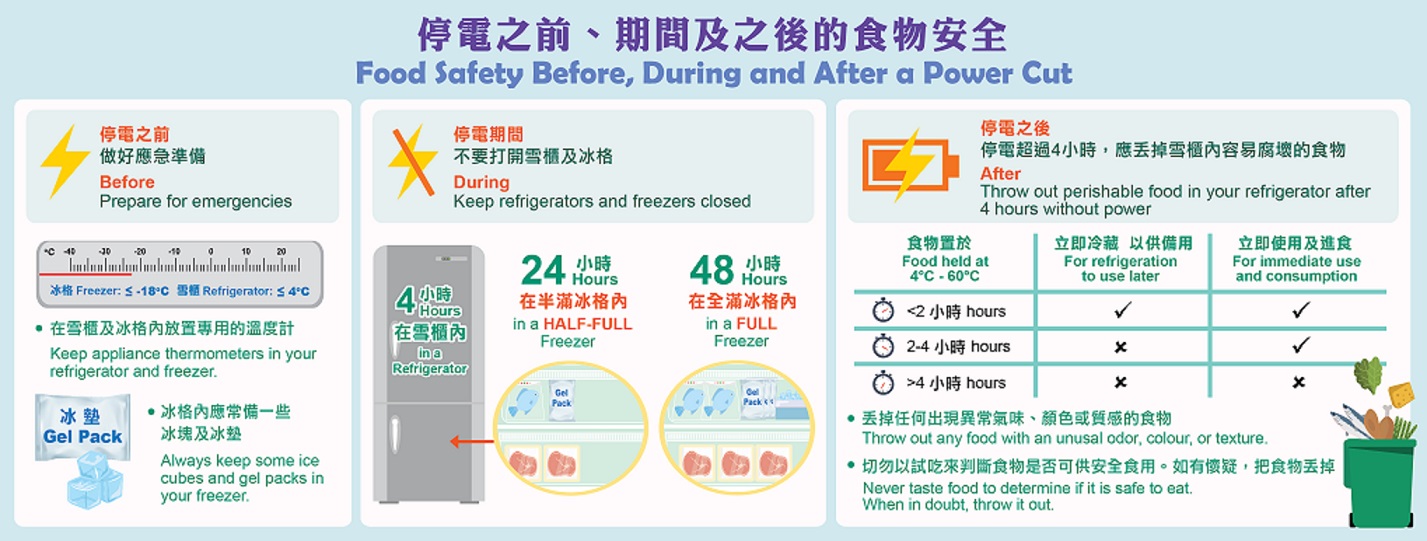
Hong Kong- How to Keep Food Safe in Case of a Power Cut at Home?

CFS

Prolonged power cut is uncommon in Hong Kong nowadays. However, sudden interruption of electricity supply may still occur due to unforeseeable factors such as adverse weather and equipment failure. Power disruptions can last for minutes to hours, during which food will spoil rapidly without refrigeration. Power cut can be troublesome, especially when you have a lot of perishable food items in your refrigerator and freezer compartment. Nonetheless, there is no need to panic. The following tips can help you keep food safe while waiting for resumption of power supply.

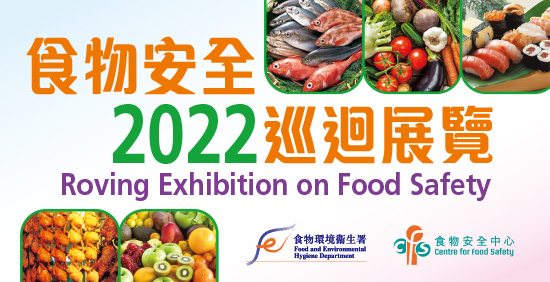
Hong Kong – Roving Exhibitions on Food Safety in 2022

CFS

Roving Exhibitions on Food Safety in 2022

The Centre for Food Safety (CFS) holds a series of exhibitions in major shopping centres of public and private housing estates across the territory every year.  Panels covering different topics such as food safety and nutrition, and educational videos are shown to enhance public knowledge on how to make safe and suitable food choices.

TWO roving exhibitions will be held in the following venues in January 2022. Details are as follows:

Date Time Venue Theme
5/1 10am – 4pm Yeung Uk Road Market Enhance Food Traceability, Strengthen Food Safety; Pesticide Residues; Trans Fats
27/1 10am – 4pm Yee On Street Market Nutrition Labelling; Enhance Food Traceability, Strengthen Food Safety; Ciguatoxins

New arrangements of the exhibitions will be announced regularly and members of the public are welcome to visit the CFS website.  For any enquiries, please contact our Communication Resource Unit at 2381 6096.

USA – FDA Core Outbreak Table Update

FDA

The FDA CORE Outbreak Table has six active food poisoning investigations this week; all but one has been identified or solved. The Salmonella Javiana outbreak, which was announced on November 24, 2021, is still not identified, and the number of people sickened in that outbreak has increased to 64.

Date
Posted
Reference
#
Pathogen
Product(s)
Linked to
Illnesses

(if any)
12/29/

2021

1052 E. coli
O157:H7
Packaged Salad
12/20/

2021

1039 Listeria
monocytogenes
Packaged Salad
12/15/

2021

1048 Listeria
monocytogenes
Packaged Salad
11/24/

2021

1044 Salmonella Javiana Not Yet
Identified
11/17/

2021

1043 E. coli
O157:H7
Spinach
9/15/

2021

1031 Salmonella
Oranienburg
Red, Yellow,
and White Onion

CPS – Funded Projects 2022 – Superheated Steam – Process Surface Decontamination

CPS

Practical application of superheated steam to harvesting, processing, and produce packing tools and equipment

Pathogens can contaminate environmental surfaces in produce handling operations. The industry uses sanitation programs to clean these surfaces and prevent product contamination. Highly effective sanitation procedures reduce the likelihood that pathogens will cross-contaminate products. In facilities that do not use water in their sanitation programs, tools like brushes and rags are used to clean. No-rinse sanitizers are sometimes used as well, but they cannot be used in organic operations. Superheated steam is a novel surface sanitizer that can kill pathogens on environmental surfaces. It is sometimes referred to as “dry steam” because it does not leave moisture or condensation on surfaces, making it a viable option for dry produce facilities. This project is designed to evaluate superheated steam use under industry relevant conditions. We will not only determine how well it works, but we will assess other key performance indicators including cost, range of appropriate applications, and the effect of extended use on equipment wear-and-tear and change to ambient relative humidity. This project will provide industry with the tools to comprehensively assess tradeoffs in superheated steam implementation. These resources will help improve the design of sanitation programs and enhance control over pathogen cross-contamination.

France- Large drop but France still records more than 1,000 outbreaks in 2020

Food Safety News

23311_lores

The number of outbreaks fell by more than 40 percent in France in 2020, largely because of COVID-19 measures, according to new numbers from the French public health agency.

Overall, 1,010 outbreaks were declared in 2020 affecting 6,814 people. Of these, 396 went to hospitals and nine died. Officials are compiling outbreak numbers for 2021.

In 2020, outbreaks went down by 43 percent from 1,783 in 2019 when 15,641 people were sickened, according to Sante publique France.

The drop in outbreaks is greater for those linked to commercial and catering settings but can be seen, to a lesser extent, for domestic outbreaks. The decrease is more marked during times of lockdown because of the pandemic but can also be noted outside these periods when social distancing measures, working from home and closure of restaurants were in place.

Scotland FSS – Annual Report – Food Safety

FSS

FSS has continued to develop its surveillance capability to improve the targeting of food sampling activities and interventions. This includes the provision of funding for LAs to sample in priority areas identified through horizon scanning, and evidence gathered through research, surveys and incidents. As part of its programme of work to ensure preparedness for the potential consequences of EU Exit, FSS has also utilised a range of datasets to improve its understanding of key import and export markets in Scotland, and distribution chains used to transport foods into the country.

During 2020/21, there was a large reduction (72%) in the total number of samples taken compared with the previous year. This is the most significant decrease in sampling activity recorded since the 2015 baseline. It is indicative of the impact of COVID-19 on Local Authority activities during the year as they were only able to do limited sampling, either because they couldn’t access food businesses premises (as they were closed or for health and safety purposes) or because of having to divert resources elsewhere to deal with other priorities.

It is clear there has been a decrease in the reporting of most of the five key pathogens during COVID-19.The reasons behind this change haven’t yet been fully established, but may reflect under reporting due to restrictions on GP appointments and people not wanting to present to the NHS with mild cases of vomiting and diarrhoea during the pandemic. Alternatively, there may actually be a true reduction in these illnesses due to COVID-19 restrictions on overseas travel, eating out and social interactions, and also improvements in hand hygiene which can be a key factor in preventing the transmission of food poisoning.
We are working with PHS to try to understand the reasons behind the reported rates of food poisoning to identify any positive behaviour changes during this period that we should continue to communicate to the Scottish population. Campylobacter continues to be the biggest cause of bacterial foodborne illness with direct healthcare costs estimated at around £3 million each year in Scotland. Chicken remains the main source of campylobacter infection in Scotland.
The industry has made significant progress in controlling contamination from the farm through to retail. However, our surveillance has indicated that there is still scope to reduce the risks of transmission through the handling of raw chicken both in retail settings and in the home. Research we have conducted with PHS has also shown that in Scotland, campylobacter infection has the most serious consequences for older people and those living in more deprived areas. Over the coming year, we will use this evidence to tailor our guidance and advice to areas of risk; helping businesses and consumers to adopt the controls and good hygiene practices which are effective in tackling campylobacter.
Following a successful partnership with researchers and industry we published, in November 2020, our report on the Risk of Shiga Toxin-producing E. coli (STEC) contamination in wild venison. The aims of the report were to map the venison industry in Scotland, assess STEC prevalence in wild deer faeces, and review cross-contamination risks in the slaughter and processing stages of wild deer. The findings of the project have identified key recommendations for hygiene practices from cull to final product to be included in guidance for the sector.
In October 2020 we presented a paper to the Advisory Committee on the Microbiological Safety of Food (ACMSF) on STEC research in Scotland, showcasing the research and evidence gathering undertaken by FSS which allowed us to link up with other research efforts across the UK and beyond. We completed a survey of the microbiological quality of beef mince on retail sale in Scotland that will be published in June 2021. The results show that the levels of pathogens present in retail mince beef were in line with other European surveys, and there were no antimicrobial resistance (AMR) “results of concern” (i.e. resistance to multiple classes or critically important antibiotics). In 2020 FSS began work with the Scottish Salmonella Reference Laboratory to undertake genomic sequencing of part of its historical archive of Salmonella samples.
Around 500 samples from veterinary and food isolates are being sequenced and the work is due to be completed in summer 2022. The results of this study will be used in a number of ways, such as supporting risk assessment (for example there have been a number of high profile Salmonella outbreaks in recent years, particularly associated with frozen reconstituted chicken products), and also to increase our understanding of how AMR is distributed amongst historical isolates.
Scientific advice and collaboration During 2020-21 we have been working to update our online tools, with current evidence, to support food businesses in controlling the microbiological risks in the production of smoked fish and fresh produce. The updated tools, to be relaunched in summer 2021 will provide a new generic web tool platform that can be populated with content for any industry. FSS have worked with a number of institutions to produce industry guidance to support the safe manufacture of food. In April 2020 the IFST Handbook of Microbiological Criteria for Foods (“Red Book”) was published; this book was co-authored by FSS science staff. We also have a number of further collaborations such as with Campden BRI to develop other pieces of guidance, particularly in the control of Listeria monocytogenes.
Throughout this year, we have also worked collaboratively across Scottish Government and other partners on the work to support Scotland’s waste reduction strategy, and programmes of work aimed at understanding and controlling antimicrobial resistance in Scotland.1.Food is Safe