Category Archives: Microbiological Risk Assessment

India – Telangana: Now report food safety and quality issues through social media

Telangana Today

Hyderabad: To address grievances related to food poisoning, lack of quality and safety in food products and ingredients, the Telangana government on Sunday has urged people to call (040-21111111) or reach out to food safety officials through micro-blogging social media platform Twitter (@AFCGHMC) for quick redressal.

State Health Minister, T Harish Rao, in a review meeting here on Sunday with officials from Commissioner of Food Safety, Institute of Preventive Medicine (IPM) and food safety inspectors from all the districts and senior health officials, assured people that quick food safety checks will be conducted by food safety officials after receiving complaints through the call centre or the Twitter handle @AFCGHMC.
Ghana – Marwako food poisoning case: Competitor sabotage is possible – PRO

Myjoyonline

The Public Relations officer of Marwako Fast Food Limited has said that his outfit is investigating the incidence of food poisoning that was recorded in some of its branches.

Mr. Mohammed Amin Lamptey said Management is considering all possibilities in the quest to ascertain the cause of the unfortunate happening.

Marwako, a fast-food eatery in Accra, has been trending on Twitter for the past three days after several Twitter users complained of being served contaminated food, resulting in food poisoning.

The complaints were triggered by one Edward Elohim, who posted about his illness after eating at Marwako last Saturday.

Israel – Strauss warns of profit impact due to Salmonella incident

Food Safety News

Strauss Group has estimated the impact of Salmonella illnesses and related recalls to be about U.S. $33 million on first quarter financial results.

The company said net profit for the first quarter of 2022 is expected to be hit by Israeli New Shekel 115 to 125 million ($33.6 to $36.5 million). The financial statement as of March 31 is expected to be published around May 25.

During an inspection of Strauss’s factory in Nof Hagalil, Israel in April, the Ministry of Health found “significant” failings in the company’s protocols. The agency has suspended the plant’s approval for three months or until issues detected during the visit have been rectified.

Elite branded items such as cakes, wafers, energy grain snacks, energy chocolate rice cakes, chewing gum and toffee candies were sent to the United States, Canada, Australia, New Zealand, Austria, Brazil, Cyprus, Estonia, France, Germany, Hungary, Italy, Luxembourg, Netherlands, Poland, Romania, Russia, South Africa, Spain, Sweden and the United Kingdom.

USA – CDC closes infant formula outbreak investigation; FDA continues work to find source; USDA works to resolve shortages – Cronobacter

Food Safety News

The CDC has declared that an outbreak of cronobacter infections among babies is over, but the Food and Drug Administration is continuing its investigation into the maker of the implicated infant formula.

The FDA received four complaints of cronobacter infections in infants beginning on Sept. 20, 2021, and running through Jan. 11, 2022. Two of the infected babies died. Parents of all four infants reported having fed their children formula produced by Abbott Nutrition before they became ill.

The Centers for Disease Control and Prevention worked with the FDA and state health departments to investigate the outbreak. The FDA began an investigation into Abbott’s Sturgis, MI, production facility and the plant remains closed while the investigation continues. Although five strains of cronobacter have been found in the production plant, none of them is an exact match for the patient samples.

The situation led to the recall of certain Similac products as well as products sold under the Alimentum and EleCare brands.

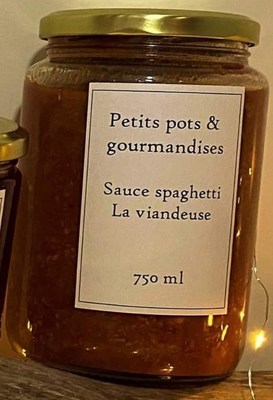
Quebec – Notice not to consume products packaged in glass jars and sold by the company Petits pots et gourmandises (Le Locker Distillerie inc.)

Quebec

"LA MEAT SPAGHETTI SAUCE" (CNW Group/Ministry of Agriculture, Fisheries and Food)

he Ministry of Agriculture, Fisheries and Food (MAPAQ), in collaboration with the company Petits pots et gourmandises (Le Locker Distillerie inc.) located at 9302, boulevard Sainte-Anne in Sainte-Anne -de-Beaupré, warns the population not to consume the products indicated in the table below, because they have not been packaged in such a way as to ensure their safety.

Product name

Format

Affected batch

“THE MEATY SPAGHETTI SAUCE”

750ml

Units sold until May 12, 2022

” BUTTER CHICKEN “

” VEGETABLE SOUP “

The products that are the subject of this warning were offered for sale until May 12, 2022 at the establishment designated above as well as at the Fromagerie Le Mouton Blanc, located at 176, route 230 Ouest in La Pocatière, and at the Fromagerie Boulangerie Médard, located at 10, rue De Quen in Saint-Gédéon. They were packaged in glass jars with a gold lid and sold at room temperature. The label of the products includes, in addition to their name, the mention “Small pots and delicacies”.

The operator is voluntarily recalling the products in question. It has agreed with MAPAQ to issue this warning as a precautionary measure. Also, people who have any of these products in their possession are advised not to consume it. They must return it to the establishment where they bought it or throw it away. Even if the affected products show no signs of tampering or suspicious odors, their consumption may represent a health risk. No case of illness associated with the consumption of these foods has been reported to MAPAQ to date.

Quebec – Absence of information necessary for the safe consumption of cheeses packaged and sold by Gourmet Laurier – Raw Milk

Quebec

The Ministry of Agriculture, Fisheries and Food (MAPAQ), in collaboration with the Food Inspection Division of the City of Montreal and the company Gourmet Laurier inc. located at 1042, avenue Laurier Ouest in Montreal, advises people considered vulnerable (pregnant women, people with weakened immune systems, children and the elderly) not to consume the products indicated in the table below , because they do not include the statement “made from raw milk” which is required.

Product name

Format

Affected batch

“COMTOMME”

Variable

Units sold until May 12, 2022

“HIGH MOUNTAIN SUMMER BEAUFORT”

“OSSAU-IRATY”

“GRUYERE KALTBACH AOP KING”

“COUNTY LE POLIGNY”

The products that are the subject of this warning were offered for sale until May 12, 2022 inclusive, only at the establishment designated above. They were wrapped in clear plastic wrap and cut to order.

The retailer is voluntarily recalling the products in question. It has agreed with MAPAQ and the Food Inspection Division of the City of Montreal to distribute this warning as a precautionary measure. In addition, people deemed vulnerable (designated above) who have one of these products in their possession are advised not to consume it. They should return it to the establishment where they bought it, use it in a cooked dish that will be cooked until it reaches a safe cooking temperature of 74°C or throw it away. However, no case of disease associated with the consumption of this food has been reported to MAPAQ to date.

USA- Staph food poisoning linked to illnesses among Coachella bus drivers

Outbreak News Today

MRSA Staphylococcus KSW Food World

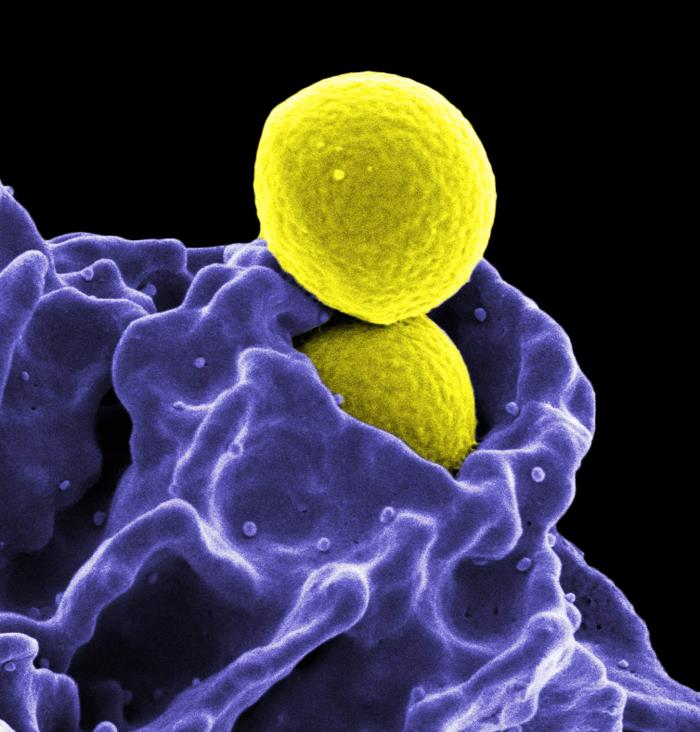
According to the Riverside County Health Department, tests conducted on food collected after dozens of employees of a shuttle bus company became ill last month detected a bacterial toxin that can cause the symptoms described by those who became sick.

A state health department laboratory reported this week that Staphylococcal aureus (Staph) enterotoxin was detected in the food sample collected by a Los Angeles County resident who became ill shortly after eating a dinner catered for employees of a shuttle bus company on April 24. The company had provided shuttle service for the Coachella Music Festival.

Research – Penn State microbiologists receive USDA grant to study biofilms guarding Listeria

Food Safety News

The U.S. Department of Agriculture has awarded a $605,000 grant to microbiologists in Penn State’s College of Agricultural Sciences to study how microbial biofilms protect Listeria monocytogenes.

“Microorganisms enclosed in a biofilm produce slimy substances that protect them from the antimicrobial activity of sanitizing chemicals by slowing down their penetration into the core of a biofilm,” Jasna Kovac, Lester Earl and Veronica Casida Career Development Professor of Food Safety and Assistant Professor of Food Science said.

“Biofilm formation can therefore result in reduced efficacy of antimicrobial sanitizers used to inactivate Listeria. This project will investigate the interactions between microorganisms found in fruit-packing environments and Listeria monocytogenes.”

Along with Kovac, Luke LaBorde, professor of Food Science, will use the funding from USDA’s National Institute of Food and Agriculture to conduct research on the interactions between microorganisms found in fruit-packing environments and Listeria monocytogenes.

According to LaBorde, because the role of the food-processing environment microbiota on Listeria monocytogenes survival within a biofilm under sanitizer pressure is poorly understood, the researchers will evaluate the ability of the most relevant environmental microbiota found in produce-packing environments to form single- and multi-species biofilms with Listeria monocytogenes.

Research – IAFNS presents new research on pathogens and low-moisture foods

Food Safety News

New research on hazards in low-moisture foods fills critical knowledge gaps and identifies cutting-edge decontamination tools. The Institute for the Advancement of Food and Nutrition Sciences hopes the study will empower food safety professionals to reduce risks in the foods and prevent foodborne illness outbreaks.

Because the persistence of pathogens and viruses in ingredients and ready-to-eat foods has wide-ranging impacts on our food supply, the Institute for the Advancement of Food and Nutrition Sciences (IAFNS) is supporting a body of research on this topic. The studies focus on low-moisture foods such as nuts, dried fruits, cereal products and chocolate. These foods are often ingrediates in other foods, so they can potentially amplify outbreaks and recalls over a wide variety of products, according to researchers.

These studies were performed as part of a multi-center research collaboration between the University of Guelph, Health Canada and North Carolina State University. This collaboration enabled the investigators’ diverse perspectives and expertise to strengthen this line of research.

According to Jeff Farber of the University of Guelph, “the increased awareness of the importance of low-moisture foods (LMF) as a possible vehicle for foodborne illness has already led to better approaches toward prevention and control and will continue to do so in the future.”

Read More at the link above.

Research – Recent Developments in Botulinum Neurotoxins Detection

MDPI

kswfoodworld

Botulinum neurotoxins (BoNTs) are produced as protein complexes by bacteria of the genus Clostridium that are Gram-positive, anaerobic and spore forming (Clostridium botulinumC. butyricumC. baratii and C. argentinense spp.). BoNTs show a high immunological and genetic diversity. Therefore, fast, precise, and more reliable detection methods are still required to monitor outbreaks and ensure surveillance of botulism. The botulinum toxin field also comprises therapeutic uses, basic research studies and biodefense issues. This review presents currently available detection methods, and new methods offering the potential of enhanced precision and reproducibility. While the immunological methods offer a range of benefits, such as rapid analysis time, reproducibility and high sensitivity, their implementation is subject to the availability of suitable tools and reagents, such as specific antibodies. Currently, the mass spectrometry approach is the most sensitive in vitro method for a rapid detection of active or inactive forms of BoNTs. However, these methods require inter-laboratory validation before they can be more widely implemented in reference laboratories. In addition, these surrogate in vitro models also require full validation before they can be used as replacement bioassays of potency. Cell-based assays using neuronal cells in culture recapitulate all functional steps of toxin activity, but are still at various stages of development; they are not yet sufficiently robust, due to high batch-to-batch cell variability. Cell-based assays have a strong potential to replace the mouse bioassay (MBA) in terms of BoNT potency determination in pharmaceutical formulations; they can also help to identify suitable inhibitors while reducing the number of animals used. However, the development of safe countermeasures still requires the use of in vivo studies to complement in vitro immunological or cell-based approaches. View Full-Text