Category Archives: Microbiological Risk Assessment

USA – Big Olaf Who? Amid Outbreak Shops Ditch Ice Cream, Branding

Food Poisoning Bulletin

Listeria kswfoodworld food safety food poisoning

Image CDC

For Big Olaf, the break-ups came quickly but not all at once. And not all of them quietly.

In the two and half weeks since Big Olaf ice cream was linked to a deadly Listeria outbreak, licensed shops throughout Florida started switching to new suppliers. One owner has permanently changed the names of the two stores she operates.

Although Listeria isn’t as common as other foodborne pathogens. It is the most deadly. And it targets pregnant women, who can suffer a miscarriage or stillbirth if they develop an infection.

“Five of the patients in this outbreak are women who contracted listeriosis while they were pregnant,” said Eric Hageman, a Listeria lawyer, and Food Poisoning Bulletin Publisher. Hageman has extensive experience with Listeria lawsuits including one filed on behalf of a 31-year-old man who suffered permanent brain damage after eating ice cream contaminated with Listeria in 2013.

Read the full story at the link above.

USA – Tara Flour Culprit in Daily Harvest Lentil Crumbles Illnesses

Food Poisoning Bulletin

Daily Harvest has identified tara flour as the apparent culprit in the illnesses that may be linked to that company’s French Lentil + Leeks Crumbles. The FDA reports that there have been 277 adverse event complaints received so far, and that 96 people have been hospitalized because they are so ill; some have had their gall bladders removed. There have been almost 500 anecdotal reports of illness. The FDA has not commented on this new information as of July 19, 2022.

But there is no indication of just what it is about the tara flour that has made people sick. The product is not inherently toxic. And considering that the crumbles have been tested for everything from E. coli bacteria to Listeria monocytogenes, Salmonella, gluten, pesticides, heavy metals, and other chemicals, it’s surprising that no specific compound has been identified.

France -Pediatric haemolytic uremic syndrome: preventive measures in the face of summer risks

Sante Publique

Each year, during the summer period, an increase in foodborne infections, including paediatric haemolytic uremic syndrome (HUS), is observed. HUS is a serious infectious disease most often food-borne. In children, this syndrome is most often caused by an infection due to a bacterium belonging to the family of Escherichia coli ( E. coli ) producing toxins, called Shiga-toxins. Public Health France recalls the preventive measures.

In the kitchen

  • Hand washing should be systematic before meal preparation;
  • Meat, and especially minced beef, but also minced meat preparations, must be well cooked through (and not pink or rare);
  • Raw milk, cheeses made from raw milk and dairy products made from raw milk should not be consumed by children under 5 years of age (prefer cooked pressed cheeses (such as Emmental, Comté, Gruyère, Beaufort), processed cheese spreads and pasteurized milk cheeses);
  • Flour-based preparations (pizza/cookie dough/cake/pie/pancake, etc.) should not be eaten raw or undercooked;
  • Vegetables, salads, fruits and aromatic herbs, in particular those which are going to be eaten raw, must be carefully washed before consumption, after peeling if necessary;
  • Raw foods should be kept separate from cooked or ready-to-eat foods;
  • Cooked meals and leftover food must be quickly put in the refrigerator and sufficiently reheated before consumption;
  • Kitchen utensils (especially when they have previously been in contact with raw foods such as meat or cheese), as well as work surfaces, must be thoroughly washed to avoid the risk of cross-contamination.

During activities and leisure

  • Children should not drink untreated water (well water, river, torrent, etc.) and avoid swallowing it when swimming (lake, river, pond, etc.);
  • Avoid contact of very young children (under 5 years old) with cows, calves, sheep, goats, etc., and their environment; in the event of contact with these animals, hand washing (water and soap) must be systematic before the child puts his fingers to his mouth.

USA – Vi-Jon, LLC Expands Voluntary Nationwide Recall of Magnesium Citrate Saline Laxative Oral Solution Lemon Flavor Due to Microbial Contamination

FDA

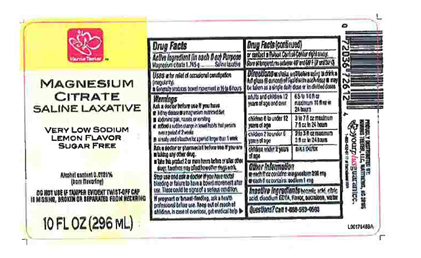
Representative labeling, Magnesium Citrate Saline Laxative Oral Solution, Lemon Flavor

July 14, 2022 – Smyrna, TN, Vi-Jon, LLC is expanding its voluntary recall to include all lots of Magnesium Citrate Saline Laxative Oral Solution Lemon Flavor, 10 FL OZ (296 mL) within expiry to the consumer level.  The recall was initiated after 3rd Party and Vi-Jon, LLC microbial testing identified the presence of Gluconacetobacter liquefaciens.

Risk Statement: Immunocompromised patients, who consume this product, may be at increased risk for invasive infections caused by Gluconacetobacter liquefaciens that could lead to serious, life-threatening adverse health consequences. To date, Vi-Jon, LLC has received one report of an adverse reaction potentially related to this recall.  Vi-Jon, LLC is in the process of investigating this report.

The product is used for relief of occasional constipation (irregularity) and generally produces bowel movement in ½ to 6 hours. The product is packaged in a 10 oz clear round plastic bottle.

Luxembourg – Luxembourg to set up new food agency

Food Safety News

Luxembourg is to get a single agency in charge of official controls in the food chain.

Legislators in the country voted this past week to create the Luxembourg Veterinary and Food Administration (ALVA).

The new authority will bring together all official controls relating to the food supply chain under the remit of the Minister of Agriculture, Viticulture and Rural Development.

Minister of Consumer Protection and Health Paulette Lenert said the reform would bring together services currently under the supervision of three different ministries and involve 100 people.

USA – Salmonella Enteritidis Outbreak at Nebraska Correctional Facility

Food Poisoning Bulletin

A Salmonela Enteritidis outbreak at a Nebraska correctional facility this year sickened at least 15 people, according to the CDC’s Morbidity and Mortality Weekly Report (MMWR) for the week of July 15, 2022. The Lincoln-Lancaster County Health Department (LLCDH) notified the Nebraska Department of Health and Human Services of two cases of laboratory-confirmed Salmonella in inmates on January 14, 2022.

The investigation linked consumption of mechanically separated chicken to the illnesses. Mechanically separated chicken is produced by separating edible meat from bone and cartilage under pressure. It is often used for use in institutions like prisons, jails, and correctional facilities because it’s cheap. A Salmonella Heidelberg outbreak linked to that product sickened at least nine inmates in Tennessee in 2015.

USA – Collaborating on Culture in the New Era of Smarter Food Safety – August 3rd Webinar

FDA

Date:
August 3, 2022
Time:
12:15 PM – 1:15 PM ET

The U.S. Food and Drug Administration and Stop Foodborne Illness External Link Disclaimer, a non-profit public health organization, are collaborating on a webinar series that explores food safety culture, one of the core elements in FDA’s New Era of Smarter Food Safety initiative.

The fourth webinar, called “What More Do You Want to Know About Food Safety Culture?,” will be broadcast live from the International Association for Food Protection 2022 Annual Meeting on August 3, 2022, at 12:15 p.m. ET. Speakers and attendees will engage in a question-and-answer session on an array of food safety culture topics. Registration is available for both in-person and virtual attendance.

The series, entitled “Collaborating on Culture in the New Era of Smarter Food Safety,” began on Thursday, November 4, 2021, with the session entitled “Key Concepts in Addressing Food Safety Culture as a Science – Not a Slogan.”

The second webinar in the series, called “Making Leaders Risk Aware and Push to Reduce Risk,” took place on Wednesday, February 16, 2022.

The third webinar, called “Building a Coalition of Food Safety Culture Champions Across Your Organization,” took place on May 18, 2022.

The New Era of Smarter Food Safety blueprint states that dramatic improvements in reducing the burden of foodborne illness cannot be made without doing more to influence the beliefs, attitudes, and, most importantly, the behaviours of people and the actions of organizations.

The webinar series will engage experts from the public and private sectors in a collaborative exchange of ideas and experiences related to the importance of a robust food safety culture in helping to ensure safe food production.

The series will have valuable information for both those well-versed on, and those just learning about, food safety culture.

Register Here External Link Disclaimer

Registration is required; a recording will be available after the event.

USA – New Era of Smarter Food Safety Blueprint

FDA

New Era for Smarter Food Safety Blueprint

The New Era of Smarter Food Safety Blueprint is centered around four core elements:

  1. Tech-enabled Traceability
  2. Smarter Tools and Approaches for Prevention and Outbreak Response
  3. New Business Models and Retail Modernization
  4. Food Safety Culture

These are the foundational pillars of the New Era of Smarter Food Safety, covering the range of technologies, analytics, business models, modernization and values that are its building blocks. These elements, working together, will help create a safer and more digital, traceable food system.

Research – Marine Harmful Algal Bloom (HAB)-Related Illness Tracking

OEHHA

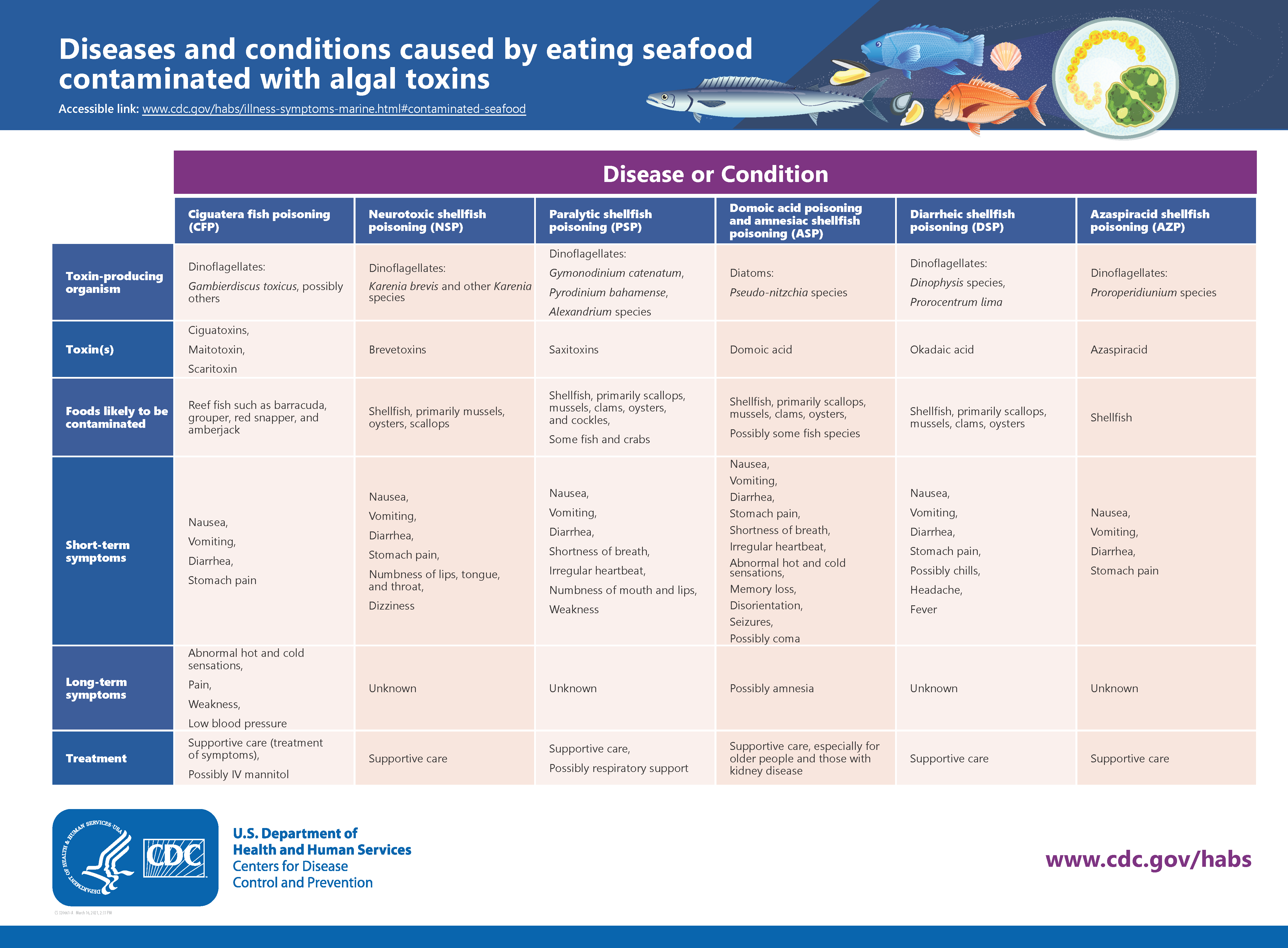
Diseases and conditions caused by eating seafood contaminated with algal toxins

What are marine harmful algal bloom (HAB)-related illnesses?

When phytoplankton and algae in marine waters occur at levels that pose a health risk to humans, animals, and the environment, they are referred to as marine harmful algal blooms (HABs). The US Centers for Disease Control and Prevention (CDC) provide resources on potential human and animal exposures to marine HABs or associated marine biotoxins via skin contact or inhalation, or consumption of fish and shellfish.

Research – Publisher’s Platform: Colonel Colon and his League of Faecal Fighters coming soon to help make your food safer

Food Safety News

Over a decade ago, the mom of two clients who both developed acute kidney failure after consuming E. coli O157:H7-tainted spinach sent me an unexpected present. The outbreak sickened over 205 people, killing five, sending hundreds to the hospital, many with life-altering complications. The gift was a bobble-head that bore a similarity to a younger version on me. On the base it said: “Colonel Colon and his League of Fecal Fighters.” It sits on my desk today.

I have always thought of doing something with the gift, and with the talent of my incredible niece, Janae Dueck, and borrowing from the work of the good food people at the FDA and FSIS, and idea is brewing of a way to help educate us all to be Fecal Fighters.

Over the next year we will be working on comic book, a cartoon video about the adventures of these superheroes, and a food safety jingle (thanks to my friend Vincent).

Read More at the Link Above