Summary
Do not use, sell, serve or distribute the affected products.
Affected products
Issue
Peller Family Vineyards brand Pinot Grigio recalled due to bloating and presence of sediment,
The recalled product has been sold in Ontario.
Do not use, sell, serve or distribute the affected products.
Peller Family Vineyards brand Pinot Grigio recalled due to bloating and presence of sediment,
The recalled product has been sold in Ontario.
Do not consume, use, sell, serve or distribute recalled products
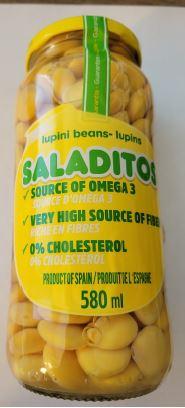
The affected product is being recalled from the marketplace because it may permit the growth of Clostridium botulinum.
The recalled product has been sold in Ontario, Quebec, and Nova Scotia.
Food contaminated with Clostridium botulinum toxin may not look or smell spoiled but can still make you sick. Symptoms in adults can include facial paralysis or loss of facial expression, unreactive or fixed pupils, difficulty swallowing, drooping eyelids, blurred or double vision, difficulty speaking, including slurred speech, and a change in sound of voice, including hoarseness. Symptoms of foodborne botulism in children can include difficulty swallowing, slurred speech, generalized weakness and paralysis. In all cases, botulism does not cause a fever. In severe cases of illness, people may die.
Posted in bacterial contamination, CFIA, Clostridium, Clostridium botulinum, food contamination, food handler, Food Hazard, Food Hygiene, Food Inspections, Food Micro Blog, Food Microbiology, Food Microbiology Blog, Food Microbiology Testing, Food Pathogen, Food Quality, food recall, Food Safety, Food Safety Alert, Food Safety Management, Food Safety Regulations, Food Testing, Food Toxin, microbial contamination
Posted in Antibacterial, Decontamination Microbial, Food Micro Blog, Food Microbiology, Food Microbiology Blog, Food Microbiology Testing, Listeria, Listeria monocytogenes, microbial contamination, Microbial growth, Microbiological Risk Assessment, Microbiology, Microbiology Investigations, Microbiology Risk
Posted in Biofilm, Decontamination Microbial, Food Micro Blog, Food Microbiology, Food Microbiology Blog, Food Microbiology Research, Food Microbiology Testing, Listeria, microbial contamination, Microbial growth, Microbiological Risk Assessment, Microbiology, Microbiology Investigations, Microbiology Risk, Pseudomonas
Posted in antimicrobial resistance, Antimicrobials, Decontamination Microbial, Food Micro Blog, Food Microbiology, Food Microbiology Blog, Food Microbiology Research, Food Microbiology Testing, microbial contamination, Microbial growth, Microbiological Risk Assessment, Microbiology, Microbiology Investigations, Microbiology Risk, MLST, MRSA, Phage, Staphylococcal Toxin, Staphylococcus aureus

Posted in Clostridium, Clostridium perfringens, Decontamination Microbial, Food Micro Blog, Food Microbiology, Food Microbiology Blog, Food Microbiology Research, Food Microbiology Testing, microbial contamination, Microbial growth, Microbiological Risk Assessment, Microbiology, Microbiology Investigations, Microbiology Risk
Strictly speaking, cheese should be completely free of aflatoxins, a class of toxic compounds that are produced by certain molds found in food, and can cause liver damage and cancer. In practice, however, the technology used to produce milk and cheese is unable to guarantee the total absence of aflatoxins, as demonstrated by research performed in several countries. In the latest study conducted in Brazil on this subject, a team of researchers analyzed 28 samples of curd cheese and mozzarella produced in Araripe, a subhumid area within the semi-arid region of Pernambuco State (Northeast Brazil). The samples were collected between March and May 2022.
The results are reported in an article published in the journal Toxins. The analysis revealed the presence of aflatoxins in all samples. The highest levels were found in artisan mozzarella, but none had more than 0.25 μg/kg (micrograms per kilogram). This is the upper limit permitted by the European Union and was chosen by the researchers as their parameter as well.
In Brazil, the limit for AFM1 is 2.5 μg/kg, ten times the maximum acceptable level in the EU.
Posted in Aflatoxin, aflatoxin m1, Decontamination Microbial, Food Microbiology, Food Microbiology Blog, Food Microbiology Research, Food Microbiology Testing, microbial contamination, Microbial growth, Microbiological Risk Assessment, Microbiology, Microbiology Investigations, Microbiology Risk, Mycotoxin
Legionellosis, notably Legionnaires’ disease, is recognized globally and in New Zealand (Aotearoa) as a major cause of community-acquired pneumonia. We analyzed the temporal, geographic, and demographic epidemiology and microbiology of Legionnaires’ disease in New Zealand by using notification and laboratory-based surveillance data for 2000‒2020. We used Poisson regression models to estimate incidence rate ratios and 95% CIs to compare demographic and organism trends over 2 time periods (2000–2009 and 2010–2020). The mean annual incidence rate increased from 1.6 cases/100,000 population for 2000–2009 to 3.9 cases/100,000 population for 2010–2020. This increase corresponded with a change in diagnostic testing from predominantly serology with some culture to almost entirely molecular methods using PCR. There was also a marked shift in the identified dominant causative organism, from Legionella pneumophila to L. longbeachae. Surveillance for legionellosis could be further enhanced by greater use of molecular typing of isolates.
Posted in Contaminated water, Decontamination Microbial, Food Micro Blog, Food Microbiology, Food Microbiology Blog, Food Microbiology Research, Food Microbiology Testing, Legionella, Legionnaires’ disease, microbial contamination, Microbial growth, Microbiological Risk Assessment, Microbiology, Microbiology Investigations, Microbiology Risk, Water, water microbiology, Water Safety
Posted in Aeromonas, Decontamination Microbial, Food Micro Blog, Food Microbiology, Food Microbiology Blog, Food Microbiology Research, Food Microbiology Testing, Food Pathogen, microbial contamination, Microbial growth, Microbiological Risk Assessment, Microbiology, Microbiology Investigations, Microbiology Risk, Pathogen, pathogenic, Vibrio
Biofilms, those slimy films of bacteria that cling to surfaces, can wreak havoc on your equipment and harbor dangerous pathogens that contaminate your products. And they are not easy to detect or remove. Charles Giambrone, Food Safety Manager, Rochester Midland, shared strategies for the detection, remediation, and control of biofilms at the Food Safety Tech Hazards Conference in April.
“Biofilms are how microbes look to survive in nature and within your food plant,” said Giambrone, “and they can form quickly—within 13 hours.”
Biofilms form on any equipment with a large surface area and, in addition to contaminating food, they can damage equipment. “Once you get biofilms on the conveyor belts, you have slippage,” said Giambrone. “Just as biofilm plague will rot your teeth, biofilms form acid that corrode equipment. Eliminating biofilms can increase performance and prolong the lifespan of equipment.”