Category Archives: lactic acid bacteria

Research – Bread Biopreservation through the Addition of Lactic Acid Bacteria in Sourdough

MDPI

Abstract

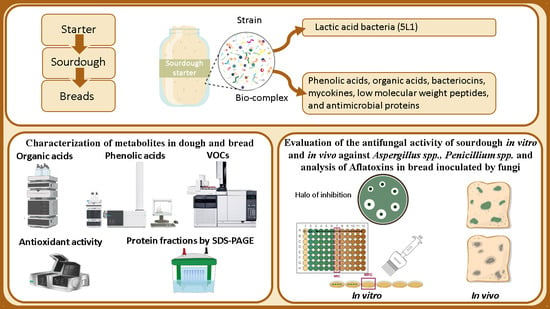
Nowadays, the consumer seeks to replace synthetic preservatives with biopreservation methods, such as sourdough in bread. Lactic acid bacteria (LAB) are used as starter cultures in many food products. In this work, commercial yeast bread and sourdough breads were prepared as controls, as well as sourdough breads with L. plantarum 5L1 lyophilized. The impact of L. plantarum 5L1 on the properties of bread was studied. Antifungal compounds and the impact on the protein fraction by the different treatments in doughs and breads were also analyzed. In addition, the biopreservation capacity of the treatments in breads contaminated with fungi was studied and the mycotoxin content was analyzed. The results showed significant differences with respect to the controls in the properties of the bread and a higher total phenolic and lactic acid content in breads with higher amounts of L. plantarum 5L1. In addition, there was a higher content of alcohol and esters. Furthermore, adding this starter culture produced hydrolysis of the 50 kDa band proteins. Finally, the higher concentration of L. plantarum 5L1 delayed fungal growth and reduced the content of AFB1 and AFB2 compared to the control.

Research – Microbiological Changes during Long-Storage of Beef Meat under Different Temperature and Vacuum-Packaging Conditions

MDPI

Abstract

We evaluated a combination of two temperatures and two packaging materials for long-term storage of vacuum-packaged (VP) beef striploins. Microbial populations and microbiome composition were monitored during refrigerated storage (120 days between 0–1.5 °C) and refrigerated-then-frozen storage (28 days between 0–1.5 °C then 92 days at −20 °C) under low-O2 permeability VP and high-O2 permeability VP with an antimicrobial (VPAM). Pseudomonas (PSE) and Enterobacteriaceae (EB) counts in VPAM samples were significantly higher (p < 0.05) than in VP samples at 28, 45, 90, and 120 days of storage. Microbiome data showed that bacteria of the genera Serratia and Brochothrix were more abundant in VPAM samples at 120 days, while lactic acid bacteria (LAB) dominated in VP samples. Frozen temperatures inhibited microbial growth and maintained a relatively stable microbiome. Refrigerated and frozen VPAM samples showed the greatest difference in the predicted metabolic functions at the end of storage driven by the microbiome composition, dominated by PSE and LAB, respectively. Although no signs of visible meat deterioration were observed in any sample, this study suggests that VP meat refrigerated and then frozen achieved better microbiological indicators at the end of the storage period.

Research – Recent Trends and Applications of Nanoencapsulated Bacteriocins against Microbes in Food Quality and Safety

MDPI

Abstract

Bacteriocins are ribosomal-synthesized peptides or proteins produced by bacterial strains and can inhibit pathogenic bacteria. Numerous factors influence the potential activity of bacteriocins in food matrices. For example, food additives usage, chemical composition, physical conditions of food, and sensitivity of proteolytic enzymes can constrain the application of bacteriocins as beneficial food preservatives. However, novel bacteriocin nanoencapsulation has appeared as an encouraging solution. In this review, we highlight the bacteriocins produced by Gram-negative bacteria and Gram-positive bacteria including lactic acid bacteria that have shown positive results as potential food preservatives. In addition, this review encompasses the major focus on bacteriocins encapsulation with nanotechnology to enhance the antimicrobial action of bacteriocins. Several strategies can be employed to encapsulate bacteriocins; however, the nanotechnological approach is one of the most effective strategies for avoiding limitations. Nanoparticles such as liposomes, chitosan, protein, and polysaccharides have been discussed to show their importance in the nanoencapsulation method. The nanoparticles are combined with bacteriocins to develop the nano-encapsulated bacteriocins from Gram-negative and Gram-positive bacteria including LAB. In food systems, nanoencapsulation enhances the stability and antimicrobial functionality of active peptides. This nanotechnological application provides a formulation of a broad range of antimicrobial peptides at the industry-scale level. Nano-formulated bacteriocins have been discussed along with examples to show a broader antimicrobial spectrum, increase bacteriocins’ applicability, extend antimicrobial spectrum and enhance stability.

Research – Effect of Probiotic Lactic Acid Bacteria (LAB) on the Quality and Safety of Greek Yogurt

MDPI

Abstract

Greek yogurt is a strained yogurt with a high protein content that brings nutritional benefits. To enhance the functional benefits of Greek yogurt, Greek yogurt was prepared with various combinations of probiotic lactic acid bacteria (LAB) (Streptococcus thermophilusLactobacillus bulgaricusLactobacillus gasseri BNR17, and Lactobacillus plantarum HY7714). Effects of probiotic LAB on quality, sensory, and microbiological characteristics of Greek yogurt were then compared. Among samples, Greek yogurt fermented by S. thermophilus and L. bulgaricus showed the highest changes of pH and titratable acidity during 21 d of storage at 4 °C. Greek yogurt fermented with L. plantarum HY7714 had a higher viscosity than other samples. Greek yogurt fermented with S. thermophilusL. bulgaricusL. gasseri BNR17, and L. plantarum HY7714 showed superior physicochemical properties and received the highest preference score from sensory evaluation among samples. Overall, the population of enterohaemorrhagic Escherichia coli (EHEC) was more effectively reduced in Greek yogurt fermented with probiotic LAB than in commercial Greek yogurt during storage at 4, 10, and 25 °C. Thus, the addition of L. gasseri BNR17 and L. plantarum HY7714 as starter cultures could enhance the microbial safety of Greek yogurt and sensory acceptance by consumers.

Luxembourg – RECALL: 0% SUGAR SWEET CHILI SAUCE – Lactic Acid Bacteria

SAP

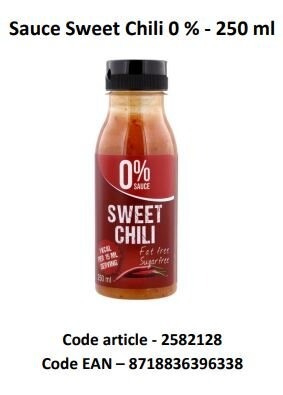
RECALL: 0% SUGAR SWEET CHILI SAUCE

Potential presence of lactic acid bacteria causing the packaging to swell

Action is recalling the following product:

Last name 0% Sugar Sweet Chilli Sauce
Unity 250ml
bar code 8718836395338
Use-by date (DLC) 01/01/2024; 02/01/2024; 03/01/2024

Danger  : Abnormal development of lactic acid bacteria that can cause the packaging to swell

The development of lactic acid bacteria can cause the packaging to swell. The product itself does not generally pose a risk to public health if consumed.

The Food Safety Division advises, however, not to consume this product and to return it to the distributor. 

France – Sweet Chili Sauce 0% – 250ml – Lactic Acid Bacteria

Gov france

Identification information of the recalled product

  • Product category Feed
  • Product subcategory Soups, sauces and condiments
  • Product brand name Sweet Chili Sauce 0% – 250ml
  • Model names or references Sweet Chili Sauce 0% – 250ml
  • Identification of products
    Batch
    see attached product list
  • Products List EN_Product_recall__Action_-_Chile.pdf Attachment
  • Storage temperature Product to be stored at room temperature
  • Geographic area of ​​sale Whole France
  • Distributors STOCK

Practical information regarding the recall

  • Reason for recall The reason is that a potential lactic acid bacteria infection can cause the packaging to swell. The product itself poses no risk to public health in the event of accidental consumption.

Netherlands – Safety Warning Remia Tomato Ketchup 500ml – Lactic Acid Bacteria

NVWA

Remia CV retrieves the Remia Tomato Ketchup. This only concerns products purchased from Nettorama, Jan Linders, Dirk, Dekamarkt, Vomar, Plus, Coop or Picnic. The reason is a possible lactic acid bacteria contamination that causes the packaging to bulge. The product itself poses no danger to public health if consumed. Other Remia CV products are not affected by this issue and are suitable for sale and consumption.

See Remia’s website

Which product is it?

  • Remia Tomato Ketchup 500ml
  • Barcode: 8710448636977
  • Lot number: L2182
  • Best Before: 07-2023

For more information, customers can contact Remia consumer service on the toll-free telephone number 0800-0222555.

Sincerely

The Dutch Food and Consumer Product Safety Authority

Resaerch- Evaluation of Various Lactic Acid Bacteria and Generic E. coli as Potential Non-pathogenic Surrogates for In-Plant Validation of Biltong Dried Beef Processing

MDPI

Validation studies conducted within a food processing facility using surrogate organisms could better represent the manufacturing process than controlled laboratory studies with pathogenic bacteria on precision equipment in a BSL-2 lab. The objectives of this project were to examine potential surrogate bacteria during biltong processing, conduct biltong surrogate validation lethality studies, and measure critical factors and intrinsic parameters during processing. Beef pieces (1.9 cm × 5.1 cm × 7.6 cm) were inoculated with four-strain mixtures of Carnobacterium divergens/C. gallinarumPediococcus acidilactici/P. pentosaceous, and Biotype 1 E. coli ATCC BAA (-1427, -1428, -1429, and -1430), as well as a two-strain mixture of Latilactobacillus sakei and other commercially available individual bacterial cultures (P. acidilactici Saga200/Kerry Foods; Enterococcus faecium 201224-016/Vivolac Cultures). Inoculated beef was vacuum-tumbled in marinade and dried in a humidity-controlled oven for 8–10 days (24.9 °C; 55% relative humidity). Microbial enumeration of surviving surrogate bacteria and evaluation of intrinsic factors (water activity, pH, and salt concentration) were performed post inoculation, post marination, and after 2, 4, 6, 8, and 10 days of drying. Trials were performed in duplicate replication with triplicate samples per sampling time and analyzed by one-way RM-ANOVA. Trials conducted with E. faeciumPediococcus spp., and L. sakei never demonstrated more than 2 log reduction during the biltong process. However, Carnobacterium achieved a >5 log (5.85 log) reduction over a drying period of 8 days and aligned with the reductions observed in previous trials with pathogenic bacteria (Salmonella, E. coli O157:H7, L. monocytogenes, and S. aureus) in biltong validation studies. Studies comparing resuspended freeze-dried or frozen cells vs. freshly grown cells for beef inoculation showed no significant differences during biltong processing. Carnobacterium spp. would be an effective nonpathogenic in-plant surrogate to monitor microbial safety that mimics the response of pathogenic bacteria to validate biltong processing within a manufacturer’s own facility. View Full-Text

Research – Evaluation of the safety and efficacy of lactic acid to reduce microbiological surface contamination on carcases from kangaroos, wild pigs, goats and sheep

EFSA

Studies evaluating the safety and efficacy of lactic acid to reduce microbiological surface contamination from carcases of wild game (i.e. kangaroos and wild pigs) and small stock (i.e. goats and sheep) before chilling at the slaughterhouse were assessed. Wild pig and kangaroo hide‐on carcases may have been chilled before they arrive at the slaughterhouse and are treated after removal of the hides. Lactic acid solutions (2–5%) are applied to the carcases at temperatures of up to 55°C by spraying or misting. The treatment lasts 6–7 s per carcass side. The Panel concluded that: [1] the treatment is of no safety concern, provided that the lactic acid complies with the European Union specifications for food additives; [2] based on the available evidence, it was not possible to conclude on the efficacy of spraying or misting lactic acid on kangaroo, wild pig, goats and sheep carcases; [3] treatment of the above‐mentioned carcases with lactic acid may induce reduced susceptibility to the same substance, but this can be minimised; there is currently no evidence that prior exposure of food‐borne pathogens to lactic acid leads to the occurrence of resistance levels that compromise antimicrobial therapy; and [4] the release of lactic acid is not of concern for the environment, assuming that wastewaters released by the slaughterhouses are treated on‐site, if necessary, to counter the potentially low pH caused by lactic acid, in compliance with local rules.

Research – Determination of Listeria monocytogenes, competitive microflora, microbial hygiene indicators and physico-chemical parameters during the shelf-life of the typical Mediterranean style fermented sausage “Salsiccia Sarda”

Journal of Food Protection

The aim of the present study was the determination of Listeria monocytogenes , competitive microbiota, microbial hygiene indicators and physico-chemical parameters in the typical Mediterranean Style fermented sausages “Salsiccia Sarda” . A batch of “Salsiccia Sarda” (25 samples) naturally contaminated by L. monocytogenes and vacuum packaged after 24 days of ripening was included in the study. Fifteen samples stored at 8° C were analysed after 13, 90 and lastly at the end of shelf-life, after 180 days from vacuum packaging. Ten vacuum packaged samples were stored at 12°C in a domestic fridge simulating temperature abuse and were evaluated at the end of the shelf-life. Samples were subjected to physico-chemical analysis (pH and aw) and investigated for the presence and enumeration of L. monocytogenes . Competitive microbiota, Lactic Acid Bacteria (LAB) and Coagulase negative Staphylococci (CNS), and microbial hygiene indicators (Total mesophilic bacterial counts, Enterobacteriaceae, Enterococcuss spp. and Staphylococcus aureus ) were determined in all the samples. Although a decreasing trend in L. monocytogenes prevalence was observed through the shelf-life, the detection of the pathogen in fermented sausages confirms the ability of L. monocytogenes to overcome the hurdles of the manufacturing process. The results of the present study highlight the importance to carefully evaluate the “Salsiccia Sarda” production process by Food Business Operators (FBOs) in order to maintain unfavourable conditions for the growth of L. monocytogenes .