Category Archives: Illness

Research – China Shellfish – Virus – Fresh Cut Salad Quality – Seasonal Campylobacter – Salmonella Control

Wiley Online

Prevalence of Human Enteric Viruses and a Potential Indicator of Contamination in Shellfish in China.

Science Direct

Influence of working conditions and practices on fresh-cut lettuce salads quality

Cambridge Journals

Identifying the seasonal origins of human campylobacteriosis

University of Cambridge

Researchers plan to use data collected to develop vaccines to control Salmonella in animals and humans

Australia – Listeria Hospital Food Outbreak

ABC News

A batch of dodgy profiteroles are being blamed on a listeria outbreak that could have spread across 13 public hospitals in Sydney.

The NSW Department of Health says that so far three patients, including a terminally ill man at Campbelltown Hospital who has since died, have tested positive for listeriosis.

The two other patients, one from Concord hospital and another from the Royal Prince Alfred are responding well to treatment.

The profiteroles which were made by Rich Products Australia have since been withdrawn from all patient meals.

An investigation into the outbreak which is believed to have occurred between mid-March and April 16 is ongoing.

USA – CDC – Food Safety Progress Report

CDCiStock_000012710183Small

Food Safety News

Infection rates of the foodborne pathogens Campylobacter and Vibrio parahaemolyticus rose in 2012, while other major pathogens generally maintained rates similar to recent years, according to the nation’s annual “food safety progress report” published by the U.S. Centers for Disease Control and Prevention Thursday.

Sweden – Food Borne Illness – Hepatitis A Virus – Berries

The Local

The Swedish Institute for Communicable Disease Control (Smittskyddsinstitutet, SMI) warned that the berries may have been responsible for 22 cases of Hepatitis A in Sweden so far.

The usual contagion rate for the same timeframe is about five people in Sweden.

Experts from the institute advised berry lovers to take caution when consuming any  berries bought in Sweden that were sold frozen.

“If you cook them for at least one minute then all the contagion will die or disappear,” Margareta Löfdahl, epidemiologist from the Institute, told the TT news agency.

“This cooking advice applies to all kinds of frozen berried from all suppliers, this is the safest option until we find out more.”

The people infected in Sweden were infected with the same type of Hepatitis that 30 people in Denmark were diagnosed with recently, which has since been traced to frozen berries and strawberries in particular.

The SMI is now sending traces of the berries to the Swedish National Food Agency (Livsmedelsverket) for testing.

Hepatitis A is an infection of the liver. It can be prevented by vaccination, and experts at SMI have recommended Swedes remember to maintain good hygiene.


Central America – 4 Dead E.coli Outbreak

Food Safety NewsEcoli Istock

At least 96 people have been hospitalized and 4 have died in an E. coli outbreak in Guatemala linked to fresh produce.

The outbreak, which has affected residents of the town of Santo Domingo Xenacoj in South Central Guatemala, is thought to have originated with contaminated fruits and vegetables, reported the Associated Press Thursday.

A male resident of the town reported that two of his children, ages 9 and 12, had died in the outbreak, according to AP.

Specimen taken from the four victims who died linked their deaths to E. coli, said health officials.

Egypt – Cairo University 479 Students with Food Poisoning

Food Safety News

Food poisoning has sent at least 479 students at Cairo’s al-Azhar university to hospitals and sent hundreds of others into the streets to demand the resignation of the school’s president.

The outbreak is so politically charged that Egyptian President Mohammed Morsi took a page out of the West’s political playbook by visiting one of the hospitals where the sickened students are being treated.

Egypt’s Health Ministry said that while hundreds were ill, there have been no deaths recorded among the patients. Those suffering from food poisoning were divided among several Cairo hospitals so they could receive medical attention more promptly. The Health Ministry said all the cases were stabilized.

“Basic hygiene standards are not always observed at Egyptian universities, but this incident is one of the largest cases of food poisoning in recent years,” said BBC, reporting from Cairo.

BBC News


Australia – NSW – Cryptosporidium in Swimming Pools

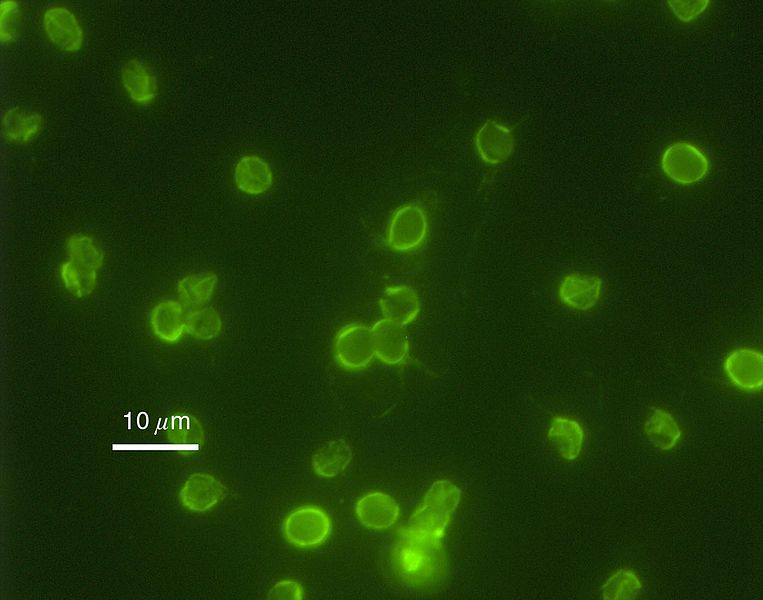
NSW763px-Cryptosporidium_parvum_01

NSW Health is urging people who have had diarrhoea not to swim in pools until at least two weeks after they have fully recovered following an increase in cryptosporidiosis in NSW.

There have been 484 cases of cryptosporidiosis reported to NSW Health to date this year. The highest rates of infections are in children under five,” Dr Jeremy McAnulty, Director, Health Protection, said.

This is the highest year to date figure since 2009 when there was a large outbreak with more than 1000 notified cases.

226 cases were reported in February which is a significant increase on the 5 year average of 121 cases. So far, 126 cases have been reported in March.

“Cryptosporidiosis is a diarrhoeal disease caused by a parasitic infection of the intestine. The most common symptoms include diarrhoea, stomach cramps and sometimes fever, nausea and vomiting. There is no specific treatment for the condition and symptoms may last a few weeks in some people,” Dr McAnulty said.

Among the cases, a range of possible risk factors have been reported including swimming in pools. However the outbreak has not been linked to a specific pool. In previous studies other risk factors have included contact with farm animals and drinking untreated water.

USA – Norovirus Suspected – O’Hare International Airport

Daily HeraldNorwalk_Caspid

The stomach ailment that grounded a group of Scandinavian tourists likely was not a Chicago souvenir, officials said Tuesday.

Seven members of a tour group fell ill Monday night before boarding a Scandinavian Airlines aircraft at O’Hare International Airport and were taken to nearby hospitals around 11 p.m

Later, two other travelers took sick after boarding Flight 944, which led the pilot to require all members of the group to leave the airplane before it departed for Copenhagen, Chicago Fire Department spokesman Larry Langford said.

“The pilot made the decision not to have anyone on the tour on his aircraft as he didn’t want anyone becoming violently ill over the ocean,” Langford said.

The Norwegian tourists numbered about 52 people, authorities said, and were on a bus trip from Memphis. Tenn., to Chicago.

Chicago Department of Public Health investigators are checking with food vendors and others with whom the group came into contact. It’s thought the bug was contracted outside of Chicago, spokesman Brian Richardson said.

The preliminary diagnosis is the norovirus, a contagious virus that can cause vomiting and diarrhea. It’s spread through contaminated food or from contact with infected people and surfaces.

USA – Hawaii – E.coli O157 Outbreak

Food Poisoning Journal

Lisa Kubota of Hawaii News Now reports that investigators with the Hawaii Department of Health are looking into at least nine people have now become ill from E. coli O157:H7.  The confirmed cases consist of three adults and six children. All of them live on Oahu except for a Canadian visitor who spent time on Oahu, but was later diagnosed on the Big Island. Officials are having trouble pinpointing the source of the infections.

Oahu healthcare providers recently received a letter from health officials warning them to be on the lookout for E. coli O157:H7. Around the same time, Dr. James Ireland saw a 67-year-old patient with symptoms like severe diarrhea and abdominal cramps.  Ireland said the man is now recovering after being hospitalized. There have been a total of 11 cases so far this year, including two unrelated to the current cluster. There were 20 last year, 9 the previous year, and 29 in 2010.

According to the state, three of the children in this latest group developed a life-threatening complication called Hemolytic Uremic Syndrome.

Research – Norovirus Shedding

Cambridge Journals OnlineNorovirus

Norovirus is a common cause of gastroenteritis in all ages. Typical infections cause viral shedding periods of days to weeks, but some individuals can shed for months or years. Most norovirus risk models do not include these long-shedding individuals, and may therefore underestimate risk. We reviewed the literature for norovirus-shedding duration data and stratified these data into two distributions: regular shedding (mean 14–16 days) and long shedding (mean 105–136 days). These distributions were used to inform a norovirus transmission model that predicts the impact of long shedders. Our transmission model predicts that this subpopulation increases the outbreak potential (measured by the reproductive number) by 50–80%, the probability of an outbreak by 33%, the severity of transmission (measured by the attack rate) by 20%, and transmission duration by 100%. Characterizing and understanding shedding duration heterogeneity can provide insights into community transmission that can be useful in mitigating norovirus risk.