Category Archives: foodbourne outbreak

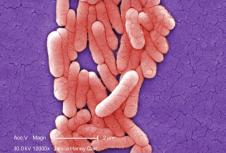
USA – Outbreak of Salmonella Infections Linked to Gravel Ridge Farms Shell Eggs – Final Update

CDC

  • As of October 25, 2018, this outbreak appears to be over.
  • Forty-four people infected with the outbreak strain of Salmonella Enteritidis were reported from 11 states.
    • Illnesses started on dates ranging from May 17, 2018 to August 26, 2018.
    • Twelve people have been hospitalized. No deaths have been reported.
  • Epidemiologic, traceback, and laboratory evidence(https://www.cdc.gov/foodsafety/outbreaks/investigating-outbreaks/index.html) indicated that shell eggs from Gravel Ridge Farms were the likely source of the outbreak.
  • On September 8, 2018, Gravel Ridge Farms recalled cage-free large eggs with use by dates of July 25, 2018 through October 3, 2018 because they might have been contaminated with Salmonella.


Sweden/Austria – Hepatitis A outbreak linked to imported frozen strawberries by sequencing, Sweden and Austria, June to September 2018

Eurosurveillance

Hepatitis A virus is an important cause of food-borne diseases and has been associated with several European outbreaks linked to berries [14]. Here, we describe an ongoing outbreak of hepatitis A virus (HAV) in Sweden and Austria and the confirmation of frozen strawberries imported from Poland as the source of infection. The aims are to highlight the importance of sequencing in outbreak investigations and, due to the long shelf-life of the food vehicle, to increase awareness and warnings towards HAV infections related to frozen strawberries in Europe

On 14 June 2018, the Public Health Agency of Sweden (PHAS) received a notification from the Regional Office of Communicable Disease Control and Prevention of a suspected local outbreak of HAV in County A with five cases. An epidemiological investigation was initiated by county A together with PHAS and the National Food Agency (NFA).

Between 11 June and 27 July 2018, 20 confirmed and probable cases were reported from six counties

USA – Canada, Washington state probe Salmonella cases tied to cucumbers

CIDRAP 


Cucumbers are suspected in Salmonella illnesses reported from Canada and Washington state, though it’s not clear yet if the events are related.

The Public Health Agency of Canada (PHAC) said federal and provincial health officials are investigating 45 lab-confirmed Salmonella Infantis infections in five provinces, most of them in the west: British Colombia, Alberta, Saskatchewan, Manitoba, and Quebec. The patient from Quebec had traveled to British Columbia, which has reported 37 of the cases.

According to an Oct 19 notice, PHAC said the outbreak’s source hasn’t been identified, but many of the people who got sick reported eating cucumbers before their illnesses began. Symptom-onset dates range from the middle of June through late September, and so far, nine people have been hospitalized. No deaths have been reported.

A food safety investigation by the Canadian Food Inspection Agency is under way, and if contaminated food products are found, it will take further steps, which would include recalling the product. So far, there are no recalls associated with the outbreak.

Meanwhile, the Washington State Department of Health (WSDH) said it is working with state, local, and federal health partners to investigate six Salmonella infections in residents from five counties: King, Snohomish, Thurston, Yakima, and Pierce. The same (unspecified) strain of Salmonella is responsible for all of the illnesses, and the last confirmed patient’s symptoms began on Sep 15.

Five of the six people bought and ate English cucumbers from various Costco stores in Washington. According to the WSDH, the cucumbers linked to the infections were sold in three-packs of individually wrapped cucumbers. It urges consumers who bought English cucumbers at Costco between Aug 18 and Sep 10 and still have them in their refrigerators to throw them away.
Oct 19 PHAC notice
Oct 19 WSDH
news release

USA – JBS Ground Beef Salmonella Outbreak

Food Poison Journal Salm2

Sixty-three more ill people from 14 states were added to this investigation since the last update on October 4, 2018. Six more states reported ill people: Hawaii, Kansas, New Mexico, Oklahoma, Texas, and Washington.

As of October 23, 2018, 120 people infected with the outbreak strain of Salmonella Newport have been reported from 22 states.  Arizona 21, California 27, Colorado 23, Hawaii 1, Idaho 2, Iowa 1, Illinois 1, Indiana 1, Kansas 1, Kentucky 1, Minnesota 1, Montana 5, New Mexico 1, Nevada 3, Ohio 2, Oklahoma 4, Oregon 1, South Dakota 6, Texas 2, Utah 9, Washington 3, Wyoming 4.

Thirty-three people have been hospitalized. No deaths have been reported.

Food Poison Journal

Sixty-three more ill people from 14 states were added to this investigation since the last update on October 4, 2018. Six more states reported ill people: Hawaii, Kansas, New Mexico, Oklahoma, Texas, and Washington.

As of October 23, 2018, 120 people infected with the outbreak strain of Salmonella Newport have been reported from 22 states.  Thirty-three people have been hospitalized. No deaths have been reported.

USA – Salmonella Outbreak Linked to Pot ‘O Gold Dairy Raw Milk in Bear Lake, PA

Food Poisoning Bulletin Raw Milk Food Safety KSW Foodworld

A Salmonella outbreak has been linked to raw milk from Pot ‘O Gold Dairy Specialties in Bear Lake, Warren County. That dairy is located in Pennsylvania. The Pennsylvania State Department of Agriculture released information about the outbreak late yesterday.

So far, nine cases of Salmonella food poisoning have been diagnosed and confirmed. The press release did not state the ages of the patients, whether or not anyone has been hospitalized, or the illness onset dates.

The raw whole milk was sold in glass half gallon containers with the Pot ‘O Gold label at 16 stores in these counties: Erie, Crawford, McKean, Warren, and Venango. The milk that was sold from September 10, 2018 to the present is part of this recall.

The milk was sold at these Crawford County facilities: Buck and Kathy in Titusville, D&J Bakery in Cambridge Springs, MIller’s Country Store in Cochranton.It was sold there locations in Erie County: Corry Lumber in Corry, Duran’s Farm Fresh Products in Waterford, Edinboro Market in Edinburg, Orton’s Fruit Market in North East, and Sander’s Market in Corry. The raw whole milk was sold at Circle K Feeds in Kane in McKean County, and at Farmer’s Daughter’s Country Market in Venango County. Finally, in Warren County, it was sold at Kondak’s Markert in Clarendon, Lottsville Miling in Lottsville, Scandia General Store in Scandia, Shell Service Center in Warren, Town and Country Store in Sugar Grove, and Youngsville Hardware in Youngsville.

USA – Notes from the Field: Multiple Cyclosporiasis Outbreaks — United States, 2018

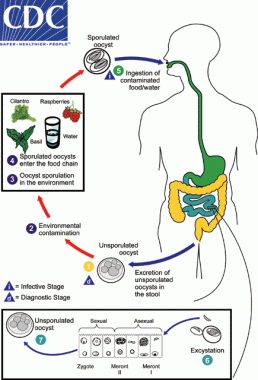
CDC Cyclospora_LifeCycle201

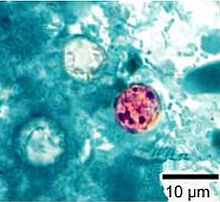
Cyclosporiasis is an intestinal illness caused by the parasite Cyclospora cayetanensis through ingestion of fecally contaminated food or water. Symptoms of cyclosporiasis might include watery diarrhea (most common), loss of appetite, weight loss, cramping, bloating, increased gas, nausea, and fatigue. Typically, increased numbers of cases are reported in the United States during spring and summer; since the mid-1990s, outbreaks have been identified and investigated almost every year. Past outbreaks have been associated with various types of imported fresh produce (e.g., basil, cilantro, and raspberries) (1). There are currently no validated molecular typing tools* to facilitate linking cases to each other, to food vehicles, or their sources. Therefore, cyclosporiasis outbreak investigations rely primarily on epidemiologic data.

The 2018 outbreak season is noteworthy for multiple outbreaks associated with different fresh produce items and the large number of reported cases. Two multistate outbreaks resulted in 761 laboratory-confirmed illnesses. The first outbreak, identified in June, was associated with prepackaged vegetable trays (containing broccoli, cauliflower, and carrots) sold at a convenience store chain in the Midwest; 250 laboratory-confirmed cases were reported in persons with exposures in three states (illness onset mid-May–mid-June) (2). The supplier voluntarily recalled the vegetable trays (3). The second multistate outbreak, identified in July, was associated with salads (containing carrots, romaine, and other leafy greens) sold at a fast food chain in the Midwest; 511 laboratory-confirmed cases during May–July occurred in persons with exposures in 11 states who reported consuming salads (4). The fast food chain voluntarily stopped selling salads at approximately 3,000 stores in 14 Midwest states that received the implicated salad mix from a common processing facility (5). The traceback investigation conducted by the Food and Drug Administration (FDA) did not identify a single source or potential point of contamination for either outbreak.

USA – Statement from FDA Commissioner Scott Gottlieb, M.D., on the FDA’s ongoing efforts to prevent foodborne outbreaks of Cyclospora

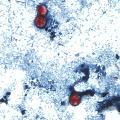
FDA 220px-Cyclospora_cayetanensis_stained

The safety of the American food supply is one of the U.S. Food and Drug Administration’s highest priorities. A key part of our work in this space focuses on implementing the principles and measures of the FDA Food Safety Modernization Act (FSMA). The actions directed by FSMA are designed to prevent foodborne illness and food safety problems from happening.

As part of these efforts, we conduct surveys that involve collecting a robust sample of certain food commodities available in the U.S. marketplace to monitor for the presence of foodborne pathogens. Over time, the FDA has increased its surveillance sampling efforts. We’ve also advanced new technology for pursuing these efforts and expanded the list of foodborne pathogens that the FDA monitors. Owing to these efforts, including a new FDA laboratory testing method, we’ve recently been able to add screening for Cyclospora – a parasite that causes intestinal infection after people ingest something, such as fresh or uncooked produce, or water that was contaminated with human waste – to the list of foodborne pathogens that we can routinely test for in appropriate commodities.

The availability of new testing methods for Cyclospora played an important role in helping the FDA identify a number of positive samples this summer. We detected Cyclospora in domestically grown cilantro that was tested as part of an ongoing sampling assignment of herbs. This cilantro sample has not been linked to any illnesses, but it was the first time we identified Cyclospora in any domestically grown produce item.  Our domestic oversight efforts will evolve to confront this new risk.

This year has been notable for the number of cyclosporiasis cases reported by state and local health departments. Our partners at the Centers for Disease Control and Prevention (CDC) today announced that 2,173 cases of domestically acquired cyclosporiasis have been recorded this spring and summer as of Sept. 12. Although this case count represents a significant increase from our previous experience with this parasite over the last several years, some of this increase is likely the result of improved public health monitoring for human illness, including better diagnostic tests.

Many of this year’s illnesses with Cyclospora are linked to two very large produce-associated outbreaks that we announced over the last several months. One of these outbreaks occurred in the spring. It resulted in 250 illnesses in four states and was linked to Del Monte vegetable trays containing broccoli, cauliflower, and carrots that were sold mostly in convenience stores in the Upper Midwest. Our traceback efforts to determine the source of the contamination indicate that the ingredients could have come from either domestic or imported sources. While our findings were not conclusive regarding the source, we were able to work with Del Monte to voluntarily recall the vegetable trays to limit the extent of illness and on Sept. 6, the FDA and CDC declared this outbreak over.

The second outbreak occurred this summer when 511 Cyclospora illnesses were reported by 16 states. Most of these illnesses occurred in the Midwest. This outbreak was linked to McDonald’s salads sold in 14 states in the Midwest that contained a romaine lettuce and carrot mix supplied by Fresh Express. The FDA worked with McDonald’s to quickly remove implicated salad from the stores. Testing conducted by the FDA identified the parasite in an unopened package of the bagged salad mix, supporting epidemiologic evidence that the salad mix is the source of the outbreak. Fresh Express took the additional precautionary step of recalling lots of romaine lettuce outside the positive lot contained in the salad mix. On Sept. 12, the FDA and CDC announced that this outbreak had ended.

Our experts worked with both McDonald’s and Fresh Express to trace the bagged salad mix ingredients back to where they were grown. We found that the products came from primarily domestic growers. During our investigation, two samples of domestically grown romaine lettuce were also found to be positive for Cyclospora even though they were not sourced from locations associated with the lettuce that was linked to this outbreak. None of the romaine lettuce associated with these positive test results for Cyclospora went into the marketplace and all of the produce suspected of being contaminated was destroyed, preventing additional Cyclospora illnesses from occurring. However, these findings are important as they represent the second time that Cyclospora has been identified in produce grown in the U.S.

Although these two outbreaks are large, together they account for less than half of all domestically acquired Cyclospora cases reported to CDC in 2018.  As noted by CDC, smaller clusters of illness have also been identified and investigations to date have found them to be epidemiologically linked to consumption of basil and cilantro in Mexican-style restaurants. These clusters are similar to clusters of Cyclospora seen in previous years that were traced to imported herbs although our investigation into the source of the current illnesses is ongoing. That said, our market survey of fresh herbs did identify Cyclospora earlier this summer in cilantro offered for import from two producers in Mexico. In response to that finding, the FDA refused entry for these shipments and took action to prevent contaminated cilantro from those firms from entering the U.S. market.

The discovery of Cyclospora in both domestic and imported produce raise both old and new concerns. They underscore the importance of the FDA’s surveillance activities to better define risks, like investigating why different product types like vegetable trays are being linked to Cyclospora outbreaks, and how widespread Cyclospora may be in the U.S. They also stress the need to broaden the tools, like import alerts, that we have up to this point used to prevent Cyclospora illnesses in the U.S. to also include actions that are more appropriate for addressing domestic contamination events.

The findings also highlight the significance of continuing to implement the provisions of the Produce Safety Rule at home and abroad. We must continue to put in place science-based measures to prevent microbial contamination from occurring, and work with our state and foreign partners to implement the Produce Safety Rule. We’ve been working closely with the National Association of State Departments of Agriculture and our state partners to, among other things, train federal and state regulators who will conduct inspections slated to begin next spring, develop inventories of farms that are covered by the rule, put in place the Produce Safety Network to support the states and their farming communities regionally, conduct On Farm Readiness Reviews to help farmers assess their preparedness to implement the Produce Safety Rule, and continue training opportunities for the farming community. All of these efforts are part of our commitment to working every day to assure the American public of the safety of the foods you and your family purchase and consume.

The U.S. has one of the safest food supplies in the world. But we also recognize that there is more that we can do when we have new findings like we’ve seen with Cyclospora. New risks will continue to emerge. Our system needs to be rigorous, nimble, and proactive in order to confront new challenges.

I want to reinforce to consumers that it’s our goal to figure out how these outbreaks happened. We take this obligation very seriously. That’s, in part, why we are intervening early. And it’s why we’ll be communicating regularly with the public to provide information and updates on all of the outbreaks we work on.

I remain committed to strengthening our work on outbreak investigations — and to applying the FDA’s food safety expertise to protect American families and keep them safe both now and in the future. We’ll provide more updates as our investigations continue, especially when we have actionable information for consumers.

The FDA encourages consumers with questions about food safety to Submit An Inquirydisclaimer icon to the agency, or to visit www.fda.gov/fcic for additional information.

The FDA, an agency within the U.S. Department of Health and Human Services, protects the public health by assuring the safety, effectiveness, and security of human and veterinary drugs, vaccines and other biological products for human use, and medical devices. The agency also is responsible for the safety and security of our nation’s food supply, cosmetics, dietary supplements, products that give off electronic radiation, and for regulating tobacco products.

RASFF Alerts – Histamine -Chilled Yellowfin Tuna – Skipjack Tuna – Chilled Tuna

RASFF-Logo

RASFF-foodborne outbreak caused by histamine (1358; 1565; 1739 mg/kg – ppm) in chilled yellowfin tuna (Thunnus albacares) from Sri Lanka in Italy

RASFF-histamine (466 mg/kg – ppm) in frozen skipjack tuna (Euthynnnus pelamis) from Vietnam in Spain

RASFF-histamine (259 mg/kg – ppm) in chilled tuna from Italy in France

USA – FDA Investigation of Multistate Outbreak of Cyclospora Illnesses Linked to Del Monte Vegetable Trays Ends

FDA cyclo

The FDA, CDC, along with state and local officials investigated a multi-state outbreak of cyclosporiasis illnesses associated with Del Monte vegetable trays recalled from Kwik Trip/Kwik Star locations in the United States.

Update – September 6, 2018

As of September 6, 2018, a total of 250 laboratory-confirmed cases of Cyclospora infection were reported in people who reportedly ate recalled pre-packaged Del Monte vegetable trays. CDC reports that the numbers of reported cases of cyclosporiasis in the United States have returned to baseline levels.

FDA evaluated and reviewed the distribution and supplier information for each component of the recalled vegetable trays as part of the traceback investigation. The investigation did not identify a single source or potential point of contamination for any of the items that comprised the recalled vegetable trays. The traceback investigation is complete.

Recommendations

Consumers who have symptoms of cyclosporiasis should contact their health care provider to report their symptoms and receive care.

USA – FDA Investigated Multistate Outbreak of Salmonella Infections Linked to Hy-Vee Spring Pasta Salad

FDA 

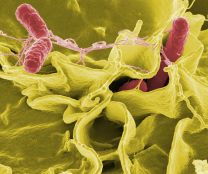
Salmonella

The U.S. Food and Drug Administration, along with the Centers for Disease Control and Prevention (CDC) and state and local partners, investigated a multi-state outbreak of Salmonella illnesses linked to Spring Pasta Salad sold at Hy-Vee locations in Iowa, Illinois, Kansas, Minnesota, Missouri, Nebraska, South Dakota, and Wisconsin.

Update – September 5, 2018

On September 5, 2018, the investigational activities related to this outbreak concluded.