Category Archives: foodborne outbreak

Research – CEO of seafood firm stresses Listeria control measures

Food Safety News

The chief executive officer of a Norwegian company linked to a Listeria outbreak has insisted it takes comprehensive action to tackle the pathogen.

Comments from Henning Beltestad, CEO of Lerøy Seafood Group, come after scrutiny of the Lerøy Midt slaughterhouse and the Norwegian Food Safety Authority’s (Mattilsynet) follow-up on Listeria control.

Citing a notification to the company from the Norwegian Food Safety Authority, Norwegian broadcaster NRK said Listeria had been detected 700 times in the production environment at the salmon slaughterhouse from August 2022 to November 2023.

“In our operations, we have always focused on minimizing the occurrence of Listeria and providing accurate and comprehensive information to our customers and public authorities. We have an integrated value chain for salmon production, which gives us the best conditions to ensure safe and healthy products for consumers,” said Beltestad.
USA – Bellevue Ihop linked to Salmonella Outbreak

Food Poison Journal

Seattle & King County Public Health announced that three individuals fell ill due to a Salmonella outbreak linked to the IHOP restaurant located at 14747 NE 20th St, Bellevue, WA. The illnesses occurred between October 23 and December 23, 2023, and two people required hospitalization. No deaths were reported. This investigation is now completed.

Laboratory testing confirmed all three cases as Salmonella infections. Further testing revealed that all three cases were infected with the same strain of Salmonella, as determined by genetic fingerprinting (whole genome sequencing or WGS) at the Washington State Public Health Laboratory.

Research – Characteristics of Gastroenteritis Outbreaks Investigated in Singapore: 2018–2021

MDPI

Abstract

There is a need to study the characteristics of outbreaks via Singapore’s outbreak surveillance system to understand and identify the gaps in food safety for targeted policy interventions due to the increasing trend in gastroenteritis outbreaks and consequential increase in foodborne-related deaths and economic burden on public health systems worldwide. A total of 171 gastroenteritis outbreaks were investigated in Singapore from January 2018 to December 2021. This study analyzed the annual trend of investigated gastroenteritis outbreaks, the proportion of outbreaks by implicated sources of food, and the proportion of the type of pathogens identified from human cases, food samples, and environmental swabs collected from outbreak investigations. Among the foodborne gastroenteritis outbreaks (n = 121) investigated in Singapore, approximately 42.1% of the outbreaks had food prepared by caterers, 14.9% by restaurants, and 12.4% had food prepared by in-house kitchens. Clostridium perfringens and Salmonella were the most common causative pathogens in foodborne outbreaks throughout the analysis period. The food samples and environmental swabs collected were mostly detected for Bacillus cereus. Norovirus was the most common causative pathogen in non-foodborne outbreaks and was mainly attributable to preschools. This highlights the importance of monitoring and educating the catering industry and preschools to prevent future outbreaks.

EFSA – Zoonoses, foodborne outbreaks and antimicrobial resistance guidance for reporting 2023 data

EFSA

This technical report provides guidance for reporting countries on how to submit their isolate‐based quantitative antimicrobial resistance data, and data on the prevalence of zoonoses and microbiological agents and contaminants in food, food‐borne outbreaks, animal populations and disease status. To collect these data, EFSA has created the Data Collection Framework (DCF) application. This report includes data dictionaries to guide the reporting of information derived from 2023 under Directive 2003/99/EC, Regulation (EU) 2017/625, Commission Implementing Regulation (EU) 2019/627 and Commission Implementing Decision (EU) 2020/1729. The objective is to explain in detail the individual data elements of the EFSA data models that are to be used for XML data submission through the DCF. In particular, it explains the data elements to be reported, including information about the data type, a reference to the list of permitted terms and any additional business rules or requirements that may apply.

Over 100 Cruise Passengers Ill on Cunard Operated Ship – Norovirus ?

Cruisehive

An outbreak has struck Queen Victoria, a Cunard Line ship, affecting over 100 passengers and crew members during its current 111-night voyage from Hamburg to Sydney. Health officials are investigating the cause, with symptoms of diarrhea and vomiting.

While the causative agents of the outbreak remain unidentified, norovirus is a common illness on cruise ships, as well as workplaces, schools, and other crowded areas. Characterized by gastrointestinal symptoms, norovirus is highly contagious and can spread quickly in enclosed environments like ships.

USA – FDA – Core Outbreak Investigation Table – Investigations of Foodborne Illness Outbreaks

FDA

What’s New

  • For the outbreak of Listeria monocytogenes (ref #1214) in a not yet identified food, FDA has initiated traceback, an onsite inspection, and sample collection and analysis.
  • For the outbreak of Listeria monocytogenes (ref #1205) in an unidentified food, the outbreak has ended, and FDA’s investigation has closed.
  • For the investigation of elevated lead levels in cinnamon applesauce pouches (ref # 1198) the complaints/adverse event reports in the advisory were updated. Refer to the advisory for additional information. The advisory is also available en español (Spanish).
  • For the outbreak of Listeria monocytogenes (ref #989) in peaches, plums and nectarines, the advisory was updated on 1/30/2024. The outbreak has ended, and FDA’s investigation has closed.

USA – Conoco View Dairy Raw Milk Campylobacter Outbreak in PA

Food Poisoning Bulletin

A Conoco View Dairy raw milk Campylobacter outbreak in Pennsylvania has sickened at least 11 people, according to the Pennsylvania Department of Agriculture. Officials are warning consumers to immediately discard all of this milk.

The Department ran tests after 11 reports of illness in December 2023 and January 2024 were received. Campylobacter contamination was confirmed in the dairy’s products.

The press release states that, “While the source of the bacteria is clear, every specific production date could not be pinpointed. All products, including those in consumers’ freezers, should be discarded.”

USA – Outbreak Investigation of Listeria monocytogenes: Peaches, Plums, & Nectarines (November 2023)- Is Over

FDA

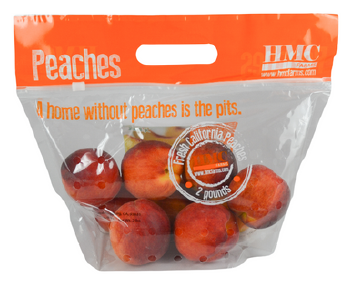
HMC Peaches

January 30, 2024

The FDA and CDC, in collaboration with state and local partners, investigated an outbreak of Listeria monocytogenes infections linked to recalled peaches, plums, and nectarines (stone fruit).

As part of this investigation, FDA initiated an inspection and collected environmental samples from the facility that packed the recalled stone fruit. Two environmental sub-samples collected from the facility were positive for Listeria monocytogenes. Whole Genome Sequencing (WGS) analysis confirmed that the strain of Listeria found in the positive sub-samples matched the same strain of Listeria making people sick in this outbreak.

As of January 30, 2024, CDC announced that the outbreak is over. CDC reports a total of 11 illnesses in seven states. There has been a total of 10 hospitalizations and one death attributed to listeriosis. The last specimen collection date was August 16, 2023. FDA’s investigation is complete.

USA – Nearly 600 with Salmonella, 225 hospitalized and 15 deaths linked to Cantaloupe

Food Poison Journal

In the United States a total of 407 people infected with one of the outbreak strains of Salmonella were reported from 44 states: Of 362 people with information available, 158 (44%) were hospitalized. Six deaths were reported.

In Canada a total, 190 laboratory-confirmed cases of Salmonella Soahanina, Sundsvall, Oranienburg, and Newport illness were linked to this outbreak. Sixty-eight (68) individuals were hospitalized, and nine deaths were reported.

EU – Zoonoses, foodborne outbreaks and antimicrobial resistance guidance for reporting 2023 data

EFSA

This technical report provides guidance for reporting countries on how to submit their isolate-based quantitative antimicrobial resistance data, and data on the prevalence of zoonoses and microbiological agents and contaminants in food, food-borne outbreaks, animal populations and disease status. To collect these data, EFSA has created the Data Collection Framework (DCF) application. This report includes data dictionaries to guide the reporting of information derived from 2023 under Directive 2003/99/EC, Regulation (EU) 2017/625, Commission Implementing Regulation (EU) 2019/627 and Commission Implementing Decision (EU) 2020/1729. The objective is to explain in detail the individual data elements of the EFSA data models that are to be used for XML data submission through the DCF. In particular, it explains the data elements to be reported, including information about the data type, a reference to the list of permitted terms and any additional business rules or requirements that may apply.