Category Archives: foodborne outbreak

USA – Salmonella Outbreak – Arapahoe County Fair

Food Poisoning Bulletin 

Salmonella kswfoodworld

Image CDC Enter a caption

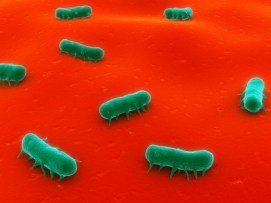
A Salmonella outbreak among people who attended the Arapahoe County Fair in Colorado has sickened at least seven people, according to the Tri-County Health Department, Arapahoe County, and the Colorado Department of Public Health and Environment. Those sickened attended the fair, or 4-H events associated with the fair, from July 21 to July 29, 2018.

USA -FDA Investigating Multistate Outbreak of E. coli O157:H7 Infections Linked to Romaine Lettuce from Yuma Growing Region

FDA  


Update

On July 31 and August 1, 2018, the FDA participated in a meeting of the Leafy Greens Food Safety Task Force that was formed in response to the serious outbreak of E. coli O157:H7 associated with romaine lettuce that occurred earlier this year. During the meeting FDA shared preliminary hypotheses from the Environmental Assessment in Yuma to facilitate conversations with state and local officials, industry and local growers on the hypotheses and associated actions necessary to prevent such an outbreak from occurring again.

As FDA has previously stated, samples of canal water have tested positive for the outbreak strain of E. coli. FDA continues to consider that contaminated water coming into contact with produce, either through direct irrigation or other means, is a viable explanation for the pattern of contamination. But other hypotheses were discussed as well. FDA notes that the canal is close to a Concentrated Animal Feeding Operation (CAFO), a facility with a large number of cattle on the premises. The CAFO can hold in excess of 100,000 head of cattle at any one time and the FDA traceback information showed a clustering of romaine lettuce farms nearby.

Our experts continue to work on examining potential links between the CAFO, adjacent water, and geologic and other factors that may explain the contamination and its relationship to the outbreak. Additional sampling activities will be conducted to further explore and narrow down hypotheses in the near future. Our findings will be detailed in a finalized environmental assessment report.

We urge other government and non-government entities, produce growers in the region, and those engaged in managing the canal systems to work with FDA and marshal and deploy resources to achieve our collective food safety goal. Broad engagement from the surrounding community is critical to developing and implementing remediation measures to reduce the potential for another outbreak. We believe local in-depth knowledge and actions are critical in helping resolve this issue in order to protect public health.

The Environmental Assessment report will be made publicly available when complete.

USA -Norovirus sickens dozens in Transylvania County

Outbreak News Today  


norovirus-1080x655

Transylvania Public Health Enter a caption

Transylvania Public Health has received more than 70 cases of nausea, vomiting and diarrhea reported by medical providers, as well as phone calls reporting similar symptoms in more than 200 people since Tuesday, July 31.

Officials have received confirmatory laboratory tests from the N.C. State Laboratory of Public Health. Of those people who were tested by their medical providers, a majority were positive for norovirus.

It is believed the outbreak was caused by being exposed to a highly-contagious virus in a public place. While health officials have not pinpointed a source,  local media report the McDonald’s in Brevard reopened Friday after closing voluntarily to deep clean the restaurant in the middle of the food illness outbreak.


South Africa – 216 Dead with 1,060 with Listeria in South Africa – People still getting sick from Polony

Food Poison Journal

NICD updated this Listeria Outbreak at the end of July.  Of note, the numbers of ill have continued to drop following the recall of Tiger Brands Enterprise Foods polony in March. However, it appears that some of the “recalled” product is still being consumed.

1,060 laboratory-confirmed cases have been reported from 01 January 2017 to 17 July 2018. The number of new cases reported each week has decreased since the implicated products were recalled on 04 March 2018 with no new cases of listeriosis reported during the week prior to release of this sitrep (Figure 1). Neonates ≤28 days of age are the most affected age group (42%, 443/1 060), followed by adults aged 15 – 49 years of age (32%, 334/1 060) – Figure 2. Most cases have been reported from Gauteng Province (58%, 614/1 060), followed by Western Cape (13%, 136/1 060) and KwaZulu-Natal (8%, 83/1 060) provinces (Table 1). Final outcome (i.e. death or discharge) is known for 76% (806/1 060) of total cases to date; 27% (216/806) with known outcome died.


RASFF Alert -Foodborne Outbreak suspected Salmonella – Infant Formula

kswfoodworld food safety poisoning

RASFF-foodborne outbreak suspected (salmonellosis) to be caused by infant formula from Ireland in France

Europe – Multi-country outbreak of Salmonella Agona infections possibly linked to ready-to-eat food

ECDC 


A multi-country outbreak of Salmonella enterica subspecies enterica serovar Agona (S. Agona) is under investigation in the European Union (EU), with cases retrospectively identified back to 2014. Overall, 147 outbreak cases have been reported by five EU countries: 122 cases since 1 January 2017, and 25 historical cases between 2014 and 2016. The United Kingdom is reporting most outbreak cases (129), with Finland (15), Denmark, Germany and Ireland (one case each) reporting the other cases. The Irish case was probably infected while visiting the United Kingdom.

The outbreak was first detected in the United Kingdom using whole genome sequencing (WGS). All S. Agona isolates from the five countries are genetically close with a maximum difference of 2 alleles from any other single isolate by core genome multilocus sequence typing scheme (cgMLST) using the ECDC Enterobase pipeline. The cases peaked in April 2017 and 2018. The close genomic relationship and the distinct seasonal spring peaks suggest that cases are part of an intermittent common source outbreak.

Seventeen S. Agona food isolates from 2018, detected in the United Kingdom, were found to be closely genetically related to the human strains. The food isolates were from cucumbers sampled during processing before and after washing (11 isolates) and ready to eat (RTE) food products containing cucumbers (six isolates). The contaminated food isolates were sampled in the United Kingdom at four plants owned by Company A and a Company C plant.

At present, there is insufficient epidemiological information available on the consumption of contaminated products by humans to support the microbiological evidence provided by the isolation of the outbreak strain in food. The epidemiological investigations in the other affected countries did not generate any strong hypothesis about the vehicle or source of infection.

Although the cucumbers used in all final contaminated products originated from Spain for a limited period (from November 2017 to April 2018), no connection between supply chains was identified: primary producers of cucumbers were different (producers A and B), and cucumbers were delivered to different processing companies through different distributors in the United Kingdom. The laboratory results for Salmonella in all cucumber samples, taken either at primary production level in Spain or during distribution to/within UK, were negative.

Based on the information available, the microbiological evidence suggests RTE products containing cucumbers as a possible vehicle of infection but so far it has not been possible to identify the specific point in the production chain where the contamination occurred.

Further investigations along the food chain are needed to identify the source of contamination. These should include collection of information about various production and processing stages for the RTE products implicated in this event, as well as thorough sampling and testing.

ECDC Link


Information -Surveillance for Foodborne Disease Outbreaks — United States, 2009–2015

CDC

Abstract

Problem/Condition: Known foodborne disease agents are estimated to cause approximately 9.4 million illnesses each year in the United States. Although only a small subset of illnesses are associated with recognized outbreaks, data from outbreak investigations provide insight into the foods and pathogens that cause illnesses and the settings and conditions in which they occur.

Reporting Period: 2009–2015

Description of System: The Foodborne Disease Outbreak Surveillance System (FDOSS) collects data on foodborne disease outbreaks, which are defined as the occurrence of two or more cases of a similar illness resulting from the ingestion of a common food. Since the early 1960s, foodborne outbreaks have been reported voluntarily to CDC by state, local, and territorial health departments using a standard form. Beginning in 2009, FDOSS reporting was made through the National Outbreak Reporting System, a web-based platform launched that year.

Results: During 2009–2015, FDOSS received reports of 5,760 outbreaks that resulted in 100,939 illnesses, 5,699 hospitalizations, and 145 deaths. All 50 states, the District of Columbia, Puerto Rico, and CDC reported outbreaks. Among 2,953 outbreaks with a single confirmed etiology, norovirus was the most common cause of outbreaks (1,130 outbreaks [38%]) and outbreak-associated illnesses (27,623 illnesses [41%]), followed by Salmonella with 896 outbreaks (30%) and 23,662 illnesses (35%). Outbreaks caused by Listeria, Salmonella, and Shiga toxin-producing Escherichia coli (STEC) were responsible for 82% of all hospitalizations and 82% of deaths reported. Among 1,281 outbreaks in which the food reported could be classified into a single food category, fish were the most commonly implicated category (222 outbreaks [17%]), followed by dairy (136 [11%]) and chicken (123 [10%]). The food categories responsible for the most outbreak-associated illnesses were chicken (3,114 illnesses [12%]), pork (2,670 [10%]), and seeded vegetables (2,572 [10%]). Multistate outbreaks comprised only 3% of all outbreaks reported but accounted for 11% of illnesses, 34% of hospitalizations, and 54% of deaths.

Interpretation: Foodborne disease outbreaks provide information about the pathogens and foods responsible for illness. Norovirus remains the leading cause of foodborne disease outbreaks, highlighting the continued need for food safety improvements targeting worker health and hygiene in food service settings. Outbreaks caused by Listeria, Salmonella, and STEC are important targets for public health intervention efforts, and improving the safety of chicken, pork, and seeded vegetables should be a priority.

Public Health Action: The causes of foodborne illness should continue to be tracked and analyzed to inform disease prevention policies and initiatives. Strengthening the capacity of state and local health departments to investigate and report outbreaks will assist with these efforts through identification of the foods, etiologies, and settings linked to these outbreaks.

RASFF Alert -Foodborne Outbreak -Chicken Fried Rice with Mushrooms

kswfoodworld food safety poisoning

RASFF -consumer recall of frozen chicken fried rice with mushrooms from France in relation to a multi-country foodborne outbreak  in France

USA – Multidrug-resistant raw turkey Salmonella outbreak: 90 ill in 26 states

CIDRAP kswfoodworld salmonella

Federal and state health officials who are investigating a multistate outbreak of multidrug-resistant Salmonella linked to a variety of raw turkey products and based on detection in live birds are warning that the strain might be widespread in the turkey industry.

So far, 90 infections from Salmonella Reading have been reported in 26 states, according to an announcement today from the US Centers for Disease Control and Prevention (CDC).

Salmonella outbreaks have been linked to turkey products in the past, especially ground turkey. In 2011 a Salmonella Heidelberg outbreak linked to ground turkey sickened at least 136 people in 34 states. The same year, a Salmonella Hadar outbreak linked to turkey burgers resulted in at least 12 infections in 10 states. The strains in both outbreaks were resistant to several antibiotics.

The federal government doesn’t classify Salmonella as an adulterant in meat, but food safety groups have called for the US Department of Agriculture (USDA) to classify certain antibiotic-resistant strains as adulterants.

RASFF Alert – foodborne outbreak caused by Salmonella in frozen vacuum-packed pork tenderloins

kswfoodworld food safety poisoning

RASFF-foodborne outbreak caused by Salmonella enterica ser. Typhimurium (in 2 out of 5 samples /25g) in frozen vacuum-packed pork tenderloins from Spain, via the Czech Republic in Slovakia