Category Archives: Foodborne Illness

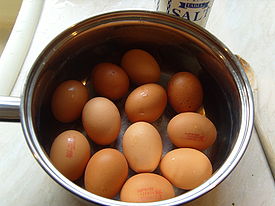
Thailand – 460 Sick – Hard Boiled Eggs – Salmonella

Bangkok Post

The number of students who have fallen ill from salmonella poisoning at a Chiang Mai school has risen to 460.

Health authorities say the students fell ill after eating three-day-old boiled eggs tainted with salmonella bacteria.

Dr Pornthep Siriwanarangsan, director-general of the Disease Control Department, said Chiang Mai Welfare School students became sick after eating donated eggs that were boiled three days previously and not reheated before they were consumed, allowing the bacteria to develop.

On Sunday evening, about 900 students of the school, located in Mae Rim district, ate chilli curry and donated boiled eggs at the cafeteria.

After the meal, 75 of the students became ill with headaches, high fever, nausea and diarrhoea.

The number of sick students increased to 460 yesterday, health authorities said.

FSAI – Mussel Recall – Possible Illness

FSAI

Mussels from Cromane Mussels trading as Skellig Seafoods, withdrawn due to a possible association with human illness

US Picnic 36 Sick – E.coli O157

E.coli Blog

As a result of eating food at a picnic at Neff’s Lawn Care in Germantown, at least 36 individuals have become ill. Of those, 9 have been hospitalized. Public Health – Dayton & Montgomery County is continuing an investigation into the cause of the foodborne outbreak. Estimates are that as many as 200-300 people may have attended an annual customer appreciation picnic.

Public Health is continuing to gather information through interviews with those who became ill and those who prepared the food. Investigators are also looking at food sources, food handling and storage practices, food temperature controls, and the potential of cross contamination of the food.

RASFF and Other Alerts – Mould, Listeria, Salmonella,Aflatoxins, STEC, Campylobacter

RASFF – Mould in Cheddar Cheese in Denmark sourced in the UK.

RASFF – Salmonella in Roasted Soya Beans in Belgium.

RASFF – Campylobacter in Fresh Whole Chicken in Denmark sourced in Germany.

RASFF – Salmonella in Galacto Oligosaccharide in Netherlands sourced in South Korea

RASFF – STEC E.coli Bovine Meat in Belgium

RASFF – Aflatoxins in Groundnuts in Netherlands sourced in Nicaragua.

Denmark – Undesirable bacteria in Yoghurt

Denmark – Mould on Cheese products.

Germany – Salmonella in Teewurst Sausage

FSA – Bag it Up – Food Safety

FSA

The Food Standards Agency in Wales is reminding consumers how they can protect their shopping when packing raw and ready-to-eat food products to reduce the risk of cross-contamination.

Information published today by the Welsh Government shows there has been a 96% reduction in the use of carrier bags in some retail sectors since charges for plastic bags were introduced in Wales in October 2011.

With more and more consumers reusing carrier bags, either for sustainability or as a result of charging, there are some important tips to help prevent bacteria spreading to ready-to-eat food.

  • Keep raw meat and fish separate from ready-to eat-foods, in separate bags.
  • If your bags are re-useable, keep one or two just for use with raw meat and fish. Don’t use them for ready-to-eat foods.
  • Re-useable bags (and single use carrier bags) should be disposed of if there’s been any spillage of raw meat juices.

RASFF Alerts – Salmonella, Listeria, Histamine

RASFF – Salmonella in Chicken Breast Filets in Denmark sourced in Poland

RASFF – Histamine in Chilled Tuna in France sourced in Spain.

RASFF – Listeria in Chilled Smoked Salmon in Italy sourced in Denmark.

German Site – Listeria in Mainzer Cheese, Salmonella in Smoked Ham


US – Botulism Outbreak

Food Safety News

Three Oregonians were hospitalized with boutlism after eating at a private barbecue, according to state health officials. 

The Clostridium botulinum bacteria that infected these individuals is thought to have come from home-canned foods served at the event, held in Deschutes County. All three victims were residents of the county, located in central Oregon.     
 
The public should see this outbreak as an example of the dangers of improper home canning, warns the agency.

US – Recall Cheese Expanded – Listeria monocytogenes

FDA

New York State Agriculture Commissioner Darrel Aubertine today warned consumers in the metropolitan New York area, including Queens, the Bronx, and Brooklyn, to not consume certain cheese products made by Mexicali Cheese Corp. located at 91-52 87th Street in Woodhaven, New York due to possible Listeria contamination.  This alert, originally issued on Friday, June 29, 2012, has been expanded to include two additional product names that are noted below.

The product is packaged in a rigid 14 oz. plastic tub that displayed the plant number 36-0128 and a code of 071512.  This consumer warning affects all packages with this code.  The product was packaged in containers bearing the following product names: 

  • Mexicali Queso Fresco Mexicano, Mexican Style Fresh Cheese;
  • Acatlan Queso Fresco, Fresh Cheese;
  • Mi Quesito Mexicano, Mexican Cheese; and 
  • Quesillo Ecuatoriano, Ecuadorian Style Cheese.

A routine sample of the cheese, taken by an inspector from the Division of Milk Control and Dairy Services on June 20, 2012, was subsequently tested by the Department’s Food Laboratory and discovered to be contaminated with Listeria monocytogenes. On June 25, 2012 the manufacturer was notified of a preliminary positive test result and voluntarily recalled the product from their customers. Test results were confirmed on June 29, 2012.  Subsequent samples will be taken to verify that the product is free of pathogens.

Listeria monocytogenes is an organism which can cause serious and sometimes fatal infections in young children, frail, or elderly people and others with weakened immune systems. Although healthy persons may suffer only short-term symptoms such as high fever, severe headaches, stiffness, nausea, abdominal pain and diarrhea, Listeria can cause miscarriages and stillbirths among pregnant women.

To date, no illnesses are known by the Department to be associated with this product.

RASFF Alerts – Histamine/Listeria/Salmonella

RASFF – Cheese from Italy – Listeria monocytogenes

RASFF – Yellow Fin Tuna – Histamine in the UK product from Vietnam

RASFF – Salmonella in Oats in Norway sourced in Sweden

US – Vibrio Outbreak – Raw Undercooked Shellfish

Food Poisoning Bulletin 

The Missouri Department of Health and Senior Services (DHSS) has announced there is an outbreak of Vibriosis in eastern Missouri. The illnesses are caused by Vibrio parahaemolyticus, which is usually associated with eating raw or undercooked shellfish, particularly oysters.

Three cases of the illnesses have been identified June 27 and 28, 2012. Risk factors for acquiring this disease include eating raw or undercooked oysters, clams, mussels, or crabs; or cross-contamination of other foods or surfaces with raw seafood. The bacteria lives in brackish water and grows easily in warm water during the summer months.