Category Archives: foodborne disease

Research – Behavior of 11 Foodborne Bacteria on Whole and Cut Mangoes var. Ataulfo and Kent and Antibacterial Activities of Hibiscus sabdariffa Extracts and Chemical Sanitizers Directly onto Mangoes Contaminated with Foodborne Bacteria

Journal of Food Protection

The behavior of foodborne bacteria on whole and cut mangoes and the antibacterial effect of Hibiscus sabdariffa calyx extracts and chemical sanitizers against foodborne bacteria on contaminated mangoes were investigated. Mangoes var. Ataulfo and Kent were used in the study. Mangoes were inoculated with Listeria monocytogenes, Shigella flexneri, Salmonella Typhimurium, Salmonella Typhi, Salmonella Montevideo, Escherichia coli strains (O157:H7, non-O157:H7 Shiga toxin–producing, enteropathogenic, enterotoxigenic, enteroinvasive, and enteroaggregative). The antibacterial effect of five roselle calyx extracts (water, ethanol, methanol, acetone, and ethyl acetate), sodium hypochlorite, colloidal silver, and acetic acid against foodborne bacteria were evaluated on contaminated mangoes. The dry extracts obtained with ethanol, methanol, acetone, and ethyl acetate were analyzed by nuclear magnetic resonance spectroscopy to determine solvent residues. Separately, contaminated whole mangoes were immersed in five hibiscus extracts and in sanitizers for 5 min. All foodborne bacteria attached to mangoes. After 20 days at 25 ± 2°C, all foodborne bacterial strains on whole Ataulfo mangoes had decreased by approximately 2.5 log, and on Kent mangoes by approximately 2 log; at 3 ± 2°C, they had decreased to approximately 1.9 and 1.5 log, respectively, on Ataulfo and Kent. All foodborne bacterial strains grew on cut mangoes at 25 ± 2°C; however, at 3 ± 2°C, bacterial growth was inhibited. Residual solvents were not detected in any of the dry extracts by nuclear magnetic resonance. Acetonic, ethanolic, and methanolic roselle calyx extracts caused a greater reduction in concentration (2 to 2.6 log CFU/g) of all foodborne bacteria on contaminated whole mangoes than the sodium hypochlorite, colloidal silver, and acetic acid. Dry roselle calyx extracts may be a potentially useful addition to disinfection procedures of mangoes.
USA – More Ill with Salmonella Linked to Rose Acre Farms’ Eggs

Food Poison Journal

Consumers, restaurants, and retailers should not eat, serve, or sell recalled eggs produced by Rose Acre Farms’ Hyde County farm. Throw them away or return them to the place of purchase for a refund.

  • These eggs were sold under multiple brand names, including Coburn Farms, Country Daybreak, Food Lion, Glenview, Great Value, Nelms, Publix, Sunshine Farms, and Sunups.
  • Check egg cartons for the following numbers: P-1065 (the plant number) and another set of numbers between 011 and 102 (the Julian date), or, for Publix and Sunups egg cartons, plant number P-1359D and Julian date 048A or 049A with Best By dates of APR 02 and APR 03.
  • Visit the FDA website for a list of recalled products.

USA – Salmonella-Contaminated Eggs Sicken 35 People Across Nine States

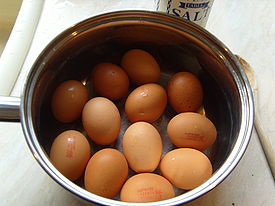
Food Logistics 275px-Boiled_eggs_in_saucepan_by_Sarah_McCulloch

A salmonella outbreak attached to more than 200 million eggs has sickened 35 people, spreading across nine states.

NBC reports that 35 people across nine states have been sickened by a salmonella outbreak tied to a recall of more than 200 million eggs.

The eggs have been traced to egg-based producer Rose Acre Farms in Hyde County, North Carolina. Last month, the Centers for Disease Control and Prevention said that 23 people were sickened by the eggs, but since then the number has jumped to 35.

The 12 people that fell ill recently were in five different states along the East Coast.

According to NBC, the eggs were sold under different brands in a variety of retailers and restaurants. According to the CDC, 11 people have been hospitalized but no deaths have been reported.

USA – Why Are There So Many HUS Complications in the E. coli O157:H7 Romaine Outbreak? An Attorney Answers

Food Poisoning Bulletin 

The hospitalization rate and hemolytic uremic syndrome case count in the deadly E. coli O157:H7 HUS outbreak that is linked to romaine lettuce has been very high. Typically, in an E. coli outbreak, about 30% of patients are hospitalized, and about 5 to 10% develop hemolytic uremic syndrome (HUS).

But in this outbreak, the hospitalization rate is almost 50%, and 13% of those patients have developed HUS. Why is the hospitalization rate and the HUS rate so high in this particular outbreak?

Typically, the group most susceptible to developing HUS is children under the age of 5. The patient age range in this outbreak is from 1 to 88. There could be quite a few children sick, which may explain the high HUS rate.

Another explanation for the high HUS rate and the high hospitalization rate is the type of toxins the E. coli bacteria are producing. Shiga toxin-producing E. coli bacteria make two types of those toxins: Stx1 and Stx2. Unfortunately, the bacteria in this outbreak are making Stx2, which causes more damage to the body.

Another factor could be that the lettuce was contaminated with an unusually high number of bacteria. It takes just 10 E. coli bacteria to make someone sick. More bacteria can release more toxins and cause more damage.”

USA – 54 sick from Salmonella at Chicago’s Cook County Jail

Barf Blog

At least five detainees have gotten sick in an apparent salmonella outbreak at a medium-security division of the Cook County Jail in Chicago.

Detainees at the jail’s Division 11, 3015 S. California Boulevard, “began experiencing symptoms of a gastrointestinal illness” last week, according to a statement from the Cook County Sheriff’s Office. Over the weekend, five cases of salmonella were confirmed among the 54 detainees reporting symptoms.

Two of the detainees were hospitalized for their symptoms, the sheriff’s office said. One has since been returned to the jail and the other was expected to be returned to the jail on Tuesday.


USA- FDA: Rodents, Filth Linked to Egg Recall

Quality Assurance Mag 

An inspection report released Thursday by the U.S. Food and Drug Administration indicates that the North Carolina farm linked to a multistate outbreak of Salmonella from contaminated eggs had an ongoing rodent infestation, unsanitary conditions and poor employee practices, CNN reported.

On April 13, Rose Acre Farms voluntarily recalled nearly 207 million eggs produced at its Hyde County farm in North Carolina that it believed were at risk of contaminated with Salmonella bacteria. Three days later, Cal-Maine Foods Inc. voluntarily recalled 280,800 eggs purchased from the same Rose Acre Farm.

Canada – CFIA – FDA – Norovirus Outbreak

FDA 

The U.S. Food and Drug Administration, along with the Centers for Disease Control and Prevention (CDC), the Public Health Agency of Canada, the Canadian Food Inspection Agency, and state and local partners, are investigating a multi-state outbreak of Norovirus illnesses that are linked to oysters.

What is the Problem and What is being Done About It?

The U.S. Food and Drug Administration is working with federal, state, and local officials regarding a norovirus outbreak linked to raw oysters from British Columbia, Canada. The FDA has confirmed that potentially contaminated raw oysters harvested in the south and central parts of Baynes Sound, British Columbia, Canada, were distributed to CA, IL, MA, and WA. It is possible that additional states received these oysters either directly from Canada or through further distribution within the U.S.

FDA and the states are conducting a traceforward investigation to determine where the raw oysters were distributed and ensure they’re removed from the food supply. Retailers should not serve raw oysters harvested from the following harvest locations (or landfiles) within Baynes Sound: #1402060, #1411206, #1400483, and #278757.

Oysters can cause food-related illness if eaten raw, particularly in people with compromised immune systems. Food contaminated with noroviruses may look, smell, and taste normal.

CFIA

Public Health Notice — Ongoing outbreak of norovirus and gastrointestinal illnesses linked to raw oysters

April 27, 2018 – Update

This notice has been updated to include additional cases of illness associated with this outbreak. In the last week, the Public Health Agency of Canada has seen a decrease in the number of cases being reported to the outbreak investigation team which indicates the outbreak may be slowing. The outbreak investigation remains active and findings to date have identified that most people who became sick were infected after consuming oysters that were harvested in the south and central parts of Baynes Sound, British Columbia. The investigation into a specific source of contamination impacting the shellfish farms in that area is ongoing.

Canada – Updated Food Recall Warning – Certain pork products recalled due to E. coli O157:H7

CFIA

Recall details

Ottawa, April 27, 2018 – The food recall warning issued on April 26, 2018 has been updated to include additional product information. This additional information was identified during the Canadian Food Inspection Agency’s (CFIA) food safety investigation.

Industry is recalling certain pork products from the marketplace due to possible E. coli O157:H7 contamination. Consumers should not consume and distributors, retailers and food service establishments, such as hotels, restaurants and cafeterias, should not sell or use the recalled products described below.

Recalled products

Brand Name Common Name Size Code(s) on Product UPC
Rimbey Foods Ltd. Sliced Pork Belly Variable Sold from February 19 up to and including April 27, 2018 Starts with 0 200118
Fuge Fine Meat Salchicha de Huacho Sausage 630 g All Best Before dates from May 3, 2018 up to and including May 26, 2018 None
Fuge Fine Meat Maple Sage Bratwurst Sausage 630 g All Best Before dates from May 3, 2018 up to and including May 26, 2018 None
Fuge Fine Meat DD Bratwurst Sausage 630 g All Best Before dates from May 3, 2018 up to and including May 26, 2018 None

RASFF Alert – Foodborne Outbreak – Salmonella – Fuet Sausage – France

kswfoodworld food safety poisoning

RASFF-foodborne outbreak caused by Salmonella (4, 5, 12:i:-) in fuet sausage from Spain in France

South Africa – 50 New Cases of Listeriosis Reported Since Product Recall

South AfricaAll Africa 

Fifty new cases of listeriosis have been reported since affected food products were recalled on March 4, according to the National Institute of Communicable Diseases (NICD).

Eight additional cases were reported last week while one case, that occurred in October 2017, was retrospectively reported, stated the NICD’s latest report.

Marler Blog – Full Report Link

A multisectorial incident management team (IMT) has been formed by the National Department of Health (NDoH) to strengthen co-ordination of outbreak response and strengthen health systems to prevent future outbreaks. Funding is being sourced.

 The number of cases of laboratory-confirmed listeriosis reported per week has decreased since the implicated products were recalled on 04 March 2018, with eight additional cases reported this week. Of the eight cases reported this week, one case occurred in October 2017 and was retrospectively reported.

 Since the recall, a total of 50 cases have been reported

a. Twenty-four (48%) were among neonates ≤28 days old

b. Three (6%) were among children age 1 month to 14 years old

 As of 17 April 2018, a total of 1 019 laboratory-confirmed listeriosis cases have been reported to NICD since 01 January 2017.