Category Archives: Food Virus

Hong Kong – Trade instructed to suspend importing and selling of raw oysters produced by Whitstable Oyster Company in UK – Norovirus

CFS

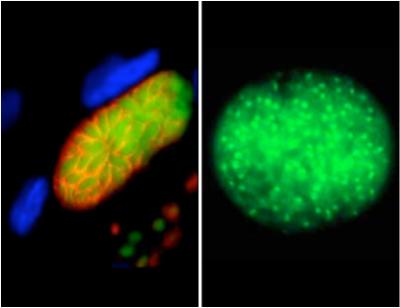
Food Borne Illness - Norovirus -CDC Photo

The Centre for Food Safety (CFS) of the Food and Environmental Hygiene Department today (July 6) instructed the trade to suspend the import of raw oysters produced by Whitstable Oyster Company in the United Kingdom (UK). The trade should also stop using or selling the product concerned immediately should they possess it.

A spokesman for the CFS said, “The CFS was notified by the Centre for Health Protection of the Department of Health of several food poisoning cases which involved consumption of raw oysters at one restaurant in Sha Tin and one restaurant in Causeway Bay. The CFS conducted investigations at the restaurants concerned and found that both restaurants had sold raw oysters from the Whitstable Oyster Company in the United Kingdom supplied by the same local supplier. As well, the CFS received a notification from the Food Standards Agency of the UK that raw oysters supplied by Whitstable Oyster Company in the UK were suspected to be contaminated with norovirus. For the sake of prudence, the CFS has immediately instructed the trade to suspend the import into and sale within Hong Kong of all raw oysters produced by Whitstable Oyster Company in UK.”

The CFS has also instructed the supplier and restaurants concerned to stop supplying and selling the affected raw oysters immediately, and is tracing the distribution of the affected product. The trade should also stop using or selling the product in question.

The spokesman pointed out that as oysters feed by filtering a large volume of seawater, pathogens (such as norovirus), chemical contaminants or natural toxins can accumulate in them if they are grown in or harvested from contaminated water. Regardless of the season or the region in which the oysters are harvested, consuming oysters, particularly raw or partially cooked ones, carries an inherent food safety risk. Susceptible groups, such as pregnant women, young children, the elderly and people with weakened immune systems or liver diseases, should avoid eating raw oysters.

The CFS will inform the British authorities and will also notify the local trade. It will continue to follow up on the incident and take appropriate action to safeguard food safety and public health. An investigation is ongoing.
USA – Concord Waffle House link in Hepatitis A scare

Food Poison Journal

Cabarrus Health Alliance (CHA) is investigating a case of Hepatitis A in a worker at the Waffle House located at 1010 Vinehaven Dr. NE, Concord, NC 28025, located on Exit 60 off Interstate 85.

Possible exposure may have occurred in persons that bought and ate food from the Vinehaven Dr. Waffle House on June 20 between 9 p.m. and 12 a.m. or June 21 between 12 a.m. and 7 a.m. If you believe that you purchased and ate food during this time period, you can receive a hepatitis A vaccine to prevent contracting the virus.

Research – Low-Temperature Virus vB_EcoM_VR26 Shows Potential in Biocontrol of STEC O26:H11

MDPI

Shiga toxin-producing Escherichia coli (STEC) O26:H11 is an emerging foodborne pathogen of growing concern. Since current strategies to control microbial contamination in foodstuffs do not guarantee the elimination of O26:H11, novel approaches are needed. Bacteriophages present an alternative to traditional biocontrol methods used in the food industry. Here, a previously isolated bacteriophage vB_EcoM_VR26 (VR26), adapted to grow at common refrigeration temperatures (4 and 8 °C), has been evaluated for its potential as a biocontrol agent against O26:H11. After 2 h of treatment in broth, VR26 reduced O26:H11 numbers (p < 0.01) by > 2 log10 at 22 °C, and ~3 log10 at 4 °C. No bacterial regrowth was observed after 24 h of treatment at both temperatures. When VR26 was introduced to O26:H11-inoculated lettuce, ~2.0 log10 CFU/piece reduction was observed at 4, 8, and 22 °C. No survivors were detected after 4 and 6 h at 8 and 4 °C, respectively. Although at 22 °C, bacterial regrowth was observed after 6 h of treatment, O26:H11 counts on non-treated samples were >2 log10 CFU/piece higher than on phage-treated ones (p < 0.02). This, and the ability of VR26 to survive over a pH range of 3–11, indicates that VR26 could be used to control STEC O26:H11 in the food industry. View Full-Text

Research – Occurrence of Human Enteric Viruses in Shellfish along the Production and Distribution Chain in Sicily, Italy

MDPI

Contamination of bivalve mollusks with human pathogenic viruses represents a recognized food safety risk. Thus, monitoring programs for shellfish quality along the entire food chain could help to finally preserve the health of consumers. The aim of the present study was to provide up-to-date data on the prevalence of enteric virus contamination along the shellfish production and distribution chain in Sicily. To this end, 162 batches of mollusks were collected between 2017 and 2019 from harvesting areas, depuration and dispatch centers (n = 63), restaurants (n = 6) and retail stores (n = 93) distributed all over the island. Samples were processed according to ISO 15216 standard method, and the presence of genogroup GI and GII norovirus (NoV), hepatitis A and E viruses (HAV, HEV), rotavirus and adenovirus was investigated by real-time reverse transcription polymerase chain reaction (real-time-RT PCR), nested (RT)-PCR and molecular genotyping. Our findings show that 5.56% of samples were contaminated with at least one NoV, HAV and/or HEV. Contaminated shellfish were sampled at production sites and retail stores and their origin was traced back to Spain and several municipalities in Italy. In conclusion, our study highlights the need to implement routine monitoring programs along the whole food chain as an effective measure to prevent foodborne transmission of enteric viruses. View Full-Text

Research- Prevalence of Toxoplasma gondii, Hepatitis E Virus and Salmonella antibodies in meat juice samples from pigs at slaughter in Switzerland

Journal of Food Protection

Toxoplasma

Toxoplasma gondii , hepatitis E virus (HEV) and Salmonella are zoonotic foodborne pathogens that may be transmitted to humans through the consumption of raw or undercooked pork.  The aim of this study was to determine the seroprevalence of anti- Toxoplasma gondii , anti-HEV and anti- Salmonella antibodies from healthy pigs at slaughter in Switzerland. In the period of August to September 2020 diaphragm muscle of Swiss fattening pigs was collected in three Swiss abattoirs from a total of 188 farms. Two randomly chosen pig carcasses per farm were selected. On the basis of the slaughter data, the production system and the canton of origin were noted, comparing indoor (n=120) and free-range farming (n=68), and regional allocation. The meat juice of these samples was analyzed for pathogen-specific antibodies using commercial enzyme-linked immunosorbent assay (ELISA) kits. The seroprevalences were 1.3% for T. gondii , 71.8% for the HEV and 5.3% for Salmonella , respectively. Comparing the origins, the results of many cantons weren’t meaningful due to the low number of samples. No regional accumulations were found for T. gondii and the HEV. The results showed that 2.1% of the farms had least one T. gondii seropositive animal, 80.3% had at least one HEV seropositive animal, and 8.5% had at least one Salmonella seropositive animal, respectively. The seropositivity of T. gondi i was higher in free-range pigs than in indoor pigs, whereas anti- Salmonella antibodies were more common in pigs from indoor farming than in outdoor pigs. The seroprevalence of anti HEV-Abs was similar in free-range and indoor farming pigs. Compared to studies from 2012 the seroprevalence of T. gondii has decreased whereas the seroprevalence of the HEV has increased and is highly prevalent among fattening pigs in Switzerland. The low seroprevalence of Salmonella has remained stable in recent years.

USA – Thirteen sickened with Norovirus after eating at same restaurant

Food Safety News

Norwalk_Caspid

A norovirus outbreak among restaurant patrons in the Seattle-King County area of Washington has been reported.

The public health department reported on June 9 that 13 people from one meal party came down ill with symptoms of the virus after eating at Mazatlan Restaurant in Auburn, WA. The people dined at the restaurant on May 21.

“We have not identified how norovirus was spread within the restaurant. This is not uncommon for norovirus outbreaks because the virus can spread through multiple contaminated food items, environmental surfaces, and from person to person,” according to a statement from the public health department.

USA – Norovirus Outbreak sickens 23 linked to Habit Burger Grill in Shoreline

Food Poison Journal

Norovirus Food Safety kswfoodworld

According to Seattle King County Department of Health there appears to be a norovirus outbreak in Shoreline.

Public Health is investigating an outbreak of norovirus-like illness with vomiting, diarrhea, body aches, and chills associated with Habit Burger Grill in Shoreline.

We have not identified how norovirus was spread within the restaurant. This is not uncommon for norovirus outbreaks because the virus can spread through multiple contaminated food items, environmental surfaces, and from person to person.

USA – Acute Hepatitis A Case in a Food Service Worker in Eastport, Maine

Food Poison Journal

The Maine Center for Disease Control and Prevention (Maine CDC) has identified a case of acute hepatitis A virus infection in an Eastport, Maine, food service worker. The individual handled food in the deli at the R&M IGA at 88 Washington Street in Eastport, Maine, while infectious on the following dates in 2021: May 3-6, May 8, May 10-13, May 15, and May 18-20. Deli food items purchased on May 3-22 should be discarded or cooked thoroughly.

Epidemiological assessment of the employee’s illness determined that patrons of the establishment may be at risk for hepatitis A infection. Maine CDC recommends that anyone who ate food prepared in the R&M IGA deli from May 13-22, 2021, receive hepatitis A vaccine within 14 days of their potential exposure. There is a 14-day window during which prophylaxis is effective after exposure.

RASFF Alert – Norovirus – Live Oysters

RASFF

Norovirus (detected /25g) in live oysters (Crassotrea gigas) from France inSpain

Research – Hepatitis A outbreak associated with consumption of dates, England and Wales, January 2021 to April 2021

Eurosurveillance

An outbreak of genetically related hepatitis A virus (HAV) infections among people with no travel history was identified by the Public Health England (PHE) Virus Reference Department (VRD) in conjunction with local teams noting that the cases had eaten dates.

We describe investigations including case characteristics, phylogenetics, analytical studies, and control measures. We aim to flag the possible risk of hepatitis A to populations in other countries through the consumption of contaminated dates, particularly as Ramadan, which is associated with an increase in consumption of dates, began on 12 April 2021, and hepatitis A has a long incubation period of 15 to 50 days.

A confirmed case was defined as a laboratory-confirmed HAV infection with one of three clustered sequences (sequences VRD21_HAV005, VRD21_HAV009 and VRD21_HAV020) and onset date from 1 January 2021 in England or Wales, no travel history or contact with a suspected or confirmed HAV case in the 60 days before onset. A probable case was a laboratory-confirmed HAV infection, with no or pending sequencing result, and with an epidemiological link to a confirmed HAV case with one of the three clustered sequences.

Samples from all locally diagnosed HAV infections in England and Wales are routinely sent to the VRD for characterisation. The outbreak cases had HAV from three closely related Middle Eastern genotype IB sequences (≤ 2 bp different in a 505 bp segment) which clustered most closely with those found in travellers returning from Syria and Lebanon. The sequences have been submitted to the European Nucleotide Archive (ENA), accession numbers OD998295–OD998297.