Category Archives: Food Virus

USA – Pittsburgh School Closed Monday Due To Possible Norovirus Outbreak

ibtimes

Norovirus Food Safety kswfoodworld

The illness at Pittsburgh Carmalt is “most likely” norovirus, the Pittsburgh Public Schools said on its website. The cases were reported among students, as well as staff.

Norovirus is “very contagious” and can cause the infected individuals to experience symptoms such as vomiting and diarrhea, the Centers for Disease Control and Prevention (CDC) noted. In fact, norovirus has also been called the “winter vomiting bug.”

“Anyone” is susceptible to getting infected and falling ill with norovirus, the agency explained. This can be through having direct contact with someone who is infected, eating contaminated food or simply by touching contaminated surfaces and then putting unwashed hands in the mouth.

The affected school will be closed Monday to make way for thorough cleaning and “prevent further student and staff infections.” The classes will resume Tuesday.

UK – Emergency closure at South Shore Academy after ‘highly infectious’ norovirus outbreak

Blackpool Gazette

A South Shore secondary school was ordered to close by Blackpool Council after a ‘highly infectious’ norovirus outbreak there.

A letter from head teacher Rebecca Warhurst read: “Due to a highly infectious sickness and diarrhoea outbreak, which is likely to be norovirus, Public Health have advised to close the school with immediate effect in order to break the infection cycle.

RASFF Alert- Foodborne outbreak with Hepatitis A virus – Frozen Raspberries

RASFF

Foodborne outbreak with Hepatitis A virus suspected caused by frozen raspberries from Poland and Bulgaria in Norway and the Netherlands

USA – Provigo Grocery Sushi in Montreal May Be Contaminated with Hepatitis A

Food Poisoning Bulletin

Provigo grocery sushi in Montreal may be contaminated with hepatitis A, according to news reports quoting Montreal Public Health. That store is located at 6600 Saint-Jacques street in Montreal’s Notre-Dame-de-Grâce neighborhood.

The sushi products were made between November 17 and 20, 2021 and November 24 and 25, 2021. While the risk of transmission is low, this virus is quite contagious. People can get sick through person to person contact, through touching contaminated surfaces, and by eating contaminated food.

Norway – Imported frozen raspberries probable source of Hepatitis A outbreak

Outbreak News Today

The source of infection for the national outbreak of hepatitis A was probably imported, frozen raspberries. This is shown by the investigation that the Norwegian Food Safety Authority and the Norwegian Institute of Public Health have carried out in connection with the outbreak, which is now considered over.

The outbreak of hepatitis A lasted from April to October this year and involved 20 infected people.

Tracing of the source shows that the raspberries are probably no longer on the market. The outbreak is therefore considered over, says senior adviser Heidi Lange at the National Institute of Public Health (NIPH).

India – 4 more norovirus cases in Thrissur

The Hindu

Norovirus Food Safety kswfoodworld

Four more cases of norovirus were reported from a college in Thrissur on Tuesday. The infection was reported in four day scholars of the college.

Though 57 cases have been reported from the college earlier, they were in college hostels. The Health Department has asked the college authorities to make the classes online.

According to preliminary investigation, the infection spread from the drinking water distributed in the hostel.

Chad – Hepatitis E outbreak reported in Chad

Outbreak News Today

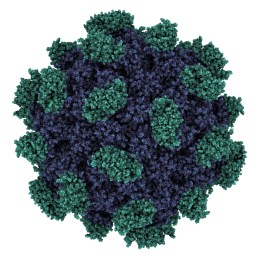
Hepatitis E virus capsid structure. HEV infection causes viral h

Hepatitis E virus capsid structure. HEV infection causes viral hepatitis. Atomic-level structure.

A Hepatitis E outbreak had been declared by Chadian health authorities in mid-November 2021 in Sategui health area, Lai health district in the Tandjile region.

As of November 20, there have been 377 suspected cases and 2 deaths (CFR 0.5%) reported. Among those affected, the majority have been men with 216 cases (57%) and the most affected age group has been less than 10 years of age with 90 cases (23.8%).

Hepatitis E is endemic in Chad, particularly in the Tangile region, which previously experienced large-scale outbreaks in 2017 and 2018. Poor hygiene and sanitation conditions coupled with limited access to safe water are risk factors for outbreaks in this region.

China – Dozens of college students sickened with norovirus in Guangdong Province

Outbreak News Today

Eurofins

In Guangdong Province in southern China, hundreds of students at the Guangzhou Vocational and Technical University of Science and Technology have been stricken with symptoms including stomachache, diarrhea, vomiting and fever.

The university reported on Tuesday that 315 students suffered from symptoms including stomachache, diarrhea, vomiting and fever with 24 being preliminarily diagnosed as having contracting Norovirus as of  Tuesday morning.

An investigation reveals the sick students dined at various venues including seven canteens inside the campus and several restaurants outside the campus.

Research – Ultrashort-pulse lasers kill bacterial superbugs, spores

Science Daily

Life-threatening bacteria are becoming ever more resistant to antibiotics, making the search for alternatives to antibiotics an increasingly urgent challenge. For certain applications, one alternative may be a special type of laser.

Researchers at Washington University School of Medicine in St. Louis have found that lasers that emit ultrashort pulses of light can kill multidrug-resistant bacteria and hardy bacterial spores. The findings, available online in the Journal of Biophotonics, open up the possibility of using such lasers to destroy bacteria that are hard to kill by other means. The researchers previously have shown that such lasers don’t damage human cells, making it possible to envision using the lasers to sterilize wounds or disinfect blood products.

“The ultrashort-pulse laser technology uniquely inactivates pathogens while preserving human proteins and cells,” said first author Shaw-Wei (David) Tsen, MD, PhD, an instructor of radiology at Washington University’s Mallinckrodt Institute of Radiology (MIR). “Imagine if, prior to closing a surgical wound, we could scan a laser beam across the site and further reduce the chances of infection. I can see this technology being used soon to disinfect biological products in vitro, and even to treat bloodstream infections in the future by putting patients on dialysis and passing the blood through a laser treatment device.”

Tsen and senior author Samuel Achilefu, PhD, the Michel M. Ter-Pogossian Professor of Radiology and director of MIR’s Biophotonics Research Center, have been exploring the germicidal properties of ultrashort-pulse lasers for years. They have shown that such lasers can inactivate viruses and ordinary bacteria without harming human cells. In the new study, conducted in collaboration with Shelley Haydel, PhD, a professor of microbiology at Arizona State University, they extended their exploration to antibiotic-resistant bacteria and bacterial spores.

The researchers trained their lasers on multidrug-resistant Staphylococcus aureus (MRSA), which causes infections of the skin, lungs and other organs, and extended spectrum beta-lactamase-producing Escherichia coli (E. coli), which cause urinary tract infections, diarrhea and wound infections. Apart from their shared ability to make people miserable, MRSA and E. coli are very different types of bacteria, representing two distant branches of the bacterial kingdom. The researchers also looked at spores of the bacterium Bacillus cereus, which causes food poisoning and food spoilage. Bacillus spores can withstand boiling and cooking.

In all cases, the lasers killed more than 99.9% of the target organisms, reducing their numbers by more than 1,000 times.

Viruses and bacteria contain densely packed protein structures that can be excited by an ultrashort-pulse laser. The laser kills by causing these protein structures to vibrate until some of their molecular bonds break. The broken ends quickly reattach to whatever they can find, which in many cases is not what they had been attached to before. The result is a mess of incorrect linkages inside and between proteins, and that mess causes normal protein function in microorganisms to grind to a halt.

“We previously published a paper in which we showed that the laser power matters,” Tsen said. “At a certain laser power, we’re inactivating viruses. As you increase the power, you start inactivating bacteria. But it takes even higher power than that, and we’re talking orders of magnitude, to start killing human cells. So there is a therapeutic window where we can tune the laser parameters such that we can kill pathogens without affecting the human cells.”

Heat, radiation and chemicals such as bleach are effective at sterilizing objects, but most are too damaging to be used on people or biological products. By inactivating all kinds of bacteria and viruses without damaging cells, ultrashort-pulse lasers could provide a new approach to making blood products and other biological products safer.

“Anything derived from human or animal sources could be contaminated with pathogens,” Tsen said. “We screen all blood products before transfusing them to patients. The problem is that we have to know what we’re screening for. If a new blood-borne virus emerges, like HIV did in the ’70s and ’80s, it could get into the blood supply before we know it. Ultrashort-pulse lasers could be a way to make sure that our blood supply is clear of pathogens both known and unknown.”


Story Source:

Materials provided by Washington University School of Medicine. Original written by Tamara Bhandari. Note: Content may be edited for style and length.

RASFF Alert – Norovirus – Oysters

RASFF

Norovirus in oysters in Netherlands and Belgium