Category Archives: Food Virus

RASFF Alert – Rotavirus – Oysters

RASFF

Rotavirus in oysters from France in the Netherlands

RASFF Alert – Rotavirus – Oysters

RASFF

Rotavirus in oysters from France in the Netherlands

New Zealand – links Hepatitis A berry cases to EU illnesses

Food Safety News

Officials in New Zealand investigating Hepatitis A cases linked to berries have identified a connection with a past outbreak in Europe.

There are 12 hepatitis A infections from eating frozen berries in New Zealand. Eight have been linked by genetic sequencing, meaning they were likely exposed to the same source of the virus. Seven people have been hospitalized. The virus attacks the liver. The Ministry for Primary Industries (MPI) was informed by the Ministry of Health of three Hepatitis A cases in September.

Foodstuffs Own Brands has recalled various Pams brand frozen berry products because of a possible link to the hepatitis A cases. Products are being removed from New World, Pak’n Save and Four Square shops nationwide, and from Trents and Raeward Fresh stores in the South Island.

New Zealand – Nationwide recall of Pams frozen berries as Hepatitis A infections rise to 12, several hospitalised

Stuff NZ

Another nine cases of hepatitis A have been detected with links to frozen berries, prompting a recall of half a dozen products from the Pams brand.

Pams – a New Zealand division of supermarket giant Foodstuffs – is recalling various frozen berry products as a precautionover a possible link to recent cases of the contagious virus.

Of the 12 cases found so far, seven have been hospitalised, including young, fit teenagers – not typically deemed at high risk from the illness, New Zealand Food Safety deputy director-general Vincent Arbuckle said.

The investigation into the source continues. Until, and unless, a definitive source is identified, the advice to heat-treat remains in place for all frozen berry products – regardless of brand, officials warned.

USA – More than 200 backpackers and rafters sickened in Grand Canyon National Park backcountry- Suspected Norovirus

Food Safety News

Between April 1 and June 17, 2022, at least 222 rafters and backpackers became infected with acute gastroenteritis, most likely norovirus, according to the Centers for Disease Control and Prevention (CDC). This is the largest outbreak of acute gastroenteritis documented in the Grand Canyon National Park backcountry.

Preliminary analysis of illness characteristics and portable toilet specimen test results suggested norovirus as the primary causative agent of illness. Norovirus spreads quickly through person-to-person contact and contaminated food or beverages and can persist in the environment. The bacteria can live for days to weeks on hard surfaces.

River outfitters and National Park staff members partnered to enable the implementation of prevention and control measures.

Norovirus-associated acute gastroenteritis is highly transmissible in settings with close person-to-person contact and decreased access to hand hygiene. Because many trips use the same campsites and place-portable toilets in the same locations, particles could have been transmitted to surfaces, beach sand or river water where new groups could have encountered them, and then transmitted the virus both from person-to-person and trip-to-trip.

Research – Spread of Hepatitis A virus strains of genotype IB in several EU countries and the United Kingdom – including foodborne spread

ECDC

As of 29 September 2022, 303 cases with identical or closely related HAV strains have been identified in Austria (7), Germany (8), Hungary (161), the Netherlands (8), Slovenia (35), Sweden (8), and the UK (76). Currently available epidemiological and microbiological data suggest that human-to-human transmission has occurred, and possibly also transmission through contaminated food.

On 15 February 2022, Hungary reported an outbreak of HAV genotype IB with the disease onset of the first case in early December 2021. To date, 161 cases (139 males, 22 females) have been confirmed with this strain in the National Hepatitis Reference Laboratory in Hungary. The weekly number of reported hepatitis A cases have been declining since June 2022. Several infected people identified themselves as men who have sex with men (MSM), suggesting possible transmission among sexual contacts. Several patients have been hospitalised.

In July 2022, a foodborne outbreak was suspected with a link to a restaurant in Hungary, where 16 people fell ill with HAV IB infection. Some of the patients reported consuming cold soup made with frozen berries. In the UK, no clear source of infection has been identified, but epidemiological investigations so far indicate possible foodborne infections in addition to person-to-person transmission. Germany, the Netherlands, and Sweden have reported a total of nine cases infected with strains matching the sequences of the UK strain. Investigations of these cases didn’t find any clear risk factors for infection such as a travel history or consumption of berries. Further investigations are ongoing.

HAV is highly transmissible through contaminated water, food, and via the faecal–oral route among close contacts (e.g. household contacts, sexual contacts, and contacts in day-care centres or schools), with an average incubation period of four weeks, ranging from two to six weeks. The virus is highly resistant to environmental conditions as well as to several preservation methods like acidification or freezing. Therefore, possible food-borne transmission should be investigated when several cases are reported within a short period.

Practising good hand hygiene – including thoroughly washing hands with soap after using the bathroom, changing nappies, and before preparing or eating food – plays an important role in preventing the spread of hepatitis A. Scaling up surveillance to detect and investigate sporadic and clusters of cases possibly associated with foodborne transmission in collaboration with food safety authorities is essential.

MSM are at risk of HAV infection when engaging in sexual practices that facilitate faecal-oral transmission of the virus. Hepatitis A vaccination, which is safe and highly effective, is the main option for response in the context of the current circulation of HAV genotype IB among MSM. The World Health Organisation and most EU/EEA countries recommend hepatitis A vaccination for MSM.

Besides vaccination, other options can contribute to the prevention of transmission among MSM: the use of condoms for anal sex, which have the additional benefit of offering protection against other sexually transmitted infections and good personal hygiene (e.g. washing hands and genital areas before and after sex). For the provision of primary prevention advice, authorities should consider engaging with civil society, social media, media outlets and dating apps to raise awareness among MSM about the risk of contracting HAV and the importance of vaccination. MSM who have already contracted the infection should be referred to sexual health services for further testing.

RASFF Alert – Norovirus – Oysters –

RASFF

Norovirus (GI /2g) in live oysters (Crassostrea gigas) from France, via Netherlands in Finland

Research – Risk Assessment of Norovirus Transmission in Food Establishments

FDA

The Risk Assessment of Norovirus Transmission in Food Establishments: Evaluating the Impact of Intervention Strategies and Food Employee Behavior (Duret et al. 2017) evaluates the dynamics of norovirus transmission from ill or infected food employees in food establishments (restaurant setting) to ready-to-eat food and consumers during food preparation and also evaluates the impact of prevention strategies. A discrete event model was developed to study norovirus transmission from the soiled hands of ill or infected food employees and the impact of prevention strategies and their compliance on the prevalence of contaminated servings and the number of resulting infected customers.

The Evaluation of the Impact of Compliance with Mitigation Strategies and Frequency of Restaurant Surface Cleaning and Sanitizing on Control of Norovirus Transmission from Ill Food Employees Using an Existing Quantitative Risk Assessment Model (Fanaselle et al. 2022) uses the previously published FDA quantitative risk assessment model in Duret et al. 2017, to evaluate more than 60 scenarios examining the impact of implementation and compliance with recommendations in the FDA Food Code for: restaurant surface cleaning and sanitizing, hand hygiene and employee health.

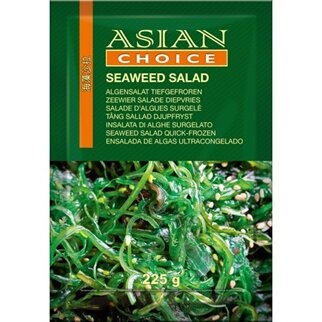
France – Wakame Salad- Hepatitis E

Gov france

Identification information of the recalled product

  • Product category Feed
  • Product subcategory Others
  • Product brand name asian choice
  • Model names or referencesDV8010 225g Expiry date:25-07-2023
  • Identification of products
    GTIN Batch Date
    8717677865734 2111040038 Use-by date 07/25/2023
  • Marketing start/end date From 06/12/2021 to 15/02/2022
  • Storage temperature Product to keep in the freezer
  • Geographic area of ​​sale Saint Etienne
  • Distributors international store

Practical information regarding the recall

  • Reason for recall Presence of type E hepatitis
  • Risks incurred by the consumer Hepatitis E virus
  • Additional description of the risk there is a limited health risk of contamination by the virus.

Research – Interactions Between Infectious Foodborne Viruses and Bacterial Biofilms Formed on Different Food Contact Surfaces

Springer

Bacterial biofilms contribute to contamination, spoilage, persistence, and hygiene failure in the food industry, but relatively little is known about the behavior of foodborne viruses evolving in the complex communities that make up biofilm. The aim of this study was to evaluate the association between enteric viruses and biofilms on food contact surfaces. Formed biofilms of mono- and multispecies cultures were prepared on glass, stainless steel, and polystyrene coupons and 105 pfu/ml of murine norovirus, rotavirus, and hepatitis A virus were added and incubated for 15 min, 90 min, and 24 h. The data obtained clearly demonstrate that the presence of biofilms generally influences the adhesion of enteric viruses to different surfaces. Many significant increases in attachment rates were observed, particularly with rotavirus whose rate of viral infectious particles increased 7000 times in the presence of Pseudomonas fluorescens on polystyrene after 24 h of incubation and with hepatitis A virus, which seems to have an affinity for the biofilms formed by lactic acid bacteria. Murine norovirus seems to be the least influenced by the presence of biofilms with few significant increases. However, the different factors surrounding this association are unknown and seem to vary according to the viruses, the environmental conditions, and the composition of the biofilm.