Category Archives: Food Safety

USA – Citterio brand premium Italian-Style salame sticks linked to Minnesota Salmonella cases

Food Safety News

Minnesota Department of Health (MDH) officials are warning Minnesota consumers not to eat Premium Italian-Style Salame Sticks produced by Citterio and purchased at Trader Joe’s or other retailers after linking Salmonella infections to the product.

Three Minnesotans have been identified as part of this outbreak. The patients became ill between Sept. 20 and Sept. 29. One was hospitalized for two days, and all have recovered. All three cases report consuming Citterio Premium Italian-Style Salame Sticks purchased at different Trader Joe’s locations. Health officials recommend not eating any Citterio Premium Italian-Style Salame Sticks they may have at home. Other brands of salami sticks and other Citterio products are not known to be affected at this time, but the investigation to determine the scope of the problem is ongoing.

USA- Maine Crabmeat linked to Salmonella illnesses

Food Poison Journal

According the the Maine CDC and press reports, two people were hospitalized after a salmonella outbreak linked to crabmeat from Hardie’s Crabmeat in Deer Isle, officials said. Maine CDC is investigating a total of five cases linked to the outbreak.

The cases include four Maine residents and one New Hampshire resident.

Maine CDC and the Maine Department of Agriculture, Conservation and Forestry discovered the crabmeat was likely contaminated during preparation and packaging. Health officials recommend packages of Hardie’s Crabmeat purchased between June 15 and Aug. 15 be thrown away.

Freezing doesn’t destroy the bacteria that causes salmonella.

Hardie’s Crabmeat addressed concerns from investigators about the contaminated food, and Maine CDC said there’s no evidence crabmeat currently being sold poses a risk if eaten.

Crabmeat from Hardie’s was sold at multiple places across Maine, but packages should be clearly labeled as from that company.

Common symptoms of salmonella include diarrhea, nausea, stomach pain, fever and headache, health officials said. And those symptoms typically start 6 to 72 hours after exposure. They can last up to a week, though some infected people don’t have any symptoms.

USA – Outbreak Investigation of Salmonella Oranienburg: Whole, Fresh Onions (October 2021)

FDA

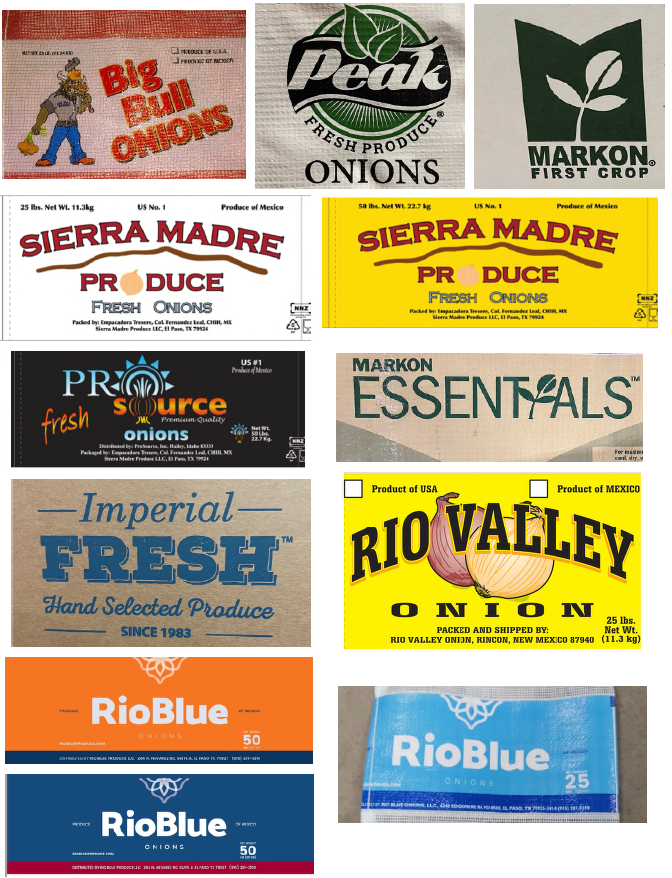
Outbreak Investigation of Salmonella Oranienburg in Whole, Fresh Onions - Sample Product Images (October 2021)

FDA and CDC are investigating illnesses linked to whole, fresh onions. Do not eat, sell, or serve certain onions from ProSource Produce and Keeler Family Farms

The FDA, along with CDC and state and local partners, is investigating a multistate outbreak of Salmonella Oranienburg infections linked to whole, fresh onions. FDA’s traceback investigation is ongoing but has identified ProSource Produce, LLC (also known as ProSource Inc.) of Hailey, Idaho, and Keeler Family Farms of Deming, New Mexico, as suppliers of potentially contaminated whole, fresh onions imported from the State of Chihuahua, Mexico.

On October 22, 2021, Keeler Family Farms issued a voluntary recall of red, yellow, and white whole, fresh onions imported from the State of Chihuahua, Mexico, from July 1, 2021, through August 25, 2021, when the last shipment of onions from the State of Chihuahua, Mexico was received by the firm. These onions contain a label that is marked as “MVP (product of MX)”. Additional details regarding the recalled product are available on the Keeler Family Farms’ recall announcement.

On October 20, 2021, ProSource Produce LLC issued a voluntary recall of red, yellow, and white whole, fresh onions imported from the State of Chihuahua, Mexico, with import dates from July 1, 2021, through August 31, 2021. A full list of recalled product information is available in ProSource Produce LLC’s recall announcement.

These onions supplied by ProSource Produce LLC and Keeler Family Farms were sold to restaurants, food service locations, wholesalers, and retail or grocery stores throughout the United States. The investigation is ongoing to determine the source of contamination and if additional products or firms are linked to illness. Additional information will be provided as it becomes available.

Recommendation

Advice for restaurants, retailers and consumers: Do not eat, sell or serve recalled onions, or products containing recalled onions. All recalled onions were supplied by ProSource Produce LLC and Keeler Family Farms and imported from the State of Chihuahua, Mexico between July 1, 2021 and August 31, 2021. If your onion has a label and it is not from one of the brands listed below originating from the State of Chihuahua, Mexico imported during this timeframe, it is not part of the recalls. If you cannot tell if your onions were recalled, do not eat, sell, or serve them and throw them out.

Recalled onions were distributed under the following brands:

  • Big Bull
  • Peak Fresh Produce
  • Sierra Madre
  • Markon First Crop
  • Markon Essentials
  • Rio Blue
  • ProSource
  • Rio Valley
  • Sysco Imperial
  • MVP

Additional descriptors used for these recalled onion types may include, but are not limited to, jumbo, colossal, medium, summer, and sweet onions.

Additional information about each recall can be found in the ProSource Produce LLC’s recall announcement and the Keeler Family Farms recall announcement.

Onions may last up to three months if stored in a cool, dry place. Restaurants, retailers, and consumers who suspect having purchased such onions may still have them in storage and should not eat, sell, or serve them, and should throw them out.

FDA recommends that anyone who received or suspects having received recalled onions use extra vigilance in cleaning and sanitizing any surfaces and containers that may have come in contact with these products to reduce the risk of cross-contamination. This includes cleaning and sanitizing cutting boards, slicers, countertops, refrigerators, and storage bins.

Consumers who have symptoms of Salmonella infection should contact their health care provider. Most people with salmonellosis develop diarrhea, fever, and abdominal cramps. More severe cases of salmonellosis may include a high fever, aches, headaches, lethargy, a rash, blood in the urine or stool, and in some cases may become fatal.

Suppliers and Distributors: Do not use, ship, or sell red, yellow, or white onions recalled by ProSource Produce LLC or supplied by Keeler Family Farms that were imported from the State of Chihuahua, Mexico, or food products containing such onions. Suppliers and distributors that re-package raw onions should use extra vigilance in cleaning any surfaces and storage areas that may have come into contact with these products. If there has been potential cross contamination or mixing of onions from other sources with these products, suppliers and distributors should discard all comingled and potentially cross-contaminated product.

Recall Information

ProSource Produce LLC has voluntarily recalled red, yellow, and white onions imported from the State of Chihuahua, Mexico, with import dates from July 1, 2021, through August 31, 2021. Additional descriptors used for these onion types may include, but are not limited to, jumbo, colossal, medium, summer and sweet onions. Additional recall information will be made public as soon as it is available from ProSource Inc.

The onions were distributed to wholesalers, broadline foodservice customers, and retail or grocery stores in:

  • 50 lb., 25 lb., 10 lb., 5 lb., 3 lb., and 2 lb. mesh sacks
  • 50 lb., 40 lb., 25 lb., 10 lb., and 5 lb. cartons

And by the following distributors and/or under the following brands:

  • Big Bull
  • Peak Fresh Produce
  • Sierra Madre
  • Markon First Crop.
  • Markon Essentials
  • Rio Blue
  • ProSource
  • Rio Valley
  • Sysco Imperial

Keeler Family Farms has recalled red, yellow, and white whole, fresh onions imported from the State of Chihuahua, Mexico, with import dates from July 1, 2021, through August 25, 2021. The onions were distributed in 25lb and 50lb mesh sacks. They contain a label that is marked as “MVP (product of MX)”.

Additional details regarding the recalled products are available on the Keeler Family Farms recall announcement.


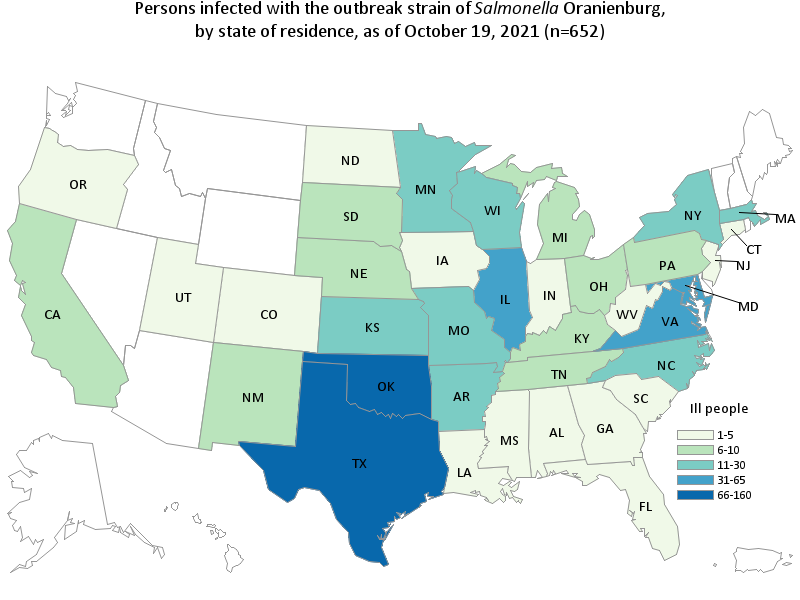
Case Count Map Provided by CDC

Outbreak Salmonella Onions Case Count Map Oct 20 2021

Case Counts

Total Illnesses: 652
Hospitalizations: 129
Deaths: 0
Last Illness Onset: September 30, 2021
States with Cases: AL, AR, CA, CO, CT, FL, GA, IA, IL, IN, KS, KY, LA, MA, MD, MI, MN, MO, MS, NC, ND, NE, NJ, NM, NY, OH, OK, OR, PA, SC, SD, TN, TX, UT, VA, WI, WV
Product Distribution: Nationwide

Canada – Updated Food Recall Warning – Gwillimdale Farms brand Onions, Product of Mexico recalled due to Salmonella

CFIA

Gwillimdale Farms - Onions - label, front

Recall details

Ottawa, October 22, 2021 – The food recall warning issued on October 21, 2021 has been updated to include additional product information. This additional information was identified during the Canadian Food Inspection Agency’s (CFIA) food safety investigation.

Gwillimdale Farms is recalling Gwillimdale Farms brand Onions, Product of Mexico from the marketplace due to possible Salmonella contamination. Consumers should not consume the recalled products described below or foods containing these raw onions. Retailers, distributors, manufacturers, and food service establishments such as hotels, restaurants, cafeterias, hospitals, and nursing homes should not serve, use, or sell the recalled products described below.

The following products have been sold in Ontario and Quebec and may have been distributed in other provinces and territories.

Recalled product

Brand Product Size UPC Codes Additional information
Gwillimdale Farms Onions 2 lbs (907 g) 6 28250 41454 7
  • 07/09/21
  • 07/13/21
  • 07/14/21
  • 07/15/21
  • 07/16/21
  • 07/19/21
  • 07/20/21
Product of Mexico
Gwillimdale Farms Onions 3 lbs (1.36 kg) 6 28250 41455 4
  • 07/16/21
  • 07/19/21
Product of Mexico
Gwillimdale Farms Onions 5 lbs (2.27 kg) 6 28250 41456 1
  • 07/13/21
  • 07/15/21
  • 07/16/21
  • 07/19/21
Product of Mexico

Background

This recall was triggered by a recall in another country by Prosource Produce LLC of Hailey, Idaho. The CFIA is conducting a food safety investigation, which may lead to the recall of other products. If other high-risk products are recalled, the CFIA will notify the public through updated Food Recall Warnings.

The CFIA is verifying that industry is removing the recalled products from the marketplace.

Illnesses

There have been no reported illnesses in Canada associated with the consumption of these products.

Product photos

Printer ready version of photos

  • Gwillimdale Farms - Onions - label, front
  • Gwillimdale Farms - Onions - 5 lbs (2.27 kg) - label, back
  • Gwillimdale Farms - Onions - 3 lbs (1.36 kg) - label, back
  • Gwillimdale Farms - Onions - 2 lbs (907 g) - label, back

Public enquiries and media

Public enquiries
Toll-free: 1-800-442-2342 (Canada and U.S.)
Telephone: 1-613-773-2342 (local or international)
Email: information@inspection.gc.ca
Media relations
Telephone: 613-773-6600
Email: cfia.media.acia@inspection.gc.ca

Research – Biofilms bring safety challenges to food companies

Food Safety News

In the first installment of this series with Sterilex, Food Safety News explores what biofilms are and their unique resistance to attempts to kill the pathogens they protect.

Food processors and manufacturers know the environments in which they operate are friendly to organisms that can taint their products, potentially leading to foodborne illness outbreaks.

Food safety plans and specific good manufacturing processes outlined in those documents are designed to combat common pathogens — including strains of Listeria, Salmonella and E. coli — that could lead to recalls or outbreaks.

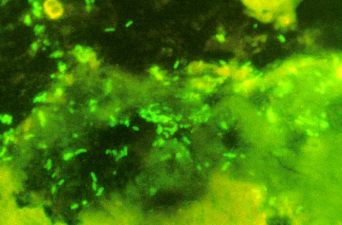
Whether or not food safety plans specifically mention “biofilms,” in many cases they are the root cause of contamination in food facilities. Approximately 60 percent of foodborne illness outbreaks are caused by biofilms, according to food safety research.

Italy -Smoked swordfish – Listeria monocytogenes

Salute

Brand : Gastronomia Valdarnese

Denomination : Smoked swordfish

Reason for reporting : Recall due to microbiological risk

Publication date : 22 October 2021

Click to access C_17_PubblicazioneRichiami_1532_azione_itemAzione0_files_itemFiles0_fileAzione.pdf

Research – Characterization of Escherichia coli from Edible Insect Species: Detection of Shiga Toxin-Producing Isolate

MDPI

ecoli

Insects as novel foods are gaining popularity in Europe. Regulation (EU) 2015/2283 laid the framework for the application process to market food insects in member states, but potential hazards are still being evaluated. The aim of this study was to investigate samples of edible insect species for the presence of antimicrobial-resistant and Shiga toxin-producing Escherichia coli (STEC). Twenty-one E. coli isolates, recovered from samples of five different edible insect species, were subjected to antimicrobial susceptibility testing, PCR-based phylotyping, and macrorestriction analysis. The presence of genes associated with antimicrobial resistance or virulence, including stx1, stx2, and eae, was investigated by PCR. All isolates were subjected to genome sequencing, multilocus sequence typing, and serotype prediction. The isolates belonged either to phylogenetic group A, comprising mostly commensal E. coli, or group B1. One O178:H7 isolate, recovered from a Zophobas atratus sample, was identified as a STEC. A single isolate was resistant to tetracyclines and carried the tet(B) gene. Overall, this study shows that STEC can be present in edible insects, representing a potential health hazard. In contrast, the low resistance rate among the isolates indicates a low risk for the transmission of antimicrobial-resistant E. coli to consumers. View Full-Text

UK – The Global Food Safety Incidents and Emergency Response Conference 2021

FSA

Last week, after six months of planning, the Food Standards Agency and Food Standards Scotland jointly hosted the entirely virtual GFSIER Conference 2021.

I would like to say a huge thank you to everyone who attended over the three days. As a team, the Incidents and Resilience Unit are delighted to have had 650 registered delegates representing over 80 countries.

It proved really productive and was such a positive experience to meet worldwide counterparts and establish new contacts within the regulatory and food systems.

Aims of the conference

The conference aimed to address how to enhance food safety and food security in a changing world.

It enabled us to come together to explore how we can improve global food security through sharing of best practice, working collaboratively and learning from each other.

The event also focused on keeping food safety incident and crisis response high on the agenda.

Reflecting on the three days and working with my team to plan for the future, I really do think we achieved what we set out to do.

Day one – Food safety regulators around the world

Professor Susan Jebb, FSA Chair, opened the conference discussing the current challenges in the world of food safety.

Co-operation, co-ordination, communication, data sharing and new technologies were all high on the agenda.

Dr Francesco Branca, Head of Nutrition and Food Safety at the World Health Organization, started the response to these challenges by talking about the role of INFOSAN in food safety incidents and the broader food system.

A key conclusion was that, due to the improved technologies and methods to detect and monitor food safety events, there is, and will continue to be, a higher number of food safety incidents statistically.

This does not necessarily mean that there are more food safety events, but rather that more existing events are being detected. This improved detection can only benefit us and our counterparts around the world in improving prevention.

Of course, with the continued rise of global food trade we can expect an increase in complex, international food safety incidents. This alone highlights the importance for nations and stakeholders being actively involved in international food safety networks, allowing us all to open and maintain vital communication channels.

Discussions on the first day covered surveillance and data, new technology in incident management and food authenticity and food crime.

There is a lot of work around surveillance and data happening across the globe and the importance of the use of artificial intelligence (AI) and predicative modelling is key.

We must focus on how we are working and collaborating in the development of ever more sophisticated tools for the sharing of data. We must ensure we keep up with greater demands in the future for analysing and interpretating evidence.

AI will be important in assisting with the resource implications of increased detection of incidents.

Other new technologies highlighted by the conference included new analytical techniques being used to assess food authenticity and identify food fraud, remote surveillance made possible using mobile phone and camera recordings, and whole genome sequencing to identify food outbreaks which in previous years we would never have identified.

Social science is also playing a part in food safety in helping us to understand not just what consumers are eating, but allowing us to listen to consumers and understand their concerns. Overall, I think we are in a good place as regulators to set high standards as we embrace new technology.

Day two – International collaboration and food safety

The conference benefited from input from all four UK devolved nations over the three days. it was useful to hear from the Northern Ireland and Welsh Food Advisory Committees to open day two.

How we work and co-ordinate across the four nations is invaluable and sets an example for how other countries can collaborate both internally and internationally.

The food industry was inevitably at the heart of most discussions covered by the conference.

It was great to hear from Steve Purser from Tesco PLC, to learn about industry priorities and food safety challenges from a different perspective. It was clear that collaboration and information sharing are high on the food industry’s agenda too.

Representatives from industry, regulators and public health authorities then joined me to reflect on best practice and share their top tips from an incident or emergency that they had been involved in. Learning from our own and others’ experience is invaluable, and I hope such lessons have proved useful for all the delegates.

The outbreaks, risk communication and crisis management breakout sessions added further insight as to where we should focus our attention.

We are always aiming for more open data sharing as well as good integration of all available sources including epidemiological, environmental, food chain and microbiological information.

Various platforms exist for sharing genomic data and I see potential for expanding the scope and use of other platforms, including INFOSAN. Communication of risks requires partnership working and we need to consider other nations’ access to systems and capacity to deal with food incidents, while supporting each other to improve where we can.

A phrase used regularly during the conference was ‘honest uncertainty’ and I believe being open and transparent, even when pressed for a quick answer is important.

With the food safety challenges we face, increasing crisis management and incident response is a global challenge, not bound by borders.

We are building new partnerships all the time and I look forward to seeing these relationships develop as we tackle more issues together.

Day three – Global priorities for food safety

The final day of the conference was opened by Ross Finnie, FSS Chair. He provided insight into priorities and challenges for the UK and fellow regulators. This set us up for a day of debate and discussion, allowing us to pull together learnings and objectives to take forward.

Having Dr Peter Ben Embarek, Head of WHO One Health Initiative (OHI) and Steve Wearne, Director, Global Affairs, Food Standards Agency and Vice Chair of Codex Alimentarius Commission present, really brought home how food is a global commodity and how food safety is a global challenge.

You can read Steve Wearne’s post-event article about Codex on LinkedIn.

To finish we welcomed colleagues from around the globe to give their views on harmonisation and best practice across differing international regulatory systems and future challenges for industry and regulators.

FSA Chief Executive Emily Miles and FSS Chief Executive Geoff Ogle brought the conference to a close as they summed up the debate and shared key learnings and challenges with delegates.

As I reflect on the conference, the things my team and I will take away are:

  • the importance of data sharing and the benefits of getting it right;
  • the part we play in improving public trust in us as regulators;
  • how we can utilise information sources available to us and;
  • how we can support countries with less capacity to deal with food incidents.

All in all, a really interesting three days – thank you to everyone involved.

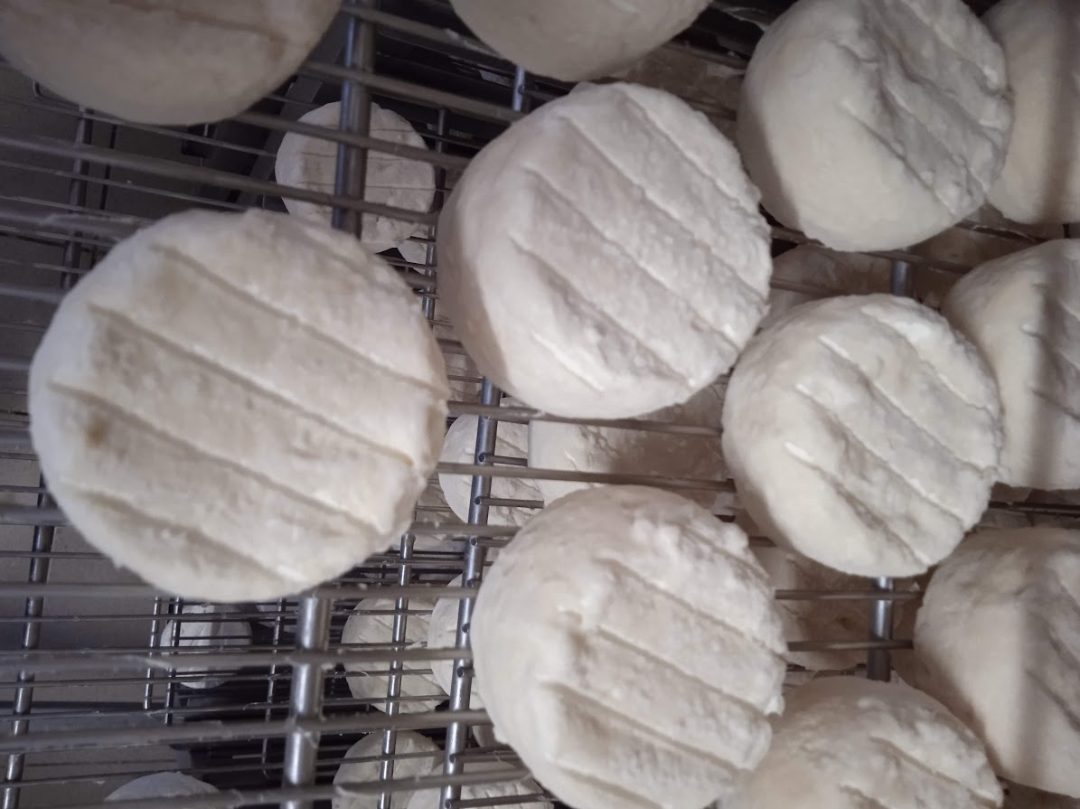
France – RAW MILK GOAT CHEESES – E.coli

Gov france

Identifying information for the recalled product

  • Product category Food
  • Product sub-category Milk and dairy products
  • Product brand name GOAT CHEESES
  • Names of models or references GAEC DES PRAIRIES
  • Product identification

    Lot Dated 299/309/110/210/310/410/510/610

    Use-by date between 10/29/2021 and 11/06/2021 79/89/99/109/119/129/139/149/159/169/179/189/199/209/219/229/239/249/259/269/279/289/299/309/110 / 210/310/410/510/610

  • Start date / End of marketing From 09/29/2021 to 10/07/2021
  • Storage temperature Product to be stored at room temperature
  • Geographical sales area Departments: HAUTE-LOIRE (43)
  • Distributors Torrilhon salting

Practical information regarding the recall

  • Reason for recall Risk of E.Coli
  • Risks incurred by the consumer Escherichia coli

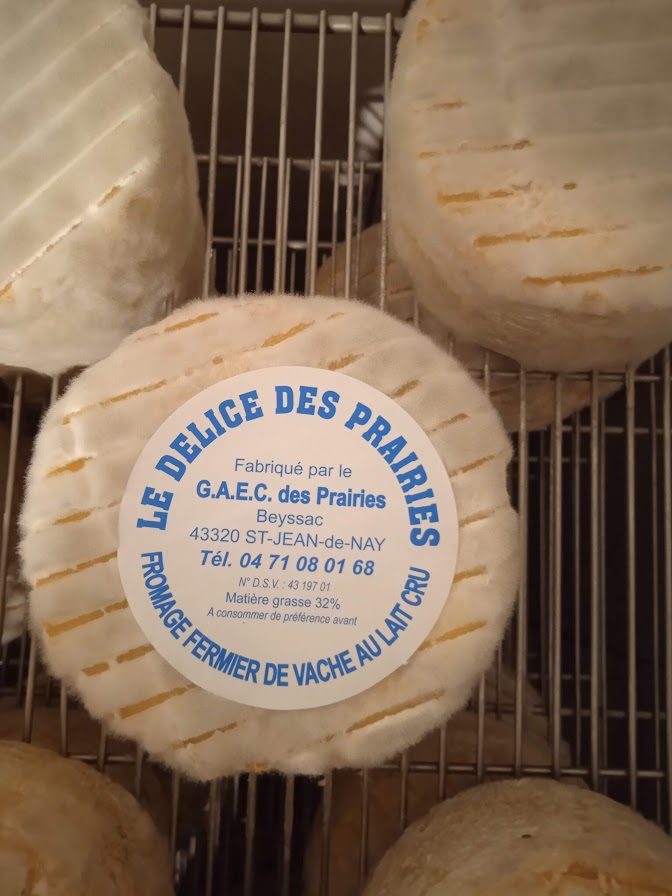
France – COW CHEESE IN RAW MILK – E.coli

Gov france

Identifying information for the recalled product

  • Product category Food
  • Product sub-category Milk and dairy products
  • Product brand name THE DELICE OF THE PRAIRIES
  • Names of models or references THE GAEC DES PRAIRIES
  • Product identification

    Lot Dated 79/89/99/109/119/149/159/169/179/189/219/229/249/259/289/299/110/210/510/610

    Recommended consumption date between 07/12/2021 and 06/01/2022

  • Start date / End of marketing From 09/27/2021 to 10/07/2021
  • Storage temperature Product to be stored at room temperature
  • Geographical sales area Regions: Auvergne-Rhône-Alpes
  • Distributors Le fromager des halles brives, Clermont neyrat, Thiers, Clermont saint jean, lempdes Intermarché St paulien Super U Langeac Ardèche cicada Proxi Espaly and Loudes Salaison torrilhon Salaison du Velay Chabanon, Méjean, jacob Colombet J

Practical information regarding the recall

  • Reason for recall presence of E.Coli
  • Risks incurred by the consumer Escherichia coli