QUEBEC CITY , Jan. 11, 2024 /CNW/ – The Ministry of Agriculture, Fisheries and Food (MAPAQ), in collaboration with the company Boucherie Thibault inc. , located at 1739, avenue des Érables, in Plessisville , advises the population not to consume the product indicated in the table below, because this food is likely to contain the E. coli bacteria .
Product name
Format
Target lot
“BBQ POTATO AND VEGETABLE MEATLOAF”
Unitary
BEST AV
24-JA-14
The product which is the subject of this warning was offered for sale until January 11, 2024, and only at the establishment designated above. The product was packaged in an aluminum tray with a transparent plastic lid and sold refrigerated.
The operator is recalling the product in question. He agreed with MAPAQ to broadcast this warning as a precautionary measure. In addition, people who have this product in their possession are advised not to consume it. They must return it to the establishment where they purchased it or throw it away. Food contaminated with E. coli bacteria does not necessarily show visible spoilage or a suspicious odor, but can still make a person who consumes it sick. Possible symptoms are: nausea, vomiting, more or less acute abdominal cramps and watery or bloody diarrhea.
It should be noted that no cases of illness associated with the consumption of this food have been reported to MAPAQ to date.
FAO & WHO. 2023. Prevention and control of microbiological hazards in fresh fruits and vegetables – Parts 1 & 2: General principles. Meeting report. Microbiological Risk Assessment Series, No. 42. Rome. https://doi.org/10.4060/cc8490
Executive summary
Introduction
The purpose of the meetings was to collect, review and discuss relevant measures
for control of microbiological hazards from primary production to point of sale in
fresh, ready-to-eat (RTE), and minimally processed fruits and vegetables, including
leafy vegetables.
The scope of the meetings included aspects of primary production in open fields
or in protected facilities (such as high and low tunnels, production under cover,
greenhouses and net houses, and address hydroponic and aquaponic systems,
and other systems as required) and post-harvest activities, including activities
performed prior to packing, minimal processing, distribution, maintenance of
the cold chain where applicable, transportation, and handling at point of sale.
Emphasis was placed on the identification and evaluation of solutions to reduce
microbiological risks that result in foodborne illnesses associated with fresh fruits
and vegetables produced in various regions of the world, taking into consideration
their effectiveness and sui
Globally, the risk of foodborne diseases is high among the young, old, pregnant and immunocompromised groups. Strategies to improve safe food supply are poorly understood among stakeholders. In this paper, we discuss the importance of the adoption of food safety standards, the effects of non-compliance of food safety protocols, consumer-producer awareness of food safety, and the challenges involved in the adoption of food safety protocols. The major challenges include gaps in dissemination of relevant information, the cost involved in adoption of many food safety programs; low educational levels of food handlers, insufficient food testing laboratories; inadequate funding, equipment, and skilled personnel; and cost of training and education; and lack of coordination among organizations handling food safety issues. Building competencies of food safety personnel, inspectorates, national or regional laboratories and adequate resource support to industry and supporting agencies will enhance safety of the global food supply.
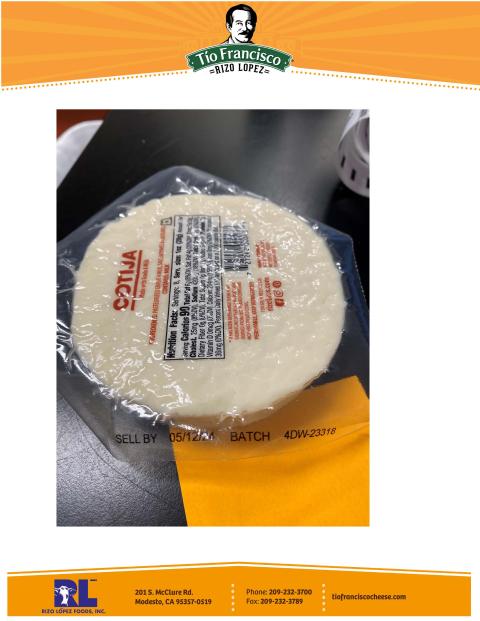
Rizo Lopez Foods, Inc. of Modesto, CA is recalling a total of 344 cases of Aged Cotija Mexican Grating Cheese (8oz), UPC 72724200043 batch number 4DW-23318 because it has the potential to be contaminated with Listeria monocytogenes, an organism which can cause serious and sometimes fatal infections in young children, frail or elderly people, and others with weakened immune systems. Although healthy individuals may suffer only short-term symptoms such as high fever, severe headache, stiffness, nausea, abdominal pain and diarrhea, Listeria infection can cause miscarriage and stillbirths among pregnant women.
Aged Cotija Mexican Grating Cheese (8oz) was distributed nationwide through distributors.
The product comes in a small 8oz. “puck” shape wrapped in clear plastic marked with red and black lettering on the botom noted as “Cotija, made with Grade A Milk” along with an ingredient description. Nutritional facts are noted in black below the ingredient description. The top shows “Cotija Aged Mexican Grating Cheese” with orange background. Batch number is identified on the outer edge of the clear plastic with “SELL BY 05/12/24 BATCH 4DW-23318” in black lettering.
To date, no confirmed illnesses related to this product have been reported.
The recall was a result of a routine sampling program by the Hawaii State Department of Health’s Food and Drug Branch on Wednesday, January 3rd which revealed that the finished product contained the bacteria. Rizo Lopez Foods, Inc. has ceased the producon and distribution of the product as the FDA and Rizo Lopez Foods continue their investigation as to what caused the issue.
Consumers who have purchased Aged Cotija Mexican Grating Cheese (8oz). are urged to quarantine the product and destroy it. Consumers with questions may contact the company at 1-800-626-5587, Monday through Friday, 8:00am-5:00pm Pacific Standard Time.
Product category
Food
Product subcategory
Milk and dairy products
Product brand name
FRUIT COUNT
Model names or references
FRUIT COUNT
Product identification
GTIN Batch Date
36122022 36122022 Use-by date 01/17/2024
Products List
Scan.pdfAttachment
Packaging
cheese by cut 250 -500 grs or kilo
Start/end date of marketing
From 12/27/2023 to 01/03/2024
Storage temperature
Product to keep in the refrigerator
Geographical sales area
Whole France
Distributors
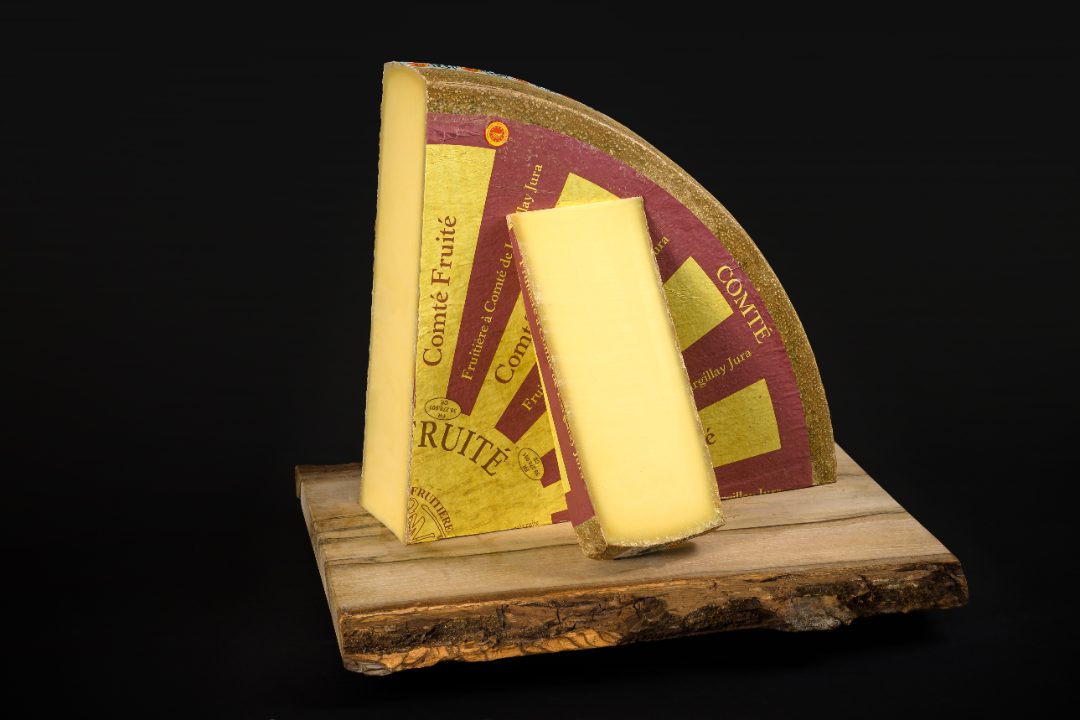
FRUITIERE IN COMTE EURL LA SAINT CHRISTOPHE 1 GRANDE RUE 39130 CLAIRVAUX LES LACS
List of points of sale
DISTRIBUTOR.pdf
CHICAGO, Illinois – January 11, 2024 – The Quaker Oats Company today announced an expansion of the December 15, 2023, recall to include additional cereals, bars and snacks listed below because they have the potential to be contaminated with Salmonella, an organism which can cause serious and sometimes fatal infections in young children, frail or elderly people, and others with weakened immune systems. Healthy persons infected with Salmonella often experience fever, diarrhea (which may be bloody), nausea, vomiting and abdominal pain. In rare circumstances, infection with Salmonella can result in the organism getting into the bloodstream and producing more severe illnesses such as arterial infections (i.e., infected aneurysms), endocarditis and arthritis.
The products listed in the link above are sold throughout the 50 United States, Puerto Rico, Guam and Saipan. Consumers should check their pantries for any of the products listed below and dispose of them. Additionally, consumers with any product noted below can contact Quaker Consumer Relations (9 a.m. – 4:30 p.m. CST, Mon.-Fri.) at 1-800-492-9322 or visit www.QuakerRecallUSA.comExternal Link Disclaimer for additional information or product reimbursement.
This recall applies to the specific products listed below, in addition to the products announced on December 15, 2023. A combined list of recalled products is available on www.QuakerRecallUSA.comExternal Link Disclaimer.





 FoodWorld