Category Archives: Food Pathogen

UK – Listeria outbreak in English hospitals: update

Apologies for this being late but i have been on holiday 🙂

HPS

06 August 2019

Article: 53/3104

The Public Health England (PHE) team investigating cases of listeriosis linked to sandwiches and salads in NHS hospitals in England has confirmed that, since the last update on 26 June 2019, there has been another death, bringing to six the total number of deaths linked to this outbreak.

The individual who died was one of the nine previously confirmed cases. The individual is considered to have acquired listeriosis from Good Food Chain products while at Western Sussex Hospitals NHS Foundation Trust.

PHE continues to test all samples of listeria on an ongoing basis to check if they are linked to this outbreak. To date, thirty-four samples have been tested, with none linked to the outbreak.

There have been no new cases of listeriosis linked to this outbreak. Investigations are continuing and the public should be reassured that the risk continues to be low.

No cases have been reported in Scotland so far.
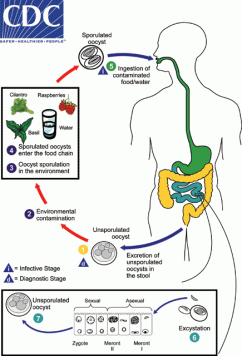
USA – Basil Cyclospora Outbreak Has Sickened 205 in 11 States

Food Poisoning Bulletin Cyclospora_LifeCycle201

The FDA has updated the basil cyclospora outbreak that has now sickened at least 205 people in 11 states. That’s an increase of 73 patients since the last update which was posted on July 25, 2019. Five people have been hospitalized because they are so sick. The basil in question is imported from Mexico by Siga Logistics de RL de CV from Morelos. That facility recalled basil on July 24, 2019.

Canada – Food Recall Warning – Rosemount brand cooked diced chicken meat recalled due to Listeria monocytogenes

CFIA CIFA

Recall details

Ottawa, August 18, 2019 – Rosemount Sales and Marketing is recalling Rosemount brand cooked diced chicken meat from the marketplace due to possible Listeria monocytogenes contamination. Consumers should not consume and distributors, retailers and food service establishments such as hotels, restaurants, cafeterias, hospitals and nursing homes should not sell or use the recalled products described below.

Recalled products

Common Name Size UPC Code(s) on Product
Cooked diced chicken meat 13 mm – ½” (#16305) 4.54 kg 2 06 20263 12454 7 PACKDATE: 01/21/19

USA -Outbreak of Listeria Infections Linked to Deli-Sliced Meats and Cheeses

Illustration with a microscope and text reading Investigation Notice

Posted April 17, 2019 at 4:30 PM ET

CDC and several states are investigating a multistate outbreak of Listeria infections linked to deli-sliced meats and cheeses. The U.S. Department of Agriculture’s Food Safety and Inspection Service and the U.S. Food and Drug Administration are monitoring the outbreak.

Latest Outbreak Information
Illustration of a megaphone.
At A Glance

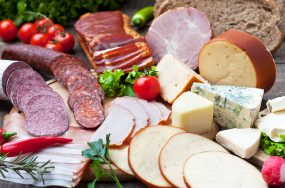
Photo of deli products.

  • A total of 8 people infected with the outbreak strain of Listeria monocytogenes have been reported from 4 states.
    • All 8 people have been hospitalized, and one death has been reported from Michigan.
  • Epidemiologic and laboratory evidence indicates that meats and cheeses sliced at deli counters might be contaminated with Listeria monocytogenes and could make people sick.
  • In interviews, ill people report eating different types and brands of products, including meats and cheeses, purchased from and sliced at deli counters in many different retail locations.
  • The outbreak strain has been identified in samples taken from meat sliced at a deli and from deli counters in multiple stores.
  • A single, common supplier of deli products has not been identified.
  • CDC is not advising that consumers avoid eating products prepared at delis, or that retailers stop selling deli-sliced products.
  • Retailers should clean and sanitize deli slicersExternal frequently and other areas where deli products are prepared, stored, or served to avoid cross contamination.
  • This outbreak is a reminder that people at higher risk for severe Listeria infection should handle deli-sliced meats and cheeses carefully to prevent illness. Pregnant women and their newborns, adults age 65 and older, and people with weakened immune systems are more likely to get sick with listeriosis.

Research – A Bacteriophage Cocktail Eliminates Salmonella Typhimurium from the Human Colonic Microbiome while Preserving Cytokine Signaling and Preventing Attachment to and Invasion of Human Cells by Salmonella In Vitro

Journal of Food Protection

ABSTRACT

Nontyphoidal Salmonella strains continue to be a major cause of foodborne illness globally. One intriguing approach to reducing the risk of salmonellosis is the direct ingestion of phages targeting Salmonella to enhance natural gut resilience and provide protection during foodborne disease outbreaks. We evaluated the ability of a prophylactically administered bacteriophage cocktail, the foodborne outbreak pill (FOP) targeting Escherichia coli O157:H7, Listeria monocytogenes, and Salmonella, to resolve a Salmonella infection in the Simulator of the Human Intestinal Microbial Ecosystem (SHIME), a simulated gut platform populated by the human intestinal microbiome of healthy donors. The FOP preparation eliminated Salmonella enterica serovar Typhimurium from the colon compartment of the SHIME platform but health-associated metabolites, such as short-chain fatty acids and lactate, remained stable or increased in a donor-dependent manner. In studies of human intestinal cells, pretreatment of Salmonella Typhimurium with the FOP cocktail preserved lipopolysaccharide-stimulated signaling in a Caco-2–THP-1 Transwell system and prevented destruction of the Caco-2 monolayer by Salmonella. Adhesion and invasion of intestinal epithelial cells by Salmonella—a critical factor in Salmonella pathogenesis—was blunted when the bacteria were incubated with the FOP preparation before addition to the monolayer. The FOP phage cocktail was effective for (i) eliminating Salmonella from a simulated human gut without disturbing the indigenous microbiota and (ii) reducing the risk of invasion by Salmonella into the intestinal epithelia. These results suggest that the FOP preparation may be of value for reducing the risk of salmonellosis in humans, e.g., during foodborne disease outbreaks.

Research – Antimicrobial Activity and Action Approach of the Olive Oil Polyphenol Extract Against Listeria monocytogenes

Frontiers in Microbiology

Olive oil polyphenol extract (OOPE) has been reported to have antibacterial activity; however, its effect on Listeria monocytogenes is less studied so far. This study, thus, aimed to reveal its antimicrobial activity and action approach against L. monocytogenes via evaluating the minimum inhibitory concentration (MIC) as well as the changes of intracellular adenosine 5′-triphosphate (ATP) concentration, cell membrane potential, bacterial protein, DNA, and cell morphology. The results showed that OOPE could inhibit the growth of L. monocytogeneswith a measured MIC of 1.25 mg/ml. L. monocytogenes cells treated by OOPE showed significant reduction in intracellular ATP concentrations, bacterial protein, or DNA (p < 0.05), in comparison with those without any treatment. In addition, OOPE was observed to depolarize strain cells and alter cell morphology, resulting in damaged cell membrane and, thereby, leakage of cell fluid. These findings demonstrated that OOPE had inhibition on L. monocytogenes via its action on cells, suggesting its potential as a natural preservative.

Research – Conditions at the time of inoculation influence survival of attenuated Escherichia coli O157:H7 on field-inoculated lettuce

Science Direct

Highlights

•

Higher percentages of E. coli–positive plants recovered when inoculation was closer to harvest.

•

Higher relative humidity and leaf surface wetness were measured during night inoculation.

•

Short-term smaller initial population declines were observed after night inoculation.

•

E. coli population sizes were similar 2 or more days after night or day inoculation.

•

Probability of detecting E. coli was higher for longer times when inoculated at higher levels.

Abstract

The impact of plant development, environmental conditions at the time of inoculation, and inoculum concentration on survival of attenuated BSL1 Escherichia coli O157:H7 strain ATCC 700728 on field-grown romaine lettuce was evaluated over 3 years. E. coli 700728 was inoculated onto 4- and 6-week-old romaine lettuce plants in the Salinas Valley, CA, at night or the next morning with either low (5 log) or high (7 log) cell numbers per plant to simulate a single aqueous contamination event. At night, when leaf wetness and humidity levels were high, E. coli cell numbers declined by 0.5 log CFU/plant over the first 8–10 h. When applied in the morning, E. coli populations declined up to 2 log CFU/plant within 2 h. However, similar numbers of E. coli were retrieved from lettuce plants at 2 and 7 days. E. coli cell numbers per plant were significantly lower (P < 0.05) 7 days after application onto 4-week-old compared to 6-week-old plants. E. coli 700728 could be recovered by plating or enrichment from a greater proportion of plants for longer times when inoculated at high compared with low initial concentrations and after inoculation of 6-week-old plants compared with 4-week-old plants, even at the low initial inoculum. A contamination event near harvest or when leaf wetness and humidity levels are high may enhance survivability, even when low numbers of E. coli are introduced.

USA – Conagra Brands, Inc. Recalls Canned Beef Products Due to Possible Processing Defect

USDA

WASHINGTON, July 31, 2019  – Conagra Brands, Inc., a Milton, Pa. establishment, is recalling approximately 32,400 pounds of canned beef products due to a potential processing defect, resulting in the potential survival of bacterial pathogens in the products, the U.S. Department of Agriculture’s Food Safety and Inspection Service (FSIS) announced today.

The canned beef items were produced on July 18, 2019. The following products are subject to recall: [View labels (PDF only)]

  • 15-oz. canned items of “Kaskey’s BEEFY MAC PASTA IN TOMATO & MEAT SAUCE” with Best By JUL 07 2021.

The products subject to recall bear establishment number “EST. 794” inside the USDA mark of inspection. These items were shipped to distribution centers and retail locations in Indiana, Kentucky, Maryland and Texas.

The problem was discovered by the establishment on July 27, 2019 during routine activities.

There have been no confirmed reports of adverse reactions due to consumption of these products. Anyone concerned about an injury or illness should contact a healthcare provider.

Consumers who have purchased these products are urged not to consume them. These products should be thrown away or returned to the place of purchase.

USA – Listeria linked to Raw Milk

Food Poison Journal

The state of New York is warning people to not consume unpasteurized raw milk from Churchtown Dairy due to possible contamination of Listeria Monocytogenes.

On Friday, the state Department of Agriculture & Markets notified the dairy farm that a presumptive positive detection for Listeria was made from a bottled milk sample pulled from the dairy’s cooler on July 22. Listeria Monocytogenes is a species of bacteria that can cause the infection Listeriosis.

No reported cases of the illness associated with the milk have been reported.

USA – 580 Cyclospora cases in United States – Over 2000 in 2018

Food Poison Journal

On July 25, the FDA announced an investigation into a Cyclospora outbreak linked to imported fresh basil by Siga Logistics from Mexico. Siga

The FDA is recommending consumers not to buy, eat, or serve any fresh basil exported by Siga Logistics and not to consume or serve uncooked items such as pesto or salad that may contain basil from Mexico.

Cyclospora is a parasite composed of one cell, too small to be seen without a microscope.