
RASFF – absence of labelling (allergens, nutritional information) and of expiry date on and high counts of Enterobacteriaceae (1.6E7 CFU/g) and of Escherichia coli (6.7E6 CFU/g) in black cumin cheese from the Netherlands in Germany

RASFF – absence of labelling (allergens, nutritional information) and of expiry date on and high counts of Enterobacteriaceae (1.6E7 CFU/g) and of Escherichia coli (6.7E6 CFU/g) in black cumin cheese from the Netherlands in Germany
Upon inspection performed as part of the Manufacturer self-administered quality
assurance, traces of listeria monocytogenes bacteria were found in the products
below:
Parve Mille-feuille, 500 gram package,
“Best before” date range from 28/10/20 up to and including 4/11/20
Manufacturing date range from 01/07/20 up to and including 13/07/20
and
Dairy Chocolate Balls, 300 grams package
“Best before” date range from 28/10/20 up to and including 4/11/20
Manufacturing date range from 01/07/20 up to and including 13/07/20
Consumers in possession of these products are urged not to consume them.
Anyone in possession of these products is asked to contact the Manufacturer at
053319489 to arrange for a refund or replacement.
Listeria monocytogenes are bacteria which may cause sickness in high-risk
populations such as the immunosuppressed or the elderly and may induce
miscarriage in pregnant women.
In a coordinated action with the Food Service in the Ministry of Health, Millefeuille (Kremshnit) Confectioner Ltd. recalls its products from shelves.
Tasmanian Food Co Dairy is conducting a recall of The Tasmanian Food Co Chilli Cheddar Cheese 150g. The product has been available for sale in Tasmania at IGA Queenstown, IGA Express Beaconsfield, Nigel’s Gourmet Meats Exeter and Pyengana Dairy Farm Gate Café (new best before dates only sold at the cafe).
Best Before 18/08/2020, 25/08/2020, 25/11/2020

The recall is due to microbial (Listeria monocytogenes) contamination.
Listeria may cause illness in pregnant women and their unborn babies, the elderly and people with low immune systems.
Australia.
Any consumers concerned about their health should seek medical advice and should return the product to the place of purchase for a full refund.
For further information please contact:
Tasmanian Food Co Dairy
03 6331 6983
www.thetasmanianfoodco.com.au
| Summary | |
|---|---|
| Category 1: | For Action |
| Alert Notification: | 2020.35 (Update 1) |
| Product: | Union Hall Smoked Fish Smoked Salmon Pâté; pack size: 100g; IE CK 0031 EC |
| Batch Code: | Use by: 05.08.2020 |
| Country Of Origin: | Ireland |
Further to FSAI food alert 2020.35, Union Hall Smoked Fish is recalling an additional batch of its Smoked Salmon Pâté due to the presence of Listeria monocytogenes. Point-of-sale recall notices will be displayed in stores supplied with the implicated batch.
Symptoms of Listeria monocytogenes infection can include vomiting, nausea, persistent fever, muscle aches, severe headache and neck stiffness. In rare cases, the infection can be more severe, causing serious complications. Some people are more vulnerable to Listeria monocytogenes infections, including pregnant women, babies, and people with weakened immune systems, including the elderly. The incubation period (time between initial infection and first symptoms appearing) is on average 3 weeks but can range between 3 and 70 days.
Retailers are requested to remove the implicated batch from sale and to display a point-of-sale recall notice in stores where the affected batch was sold.
Consumers are advised not to eat the implicated batch of pâté.

Following 3 recently reported cases of listeria infection in Tauranga, Toi Te Ora Public Health and the Ministry for Primary Industries (MPI) are reminding the public of the recommended food safety measures to reduce any risk from listeria.
“Listeria is a bacteria that can occasionally contaminate food and cause illness which can be serious for those with poor immunity and also pregnant women,” says Dr Neil de Wet, Medical Officer of Health for Toi Te Ora Public Health. “Our investigations include determining what the cases may have eaten in order to identify any common risk factors or food that may be the source of infection.”
MPI compliance director Gary Orr says that if there was a link identified between these cases and the food supply chain, immediate action would be taken to ensure public safety.
People who are at risk of more serious illness from listeria include pregnant women and their unborn babies, newborn babies, people with weakened immune systems and elderly people, especially if they have poor health.
While detailed investigations are underway and a source of infection for these recently notified cases is not yet clear, and often a source is not able to be identified for individual cases, it is a timely reminder that people who are in an at-risk group should avoid foods such as:
If you or anyone in your household is in an at-risk group, it is especially important to take a few simple food safety precautions:
Listeria and prevention – Ministry of Health
Information on listeria from the Ministry for Primary Industries:
List of safe food in pregnancy
Food safety in pregnancy [PDF, 561 KB]

Presence of salmonella
People who may have this product are asked not to consume it and to return it to the point of sale where it was purchased.
Foodborne illness caused by salmonella results in gastrointestinal disturbances, diarrhea, vomiting and abdominal pain, often accompanied by fever; these symptoms may be more severe in young children, immunocompromised individuals and the elderly. The incubation period can range from 6 to 72 hours.
People who have consumed the products mentioned below and who have these symptoms are invited to consult their doctor, notifying him of this consumption.
▸ Barcode
3289010001727
▸
250g format
▸ Date of minimum durability
• 11/09/2020
• 18/09/2020
▸ Lot
177007
▸ Code EMB
81 124 H
▸ Sanitary approval number
FR 81 124 012 CE
▸ Consumer service contact
The “Maison Milhau” is available to consumers to answer their questions at the telephone number: “05 63 37 06 03”.
24 hour on-call number: 06 72 01 85 50
▸ Source
https://www.auchan.fr/food
An unidentified Salmonella Newport outbreak has sickened at least 125 people in 15 states, according to the Centers for Disease Control and Prevention (CDC). Twenty-four people have been hospitalized because they are so sick. This is the way foodborne illness outbreaks sometimes start; the government publicizes it, and more people come forward who may have information that helps solve it.
Posted in food bourne outbreak, food contamination, Food Hygiene, Food Illness, Food Inspections, Food Micro Blog, Food Microbiology, Food Microbiology Blog, Food Microbiology Testing, Food Pathogen, Food Poisoning, food recall, Food Safety, Food Safety Alert, Food Testing, foodborne outbreak, foodbourne outbreak, outbreak, Poisoning, Salmonella, Uncategorized
At 7 pm on July 20, Dong Nai General Hospital received dozens of patients who are workers of Great Kingdom Company at Giang Dien Industrial Park, Trang Bom District. The patients suffered from dizziness and nausea. According to the workers, they had symptoms after dinner and starting the extra shift.
All workers are in stable condition. The doctors are still checking their condition, carrying out ultrasound tests and intravenous infusion to find the most suitable treatment.
Luong Ngoc Hoi, deputy director of Great Kingdom Company, said, “The dinner for 1,600 workers from two factories was held at 4 pm at our cafeteria. There were fried fish, boiled eggs, cabbage, spinach and sponge gourd.But after dinner, the workers at one factory showed symptoms of food poisoning. We sent 50 of them to Shing Mark Hospital and 50 to Dong Nai General Hospital.”
The cause of the poisoning is still being investigated. Dtinews/Tienphong
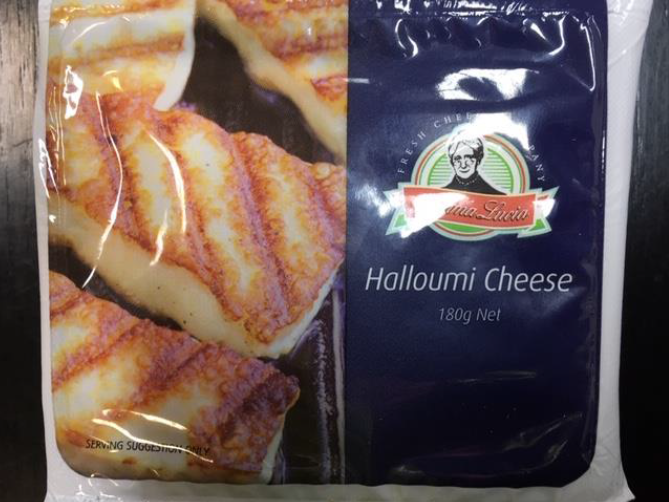
| Product identification | |
|---|---|
| Product type | Cheese |
| Name of product (size) | Mamma Lucia brand Halloumi Cheese (180g) |
| Batch marking | 20139 |
| Date marking | Use by 14 11 20 |
| Package size and description | The product is sold in a 180g plastic package. |
| Distribution | The product is imported from Australia.
The affected product has only been sold at Mediterranean Foods Trattoria & Deli, 42 Constable Street, Newtown, Wellington. |
| Notes | This recall does not affect any other Mamma Lucia brand products. |
Customers are asked to check the batch and date mark printed on the product packaging.
Affected product should not be consumed. There have been no reports of associated illness, however if you have consumed any of this product and have any concerns about your health, seek medical advice.
Customers should return the product to their retailer for a full refund.
Escherichia coli (E. coli) is a bacterium that normally lives in the intestines of people and other warm-blooded animals. Although most strains of E. coli are harmless, some types can cause serious illness with severe diarrhoea and stomach cramps.
If you have questions, contact Mediterranean Foods (Wgtn) Limited:
Posted in E.coli, food contamination, food handler, Food Hygiene, Food Inspections, Food Micro Blog, Food Microbiology, Food Microbiology Blog, Food Microbiology Research, Food Microbiology Testing, Food Pathogen, Food Poisoning, food recall, Food Safety, Food Safety Alert, Food Testing, Food Toxin, MPI, Uncategorized
A popular City Road café in the Welsh capital was closed down after around 100 cockroaches were discovered in the kitchen and dining area.
The insects were found at Mr Tikka on City Road in Roath, Cardiff, when council officers carried out an unannounced routine inspection on May 7 of last year.
When officers arrived, the owner, Rubi Begum, was seen sweeping two live insects off the counter and white powder – believed to be an insecticide – was on the kitchen floor.
More insects, including German cockroaches, which pose a significant health risk, were later discovered in the kitchen and dining area where customers were eating.
Posted in bacterial contamination, cross contamination, food contamination, Food Hygiene, Food Inspections, Food Micro Blog, Food Microbiology, Food Microbiology Blog, Food Microbiology Research, Food Microbiology Testing, Food Pathogen, Food Safety, Food Spoilage, Food Testing, microbial contamination, Research, Salmonella, Uncategorized


