Brand : CHIARELLI PIERLUIGI
Name : RAW MILK CHEESE – FORMAGGELLA
Reason for reporting : Recall due to microbiological risk
Publication date : 1 December 2020


Brand : CHIARELLI PIERLUIGI
Name : RAW MILK CHEESE – FORMAGGELLA
Reason for reporting : Recall due to microbiological risk
Publication date : 1 December 2020
Posted in Bacteria, bacterial contamination, food contamination, Food Hygiene, Food Inspections, Food Micro Blog, Food Microbiology, Food Microbiology Blog, Food Microbiology Testing, Food Pathogen, food recall, Food Safety, Food Safety Alert, Food Testing, Listeria, Listeria monocytogenes, Raw Milk, raw milk cheese

Presence of salmonella.
Those in possession of this product are asked not to consume it and to return it to the point of sale where it was purchased for reimbursement.
Foodborne illness caused by Salmonella results in gastrointestinal disturbances, diarrhea, vomiting and abdominal pain, often accompanied by fever; these symptoms may be more severe in young children, immunocompromised individuals and the elderly. The incubation period can range from 6 to 72 hours.
People who have consumed the products mentioned below and who have these symptoms are invited to consult their doctor, notifying him of this consumption.
▸ Catalan peasant
fuet • Lot: 020373 – 0203377 – 020381
• DLC: 01/30/21
▸ Catalan peppered peasant
fuet
• Lot: 020369 • BBE: 30/01/21
▸ Catalan peasant onion
fuet • Lot: 020369 – 020384
• BBE: 01/30/21
▸ Catalan peasant fine herbs
fuet
• Lot: 020369 • BBE: 01/30/21
▸ Fuet extra red pepper
• Lot: 020384
• BBE: 30/01/21
▸ Packaging
Flow-pack sachets or without packaging
▸ Net weight
170g
▸ Sanitary
stamp ES 10.01867 / GE CE
▸ Consumer service contact
The Company “ROUSSILLON SALAISONS” is available to consumers to answer their questions at the telephone number: 04.68.52.97.80
▸ Source
https://www.supercasino.fr/
Brand : TAVOLA ITALIA
Name : SPICY WASTED ABRUZZESE SAUSAGE
Reason for reporting : Recall due to microbiological risk
Publication date : 2 December 2020
Posted in Bacteria, bacterial contamination, food contamination, Food Hygiene, Food Inspections, Food Micro Blog, Food Microbiology, Food Microbiology Blog, Food Microbiology Testing, Food Pathogen, food recall, Food Safety, Food Safety Alert, Food Testing, microbial contamination, Microbiology, Salmonella
Shenandoah Growers, Harrisonburg, Va., has recalled about 15,000 units of organic basil in select packages, due to a possible health risk from Cyclospora.
The recall is limited and voluntary, according to a Food and Drug Administration news release.
These items were packed under branded and private label fresh-cut, USDA-certified organic basil clamshells at its Jefferson, Ga., facility and Harrisonburg facilities with 19 lot codes, all with the country of origin of Colombia.
Recalled products were distributed to retail stores between Oct. 20-30 in states including Georgia, Tennessee, Florida, Virginia, Pennsylvania, Maryland, Connecticut, Delaware, New Jersey, New York and Washington, D.C.
No other Shenandoah Growers products are subject to recall, and the company has no knowledge of any illness reported or related to this product, according to the release.
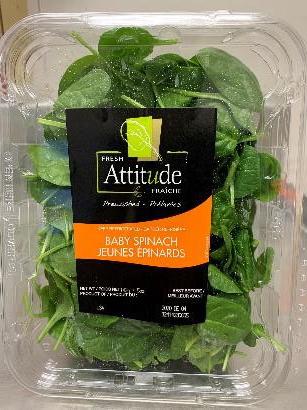
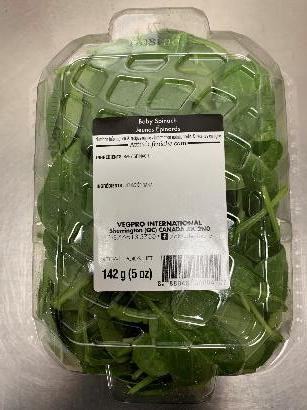
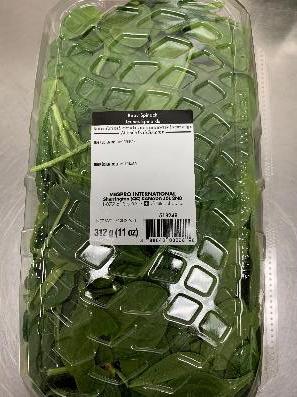
Vegpro International of Sherrington, QC CAN is recalling Fresh Attitude baby spinach (5oz and 11oz) with Best before dates of Dec 4th (for 11oz) and Dec 4th & 5th (for the 5oz), because it has the potential to be contaminated with Salmonella, an organism which can cause serious and sometimes fatal infections in young children, frail or elderly people, and others with weakened immune systems. Healthy persons infected with Salmonella often experience fever, diarrhea (which may be bloody), nausea, vomiting and abdominal pain. In rare circumstances, infection with Salmonella can result in the organism getting into the bloodstream and producing more severe illnesses such as arterial infections (i.e., infected aneurysms), endocarditis and arthritis
These products were produced in Vegpro’s Eastern Canadian plant and have been distributed ONLY in Eastern Canada and in the Northeastern United States (NY,NJ, DE, CT,MD & PA ). All other Fresh Attitude product sold in the US is produced in Belle-Glade Florida and is not linked to this recall whatsoever and therefore safe for consumption.
No illnesses have been reported to date.
The recall was initiated after it was discovered that the product was possibly contaminated with Salmonella subsequent investigation indicates that the problem may have been caused by contamination of a part of a lot of Baby Spinach.
Veg Pro recalled due to health risk
Consumers who have purchased these products are urged to return it to the place of purchase for a full refund. Consumers with questions may contact the company at 1-877-613-5700 or on our website at: http://vegpro.com/contact/

Posted in Bacteria, bacterial contamination, food contamination, Food Hygiene, Food Inspections, Food Microbiology, Food Microbiology Blog, Food Microbiology Testing, Food Pathogen, Food Poisoning, food recall, Food Safety, Food Safety Alert, Food Testing, microbial contamination, Microbiology, Salmonella

When vegetable farmers harvest crops, they often rely on postharvest washing to reduce any foodborne pathogens, but a new University of Georgia study shows promise in reducing these pathogens — as well as lowering labor costs — by applying sanitizers to produce while it is still in the fields.
Salmonella, Shiga toxin-producing E. coli and Listeria monocytogenes are major causes of foodborne diseases and of public health concern in the U.S. Tomato-associated salmonella outbreaks reported to the Centers for Disease Control and Prevention have increased in frequency and magnitude in recent years, and fresh produce accounted for 21% of E. coli outbreaks reported to the CDC over a 20-year span.
Initially researchers were going to study the use of a nonchlorine-based sanitizer made of two food additives approved by the U.S. Food and Drug Administration — levulinic acid and sodium dodecyl sulfate — as a postharvest wash solution. However, at the suggestion of a producer involved in the study — Bill Brim of Lewis Taylor Farms in Tifton, Georgia — they designed the study using the solution in a preharvest spray, said Tong Zhao, associate research scientist with the Center for Food Safety on the UGA Griffin campus.
While producers commonly use chlorine-based disinfectants — including chlorine gas, sodium hypochlorite, calcium hypochlorite and chlorine dioxide — to treat produce postharvest, the preharvest application of bactericides is not a common practice, Zhao said.
Posted in Bacteria, bacterial contamination, E.coli, food contamination, Food Inspections, Food Micro Blog, Food Microbiology, Food Microbiology Blog, Food Microbiology Research, Food Microbiology Testing, Food Pathogen, Food Poisoning, Food Safety, Food Technology, Listeria, Listeria monocytogenes, Research, Salmonella, STEC, STEC E.coli
Four people have fallen sick from two suspected food poisoning cases after eating a chicken dish at Chicken Soup Noodle House in Pilkem Street in Jordan, the Center for Health Protection said today.
All the patients were in stable condition as of last night.
In the first case, a 39-year-old man and a 41-year-old woman developed symptoms such as abdominal pains, diarrhea and vomiting within 9.5 to ten hours after consuming the chicken dish at the eatery on November 21.
In another case, two women aged between 32 and 34 developed similar symptoms within 10 to 12.5 hours after eating the same dish from the restaurant on November 22.
Brand : TAVOLA ITALIA
Name : SPICY WASTED ABRUZZESE SAUSAGE
Reason for reporting : Recall due to microbiological risk
Publication date : 30 November 2020

Mainly children are sick in a Salmonella outbreak in France linked to a type of dried sausage.
There have been 26 cases of salmonellosis, 17 of which concern children, identified by the National Reference Center for Salmonella at Institut Pasteur and Santé publique France in October and November. Those interviewed fell ill from Sept. 22 and ate dry sausages bought in the same store.
The link between Salmonella Bovismorbificans illness and consumption of dry cold meats manufactured by France Salaison was confirmed earlier this month by the Directorate General for Food (DGAL), the Directorate General for Health and Santé publique France. The company is based in Saint-Symphorien-sur-Coise in the Rhone region of France.
Potentially contaminated product has also been sent to Belgium, Luxembourg, Poland, Portugal and Slovenia.
Posted in Bacteria, bacterial contamination, food bourne outbreak, food contamination, Food Hygiene, Food Illness, Food Inspections, Food Micro Blog, Food Microbiology, Food Microbiology Blog, Food Microbiology Testing, Food Pathogen, Food Poisoning, food recall, Food Safety, Food Safety Alert, Food Testing, foodborne outbreak, foodbourne outbreak, outbreak, Salmonella


