Five European countries have reported Salmonella infections with at least some of them linked to tahini and halva from Syria.
Up to 80 people may have been affected since 2019 in Germany, Sweden, Norway, Denmark and the Netherlands with several types of Salmonella being linked to the outbreak.
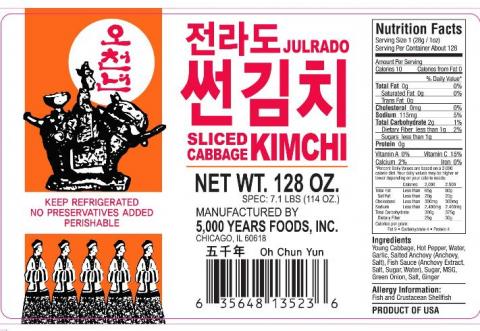
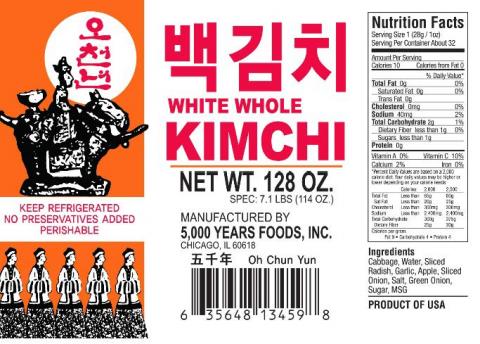
5000 YEARS FOODS, INC. of CHICAGO, ILLINOIS is recalling SLICED CABBAGE KIMCHI, WHOLE CABBAGE KIMCHI, JULRADO WHOLE CABBAGE KIMCHI, JULRADO SLICED CABBAGE KIMCHI, NO MSG WHOLE CABBAGE KIMCHI, NO MSG SLICED CABBAGE KIMCHI, NO MSG JULRADO WHOLE CABBAGE KIMCHI, NO MSG JULRADO SLICED CABBAGE KIMCHI, WHITE KIMCHI, BABY NAPA KIMCHI because it has the potential to be contaminated with Listeria monocytogenes, an organism which can cause serious and sometimes fatal infections in young children, frail or elderly people, and others with weakened immune systems. Although healthy individuals may suffer only short-term symptoms such as high fever, severe headache, stiffness, nausea, abdominal pain and diarrhea, Listeria infection can cause miscarriages and stillbirths among pregnant women.
The recalled product was distributed in ILLINOIS where the product was further distributed and it reached customers through distributors to retail stores potentially nationwide.
The recalled product was sold in 5GAL plastic tubs, and 128 oz, 64 oz, 32 oz, & 16 oz glass jars under the 5000 Years Foods brand name with code information “09052021” through “09252021” printed on the top of the lid.
–No illnesses have been reported to date.
The recall was the result of sampling by the FDA that found Listeria monocytogenes in the production facility. We, 5000 Years Foods, Inc., corrected all actions via FDA guideline and we are waiting for the environmental test result from a licensed laboratory.
Consumers who have purchased the recalled products should not consume them, and are urged to dispose of them or return them to the place of purchase for a refund. Consumers with questions may contact the company at 1-773-509-8600. (Mon-Fri 9:00 AM -4:o0 PM)
Ottawa, July 14, 2021 – Fruiterie Milano Inc. is recalling La Bella Contadina brand Burrata Nadi con latte di bufala (cheese) from the marketplace due to possible Listeria monocytogenes contamination. Consumers should not consume the recalled product described below.
Recalled product
Brand
Product
Size
UPC
Codes
La Bella Contadina
Burrata Nadi con latte di bufala (cheese)
200 g
8 032891 701270
21/07/21 L21175
What you should do
If you think you became sick from consuming a recalled product, call your doctor.
Check to see if you have the recalled product in your home. Recalled products should be thrown out or returned to the store where they were purchased.
Food contaminated with Listeria monocytogenes may not look or smell spoiled but can still make you sick. Symptoms can include vomiting, nausea, persistent fever, muscle aches, severe headache and neck stiffness. Pregnant women, the elderly and people with weakened immune systems are particularly at risk. Although infected pregnant women may experience only mild, flu-like symptoms, the infection can lead to premature delivery, infection of the newborn or even stillbirth. In severe cases of illness, people may die.
Background
This recall was triggered by Canadian Food Inspection Agency (CFIA) test results. The CFIA is conducting a food safety investigation, which may lead to the recall of other products. If other high-risk products are recalled, the CFIA will notify the public through updated Food Recall Warnings.
The CFIA is verifying that industry is removing the recalled product from the marketplace.
Illnesses
There have been no reported illnesses associated with the consumption of this product.
Product identificationLotDated21187-3017Use-by date 07/14/2021
Packaging350g tray
Start date / End of marketingFrom 07/06/2021 to 07/14/2021
Storage temperatureProduct to be stored in the refrigerator
Health markFR.13.097.003.CE
Geographical sales areaWhole France
DistributorsCASINO-CARNIVOR-OLIFRE-LEADER PRICE
Practical information regarding the recall
Reason for recall Suspicion of E.coli O157H7
Risks incurred by the consumer Toxinogenic Escherichia coli shiga (STEC)
Additional description of the risk Food poisoning caused by pathogenic E. coli results in gastrointestinal disorders often accompanied by fever within 48 hours of consuming the products.
Consumer behavior Stop consuming Return the product to the point of sale
Sanitary recommendation Escherichia coli O0157: H7 can cause in the week which follows the consumption of contaminated products, sometimes bloody diarrhea, abdominal pain and vomiting, with or without fever. These symptoms can be followed (5 to 8% of cases) by severe kidney complications, mainly in children. People who have consumed the products mentioned above and who present this type of symptoms are invited to consult their doctor without delay, notifying him of this consumption as well as the place and date of purchase. In the absence of symptoms within 10 days after consuming the affected products, there is no need to worry and consult a doctor. Generally speaking, the health authorities recall that as a precaution, raw milk and cheeses made from raw milk should not be consumed by young children, particularly those under 5 years old; preferred cooked cheeses (Emmental, Comté, etc.), processed cheese spreads and cheeses made from pasteurized milk. The same recommendation should be followed for pregnant women, immunocompromised people and the elderly.
Compensation modalities Refund
End date of the recall procedure Thursday, August 12, 2021
Start date / End of marketing From 07/06/2021 to 07/14/2021
Storage temperature Product to be stored in the refrigerator
Health markFR.13.097.003.CE
Geographical sales area Whole France
Distributors CASINO-CARNIVOR-OLIFRE-LEADER PRICE
Practical information regarding the recall
Reason for recall suspicion of E.coli O157H7
Risks incurred by the consumer Toxinogenic Escherichia coli shiga (STEC)
Additional description of the riskFood poisoning caused by pathogenic E. coli results in gastrointestinal disorders often accompanied by fever within 48 hours of consuming the products.
Consumer behavior Stop consuming Return the product to the point of sale
Sanitary recommendation Escherichia coli O157: H7 can cause in the week which follows the consumption of contaminated products, sometimes bloody diarrhea, abdominal pain and vomiting, with or without fever. These symptoms can be followed (5 to 8% of cases) by severe kidney complications, mainly in children. People who have consumed the products mentioned above and who present this type of symptoms are invited to consult their doctor without delay, notifying him of this consumption as well as the place and date of purchase. In the absence of symptoms within 10 days after consuming the affected products, there is no need to worry and consult a doctor. Generally speaking, the health authorities recall that as a precaution, raw milk and cheeses made from raw milk should not be consumed by young children, particularly those under 5 years old; preferred cooked cheeses (Emmental, Comté, etc.), processed cheese spreads and cheeses made from pasteurized milk. The same recommendation should be followed for pregnant women, immunocompromised people and the elderly.
Compensation modalities Refund
End date of the recall procedure Thursday, August 12, 2021
Consumers do not consider flour, a low-moisture food product, a high risk for microbial contamination. In the past 10 years, however, flour has been identified as a source of pathogenic bacteria, including Salmonella and Escherichia coli. Online surveys were conducted to study consumers’ flour handling practices and knowledge about food safety risks related to flour. The survey also evaluated message impact on three food safety messages in communicating information and convincing consumers to adopt safe flour handling practices. Flour-using consumers (n = 1,045) from the United States reported they used flour to make cakes, cookies, and bread. Most consumers stored flour in sealed containers. Less than 1% kept a record of product identification numbers, such as lot numbers, and less than 11% kept brand and use-by date information. Many consumers (85%) were unaware of flour recalls, or outbreaks, and few (17%) believed they would be affected by flour recalls or outbreaks. If the recall affected the flour they bought, nearly half of the consumers (47%) would buy the same product from a different brand for a few months before they returned to the recalled brand. Among consumers who use flour to bake, 66% said they ate raw cookie dough or batter. Raw dough “eaters” were more difficult to convince to avoid eating and playing with raw flour than “noneaters.” Food safety messages were less impactful on those raw dough eaters than noneaters. Compared with the food safety message with only recommendations, those messages with recommendations and an explanation as to the benefits of the practice were more effective in convincing consumers to change their practices. These findings provide insight into effective consumer education about safe flour handling practices and could assist in the accurate development of risk assessment models related to flour handling.