Category Archives: Food Pathogen

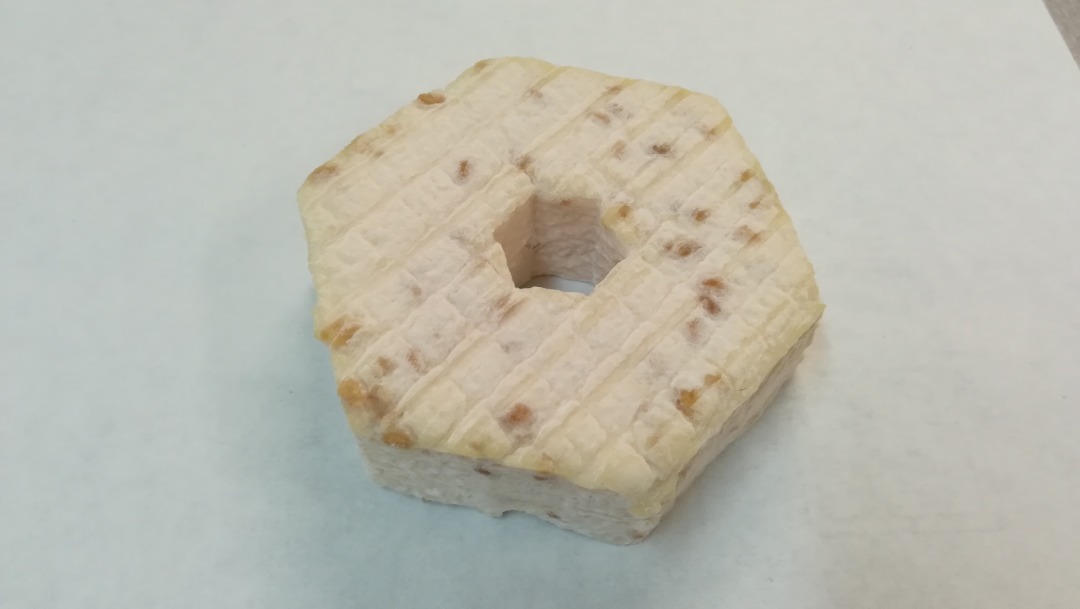
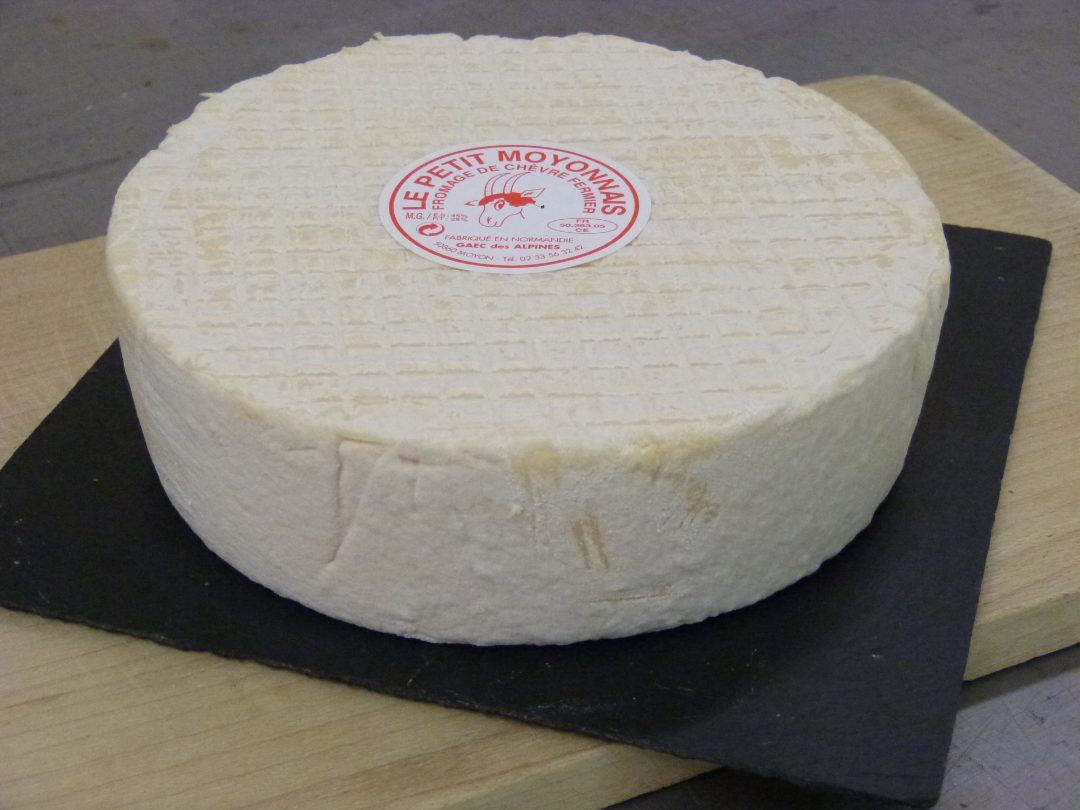
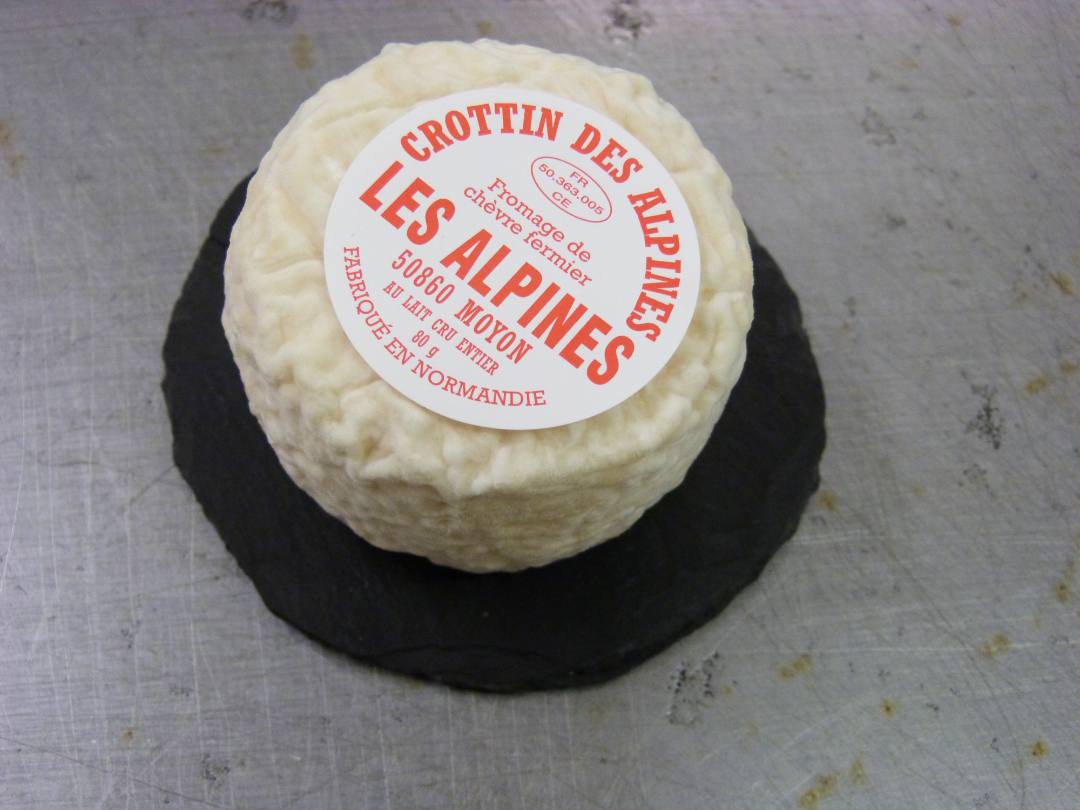
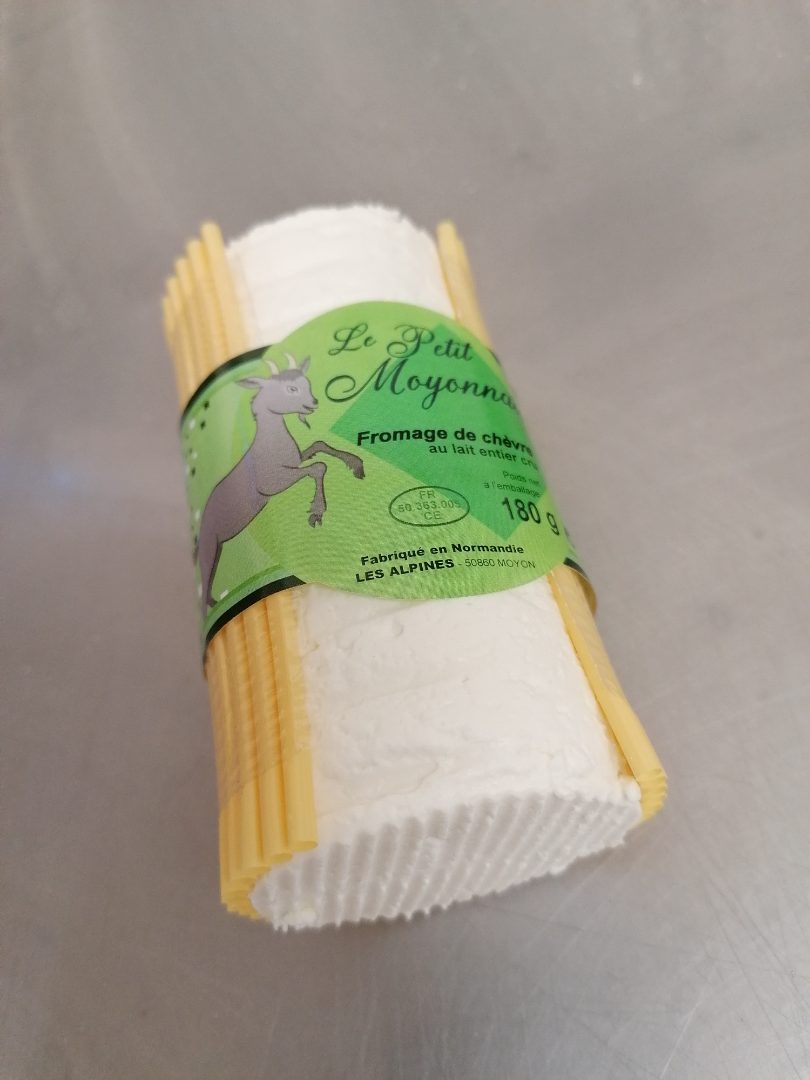
France – Alpine goat cheese – Listeria monocytogenes

Gov france

Identification information of the recalled product

  • Product category Feed
  • Product subcategory Milk and dairy products
  • Product brand name The Alpines
  • Model names or references Crottins des Alpines Tome of lactic goat cheese Le petit Moyonnais Cheese nut with fenugreek seeds Ash cheese nut Buche le petit Moyonnais
  • Identification of products
    Batch Date
    0710 to 0730 Date of minimum durability 30/08/2022
  • Products List product_to_recall_lot_0710_to_0730.pdf Attachment
  • Marketing start/end date From 15/07/2022 to 04/08/2022
  • Storage temperature Product to be stored in the refrigerator
  • Health mark50,363,005
  • Geographic area of ​​sale Whole France
  • Distributors cheese dairy traders – itinerant traders – traditional department of supermarkets

Practical information regarding the recall

  • Reason for recall Listeria
  • Risks incurred by the consumer Listeria monocytogenes (causative agent of listeriosis)

Norway – Outbreak of Salmonella in Norway probably linked to watermelon

Matportalen

The Institute of Public Health has discovered a national outbreak caused by the gastrointestinal bacterium monophasic Salmonella Typhimurium. So far, infection has been detected in 18 people. The Norwegian Food Safety Authority cooperates with the Norwegian Institute of Public Health and the Norwegian Veterinary Institute on the outbreak. The Norwegian Food Safety Authority is now working to trace the relevant watermelons.

– We consider it highly unlikely that melons associated with the outbreak are still on the market, says senior adviser Catherine Signe Svindland at the Norwegian Food Safety Authority.

According to the Norwegian Institute of Public Health, all 13 people who have been interviewed so far have eaten watermelon in the last few days before they fell ill. Most of the people fell ill in the period from the end of June to the middle of July 2022 and whole watermelon has a shelf life of 3-4 weeks.

– Melon grows on the ground in countries with a warm climate. There have previously been many outbreaks of salmonella from various types of melon. Bacteria grow very well in the melon flesh because melon has a neutral PH compared to other fruits, a lot of sugar and a high water content. If there is a wound through the skin, bacteria can enter the pulp, grow and become very numerous. Bacteria can also enter the pulp from the skin when you split the melon. If you buy ready-cut melon, feel free to ask the shop about their routines, says senior advisor Catherine Signe Svindland at the Norwegian Food Safety Authority.

The Norwegian Food Safety Authority has the following advice on safe handling of melons:

  • Do not use melons with damage to the skin that goes into the pulp.
  • Wash the melon well and dry it with paper before cutting it into pieces.
  • Wash your hands and equipment thoroughly with soap and water after handling melon.
  • Sliced ​​melon should be kept cool.

Read more at the Institute of Public Health: Outbreak of Salmonella in Norway probably linked to watermelon (fhi.no)

Read more at the Veterinary Institute: Outbreak of salmonella probably linked to watermelon (vetinst.no)

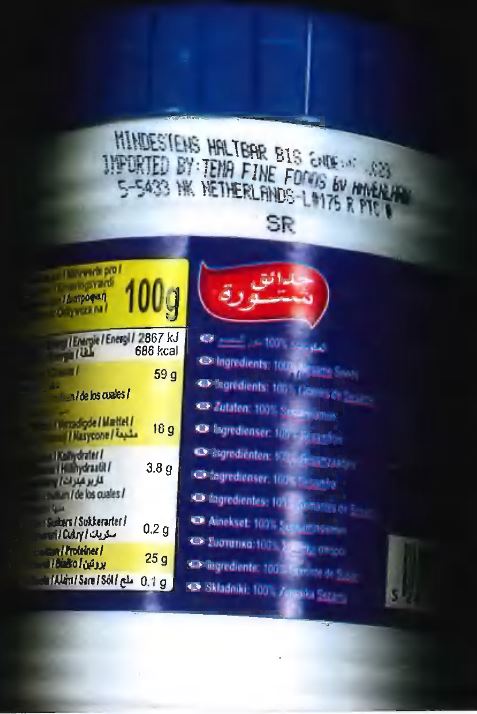
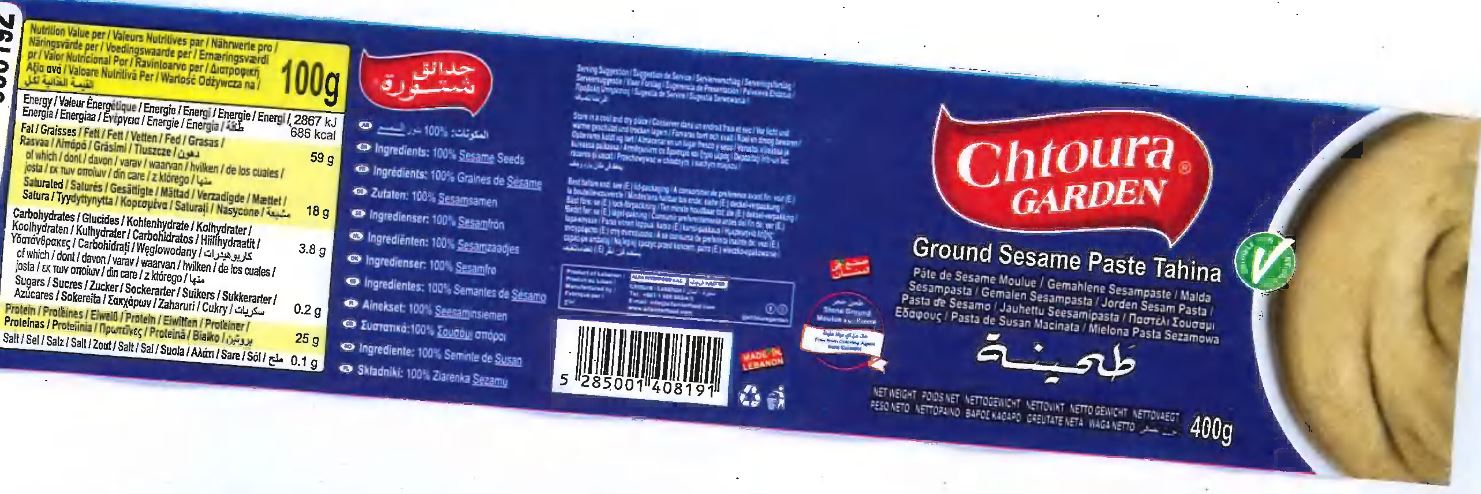
Germany – Chtoura Garden Ground Sesame Paste Tahina – Salmonella

LMW

Alert type: Food
Date of first publication: 08/11/2022
Product name:

Chtoura Garden Ground Sesame Paste Tahina

Product images:

Can in front.JPG

Packaging box.JPG

Banderole.JPG

Manufacturer (distributor):

Kaadan Alshalati Ahmad Feras August-Wilhelm-Kühnholz-Str. 8 26135 Oldenburg

Reason for warning:

Detection of Salmonella

Packaging Unit: Plastic screw-top jar
Durability: 06/2023
Lot identification: L#175 R PTC, SR
Further information:

Salmonella disease manifests itself within a few days after infection with diarrhoea, abdominal pain and occasionally vomiting and a slight fever. The symptoms usually subside on their own after a few days. Babies, small children, senior citizens and people with a weakened immune system in particular can develop more severe illnesses. Anyone who has eaten this food and develops severe or persistent symptoms should seek medical attention and report possible salmonella infection.

It makes no sense to seek preventive medical treatment without symptoms.

Further information on the pathogen can be found here: http://www.infection-protection.de/erregersteckbriefe/salmonellen

Click to access R%FCckruf+Chtoura+Garden+Sesame+Tahini+20220809.pdf

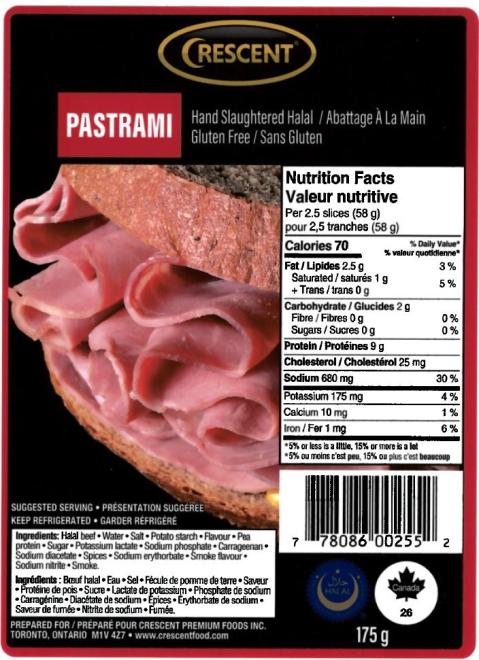
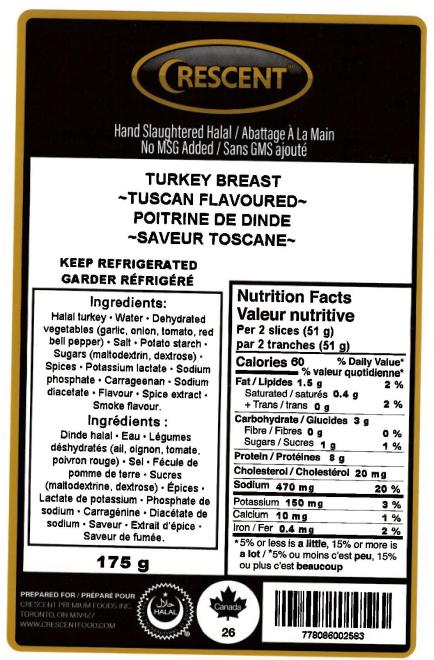
Canada – Crescent brand Pastrami and Turkey Breast – Tuscan Flavoured recalled due to Listeria monocytogenes

CFIA

Summary

Product
Pastrami, Turkey Breast – Tuscan Flavoured
Issue
Food – Microbial Contamination – Listeria
What to do

Do not consume, use, sell, serve, or distribute recalled products

Issue

The affected products are being recalled from the marketplace due to possible Listeria monocytogenes contamination.

The recalled products have been sold in Ontario.

What you should do

  • If you think you became sick from consuming a recalled product, contact your healthcare provider
  • Check to see if you have recalled products
  • Do not consume, serve, use, sell, or distribute recalled products
  • Recalled products should be thrown out or returned to the location where they were purchased

Food contaminated with Listeria monocytogenes may not look or smell spoiled but can still make you sick. Symptoms can include vomiting, nausea, persistent fever, muscle aches, severe headache and neck stiffness. Pregnant women, the elderly and people with weakened immune systems are particularly at risk. Although infected pregnant women may experience only mild, flu-like symptoms, the infection can lead to premature delivery, infection of the newborn or even stillbirth. In severe cases of illness, people may die.

RASFF Alert – Hepatitis E – Seaweed Salad

RASFF

Hepatitis E in Wakame Salad (seeweed salad) from the Netherlands in Denmark

RASFF Alerts – Listeria monocytogenes – Smoked Salmon – RTE Products – Steam Cooked Shredded Chicken Breast

RASFF

Listeria monocytogenes in smoked sliced salmon from Poland, via Germany in the Netherlands and Spain

RASFF

Listeria monocytogenes in RTE product from Slovakia in Poland

RASFF

Listeria monocytogenes in steam cooked shredded chicken breast filet from Thailand in Belgium, Denmark, Netherlands and Sweden

RASFF Alerts – Norovirus – Frozen Raspberries

RASFF

Norovirus group II detected in frozen raspberries from France in Spain, Ivory Coast and Cameroon

RASFF Alerts – Salmonella – Polish Chicken Products – Sesame Seeds – Brazil Chicken – Crayfish – Clams – Sesame Paste – Veal Medallions – Minced Meat- Dumpling with Chicken and Beef – Poultry Meat Preparation – Frozen Turkey Drumsticks

RASFF

Salmonella in crayfish from China in Sweden

RASFF

Salmonella spp in clams (R.philippinarum) from Italy in Romania and Slovenia

RASFF

Salmonella spp. in sesame paste from Syria in Germany and France

RASFF

Salmonella Enteritidis in chicken neck skin from Poland in Slovenia

RASFF

Salmonella in Veal medallions marinated meditarrane from the Netherlands in Germany

RASFF

Salmonella spp. in minced meat in Romania in Hungary

RASFF

Salmonella spp. in chicken meat from Brazil in Germany

RASFF

Salmonella in dumplings with chicken and beef filling from Germany in Estonia

RASFF

Salmonella Enteritidis in raw diced chicken from Poland in Ireland

RASFF

SALMONELLA IN SESAME SEEDS FROM NIGERIA in Greece

RASFF

SALMONELLA IN SESAME SEEDS FROM NIGERIA in Greece

RASFF

Salmonella in poultry meat preparation. from Thailand in the Netherlands and Germany

RASFF

Salmonella Enteritidis in environmental sampling – Chicken Meat from Poland in France and Lithuania

RASFF

SALMONELLA IN SESAME SEEDS FROM NIGERIA in Greece

RASFF

SALMONELLA IN SESAME SEEDS FROM NIGERIA in Greece

RASFF

SALMONELLA IN SESAME SEEDS FROM NIGERIA in Greece

RASFF

Salmonella in sesame seeds from Sudan in the Netherlands

RASFF

Salmonella in frozen turkey drumstick meat from Spain in France

RASFF

SALMONELLA IN SESAME SEEDS FROM NIGERIA in Greece and Turkey

RASFF

SALMONELLA IN SESAME SEEDS FROM ETHIOPIA in Greece

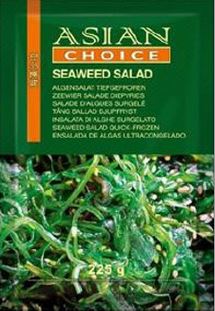
Luxembourg – RECALL: ASIAN CHOICE BRAND SEAWEED SALAD (FROZEN SEAWEED SALAD)

SAP

Last name Algensalat tiefgefroren / frozen seaweed salad Seaweed Salad
Mark AsianChoice
Unity 225g
bar code 8717677865734
Date of minimum durability (MDD) 07/25/2023
Batch 2111040038

Danger  : Possible presence of Hepatitis type E

Sale in Luxembourg by: Dafa Supermarket Luxembourg and Edens sa

A sale by other operators cannot be excluded.

Communicated by: Government Commission for Quality, Fraud and Food Safety

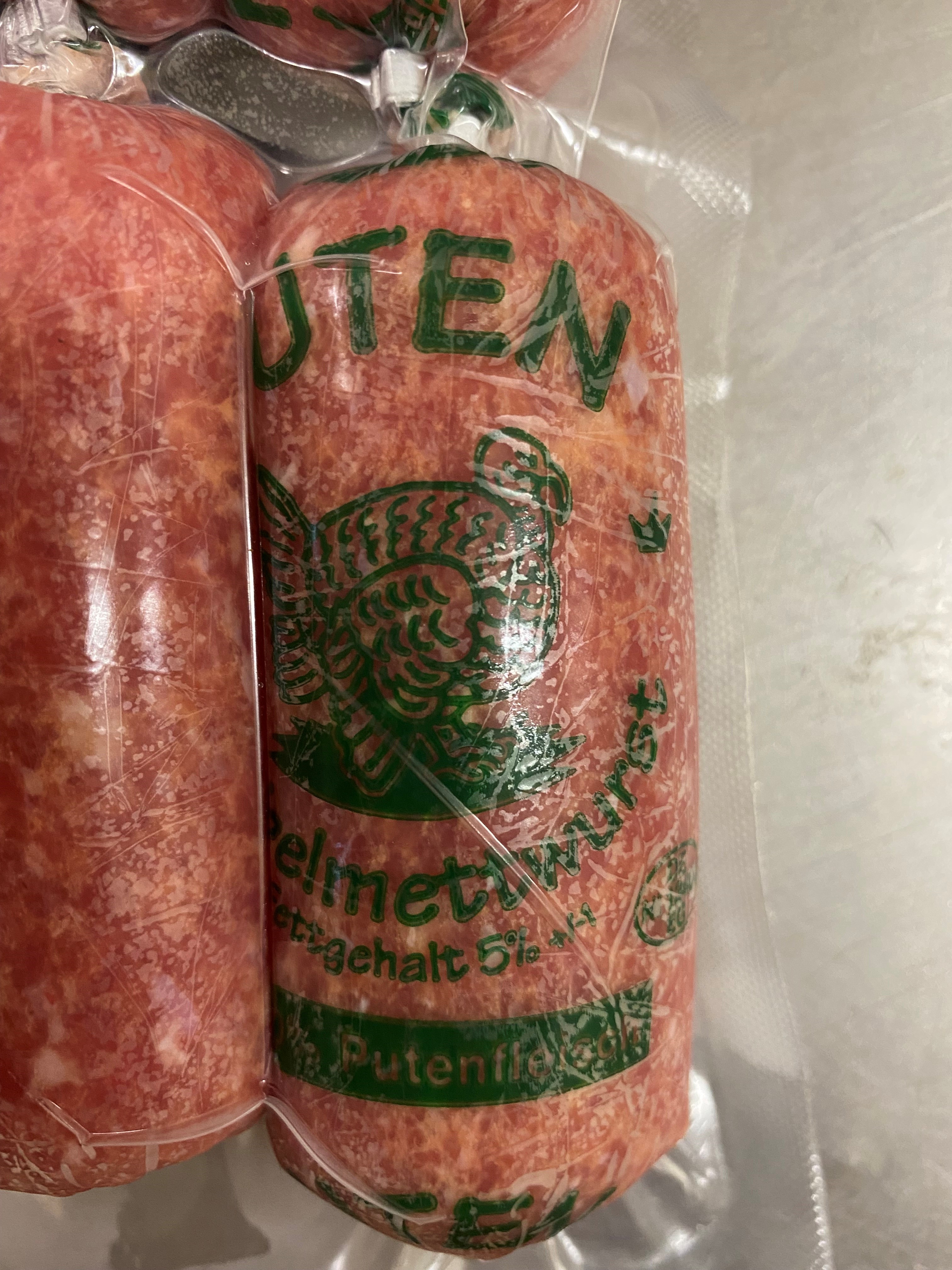
Germany – Turkey Onion Mettwurst SB – Listeria monocytogenes

LMW

Alert type: Food
Date of first publication: 08/10/2022
Product name:

Turkey Onion Mettwurst SB

Product images:

Putzwiebelmett.jpg

Provided by manufacturer

Manufacturer (distributor):

Heinrich Aldag Altländer Fleisch – und Wurstwaren GmbH & Co. KG, Dollener Straße 18 21720 Guderhandviertel

Reason for warning: Listeria detection
Packaging Unit: 500g, 1000g
Durability: 08/10/2022
Lot identification: 210722
Further information:

Listeria disease usually manifests itself within 14 days after infection with diarrhea and fever. Pregnant women, the elderly and people with a weakened immune system in particular can develop more severe illnesses with blood poisoning and meningitis. In pregnant women, even without symptoms, the unborn child can be harmed. Anyone who has eaten this food and develops severe or persistent symptoms should seek medical attention and report possible Listeria infection. Pregnant women who have eaten this food should seek medical treatment and advice even if they have no symptoms. For other people without symptoms, this is not useful.