Category Archives: Food Microbiology Research

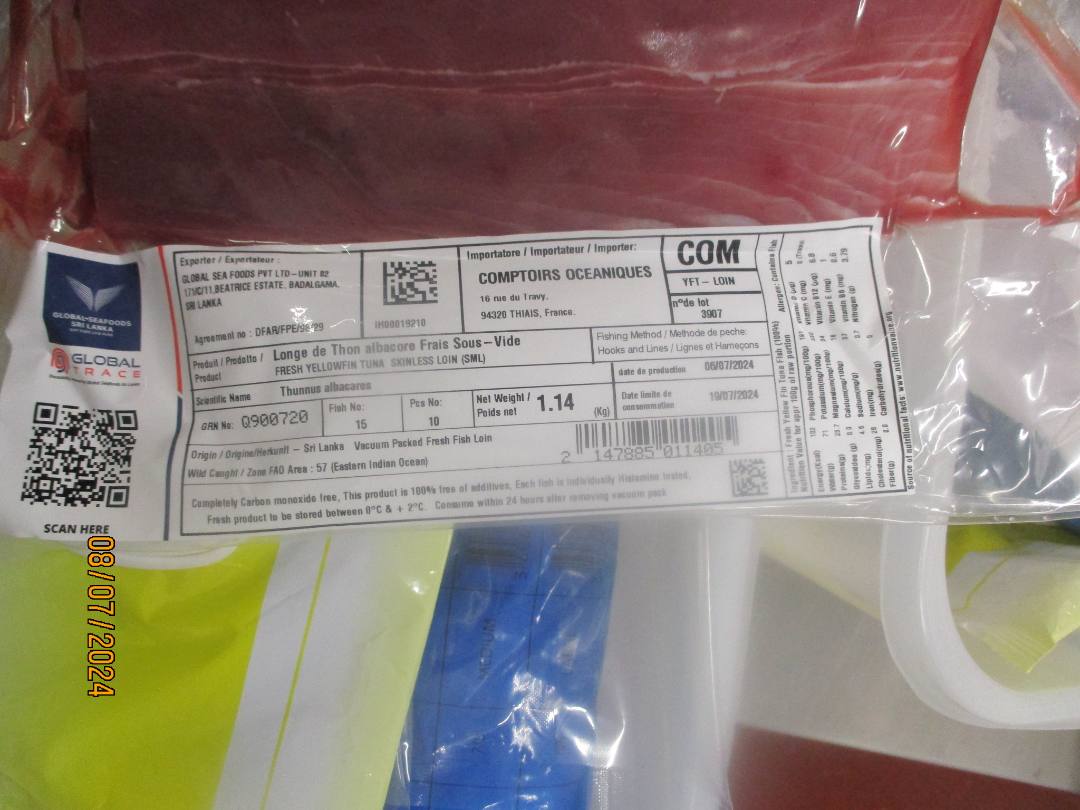
France – SKINLESS ALBACOR TUNA LOIN OI FAO 57 – Salmonella

Gov France

Product Category
Food
Product subcategory
Fishery and aquaculture products
Product brand name
FISH IS LIFE- UNBRANDED
Model names or references
FRESH SKINLESS ALBACOR TUNA LOIN OI FAO 57
Product identification
Batch Date
3907 // 00404699 Expiry date 07/19/2024
Products List
List_products.pdfAttachment
Packaging
Under a vacuum
Start/End of marketing date
From 07/08/2024 to 07/19/2024
Storage temperature
Product to be kept in the refrigerator
Health mark
DFAR/FPE/98/29
Geographic area of ​​sale
Whole France
Distributors
Promocash, Pomona Terre Azur, Carrefour Belgium

Research – Salmonella prevalence in raw cocoa beans and a microbiological risk assessment to evaluate the impact of cocoa liquor processing on the reduction of Salmonella

Science Direct

Abstract

Salmonella in raw cocoa beans (n= 870) from main sourcing areas over nine months was analyzed. It was detected in 71 (ca. 8.2%) samples, with a contamination level of 0.3-46 MPN/g except for one sample (4.1×10⁴ CFU/g). Using prevalence and concentration data as input, the impact of thermal treatment in cocoa processing on the risk estimate of acquiring salmonellosis by a random Belgian chocolate consumer was calculated by a quantitative microbiological risk assessment (QMRA) approach. A modular process risk model from raw cocoa beans to cocoa liquor up to a hypothetical final product (70-90% dark chocolate tablet), was set up to understand changes of Salmonella concentrations following the production process. Different thermal treatments during bean or nib steam, nib roasting or liquor sterilization (achieving a 0-6 log reduction of Salmonella) were simulated. Based on the generic FAO/WHO Salmonella dose-response model and the chocolate consumption data in Belgium, salmonellosis risk per serving and cases per year at population level were estimated. When a 5 log reduction of Salmonella was achieved, the estimated mean risk per serving was 3.35×10⁻⁸ (95% CI: 3.27×10⁻¹⁰-1.59×10⁻⁷), and estimated salmonellosis cases per year (11.7 million population) was 88 (95% CI: <1-418). The estimated mean risk per serving was 3.35×10⁻⁹ (95% CI: 3.27×10⁻¹¹-1.59×10⁻⁸), and the estimated salmonellosis cases per year was 9 (95% CI: <1-42), for a 6 log reduction. The current QMRA model solely considered Salmonella reduction in a single-step thermal treatment in the cocoa process. Inactivation obtained during other process steps (e.g. grinding) might occur but was not considered. As the purpose was to use QMRA as a tool to evaluate the log reduction in the cocoa processing, no post-contamination from the processing environment and ingredients was included. A minimum of 5 log reduction of Salmonella in the single-step thermal treatment of cocoa process, was considered to be adequate.

Belgium – AL’FEZ brand “Natural Tahini” sesame seed paste – Salmonella

AFSCA

tahini

In consultation with the AFSCA, Albert Heijn is recalling the sesame seed paste “Natural Tahini” from the AL’FEZ brand (all expiry dates combined). A check carried out by the producer has detected the presence of salmonella in a limited number of products.

Albert Heijn asks its customers not to consume this product and to return it to the point of sale. It will be refunded.

Product Description :     

  • Product Category: Sesame Seed Paste
  • Product Name: Natural Tahini 
  • Brand: AL’FEZ
  • EAN code: 5010338300890
  • Expiry date (BDD): all
  • Lot: all
  • Weight: 160g
  • Sales period: from January 1, 2023 to July 11, 2024

Product sold in Albert Heijn stores.

For further information please contact Albert Heijn on: 0800 777 05

Research – EFSA – Scientific Committee guidance on appraising and integrating evidence from epidemiological studies for use in EFSA’s scientific assessments

EFSA

Abstract

EFSA requested its Scientific Committee to prepare a guidance document on ap-praising and integrating evidence from epidemiological studies for use in EFSA’s scientific assessments. The guidance document provides an introduction to epidemiological studies and illustrates the typical biases, which may be present in different epidemiological study designs. It then describes key epidemiological concepts relevant for evidence appraisal. This includes brief explanations for measures of association, exposure assessment, statistical inference, systematic error and effect modification. The guidance then describes the concept of external validity and the principles of appraising epidemiological studies. The customisation of the study appraisal process is explained including tailoring of tools for assessing the risk of bias (RoB). Several examples of appraising experimental and observational studies using a RoB tool are annexed to the document to illustrate the application of the approach. The latter part of this guidance focuses on different steps of evidence integration, first within and then across different streams of evidence. With respect to risk characterisation, the guidance considers how evidence from human epidemiological studies can be used in dose–response modelling with several different options being presented. Finally, the guidance addresses the application of uncertainty factors in risk characterisation when using evidence from human epidemiological studies.

USA- Research – Reported Incidence of Infections Caused by Pathogens Transmitted Commonly Through Food: Impact of Increased Use of Culture-Independent Diagnostic Tests —Foodborne Diseases Active Surveillance Network, 1996–2023

CDC

Reducing foodborne disease incidence is a public health priority. This report summarizes preliminary 2023 Foodborne Diseases Active Surveillance Network (FoodNet) data and highlights efforts to increase the representativeness of FoodNet. During 2023, inci-
dences of domestically acquired campylobacteriosis, Shiga toxin- producing Escherichia coli infection, yersiniosis, vibriosis, and cyclosporiasis increased, whereas those of listeriosis, salmonellosis, and shigellosis remained stable compared with incidences during 2016–2018, the baseline used for tracking progress towards federal disease reduction goals. During 2023, the incidence and percent- age of infections diagnosed by culture-independent diagnostic
tests (CIDTs) reported to FoodNet continued to increase, and the percentage of cases that yielded an isolate decreased, affecting observed trends in incidence. Because CIDTs allow for diagnosis of infections that previously would have gone undetected, lack of progress toward disease reduction goals might reflect changing diagnostic practices rather than an actual increase in incidence. Continued surveillance is needed to monitor the impact of chang-
ing diagnostic practices on disease trends, and targeted prevention efforts are needed to meet disease reduction goals. During 2023, FoodNet expanded its catchment area for the first time since 2004. This expansion improved the representativeness of the FoodNet
catchment area, the ability of FoodNet to monitor trends in disease incidence, and the generalizability of FoodNet data.

Research – Positive Legionella Water Tests Understanding Detection Thresholds & Corrective Actions

Legionella Control

This water safety guide examines how the Responsible Person and others tasked with ensuring workplace water safety deal with positive legionella test results.
The guide looks in detail at the UK’s detection thresholds used for Legionella bacteria in water, what these mean in practice and what you need to do if your water samples return a positive result. The article also considers the different types of Legionella bacteria, water sampling strategies and corrective actions to take if a problem is identified.

Legionella Controls

Warren Bruce Court
Warren Bruce Road
Manchester M17 1LB
United Kingdom
t: 0330 223 36 86
e: info@legionellacontrol.com
w: legionellacontrol.com

Research – Microbial Contamination and Disease Outbreaks Associated with Rockmelons (Cucumis melo): Implications for Public Health Protection

MDPI

Abstract

Foodborne illnesses caused by consuming contaminated fresh produce not only pose serious public health risks but also lead to huge economic losses. Rockmelons (cantaloupes) have emerged as a recurrent source of disease outbreaks caused by foodborne pathogens, including Listeria monocytogenes, Salmonella, and Escherichia coli. The most common factor of the outbreaks was the microbial contamination of rockmelons at the farm, and subsequently, the pathogenic bacteria were transferred to the flesh during cutting and processing. One of the deadliest outbreaks occurred in the USA due to L. monocytogenes contamination of rockmelons which caused 33 deaths in 2011. Since then, several guidelines and recommendations have been developed for food safety management to reduce the microbial contamination of melons on farms and post-harvest operations. This article explicitly provides an updated overview of microbiological contamination, disease outbreaks, pathogens prevalence, and mitigation strategies to reduce public health risks due to the consumption of rockmelons.

Ireland – Recall of additional batches of Al’Fez Natural Tahini Smooth and Nutty due to the possible presence of Salmonella

FSAI

Category 1: For Action
Alert Notification: 2024.29 (update 1)
Product Identification: Al’Fez Natural Tahini Smooth & Nutty; pack sizes: 160g and 270g
Batch Code All batches; all best before dates
Country Of Origin: United Kingdom

Message:

Further to FSAI food alert 2024.29, all batches of Al’Fez Natural Tahini Smooth & Nutty are being recalled due to the possible presence of Salmonella. Recall notices will be displayed at point-of-sale.

Nature Of Danger:

People infected with Salmonella typically develop symptoms between 12 and 36 hours after infection, but this can range between 6 and 72 hours. The most common symptom is diarrhoea, which can sometimes be bloody. Other symptoms may include fever, headache and abdominal cramps. The illness usually lasts 4 to 7 days. Diarrhoea can occasionally be severe enough to require hospital admission. The elderly, infants, and those with impaired immune systems are more likely to have a severe illness.

Action Required:

Manufacturers, wholesalers, distributors, caterers & retailers:

Retailers are requested to remove the implicated batches from sale and display recall notices at point-of-sale.

Consumers:

Consumers are advised not to eat the affected batches.

Belgium – “Natural Tahini” sesame cream 160 g from the AL’FEZ brand – Salmonella

AFSCA

tahini

During a check carried out by the producer, the presence of salmonella was detected in a limited number of “Natural Tahini” products of the AL’FEZ brand with the expiry date 07-2025.

As a result, products with the above-mentioned expiration date will be removed from the shelves in all stores. Consumers who have purchased this product are requested not to consume it and to return it to the point of sale.

Product Description :         

Product Category: Sesame Cream

Product Name: Natural Tahini

Brand: AL’FEZ

EAN code: 5010338300890

Expiration date (DDM): all

Weight: 160 g

Sales period: January 1, 2023 to July 4, 2024

This product was distributed in Belgium in the stores Delhaize, Intermarché, Carrefour, Colruyt, Cora, Delfood and Lambrechts (Spar). 

For further information, customers can contact Pietercil Delby’s on 0473 32 34 45.

Belgium – Outbreaks and related illnesses down for 2023 in Belgium

Food Safety News

Figures from Belgium show the number of outbreaks and people sick in them declined in 2023.

The Federal Agency for the Safety of the Food Chain’s (FASFC) annual report reveals that 722 outbreaks were reported: 3,194 people were affected, 76 were hospitalized, and one died. This is lower than the record number in 2022, which saw 830 outbreaks, 4,247 people sick, and two deaths.

Only in six cases in 2023 could it be demonstrated that food was the cause, as food and human samples contained the same bacteria, viruses, or toxins that triggered the disease.