Category Archives: Food Microbiology Blog

Italy – 400 GR CAMPAGNOLO SALAMI – Listeria monocytogenes

Salute

Brand : GABBA SALUMI

Name : 400 GR CAMPAGNOLO SALAMI

Reason for reporting : Remind for microbiological risk

Date of publication : 29 March 2023

Documentation

Documentation

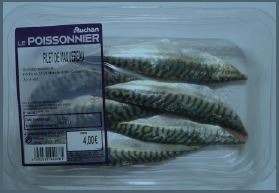
France – MACKEREL FILLET – Histamine

Gov france

Identification information of the recalled product

  • Product category Feed
  • Product subcategory Fishery and aquaculture products
  • Product brand name AUCHAN THE FISHMONGER
  • Model names or references MACKEREL FILLET AUCHAN LE POISSONNIER 200G
  • Identification of products
    GTIN Batch Date
    3254567940881 643/074 & 643/075 & 643/076 Use-by date between 03/15/2023 and 03/23/2023
  • Products List Reminder_poster.pdfAttachment
  • Packaging PACKED IN TRAYS UNDER MODIFIED ATMOSPHERE
  • Marketing start/end date From 03/15/2023 to 03/23/2023
  • Storage temperature Product to be stored in the refrigerator
  • Health mark FR 62 160 172 EC
  • Geographic area of ​​sale Whole France
  • Distributors AUCHAN

Practical information regarding the recall

  • Reason for recall PRESENCE OF HISTAMINE
  • Risks incurred by the consumer Endogenous toxins: histamine (fish, cheese, alcoholic beverages, meats)

Italy – Equine Sfilaccio – Listeria monocytogenes

Salute

Trademark : anonymous legal wording only

Name : Equine Sfilaccio

Reason for reporting : Remind for microbiological risk

Date of publication : 28 March 2023

Documentation

Documentation

Italy – BG- Sfilaccio di Cavallo 100g – Listeria monocytogenes

Salute

Brand : Bernardini Gastone

Name : Sfilaccio di Cavallo 100g

Reason for reporting : Remind for microbiological risk

Date of publication : 28 March 2023

Documentation

Documentation

Italy – BS – Sfilaccio di Cavallo 100g – Listeria monocytogenes

Salute

Brand : Buoni Sapori

Denomination : Sfilaccio di Cavallo 100g

Reason for reporting : Remind for microbiological risk

Date of publication : 28 March 2023

Documentation

Documentation

Research – Effect of Composite Edible Coatings Combined with Modified Atmosphere Packaging on the Storage Quality and Microbiological Properties of Fresh-Cut Pineapple

MDPI

Abstract

This study investigated the effect of edible coating (EC), modified atmosphere packaging (MAP), and edible coating + modified atmosphere packaging (EC + MAP) treatments on the quality of fresh-cut pineapples during storage at 4 °C. The quality differences were analyzed by measuring the quality, physiological indicators, and total microbial counts. After 8 d of storage, the brightness (L*) values of the EC + MAP and control samples were 72.76 and 60.83, respectively. The water loss and respiratory rate of the EC + MAP were significantly inhibited from 0% and 29.33 mg CO2 kg−1 h−1 to 4.13% and 43.84 mg CO2 kg−1 h−1, respectively. Furthermore, the fresh-cut pineapples treated with EC + MAP presented a good appearance, with lower total soluble solids (TSS) and relative conductivity and higher titratable acid (TA), ascorbic acid (AA), total phenol content, and firmness compared to the other treatment groups. At the end of storage, the EC + MAP samples exhibited the lowest polyphenol oxidase (PPO) activity, peroxidase (POD) activity, and malondialdehyde (MDA) content at 28.53 U, 60.37 U, and 1.47 nmol·g−1, respectively. Furthermore, the efficiency of EC + MAP treatment exceeded that of EC or MAP alone, preventing key problems involving the surface browning and microbiological safety of the fresh-cut pineapples. The results showed that EC + MAP treatment was more successful in maintaining the storage quality and extending the shelf life of fresh-cut pineapples.

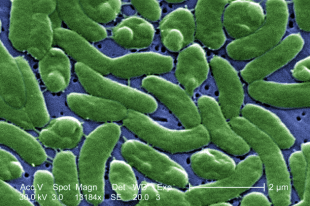
Research – Climate warming and increasing Vibrio vulnificus infections in North America

Nature.com

Vibrio_vulnificus_01

Vibrio vulnificus is an opportunistic bacterial pathogen, occurring in warm low-salinity waters. V. vulnificus wound infections due to seawater exposure are infrequent but mortality rates are high (~ 18%). Seawater bacterial concentrations are increasing but changing disease pattern assessments or climate change projections are rare. Here, using a 30-year database of V. vulnificus cases for the Eastern USA, changing disease distribution was assessed. An ecological niche model was developed, trained and validated to identify links to oceanographic and climate data. This model was used to predict future disease distribution using data simulated by seven Global Climate Models (GCMs) which belong to the newest Coupled Model Intercomparison Project (CMIP6). Risk was estimated by calculating the total population within 200 km of the disease distribution. Predictions were generated for different “pathways” of global socioeconomic development which incorporate projections of greenhouse gas emissions and demographic change. In Eastern USA between 1988 and 2018, V. vulnificus wound infections increased eightfold (10–80 cases p.a.) and the northern case limit shifted northwards 48 km p.a. By 2041–2060, V. vulnificus infections may expand their current range to encompass major population centres around New York (40.7°N). Combined with a growing and increasingly elderly population, annual case numbers may double. By 2081–2100 V. vulnificus infections may be present in every Eastern USA State under medium-to-high future emissions and warming. The projected expansion of V. vulnificus wound infections stresses the need for increased individual and public health awareness in these areas.

Research – Listeria in Food: Prevalence and Control

MDPI

Listeria monocytogenes is a foodborne pathogen characterized by its psychrotrophic and ubiquitous nature as well as its ability to survive and proliferate in a wide range of harsh environments and foods. These features make the pathogen a primary concern in the food industry, especially in the cold chain of ready-to-eat (RTE) food products. Although the incidence of listeriosis is low compared to other foodborne illnesses (e.g., salmonellosis), its high hospitalization and case fatality rates, mainly in high-risk population groups, pose a significant threat to public health.
The prevalence of L. monocytogenes has been reduced in many food categories over the last two decades, especially in meat and meat products, due to the application of improved control measures. As highlighted by Abdeen et al. [1] in this Special Issue, the application of suitable control measures along the food chain to reduce pathogen levels and prevent product recontamination together with the continuous training of food handlers are key to reduce the pathogen incidence. They found that the prevalence of L. monocytogenes in different RTE food products from Egypt was higher compared to other Listeria species. In addition, the pathogen isolates carried multiple virulence-related genes (hlyA, iap, and actA) and showed phenotypic resistance to six antibiotics. This highlights the importance of monitoring the emergence of resistant and virulent strains.
The presence of persister cells and biofilms in food processing environments also requires attention. In the study by Panebianco et al. [2], the effectiveness of gaseous ozone against the biofilm of L. monocytogenes isolates from different sources was evaluated. They concluded that ozone gas was not sufficient to completely counteract the pathogen biofilm, but it may be useful as an additional tool to improve the existing sanitization procedures in food processing environments. On the other hand, the development of innovative control approaches with reduced environmental impact is necessary to offer consumers more natural solutions and chemical-free products. In this context, van Gijtenbeek et al. [3] assessed the bioprotective potential of the Lacticaseibacillus rhamnosus strain Lrh-FQ to inhibit the growth of L. monocytogenes in creamed cottage cheese. The mechanism underlying the pathogen inhibition was based on competitive exclusion through the depletion of manganese content in the food matrix by Lrh-FQ.
A rapid and accurate detection of L. monocytogenes in food is also important to avoid sanitary and economic problems. Different methods are currently used for the detection of L. monocytogenes in food, such as conventional methods based on ISO standards using chromogenic media or biochemical tests. Alternative methods that reduce timing in pathogen detection are needed to prevent its dissemination through the food chain. In this context, Estévez et al. [4] evaluated the Vitek Immuno Diagnostic Assay System (VIDAS) to detect and count L. monocytogenes in various food items, demonstrating that VIDAS showed high efficiency and was not influenced by the food matrix or interfering microorganisms.
Predictive microbiology is a useful tool to estimate food shelf life and assist regulators in decision making. The development and/or validation of predictive models in real food products and the use of pathogen isolates from particular foods are essential to obtain accurate predictions of food systems. In this regard, Posada-Izquierdo et al. [5] modeled the effect of salt concentration on autochthonous isolated L. monocytogenes strains in an artisanal fresh cheese. Finally, Bolívar et al. [6] quantified and modeled the growth dynamics of six L. monocytogenes strains isolated from different fish products in salmon pâté. Both studies have demonstrated the growth potential of the pathogen under all tested conditions, providing interesting data about its kinetic behavior in RTE food products with significant consumption and commercial value.
The prevention of listeriosis relies on a comprehensive approach from farm to fork. This Special Issue of Foods, including five original articles and one short research communication, provides a deep understanding on the prevalence and genetic characteristics of L. monocytogenes, its growth dynamics in different RTE food products by suitable predictive tools, as well as the efficacy of different detection and control approaches. This insight can support the development of new and robust risk management strategies aimed at reducing the risk of listeriosis.

Research -Antimicrobial-Resistant Listeria monocytogenes in Ready-to-Eat Foods: Implications for Food Safety and Risk Assessment

MDPI

Abstract

Antimicrobial resistance is an existential threat to the health sector, with far-reaching consequences in managing microbial infections. In this study, one hundred and ninety-four Listeria monocytogenes isolates were profiled for susceptibility using disc diffusion techniques. Possible foodborne listeriosis risk associated with ready-to-eat (RTE) foods (RTEF) and the risk of empirical treatment (EMPT) of L. monocytogenes infections, using multiple antimicrobial resistance indices (MARI) and antimicrobial resistance indices (ARI), respectively, were investigated. Twelve European Committee on Antimicrobial Susceptibility Testing (EUCAST) prescribed/recommended antimicrobials (EPAS) for the treatment of listeriosis and ten non-prescribed antimicrobials (non-PAS)] were evaluated. Antimicrobial resistance > 50% against PAs including sulfamethoxazole (61.86%), trimethoprim (56.19%), amoxicillin (42.27%), penicillin (41.24%), and erythromycin (40.21%) was observed. Resistance > 50% against non-PAS, including oxytetracycline (60.89%), cefotetan (59.28%), ceftriaxone (53.09%), and streptomycin (40.21%) was also observed. About 55.67% and 65.46% of the isolates had MARI scores ranging from 0.25–0.92 and 0.30–0.70 for EPAs and non-PAs, respectively. There was a significant difference (p < 0.01) between the MARI scores of the isolates for EPAs and non-PAs (means of 0.27 ± 0.21 and 0.31 ± 0.14, respectively). MARI/ARI scores above the Krumperman permissible threshold (>0.2) suggested a high risk/level of antimicrobial-resistant L. monocytogenes. The MARI risks of the non-success of empirical treatment (EMPT) attributed to EPAs and non-PAs were generally high (55.67% and 65.463%, respectively) due to the antimicrobial resistance of the isolates. MARI-based estimated success and non-success of EMPT if EUCAST-prescribed antimicrobials were administered for the treatment of listeriosis were 44.329% and 55.67%, respectively. The EMPT if non-prescribed antimicrobials were administered for the treatment of listeriosis was 34.53% and 65.46%, respectively. This indicates a potentially high risk with PAs and non-PAs for the treatment of L. monocytogenes infection. Furthermore, ARI scores ≤ 0.2 for EPAs were observed in polony, potato chips, muffins, and assorted sandwiches, whereas ARI scores for non-PAs were >0.2 across all the RTE food types. The ARI-based estimate identified potential risks associated with some RTE foods, including fried fish, red Vienna sausage, Russian sausage, fruit salad, bread, meat pies, fried chicken, cupcakes, and vetkoek. This investigation identified a high risk of EMPT due to the presence of antimicrobial-resistant L. monocytogenes in RTE foods, which could result in severe health consequences.

Luxembourg – BUTTER THE MOTTE WITH SALT CRYSTALS FROM THE KER ARGOËT BRAND – Listeria monocytogenes

SAP

Grand Frais is recalling the following product in Luxembourg:

Name The motte with Guérande salt crystals
Brand Ker Argoet
Unit 250g
Use-by date (DLC) 04/17/2023
Batch 037

Danger  : Presence of Listeria monocytogenes

Listeria monocytogenes can cause fever, headache and gastroenteritis. Vulnerable people such as immunocompromised and elderly people and young children may present with neurological symptoms due to meningitis. Pregnant women should also be especially alert to these symptoms. Gastroenteritis can appear between a few hours and 3 days after consumption, while neurological symptoms can only appear after 3 months. People who have consumed these products and have these symptoms are invited to consult a doctor and report this consumption to him.

Sale confirmed in Luxembourg by: Grand Frais

Source of information: RASFF (Rapid Alert System for Food and Feed)