Category Archives: Food Micro Blog

Research – Transmission of Cryptosporidium by Fresh Vegetables

Journal of Food Protection

water contamination

Consumption of fresh fruits and vegetables is increasing thanks to the awareness to the benefits to human health. Vegetables may become contaminated by enteric pathogens (protozoan parasites, bacteria and viruses) by irrigation with contaminated water, fertilization with fresh animal manure or by infected food handlers. Cryptosporidium spp. are fecal-oral protozoan parasites, known to be highly persistent in the environment, which facilitate the transmission of the infectious oocysts. Efficient methods were developed for releasing and concentrating Cryptosporidium oocysts from leafy vegetables and sensitive and specific methods were applied for their enumeration. The aims of this review are to discuss the development and optimization of methods applied to release oocysts from leafy vegetables, the prevalence of Cryptosporidium oocysts on fresh leafy vegetables from various parts of the world and to discuss cryptosporidiosis outbreaks resulting from the consumption of leafy vegetables. Three solutions were used with comparable efficiency to release oocysts from leafy vegetables 1M glycine solution, 0.1% Alconox and filter elution buffer with an efficiency of 36.2%, 72.6% and 44%, respectively. The prevalence of Cryptosporidium oocysts was reported in developed as well as from developing countries, although simple detection methods were applied. Most of the cryptosporidiosis outbreaks were reported in developed countries, which can be related to their efficient surveillance system. Transmission of infectious pathogens, such as Cryptosporidium may be facilitated by fresh vegetables, which are imported and transferred from less developed to highly developed countries and consumed uncooked. Monitoring of Cryptosporidium oocysts by sensitive detection methods may enhance measures to prevent their transmission by freshly consumed vegetables.

Research – Influence of Different Stainless-Steel Finishes on Biofilm Formation by Listeria monocytogenes

Journal of Food Protection

Biofilm formation of L. monocytogenes on stainless steel, a widely used abiotic surface in the food processing industry was investigated, focusing on the attachment tendency and behavior of L. monocytogenes 08-5578 on eight different Stainless-steel surfaces: glass bead blasted (rough and fine), deburred (Timesaver), drum deburred, pickled, pickled and drum polished, electrolytic polished and cold rolled (untreated control). The aim was to see if there are finishes with significant lower bacterial attachment. Roughness properties (Ra, Rt, Rz, RSm; determined by interferometry) were also compared with number of adhering cells to detect possible correlations. Cultivation of L. monocytogenes biofilms was carried out using a CDC biofilm reactor (CBR) with 1% TSB set at 20°C for 4, 8, and 24 h. Additionally, a cultivation trial was run with continuous nutrient flow (1% TSB, 6.2 ml/min) for 24 h. Eight hour results showed significant difference ( P < 0.05) in biofilm cell counts in biofilms between the glass bead blasted surfaces (3.23 and 3.26 log CFU/cm 2 for the fine and rough, respectively) and deburred (Timesaver) surface (2.57 log CFU/cm 2 ); between drum deburred and deburred (Timesaver) surface (3.41 vs 2.57 log CFU/cm 2 ); between drum deburred and pickled surface (3.41 vs 2.77 log CFU/cm 2 ). Data gained after 4, 24 h and the additional 24 h continuous flow cultivation showed no significant difference in attachment among surfaces. No correlation between roughness data and attachment was found after all 4 incubation times, suggesting that roughness values, at these ranges, are insufficient in determining surfaces’ affinity to bacteria. This study suggests that roughness values cannot be used to predict the degree of L. monocytogenes attachment to a specific stainless steel surface.

France – FAMILY CHARCUTERIE PLATTER – Superior Dry Ham, Superior Rosette, Pancetta, Smoked Bacon, Coppa – Listeria monocytogenes

Gov france

Identification information of the recalled product

Practical information regarding the recall

  • Reason for recall Presence of listeria monocytogenes <10 CFU/g
  • Risks incurred by the consumer Listeria monocytogenes (causative agent of listeriosis)

France – TOMME DE VCHE, cow tomme with cider – Listeria monocytogenes

Gov france

Identification information of the recalled product

  • Product category Feed
  • Product subcategory Milk and dairy products
  • Product brand name THE CAPRARIUS
  • Model names or references cow tomme, cow tomme snag with cider
  • Identification of products
    Batch
    23A
  • Marketing start/end date From 07/27/2022 to 07/28/2022
  • Storage temperature Product to be stored in the refrigerator
  • Health mark EN 35.012.028 EC
  • Geographic area of ​​sale Departments: ILLE-ET-VILAINE (35)
  • Distributors restaurant in the Parc des Bois Rennes COOP BIO La Grassinais Saint-Malo
  • List of points of salelist_of_sales_points_concerned.pdf

Practical information regarding the recall

  • Reason for recall SUSPICIOUS LISTERIA MONOCYTOGENES
  • Risks incurred by the consumer Listeria monocytogenes (causative agent of listeriosis)

Research – Incidence of Food Poisoning Outbreaks in Pahang, Malaysia, for Six-Year, from 2013 to 2018

Pertanika

The Food Safety and Quality Division (FSQD) in Malaysia is the competent authority tasked with ensuring food safety throughout the food supply chain within the country. Despite implementing various regulations toward improving food hygiene standards in Malaysia, outbreaks of food poisoning cases continued to occur in Malaysia. This cross-sectional study was designed to explore the occurrence of food poisoning incidents in Malaysia, within the Pahang state, from 2013 to 2018 via both reported passive case detection (PCD) and active case detection (ACD) food poisoning incidents. Upon detecting all the food poisoning cases using both PCD and ACD, the people identified to have suffered from food poisoning underwent a structured interview for investigators to elicit all relevant information about the food poisoning incident. Results showed that in Pahang, the number of reported episodes fluctuated from 2013 until 2018, with an average of 21 food poisoning episodes occurring yearly, reaching a maximum in August and a minimum in May. Furthermore, Kuantan, being the state capital, had reported an exceptionally high total number of reported incidents of food poisoning with a total of 48 episodes over six years from 2013 to 2018, while Kuala Lipis had only one incident reported during the same period (which was reported in 2016). Finally, this study concluded that adequate measures must always be taken to minimise the occurrence of food poisoning, especially when preparing foods in large quantities.

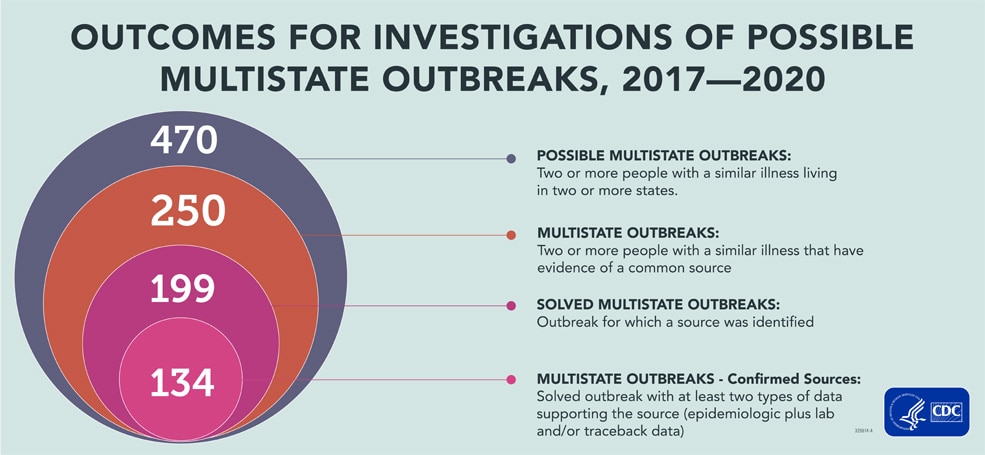
Research – USA – Summary of Possible Multistate Enteric (Intestinal) Disease Outbreaks in 2017–2020

CDC

This analysis includes 470 possible multistate outbreak investigations during 2017–2020.

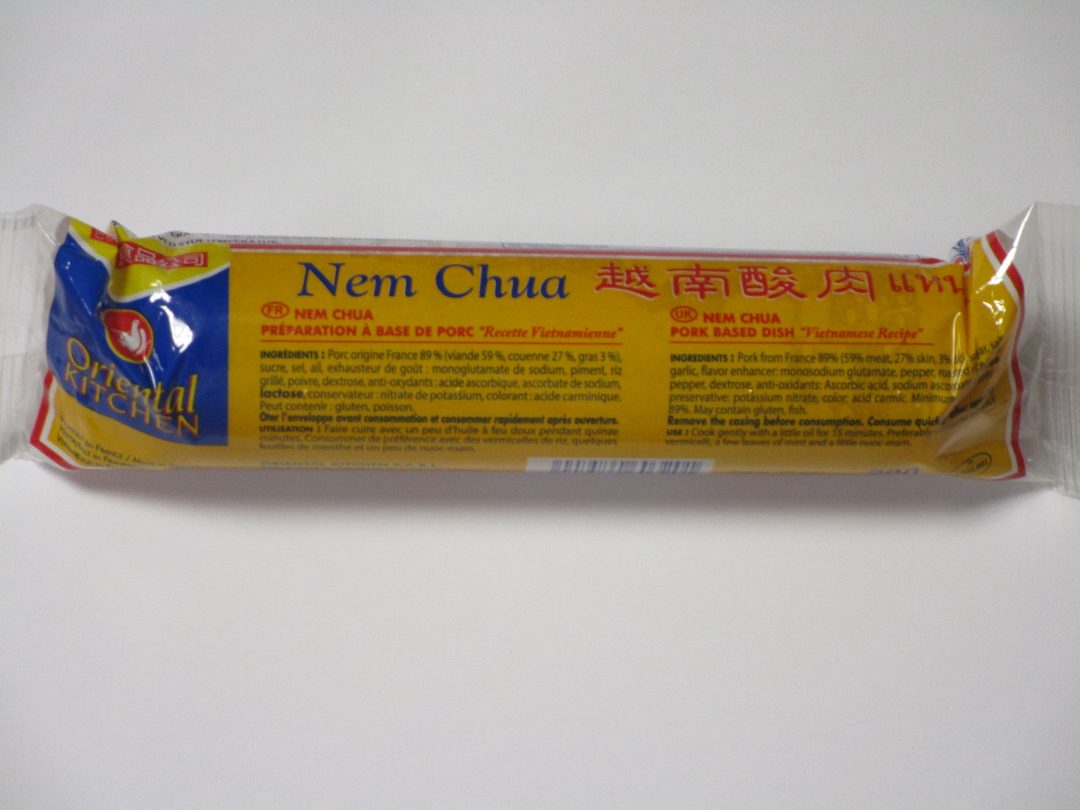
France – NEM CHUA (GUT) – Staphylococcus aureus

Gov france

Identification information of the recalled product

  • Product category Feed
  • Product subcategory Meats
  • Product brand name ORIENTAL KITCHEN
  • Model names or references NEM CHUA Long Stick (gut)
  • Identification of products
    GTIN Batch Date
    3447574603201 Produced in a 200g casing. Use-by date 09/11/2022 Use-by date 09/11/2022
  • Packaging Casing in 200g packaging
  • Marketing start/end date Since 08/19/2022
  • Storage temperature Product to be stored at room temperature
  • Health mark EN 94.022.001 CE
  • Geographic area of ​​sale Whole France
  • Distributors Asian supermarkets and grocery stores, restaurants
  • List of points of saleLIST_CLIENTS_NEM_CHUA_LS_-_DLC_11.09.2022_RAPPEL_CONSO.pdf

Practical information regarding the recall

  • Reason for recall Possible presence of Staphylococci (precautionary principle)
  • Risks incurred by the consumer Staphylococcus aureus (causative agent of staphylococcal poisoning)

Research – Examining Patterns of Persistent Listeria Contamination in Packinghouses using Agent-Based Models

Journal of Food Protection

Persistent Listeria monocytogenes contamination may occur in a packinghouse if the pathogen successfully infiltrates the facility and reaches a harborage site, from where it is difficult to remove and may contaminate produce within the facility. There is a need for simulation-based decision support tools that can predict which equipment sites are more likely to undergo persistent contamination and simulate potential corrective actions to prevent persistent contamination. Thus, we adapted for longer term simulation two existing applications of an agent-based model of Listeria spp. hourly contamination dynamics in produce packinghouses. Next, we developed a novel approach to identify and analyze persistent and transient Listeria contamination patterns on simulated agents representing equipment sites and employees. Testing of corrective actions showed that methods that involved targeted, facility-specific, risk-based sanitation were the most effective in both reducing the likelihood and duration of persistent contamination. This emphasizes that generic approaches to controlling Listeria (e.g., more concentrated sanitizers) are unlikely to be successful and suggests that usage of sanitation schedules produced through facility-specific root-cause analysis and hygienic design are key in reducing persistence. Hourly Listeria contamination patterns also suggest that transient contamination may be mistaken for persistent, depending on the frequency of environmental sampling. Likewise, as concentrations of Listeria on most contaminated agents were predicted to be very low, there is also a possibility to mistake persistence for transient contamination of sites, or even miss it outright due to false negative environmental Listeria monitoring results. These findings support that agent-based models may be valuable decision-support tools, aiding in the identification of contamination patterns within packinghouses and assessing the viability of specific corrective actions.

France – Head pie – Listeria monocytogenes

Gov france

Identification information of the recalled product

  • Product category Feed
  • Product subcategory Others
  • Product brand name unbranded
  • Model names or references Sarda Head Pie – Julia
  • Identification of products
    Batch Date
    All lots Use-by date between 08/28/2022 and 09/05/2022
  • Packaging Terrine sold sliced ​​in store
  • Marketing start/end date From 08/19/2022 to 09/05/2022
  • Storage temperature Product to be stored in the refrigerator
  • Geographic area of ​​sale Ariège (09)
  • Distributors Butcher SARDA – JULIA 09300 BELESTA

Practical information regarding the recall

  • Reason for recall Presence of Listeria monocytogenes (100 cfu/g)
  • Risks incurred by the consumer Listeria monocytogenes (causative agent of listeriosis)

France – TOULOUSE SAUSAGES -25% SALT – Salmonella

Gov france

Identification information of the recalled product

  • Product category Feed
  • Product subcategory Meats
  • Product brand name JOHN ROZE
  • Model names or references4 TOULOUSE SAUSAGES -25% SALT – JEAN ROZE – 500g
  • Identification of products
    GTIN Batch Date
    3250392422097 J22350780 Use-by date 06/09/2022
  • Packaging Modified atmosphere packaging.
  • Marketing start/end date From 08/25/2022 to 08/31/2022
  • Storage temperature Product to be stored in the refrigerator
  • Health mark EN 35.136.002 EC
  • Geographic area of ​​sale Whole France
  • Distributors INTERMARCHE

Practical information regarding the recall

  • Reason for recall Presence of Salmonella
  • Risks incurred by the consumer Salmonella spp (causative agent of salmonellosis)