Category Archives: Food Inspections

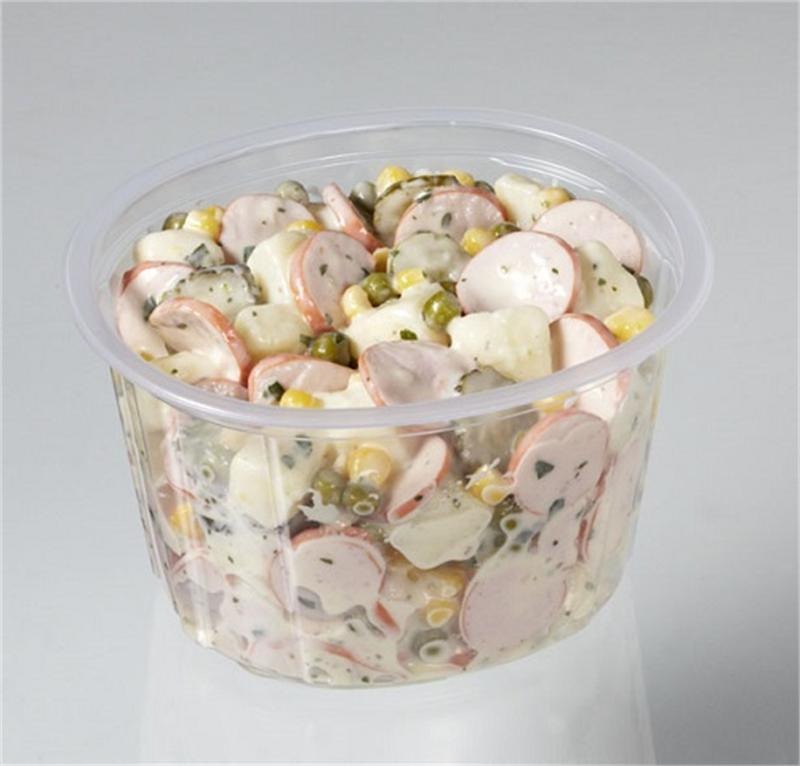
France – Strasbourg salad sold at the stand with service – Listeria monocytogenes

Gov france

Identification information of the recalled product

  • Product category Food
  • Product subcategory Prepared meals and snacks
  • Product brand name unbranded (sold at the stand department with service)
  • Model names or references Strasbourg salad (cooked potato salad and slices of frankfurter sausage seasoned with vinaigrette sauce)
  • Identification of products
    Batch
    product sold from 04/04/2022 to 08/04/2022
  • Marketing start/end date From 04/04/2022 to 08/04/2022
  • Storage temperature Product to be stored in the refrigerator
  • Health mark/
  • Geographic area of ​​sale Store cora Vesoul (70)
  • Distributors Cora Vesoul

Practical information regarding the recall

  • Reason for recall presence of listeria
  • Risks incurred by the consumer Listeria monocytogenes (causative agent of listeriosis)

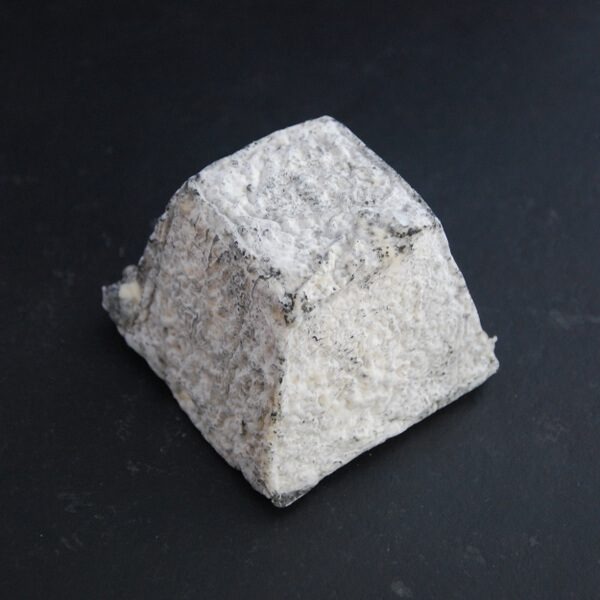
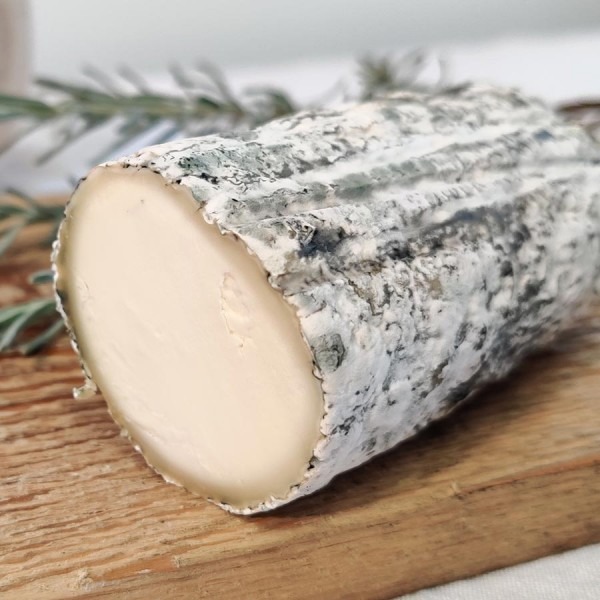
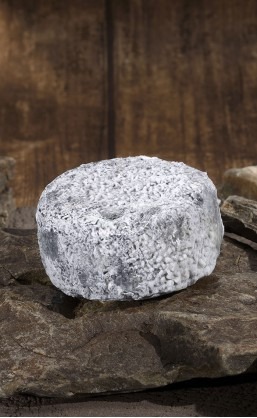
France – Pyramid, log, ash – Goats Cheese – Listeria monocytogenes

Gov france

Identification information of the recalled product

  • Product category Food
  • Product subcategory Milk and dairy products
  • Product brand name Goat cheese
  • Model names or references Pyramid, log, ash
  • Identification of products
    Batch Date
    The batches of cheeses from 22-23/03 which could not be analyzed and for which doubt remains as to contamination. The batches of cheeses marketed on March 25-26-27, 2022 and The batches of cheeses April 1-2-3 and 4, 2022. Use-by date 04/21/2022
  • Marketing start/end date From 03/25/2022 to 04/05/2022
  • Storage temperature Product to be stored in the refrigerator
  • Geographic area of ​​sale Whole France
  • Distributors Orleans market halls

Practical information regarding the recall

  • Reason for recall Listeria
  • Risks incurred by the consumer Listeria monocytogenes (causative agent of listeriosis)

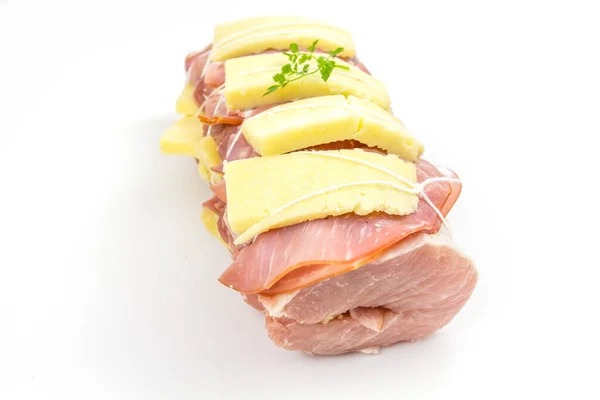
France – ROAST PORK ORLOFF -Salmonella

Gov france

Identification information of the recalled product

  • Product category Food
  • Product subcategory Meats
  • Product brand name/
  • Model names or references ROAST PORK ORLOFF SOLD IN BUTCHER STAND
  • Identification of products
    Batch
    ORLOFF PORK ROAST SOLD AT THE BUTCHER STAND BETWEEN APRIL 4 AND 15
  • Products List Reminder_poster.pdfEnclosed
  • Packaging Packed in a butcher’s stand
  • Marketing start/end date From 04/04/2022 to 15/04/2022
  • Storage temperature Product to be stored in the refrigerator
  • Health mark/
  • Further information The packaging date is indicated on the label of the bag given to the customer.
  • Geographic area of ​​sale Auchan City Tourcoing
  • Distributors Auchan City Tourcoing

Practical information regarding the recall

  • Reason for recall presence of Salmonella
  • Risks incurred by the consumer Salmonella spp (causative agent of salmonellosis)

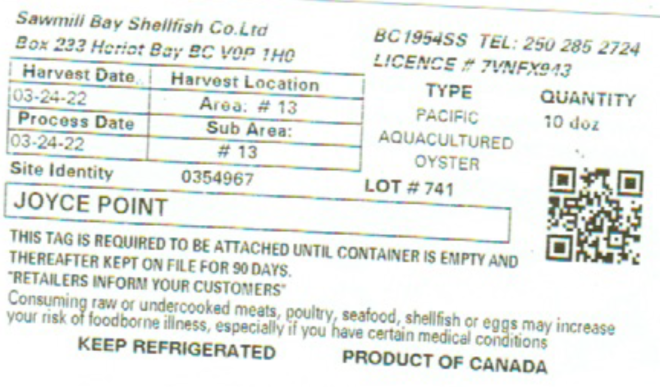
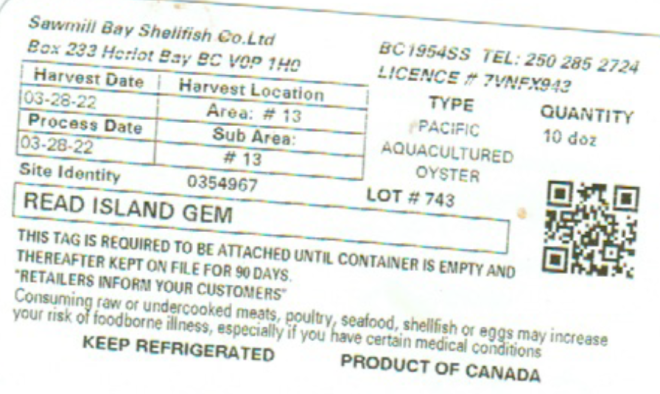
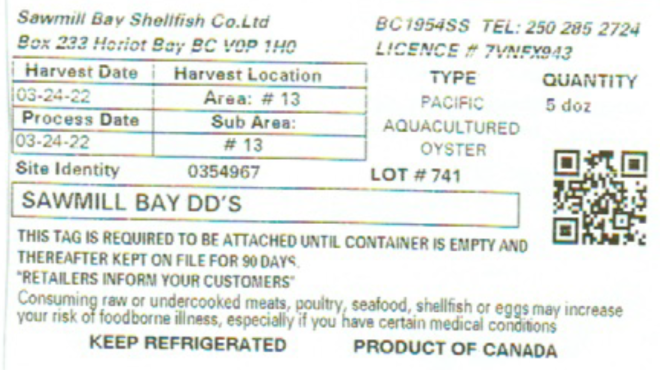
Canada – Certain Pacific Oysters recalled due to norovirus

CFIA

Summary

Product
Certain Pacific Oysters
Issue
Food – Microbial Contamination – Norovirus
What to do

Do not consume, use, sell, serve, or distribute the recalled products

Canada – Various poppy seeds recalled due to Salmonella

CFIA

Summary

Product
Various poppy seeds
Issue
Food – Microbial Contamination – Salmonella
What to do

Do not consume, use, sell, serve, or distribute the recalled products

Issue

Industry is recalling various poppy seeds from the marketplace due to possible Salmonella contamination.

The recalled products have been sold as indicated in the table.

What you should do

  • If you think you became sick from consuming a recalled product, call your doctor
  • Check to see if you have the recalled products in your home
  • Do not consume the recalled products
  • Do not serve, use, sell, or distribute the recalled products
  • Recalled products should be thrown out or returned to the location where they were purchased

Food contaminated with Salmonella may not look or smell spoiled but can still make you sick. Young children, pregnant women, the elderly and people with weakened immune systems may contract serious and sometimes deadly infections. Healthy people may experience short-term symptoms such as fever, headache, vomiting, nausea, abdominal cramps and diarrhea. Long-term complications may include severe arthritis.

WHO -CODEX COMMITTEE ON FOOD HYGIENE – DRAFT GUIDANCE FOR THE MANAGEMENT OF BIOLOGICAL FOODBORNE OUTBREAKS

FAO

INTRODUCTION
1.Foodborne illnesses encompass a wide spectrum of illnesses and are an important public health problem. They are the result of ingestion of foodstuffs contaminated with biological hazards (biological foodborne illness) or chemicals (chemical foodborne illness). The contamination of food may occur at any stage in the process from primary production through to consumption and can result from the presence of zoonotic agents in animal production or from handlers, environmental contamination, via equipment, water, soil or air.
2.Biological foodborne illness usually takes the form of gastrointestinal symptoms; however, such illnesses can also have neurological, gynecological, immunological and other symptoms. The symptoms can be mild with recovery within days or have severe consequences for the individuals due to long-term sequelae with serious health effects or even death.
3.Biological foodborne outbreaks can have significant socio-economic costs, which may be exacerbated in populations comprised of vulnerable groups, related to hospitalization and medical treatment, lost productivity and effects on tourism. For food businesses, the consequences can be lost markets, loss of consumer confidence, litigation and company closures. Such foodborne outbreaks can cause impediments to domestic production and international trade. Globalization of the food supply has led to the rapid and widespread international distribution of foods, further increasing opportunities for pathogens being inadvertently introduced into many geographical areas.
4.Codex Alimentarius has issued several guidelines for food businesses and competent authorities on hygienic practices to ensure food safety. Those guidelines focus on prevention, monitoring and corrective actions in case of deviations along the production processes. Despite efforts to ensure a high level of hygiene, foodborne outbreaks still occur.
5.In order to handle biological foodborne outbreaks efficiently, local and national multiagency networks of preparedness should be in place. To facilitate a common understanding and a consistent approach to these situations such networks should use comparable methods and interpretations to the extent possible, as well as transparent exchange of information. Cooperation through international networks is essential and should be a feature of any national network.
6.Communication and data sharing between and among networks, food business operators and internationally is fundamental for the management of foodborne outbreaks. Existing procedures on confidentiality should be used or, if not present, procedures should be developed.
7.The principles for risk analysis including risk assessment, risk management and risk communication, as described in the Codex Working Principles for Risk Analysis for Food Safety for Application by Governments(CXG 62-2007) should form the framework/basis for the establishment of a system for preparedness and management of foodborne outbreaks. The risk management measures chosen will vary according to the situation and the regulatory framework of the competent authorities.
8.Within the available analytical methods, molecular methods often best contribute to the detection of clusters of human cases and allow them to be linked to the food source when used in conjunction with epidemiological analysis. They also help to better identify batches/lots of food involved and the root cause; hence reducing the exposure of humans to hazards. In particular, the use of specific genetic methods (e.g. Pulsed-Field Gel Electrophoresis (PFGE), Whole Genome Sequencing (WGS) and Multilocus Sequence Typing (MLST)) can result in improved detection of outbreaks, including detection of associated or linked cases, when the country has the adequate resources to perform it. The increase in the use of these methods will likely lead to the detection of more outbreaks and the need for enhanced preparedness.
9.The decision to categorize an outbreak as an incident, an emergency or crisis is at the discretion of the competent authorities which should be consistent at the local and national level. The following factors may be used by the competent authorities to categorize the outbreak and to develop and adapt response plans.
The number of cases, the geographic spread of the outbreak, and whether the outbreak is ongoing,. The disease severity and its consequences, including the number of deaths and treatment options available.
The population affected, e.g. more vulnerable groups.
The pathogenicity (virulence / infectivity) of the microorganism.
The source of contamination and the history of the establishment and business.
The distribution pattern, whether the contaminated food is still available for sale or consumption, the volumes of the food and national and international trade implications.
Consumer perception (e.g. referring to an outbreak as a “crisis”) can affect the consumer confidence in a product or food category clearly not belonging to the consignment implicated.
The need to remove or reduce risk to consumers through public health action such as product recall risk communication including media alerts.
Likely exposure and consumption patterns
Whether or not the outbreak was intentional (e.g. the consequence of fraud or bioterrorism).
Whether the hazard is known or unknown.
The capacity of the country to quickly react and limit the extent of the outbreak

Research – Bacterial inhibition of Fas-mediated killing promotes neuro-invasion and persistence -Listeria monocytogenes

Nature.com

Infections of the central nervous system are among the most serious infections1,2, but the mechanisms by which pathogens access the brain remain poorly understood. The model microorganism Listeria monocytogenes (Lm) is a major foodborne pathogen that causes neurolisteriosis, one of the deadliest infections of the central nervous system3,4. Although immunosuppression is a well-established host risk factor for neurolisteriosis3,5, little is known about the bacterial factors that underlie the neuroinvasion of Lm. Here we develop a clinically relevant experimental model of neurolisteriosis, using hypervirulent neuroinvasive strains6 inoculated in a humanized mouse model of infection7, and we show that the bacterial surface protein InlB protects infected monocytes from Fas-mediated cell death by CD8+ T cells in a manner that depends on c-Met, PI3 kinase and FLIP. This blockade of specific anti-Lm cellular immune killing lengthens the lifespan of infected monocytes, and thereby favours the transfer of Lm from infected monocytes to the brain. The intracellular niche that is created by InlB-mediated cell-autonomous immune resistance also promotes Lm faecal shedding, which accounts for the selection of InlB as a core virulence gene of Lm. We have uncovered a specific mechanism by which a bacterial pathogen confers an increased lifespan to the cells it infects by rendering them resistant to cell-mediated immunity. This promotes the persistence of Lm within the host, its dissemination to the central nervous system and its transmission.

Czech Republic – BAKERY SPICY SALAD SPICY – Mold/Mould

Potravinynapranyri

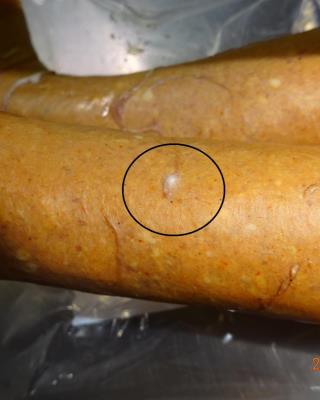
Illustration photo no. 1

Place of inspection:
Bílina ( Nábřeží 463, 418 01 Bílina )
Company ID: 44012373
Food group: Meat and meat products / Heat-treated non-perishable products

BAKERY SPICY SALAD SPICY
Category: Dangerous food
Unsatisfactory parameter:

mold visible to the eye

The product had a damaged packaging. Mold colonies were visible on the surface of the food, visible to the naked eye, and the product was dry at the point of damage to the packaging.

Food is not considered safe if it shows signs of spoilage.

Expiration date: 11/03/2022
Packaging: FIVE
Quantity of product in package: 2,138 kg
Sampling date: Feb 25, 2022
Reference number: 22-000109-CAFIA-CZ
The sample was found by an official inspection of the State Agricultural and Food Inspection Authority.

Belgium – “Shelled pistachios”, “Luxury nut mix” and “Dried olive nut mix” – Aflatoxin

AFSCA

Recall from Spar Colruyt Group
Product: “Shelled pistachios”, “Luxury nut mix” and “Dried olive nut mix”.
Problem: too high aflatoxin content.


Spar is recalling the products ‘Pistachio Shells’, ‘Luxury Nut Mix’ and ‘Dried Olive Nut Mix’.

During an internal check, too high aflatoxin B1 content was found in shelled pistachios, Luxe nut mix and dried olive nut mix. In consultation with the FASFC, Spar has therefore decided to withdraw the products concerned from sale.

Customers who have purchased these products are invited not to consume them and to return them to the store, where they will be reimbursed. In the meantime, all stores have removed the affected products from the shelves.

Description of products:

Spar – shelled pistachios (150 g)
Dates of minimum durability (MDD): between 3/7/2022 and 30/8/2022 Period of sale: from 28/12/2021 to
25/3/2022 inclusive
Item: 44056

Spar – mix of nuts with dried olives (160 g)
Date of minimum durability (MDD): 16/6/2022
Period of sale: from 28/12/2021 to 25/3/2022 inclusive
Article number: 6158

Spar – Luxe nut mix (175 g)
Dates of minimum durability (MDD): between 16/6/2022 and 30/8/2022
Period of sale: from 28/12/2021 to 25/3/2022 inclusive
Number no.: 43935

These products were offered for sale in the following stores: Spar Colruyt Group and general food stores.

For more information , customers can contact Colruyt Group Customer Service on 0800 99 124.

Finland – Suspicion of salmonella in beef strips

Ruokavirasto

Lidl has announced the withdrawal of beef strips. The company is withdrawing from Bergmann bovine minute strip 300g with an expiration date of 21/03/2022 and a batch number of 9068062103322113 32 . Suspicion of salmonella has been detected in self-monitoring samples from this batch.

The product has been on sale in all Lidl stores in Finland from March 15 to March 19. between. The recall does not apply to other product items.

Lidl asks those who have purchased and frozen the product to check the date of the product and return the products in question to the Lidl store. The price of the product will be refunded.

For more information, please contact Lidlin Customer Service, tel. 0800-0-5435 or asiakaspalvelu@lidl.fi

The matter is handled by the Finnish Inspector General Paula Hietanen, tel. +358 50 5969 637, firstname.lastname@ruokavirasto.fi .

Picture of the product
(Image: Lidl Finland)

Bergmann beef minute strip pack.