Category Archives: Food Inspections

USA – Cyclospora Outbreak Update

BarfBlog 220px-Cyclospora_cayetanensis_stained

Authorities suspect that fresh vegetables are the source of a rare parasite sickening dozens of Iowans.

The Iowa Department of Public Health reported this morning that 45 cyclospora infections have been confirmed in the state in the past few weeks.

That’s up from 22 cases earlier this week.

Only 10 such cases had been reported in the state in the past 20 years. The parasite is usually transmitted by tainted produce or water. It can cause weeks of severe diarrhea.

Federal experts are helping to trace the cause. Officials are urging everyone to wash their produce carefully … though they note that Cyclospora can be difficult to wash off.

Investigators who interviewed the patients believe the outbreak started in tainted vegetables, not fruit.

Food Poisoning Journal – Cyclospora What You Need to Know

The Iowa Department of Public Health, CDC and local public health agencies are investigating an outbreak of an intestinal illness caused by Cyclospora (a rare parasite). As of July 12, 45 cases of Cyclospora infections have been reported in Iowa with dozens more in Nebraska and other Midwestern states. It appears linked to eating fresh vegetables.

Research – Norovirus Transmission

Cambridge Journals OnlineNorwalk_Caspid

Causal mechanisms of norovirus outbreaks are often not revealed. Understanding the transmission route (e.g. foodborne, waterborne, or environmental) and vehicle (e.g. shellfish or recreational water) of a norovirus outbreak, however, is of great public health importance; this information can facilitate interventions for an ongoing outbreak and regulatory action to limit future outbreaks. Towards this goal, we conducted a systematic review to examine whether published outbreak information was associated with the implicated transmission route or vehicle. Genogroup distribution was associated with transmission route and food vehicle, but attack rate and the presence of GII.4 strain were not associated with transmission route, food vehicle, or water vehicle. Attack rate, genogroup distribution, and GII.4 strain distribution also varied by other outbreak characteristics (e.g. setting, season, hemisphere). These relationships suggest that different genogroups exploit different environmental conditions and thereby can be used to predict the likelihood of various transmission routes or vehicles

Cambridge Journals Online

USA – FDA – Pistachio’s – Salmonella

FDASalmonella

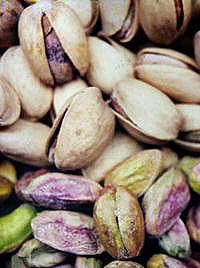
Torn and Glasser, Inc of Los Angeles, CA  90021 is voluntarily recalling some packaged Pistachios because it has the potential to be contaminated with Salmonella, an organism which can cause serious and sometimes fatal infections in young children, frail or elderly people, and others with weakened immune systems. Healthy persons infected with Salmonella often experience fever, diarrhea (which may be bloody), nausea, vomiting and abdominal pain. In rare circumstances, infection with Salmonella can result in the organism getting into the bloodstream and producing more severe illnesses such as arterial infections (i.e., infected aneurysms), endocarditis and arthritis.

This decision to recall was made due to the expanded recall of pistachio products by ARO pistachio (Upgraded from a Class II to a Class I) due to the potential of contamination with Salmonella.  The Torn and Glasser recalled products contain pistachios supplied by the ARO processing plant located in Terra Bella Ca 93270.

The recalled product was distributed from February 21, 2012 to April 29, 2013 in CA, AZ, and HI.

UK – FSA – Latest research published by the FSA

FSA

The Agency has produced a summary of its research published in April to June 2013. Several areas of research were covered, including consumer attitudes towards the decontamination of meat and the use of freezing to reduce campylobacter in chicken livers. A full report for each area of research can be found via the links at the bottom of the page.

Evaluation: Freezing to reduce campylobacters in chicken liver
The FSA commissioned a research project to assess whether freezing chicken livers, before they are prepared and cooked in a catering or domestic kitchen, can significantly reduce the incidence of campylobacter contamination. Freezing is a proven effective intervention to control campylobacter contamination of poultry meat. However, there has been a lack of evidence on how effective this treatment is with chicken livers, particularly under conditions similar to those in catering or domestic kitchens where freezer temperatures and freezing rates may vary.

RASFF Alerts – Salmonella – Sesame Seeds – Poultry – Whole Chickens

RASFF – Salmonella Tennessee (presence /25g) in hulled sesame seeds from India in Greece

RASFF – Salmonella Tennessee (presence /25g) in hulled sesame seeds from India in Greece

RASFF – Salmonella enterica (presence /25g) in frozen poultry meat preparations (Aves) from Brazil in the Netherlands

RASFF – Salmonella spp. (presence /25g) in frozen poultry meat preparations (Aves) from Brazil in the Netherlands

RASFF – Salmonella enteritidis in chilled whole chickens with neck and frozen trussed chickens from Poland in Bulgaria

RASFF Alerts – Aflatoxin – Pistachios – Dried Red Chilli

RASFF – Aflatoxins (B1 = 29 / B1 = 62) in roasted pistachios from Turkey in France

RASFF – Aflatoxins (B1 = 10; Tot. = 10 µg/kg – ppb) in dried red chilli from India in France

RASFF – Aflatoxins (B1 = 45.98; Tot. = 54.84 µg/kg – ppb) in pistachios from Turkey in Germany

RASFF Alerts – STEC – Chilled Beef

RASFF -Shigatoxin-producing Escherichia coli in chilled boneless beef (Bos taurus) from Argentina in the Netherlands

RASFF – Shigatoxin-producing Escherichia coli in chilled boneless beef (Bos taurus) from Argentina in the Netherlands


USA – FDA Recall – Pistachios – Salmonella

FDAPistachios_th

Western Mixers Produce & Nut Company of Los Angeles, California is recalling ARO and/or Treasured Harvest Pistachios, because it has the potential to be contaminated with Salmonella, an organism which can cause serious and sometimes fatal infections in young children, frail or elderly people, and others with weakened immune systems. Healthy persons infected with Salmonella often experience fever, diarrhea (which may be bloody), nausea, vomiting and abdominal pain. In rare circumstances, infection with Salmonella can result in the organism getting into the bloodstream and producing more severe illnesses such as arterial infections (i.e., infected aneurysms), endocarditis and arthritis.

Pistachios were distributed in: California, Nevada, Ohio and Utah; through Retail Stores, Mail Order and various Distributors during the dates of: October 17, 2012 – April 29, 2013.

Ireland – Hepatitis A in Frozen Berries

ECDCecdclogo

The ongoing outbreak of Hepatitis A virus (HAV) infection that has affected travellers to Italy from Germany, the Netherlands and Poland, as well as local residents in Italy, may now be affecting Ireland.

Three cases of HAV have been reported in Ireland, although none of the three has any travel history to Italy. Nor have they had any contact with other HAV cases. Isolates of the virus from the three Irish cases reveal an identical sequence to that found in the Italian outbreak.

Onset of illness in the Irish cases was April 2013. Additional case finding activity is currently underway. Exposure of cases in both Italy and Ireland suggests that the same contaminated vehicle of infection has been available in at least these two countries. In Italy, mixed frozen berries have been indicated as the most likely vehicle of infection by epidemiological, microbiological and environmental investigations. In late May, an Italian distributor withdrew mixed frozen berries from the market following identification of a package contaminated with virus identical to the outbreak strain.

The most recent cases in the ongoing HAV infection outbreak have been reported by Italy. The onset of symptoms in these cases was recorded in June 2013. Due to the long shelf life of frozen berries and to the average length of approximately one month for incubation of HAV, more cases are expected to be reported.

While there is evidence pointing towards mixed frozen berries as the vehicle of infection, the specific berry type has not yet been identified. The point of contamination remains unknown at this time and as a result it is not yet possible to exclude the occurrence of associated cases in other EU Member States.

USA – Salmonella Outbreak at a Funeral Home

Food Safety NewsSalmonella

At least 36 people who attended a funeral in western Alabama on July 6 have fallen ill with Salmonella infections, reported the Alabama Department of Public Health Wednesday.

The funeral was held at Eastern Star Baptist Church in York, AL, and was attended by at least 100 people, according to a press release from ADPH.

Of those known to have been sickened, 30 were hospitalized in 9 different states, including Alabama, California, Florida, Georgia, Illinois, Kansas, Michigan, Missouri and Oklahoma.

The health department’s investigation into the outbreak began June 8 after a local hospital reported that 25 people had come in late on July 6 and into the following day complaining of fever, diarrhea, nausea and vomiting.