Category Archives: Food Inspections

Australia – Consumer alert: frozen vegetable product recalls – Listeria monocytogenes

FSANZ 


Food Standards Australia New Zealand (FSANZ) today warned vulnerable people to check their freezers for recalled frozen vegetable products that are possibly contaminated with Listeria monocytogenes.

Acting FSANZ CEO Peter May said pregnant women, people whose immune systems are compromised (e.g. cancer patients) and elderly people, are at a much greater risk from Listeria infection.
 
“The products affected contain a particularly dangerous strain of Listeria and are being recalled as a precautionary measure to ensure consumers are protected, but particularly vulnerable populations,” Mr May said.
 
“While many people will follow cooking instructions properly (which should kill Listeria bacteria) we are aware that some people eat frozen vegetables straight from the freezer and there is a risk of some people not cooking produce properly.
 
Consumers who have the product in their freezer should return it to the place of purchase for a full refund or dispose of it. Consumers who have eaten the product and feel unwell should see a health professional.
 

Bermuda – Conch Poisonings Spark Warning

Tribune 242 


THERE have been four confirmed cases of conch poisoning and as many as six unconfirmed cases, Health Minister Duane Sands announced yesterday.

According to Dr Sands, the exposure took place in the previous 72 to 96 hours with a number of the patients affected having eaten at Potter’s Cay.

Noting that an outbreak of conch poisoning is something the country can “ill afford” right now, Dr Sands was adamant the issue can be easily mitigated if proper hygiene is maintained.

Four cases have been confirmed via laboratory testing but Dr Sands said there are a number of unconfirmed cases – “possibly as many as six” awaiting laboratory results. He added the affected people are being treated at both Doctors Hospital and Princess Margaret Hospital, and so far, all the self-identified patients are Bahamian.

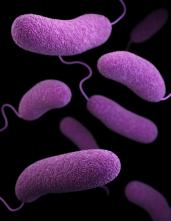
Conch poisoning is caused by vibrio parahaemolyticus, a bacteria which requires salt water to live. According to Dr Sands, when ingested, vibrio bacteria can cause watery diarrhoea, which is usually accompanied by abdominal cramping, vomiting, fever, nausea, and chills.

These symptoms often occur within 24 hours of ingestion and last about three days. He added that severe illness is “rare” and typically occurs in people with a “weakened” immune system.

The last major outbreak of conch poisoning occurred in the 1990s, around 1991 and 1999, Dr Sands said. He added that there were more than 1,100 cases of vibrio parahaemolyticus poisoning during that era.

The health minister was also adamant the issue is not with the conch meat itself.

“Vibrio is not an issue of the meat itself. Vibrio is a bacteria that ordinarily lives in seawater and is a part of the surface of the conch. The conch meat itself is not infected with vibrio parahaemolyticus. So you can wash it off. So, testing the conch meat itself is not the issue.

UK – Food poisoning suspected amid sickness reports after Royal College of Art event Public Health England said it is investigating the causes of the stomach sickness.

BT.com

More than 200 people have reported falling ill with suspected food poisoning after a graduation ceremony at the Royal College of Art.

Public Health England (PHE) said on Wednesday it is investigating the causes of the stomach sickness after the event at the prestigious London university.

Musician Peter Gabriel received an honorary degree at the Royal Albert Hall ceremony attended by hundreds of students and their families on Friday and many went to a buffet at the university afterwards.

RCA chief operating officer Richard Benson said: “We have received reports from approximately 200 students, guests and staff who suffered gastrointestinal illness over the weekend following the college buffet reception on Friday.

“This was clearly very unfortunate, and for some of the students and their families was a really unpleasant end to what should have been a day of celebration at the end of the academic year.”

In an email to students, he added “the symptoms appear consistent with food poisoning”.

Hong Kong – Not to consume prepackaged ginger powder contaminated with Aflatoxins

CFS

Issue Date 5.7.2018
Source of Information Centre for Food Safety (CFS)
Food Product A batch of prepackaged ginger powder manufactured in India
Product Name and Description Product name: Organic Ginger Powder

Brand: SpiceBox

Place of origin: India

Distributor: SpiceBox Organics Limited

Net weight: 50 grams per pack

Best-before date: March 30, 2019

Reason For Issuing Alert
  • The CFS collected the above-mentioned sample from a shop in the Mid-levels for testing under its routine Food Surveillance Programme. The results showed that it contained aflatoxins at a level of 20 micrograms (µg) per kilogram. Under the Harmful Substances in Food Regulation (Cap 132 AF), the maximum permitted concentration for aflatoxins in food (except for peanuts or peanut products) is 15µg/kg.
  • The World Health Organization (WHO)’s International Agency for Research on Cancer classified naturally occurring aflatoxins as carcinogenic to humans, and the Joint Food and Agriculture Organization/WHO Expert Committee on Food Additives advised that intake of aflatoxins should be reduced to levels as low as reasonably possible although no health-based guidance value has been set. Aflatoxins can lead to liver cancer after long-term ingestion, and the risk for hepatitis B carriers is relatively high.
Action Taken by the Centre for Food Safety
  • The CFS has informed the vendor concerned of the irregularity and the vendor has removed from shelves and stopped sale of the affected product according to the CFS’ instructions. Should there be sufficient evidence, prosecution will be instituted. The Centre is also tracing the source and distribution of the affected product.
  • The CFS will alert the trade, continue to follow up on the incident and take appropriate action.
Advice to the Trade
  • Stop using or selling the affected product immediately if they possess it.
Advice to Consumers
  • Stop consuming the affected batch of the product if they bought it.
  • To avoid excessive intake of mycotoxins, people should maintain a balanced and varied diet to minimise the risk from a small range of food items, and to avoid consuming food that looks mouldy or damaged.

UK – Alert type Food Alert Greenyard Frozen UK Ltd recalls various frozen vegetable products due to possible contamination with Listeria monocytogenes

FSA

Greenyard Frozen UK Ltd has taken the precautionary step of voluntarily recalling various frozen vegetable products because they might contain Listeria monocytogenes.

This recall includes sweetcorn and sweetcorn mixed vegetables and inlcudes the following brands and retailers. There is a very long list!

Tesco/Sainsburys/Lidl/One Stop/Penguin/Ross/Aldi/Waitrose/Iceland/Growers Pride/

Action taken by the company

Greenyard Frozen UK Ltd are recalling the above products. Point of sale notices will be displayed in all retail stores

that are selling these products. These notices explain to customers why the products are being recalled and tell them what to do if they have bought any of the products listed above.

Our advice to consumers

If you have bought any of the above products do not eat them. Instead, return the product to the store from where it was bought for a full refund.


RASFF Alert – Moulds – Childrens Fruit Smoothies

kswfoodworld food safety poisoning

RASFF-children fruit smoothies pouches from Spain infested with moulds in Denmark

RASFF Alert – Foodborne outbreak – Salmonella homemade béarnaise sauce with eggs

kswfoodworld food safety poisoning

RASFF-foodborne outbreak suspected to be caused by Salmonella enterica ser. Typhimurium (presence /25g) in homemade béarnaise sauce with eggs from the Netherlands in Iceland

RASFF Alert – DSP – Live Mussels

kswfoodworld food safety poisoning

RASFF -Diarrhoeic Shellfish Poisoning (DSP) toxins (260 µg/kg – ppb) in live mussels (Mytilus edulis) from Sweden in Sweden

RASFF Alert – E.coli – Praew Leaves (Vietnamese Corriander)

kswfoodworld food safety poisoning

RASFF-high count of Escherichia coli (2000; 12000; 16000 CFU/g) in praew leaves from Laos in the UK

RASFF Alerts – Listeria monocyotgenes – Sliced Smoked Salmon – Ready to Eat Sausages – Chilled Shrimp Salad – Cooked Seasoned Ham

kswfoodworld food safety poisoning

RASFF-Listeria monocytogenes (<10 CFU/100g) in sliced smoked salmon from Estonia in France

RASFF-Listeria monocytogenes (present /25g) in ready-to-eat sausages from Poland in Poland

RASFF-Listeria monocytogenes (presence /25g) in chilled shrimp salad from Belgium in Belgium

RASFF-Listeria monocytogenes (presence /25g) in cooked seasoned ham from Italy in Italy