Category Archives: Food Inspections

Spain and Portugal – Sardines recalled due to botulinum toxin risk

Food Safety News

cdc clost spore

Image CDC


Grupo Día, which has 7,400 stores, has recalled a batch of canned sardines in olive oil in Spain and Portugal because of botulinum toxin.

The product comes from Portugal and was distributed in Spain. No illnesses have been reported.

Foodborne botulism, caused by eating food that was improperly processed or held at improper temperatures, is rare but potentially fatal if not diagnosed rapidly and treated with antitoxin.

Grupo Día officials said the withdrawal is a precautionary measure due to a possible sterilization defect.

The Spanish multinational company specializes in the distribution of food, household and personal care products. It operates in Spain, Portugal, Argentina, Brazil and China with almost 7,400 stores.

The Spanish Agency for Consumer Affairs, Food Safety and Nutrition (AECOSAN) issued a statement saying it had learnt that more than 24,500 cans of sardines had been recalled.

Recall

UK – Levels of AMR Campylobacter in retail chickens remain steady

FSA

Levels of AMR Campylobacter in retail chickens remain steady

We have published the Year 3 results of a survey to identify the proportion of Campylobacter isolated from the FSA’s UK retail chicken survey that were resistant to a range of antimicrobial agents.

The survey tested a subset of the Campylobacter isolates (Campylobacter jejuni and Campylobacter coli strains) from Year 3 of the UK retail chicken survey for AMR. Analysis was carried out between August 2016 and July 2017 during which 585 Campylobacter isolates from samples of whole, UK-produced, fresh chicken were tested.

Background

The development and spread of antimicrobial resistance (AMR) is a concern worldwide. The use of antibiotics is important in treating infections and preventing disease from arising in both animals and humans. However, the overuse and/or misuse of antibiotics in both animal husbandry and healthcare settings has been linked to the emergence and spread of microorganisms which are resistant to them, rendering treatment ineffective and posing a risk to public health.

The transmission of AMR microorganisms through the food chain is thought to be one of the routes by which people are exposed to AMR bacteria. However, there is uncertainty around the contribution food makes to the problem of AMR in human infections.

This report presents AMR data for a subset of Campylobacter isolates collected as part of the survey of Campylobacter contamination in fresh whole UK-produced chilled chickens at retail sale. There is a continued need to monitor the prevalence and types of AMR bacteria in retail chicken and other foods to inform a baseline and also the risk to public health.

What the results show

Read the report: AMR in Campylobacter from retail chilled chicken in the UK (Year 3: 2016-17)

Overall, the proportions of AMR Campylobacter isolates found in this study were similar to those reported in the previous survey year (July 2015 to July 2016), although the percentage of C. coli isolates with resistance to erythromycin was lower. Multi-drug resistance was similar to that found in the previous survey years.

Differences in levels of ciprofloxacin and tetracycline resistance for isolates from standard and free-range birds were examined. There were no differences within C. jejuni isolates but a higher proportion of C. coli isolates from free-range chickens were resistant, compared to isolates recovered from standard chickens. However, relatively few isolates were tested and this result has not been found in previous surveys.

FSA’s Science lead in Microbiological Risk Assessment, Paul Cook said:

‘While there is evidence that AMR Campylobacter is present on whole fresh chickens sold at retail in the UK, the risk of getting AMR-related infections through eating or preparing contaminated meat remains very low as long as you follow good hygiene and cooking practices.

‘Tackling AMR is a significant priority for the FSA and across UK Government. This survey allows us to monitor AMR Campylobacter in retail chickens over time and overall results have remained stable.’

Year 3 Campylobacter retail chicken survey

The FSA has also published the Year 3 report for the UK retail chicken survey. This report collates the data for August 2016-July 2017 which has previously been published quarterly.

Compared to previous years of the retail survey, the report shows that the average proportion of fresh, whole chicken at retail sale in the UK that are contaminated with a high level of Campylobacter decreased considerably for this period.

Consumer advice

Chicken is safe as long as you follow good hygiene and cooking practices.

  • cover raw chicken and store at the bottom of the fridge so juices cannot drip onto other foods and contaminate them with food poisoning bacteria such as Campylobacter
  • don’t wash raw chicken – thorough cooking will kill any bacteria present, including Campylobacter, while washing chicken can spread germs by splashing
  • thoroughly wash and clean all utensils, chopping boards and surfaces used to prepare raw chicken
  • wash hands thoroughly with soap and warm water, after handling raw chicken – this helps stop the spread of Campylobacter by avoiding cross-contamination
  • make sure chicken is cooked thoroughly and steaming hot all the way through before serving. Cut into the thickest part of the meat and check that it is steaming hot with no pink meat and that the juices run clear.

Research – Prevalence of Norovirus in produce sold at retail in the United Kingdom

Science Direct

Highlights

•

Fresh / frozen raspberries and lettuce were sampled from UK retail outlets over a 13 months, and tested for Norovirus.

•

5.3% of lettuce, 2.3% of fresh raspberry, and 3.6% of frozen raspberry samples were Norovirus-positive.

•

The data raises whether food safety management systems are being effectively implemented in these food supply chains.

Abstract

To acquire data on contamination with Norovirus in berry fruit and salad vegetables in the United Kingdom, one thousand one hundred and fifty two samples of fresh produce sold at retail in the UK were analysed for Norovirus. Of 568 samples of lettuce, 30 (5.3%) were Norovirus-positive. Most (24/30) lettuce samples which tested positive for Norovirus were grown in the UK and 19 of those 24 samples contained NoV GI. Seven/310 (2.3%) samples of fresh raspberries were Norovirus-positive. Most (6/7) of the positively-testing fresh raspberry samples were imported, but no predominance of a genogroup, or any seasonality, was observed. Ten/274 (3.6%) samples of frozen raspberries were Norovirus-positive. The country of origin of the positively-testing frozen raspberry samples was not identified in most (7/10) instances. The collected data add to the currently limited body of prevalence information on Norovirus in fresh produce, and indicate the need for implementation of effective food safety management of foodborne viruses.

Research – Understanding the Relation between Establishment Food Safety Management and Salmonella Risk Factor Violations Cited during Routine Inspections

Journal of Food Protection

Restaurants are a frequent setting for outbreaks and sporadic cases of Salmonella. The relationship among food safety management characteristics, compliance with procedures to reduce Salmonella-associated risk factors (as found during routine inspections), and the likelihood that an establishment has experienced a sporadic Salmonella case was assessed. Individual risk factor violations associated with Salmonella transmission pathways were identified by a literature review. Data from 546 routine inspection reports collected from July 2016 to June 2017, including 25 from restaurants that had experienced a sporadic case of Salmonella, were evaluated. In restaurants with certified food managers, there were fewer observations of Salmonella risk factor reduction procedures that were not in compliance. For establishments that had experienced sporadic cases of Salmonella, the person in charge at the time of an inspection was less likely to have been the establishment’s official certified food manager of record (rate ratio = 0.4, 95% confidence interval = 0.2 to 0.8; P = 0.01), and there was increased likelihood of being found out of compliance for prevention of contamination by hands (rate ratio = 3.7, 95% confidence interval = 1.4 to 8.1; P = 0.001). The results of this study warrant future research on the dynamics of food safety management systems, the effect they have on risk factor violations cited on routine inspection results, and the risk for transmission of Salmonella. Analyzing routine inspection data as hazard surveillance may be useful to identify food establishments at a greater risk for transmitting Salmonella infections.

Research – Predicting the Growth of Listeria monocytogenes and Salmonella Typhimurium in Diced Celery, Onions, and Tomatoes during Simulated Commercial Transport, Retail Storage, and Display

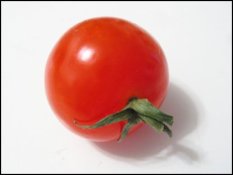
Journal of Food Protection cherry-tomato-pristine-variety

Temperature is arguably the most important factor affecting microbial proliferation in fresh-cut produce. In this study, growth of Listeria monocytogenes in diced onions and celery and Salmonella Typhimurium in diced tomatoes was determined in modified atmosphere packages and snap-fit containers using three fluctuating temperature scenarios for transport, retail storage, and display. As expected, L. monocytogenes growth in diced onions and celery varied depending on the extent of temperature abuse, with exposure to high and intermediate temperature-abuse scenarios generally being growth supportive. A Baranyi primary model with a square-root secondary model for maximum growth rate, and a linear model for maximum population density, were used to estimate Listeria growth under fluctuating temperature. Accuracy and acceptability of the model prediction were evaluated in terms of root mean square error (RMSE) and acceptable prediction zone (APZ), respectively. Overall, growth predictions for L. monocytogenes were more accurate for celery (RMSE, 0.28 to 0.47) than onions (RMSE, 0.42 to 1.53) under the fluctuating temperature scenarios tested. However, both predictions yielded APZ values that ranged from 82 to 100% for celery and 36 to 78% for onions. In contrast, Salmonella Typhimurium populations increased more than 1 log CFU/g in diced tomatoes under the three fluctuating temperature scenarios studied. Overall, these diced products packaged under a high-oxygen atmosphere showed decreased pathogen growth compared with product stored in a passive modified atmosphere. Findings from this study will be particularly useful in assessing the risk associated with consumption of diced celery, tomatoes, and onions and in designing effective packaging strategies to minimize pathogen growth in fresh-cut produce.

USA – Outbreak of Listeria Infections Linked to Pork Products Final Update

CDC

This outbreak appears to be over. In general, people who are at higher risk for Listeria infection should avoid eating hot dogs, lunch meats, cold cuts, other deli meats (such as bologna), or fermented or dry sausages unless they are heated to an internal temperature of 165°F or until steaming hot just before serving. Learn more about how you can take steps to prevent Listeria infection.

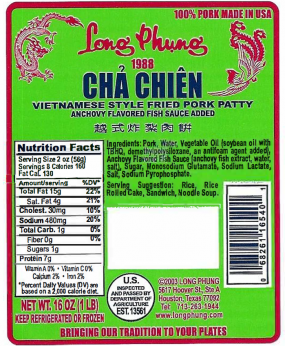
Label of packaging

CDC, public health and regulatory officials in several states, and the U.S. Department of Agriculture’s Food Safety and Inspection Service (USDA-FSIS) investigated a multistate outbreak of Listeria monocytogenes infections linked to pork products produced by Long Phung Food Products. As of January 29, 2019, this outbreak appears to be over.

USA – Oskri Organics Corporation Recalls All Nut Butters because of Possible Health Risk – Listeria monocytogenes

FDA

Oskri Organics Corporation of Lake Mills, WI is recalling ALL Oskri Corporation manufactured nut butters.

This recall has been initiated due to positive test results for Listeria monocytogenes found in multiple Oskri Corporation manufactured nut butters. Consumption of this product may cause potential health risk.

No illnesses have been reported.

We began production of the recalled Oskri Corporation manufactured nut butters the beginning of January 2018. This recall pertains to ALL Oskri Corporation manufactured nut butters with Best By dates of June 2020 (6/20) and earlier.

Oskri Corporation has distributed Nut Butters to the following states: NY, MI, CA, PA, OH, WI, NH, IL, FL, MA, TX, AZ, IN, ID, OR, SC, and RI.

Nut butters subject to recall include: Almond, Cashew, Coconut, Peanut (all flavor varieties), Pumpkin, Sunflower, and Tahini. Nut butters are sold in 16 oz plastic jars with the Lot Number either on the top or bottom of the jar near the Expiration Date, in Pouches with the Lot Number and Expiration Date located on either the top or bottom of the back of the pouch. On bulk packaging, which would be Oskri Corporation boxes, the label should be located on the box in the upper right-hand corner of one of the four sides. This label will list the lot number, production date, as well as the expiration date.

USA – Jac. Vandenberg, Inc. Recalls Fresh Peaches, Fresh Nectarines and Fresh Plums Because They May Be Contaminted with Listeria Monocytogenes

FDA

Jac. Vandenberg, Inc. of Yonkers, New York is recalling 1,727 cartons of Fresh Peaches, 1,207 cartons of Fresh Nectarines and 365 cartons of Fresh Plums because they have the potential to be contaminated with Listeria monocytogenes, an organism which can cause serious and sometimes fatal infections in young children, frail or elderly people, and others with weakened immune systems. Although healthy individuals may suffer only short-term symptoms such as high fever, severe headache, stiffness, nausea, abdominal pain and diarrhea, Listeria infection can cause miscarriages and stillbirths among pregnant women.

The Fresh Peaches, Fresh Nectarines and Fresh Plums were distributed in Alabama, California, Georgia, Illinois, Kentucky, Maine, Massachusetts, Michigan, Mississippi, New Jersey, New York, North Carolina, Ohio, Pennsylvania, South Carolina, Tennessee, West Virginia and Virginia through small retail establishments and the following select retail stores:

Retail Stores States Product
ALDI Alabama, Georgia, Kentucky, Mississippi, North Carolina, South Carolina, Tennessee, Virginia Nectarines, Peaches, Plums
Costco California Nectarines
Fairway Market New York Nectarines, Peaches
Hannaford Maine Peaches
Market Basket Massachusetts Nectarines, Peaches
Walmart Kentucky, Maryland, New Jersey, New York, Ohio, Pennsylvania, Virginia, West Virginia Nectarines (MD, NJ, NY, PA, VA, WV), Peaches (KY, NJ, NY, OH, PA, WV)

The peaches and nectarines are sold as a bulk retail produce item with PLU sticker (PLU# 4044, 3035, 4378) showing the country of origin of Chile. The peaches, nectarines and plums sold at ALDI are packaged in a 2-pound bag with the brand Rio Duero, EAN# 7804650090281, 7804650090298, 7804650090304. The nectarines sold at Costco are packaged in a 4-pound plastic clamshell with the brand Rio Duero, EAN# 7804650090212.

No illnesses have been reported to date in connection with this problem to date.

The recall was the result of a routine sampling program by the packing house which revealed that the finished products contained the bacteria. The company has ceased the distribution of the product as FDA and the company continue their investigation as to what caused the problem.

Consumers who have purchased Fresh Peaches, Fresh Nectarines and Fresh Plums are urged to return it to the place of purchase for a full refund. Consumers with questions may contact the company at compliance@jacvandenberg.com.

UK – Scotland – Microbiological survey of minced beef on sale in Scotland

HPS

Scotland’s Rural College (SRUC) and partners, in collaboration with public analysis laboratories, will conduct a comprehensive survey of the microbiological pathogens STEC (Shiga toxin-producing E. coli), Campylobacter, Salmonella and hygiene indicator organisms (generic E. coli and aerobic colony counts) in minced beef across Scotland. All of the pathogens detected and a subset of 100 isolates of generic E. coli will be tested for antimicrobial resistance (AMR).

The primary objective of the survey is to generate baseline data on the prevalence of pathogens and hygiene indicator organisms in minced beef on retail sale. A secondary objective is to see if there are any patterns in variation, such as seasonal changes, in order to identify any risk factors associated with microbiological contamination.

The survey will be carried out between January and December 2019 and the results and analysis are due to be published by summer 2020.

Source: Food Standards Scotland, 23 January 2019

Vol: 53 No: 04 Year: 2019 Type: Current Note

Research – Salmonella Contamination in Ready-to-Eat Tilapia Sashimi Processing Plants

Journal of Food Protection

In this study, we investigated contamination rates and possible contamination routes of Salmonella in two typical tilapia sashimi processing plants in Taiwan. We found that the overall isolation rate was 5.0% (n = 61), from a total of 1,218 samples collected in a year from different processing sections (freezing, scaling and bleeding, visceral removal, washing and disinfection, and packaging) and from different operating times (before processing and 3 and 6 h after processing began). In plant A, which is a relatively well-operated plant compared with plant B, Salmonella was only found in the freezing, scaling and bleeding, and visceral removal sections, with isolation rates ranging from 0 to 9.3%. No Salmonella was identified in the final ready-to-eat products at plant A. In plant B, Salmonella was found in all sections and in the final products, with isolation rates ranging from 4.6 to 36.1%. Regarding the processing times, the contamination rates increased significantly (P < 0.05) 3 h after processing began in plant B. Among the isolates, 10 serotypes were detected, some of which are commonly observed in human salmonellosis cases in Taiwan, indicating a risk of zoonoses. However, only four isolates showed antimicrobial resistance in the current study. With molecular subtyping, we observed accumulated and persistent Salmonellaecontamination patterns in plant B. These results suggest that inadequate sanitation impairs the foodborne pathogen control program in tilapia sashimi plants.