Category Archives: Food Illness

Research – Salmonella found to be resistant to different classes of antibiotics

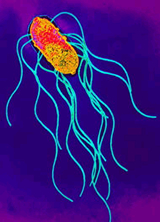
Science Daily Salmonella kswfoodworld

Brazil’s Ministry of Health received reports of 11,524 outbreaks of foodborne diseases between 2000 and 2015, with 219,909 individuals falling sick and 167 dying from the diseases in question. Bacteria caused most outbreaks of such illnesses, including diarrhea and gastroenteritis. The most frequent were Salmonella spp., with 31,700 cases diagnosed in the period (14.4% of the total), Staphylococcus aureus (7.4%), and Escherichia coli (6.1%).

According to a survey by the Ministry of Social Development, bacteria of the genus Salmonella were the etiological agents in 42.5% of the laboratory-confirmed foodborne disease outbreaks reported in Brazil between 1999 and 2009.

Whole-genome sequencing of the main bacteria that cause acute diarrhea is the research focus for a group at the University of São Paulo led by Juliana Pfrimer Falcão, a professor at the university’s Ribeirão Preto School of Pharmaceutical Sciences (FCFRP-USP).

In an article published in PLOS ONE, biomedical scientists Amanda Aparecida Seribelli and Fernanda Almeida, who belong to Falcão’s lab, describe how they sequenced and investigated the genomes of 90 strains of a specific serovar of Salmonella enterica known as S. Typhimurium (an abbreviation of Salmonella enterica subspecies serovar Typhimurium).

The 90 strains were isolated between 1983 and 2013 at Adolfo Lutz Institute in Ribeirão Preto (São Paulo State, Brazil) and Oswaldo Cruz Foundation (Fiocruz) in Rio de Janeiro. They provide a portrait of the epidemiology of salmonellosis in Brazil in the last 30 years, coming from all regions of the country and having been collected from patients with foodborne infections or from contaminated food such as poultry, pork, or lettuce and other vegetables.

Research -Google FINDER Search May Pinpoint Restaurants Associated with Food Poisoning Outbreaks

Food Poisoning Bulletin

Google and Harvard University have developed a new method for identifying restaurants that may be the source of food poisoning outbreaks much more quickly than traditional methods. The method is called FINDER (Foodborne IllNess DEtector in Real time), which uses web search and location data. Most food poisoning outbreaks are linked to restaurants and delis.

Research – FDA Report Released on Restaurant Foodborne Illness Factors

Food Poisoning Bulletin

The FDA has released findings from the first phase of a 10 year study that is looking at restaurant foodborne illness factors  in fast food restaurants and full service restaurants. The report looked at risk factors from 2013 to 2014. The first 10-year study was conducted between 1998 and 2008.

In the 2008 study, the FDA found that the restaurant foodborne illness factors that needed the most improvement were poor personal hygiene, improper food holding/time and temperature, and contaminated equipment and protection from contamination.

More than half of all food poisoning outbreaks in the U.S. every year are associated with restaurant food. In 2014, when looking at outbreaks linked to a single location, restaurants accounted for 485 outbreaks, or 65% of the total, and 4780 illnesses, or 44%. Many of these outbreaks led to lawsuits. The FDA at that time stated it needed more research to identify the root causes for these poor retail food safety practices, and to determine effective intervention strategies.

The restaurant foodborne illness risk factors that were listed for this study include employee handwashing, proper temperature control of perishable foods, improper food holding time, hand-to-hand contact with ready-to-eat foods, cooking raw animal foods to safe final and required internal temperatures, contaminated equipment, and food obtained from unsafe sources.

South Africa – Durban Old Town Italy a Link in South African Salmonella Outbreak – What you need to know

Food Poison Journal


Time’s consumer reporter, Wendy Knowler, reports that salmonella bacteria, most likely from contaminated eggs, has put at least 30 people in the greater Durban area in hospital, and sickened many more.

Social media reports posted by people who’d contracted salmonellosis after eating at the upmarket Old Town Italy restaurant in Umhlanga – mostly meals including hollandaise sauce – raised the alarm, but the outbreak of the past few weeks goes far beyond one restaurant.

In addition, four children attending a Cowies Hill creche were confirmed by doctors to have salmonellosis; seven people who attended a private lunch ended up in Hillcrest Private Hospital for almost a week after eating a dessert made with egg; a Florida Road restaurant closed for two days after its patrons reported falling ill and many pharmacies in the greater Durban area have reported a sudden spike in the demand for diarrhoea medication.

USA – CDC – Outbreak of Multidrug-Resistant Salmonella Infections Linked to Raw Turkey Products – One Death

CDC

CDC and public health and regulatory officials in several states are investigating a multistate outbreak of multidrug-resistant Salmonella infections linked to raw turkey products. The U.S. Department of Agriculture’s Food Safety and Inspection Service (USDA-FSIS) is monitoring the outbreak.

  • Seventy-four more ill people from 26 states were added to this investigation since the last update on July 19, 2018.
  • As of November 5, 2018, 164 people infected with the outbreak strain of Salmonella Reading have been reported from 35 states.
    • 63 people have been hospitalized, and one death has been reported from California.
  • Epidemiologic and laboratory evidence(https://www.cdc.gov/foodsafety/outbreaks/investigating-outbreaks/index.html) indicates that raw turkey products from a variety of sources are contaminated with Salmonella Reading and are making people sick.
  • In interviews, ill people report eating different types and brands of turkey products purchased from many different locations. Three ill people lived in households where raw turkey pet food was fed to pets.
  • The outbreak strain has been identified in samples taken from raw turkey pet food, raw turkey products, and live turkeys.
  • A single, common supplier of raw turkey products or of live turkeys has not been identified.
  • The outbreak strain of Salmonella Reading is present in live turkeys and in many types of raw turkey products, indicating it might be widespread in the turkey industry. CDC and USDA-FSIS have shared this information with representatives from the turkey industry and asked about steps that they may be taking to reduce Salmonella contamination.


USA – FDA issues final report on E coli in Arizona-grown romaine

CIDRAP

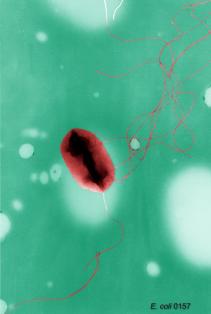
kswfoodworld E.coli O157

Image CDC

An environmental investigation in an Arizona romaine-growing area near Yuma that was linked to a large Escherichia coli O157:H7 outbreak earlier this year confirmed the outbreak strain in samples of irrigation canal water, which probably contaminated the lettuce.

The US Food and Drug Administration (FDA) yesterday released a report that detailed findings from federal and Arizona officials who visited the area several times over the summer. The event marked the nation’s largest E coli outbreak since 2006, with reports of 210 illnesses from 36 states. Ninety-six patients were hospitalized, 27 had hemolytic uremic syndrome (HUS), a potentially fatal kidney complication, and five people died.

FDA Commissioner Scott Gottlieb, MD, said in a statement yesterday that the agency is committed to taking steps to prevent similar outbreaks in the future and improve the safety of leafy greens. “Since the next romaine growing season for the Yuma region is underway, it’s critical for all of us to understand what happened so we can identify the changes that can prevent future outbreaks and reduce the scope of any problems that could arise,” he said.

Water contamination source still a mystery

The investigation team, led by the FDA, visited the Yuma growing area several times from June through August and collected numerous environmental samples. However, the only ones that tested positive for the outbreak strain were collected in early June from a 3.5-mile stretch of an irrigation canal near Wellton in Yuma County that delivers water to farms. The growing season had ended weeks before the probe, so no leafy greens samples could be tested.

Besides testing irrigation water, the team visited farms to look at other possible factors, including soil amendments, growing and harvesting practices, animal intrusion, adjacent land use, and employee health and hygiene practices. They also examined potential contamination sources at manufacturing and processing operations.

Despite extensive environmental sampling, only the three irrigation water samples were positive. There was a large concentrated animal feeding operation (CAFO) adjacent to the stretch of canal where water tested positive, but investigators didn’t find an obvious route for contamination, and a limited number of samples from the operation didn’t yield the outbreak strain.

The team wasn’t able to determine how the water may have contaminated the lettuce, though they said possibilities include direct application of irrigation water or use of the water to dilute chemicals applied to crops during aerial and land-based spraying. They also said they couldn’t rule out other possible contamination sources that didn’t turn up during the investigation.

Recommendations for growers and processors

Along with its investigation report, the FDA included a list of recommendations for leafy-greens producers, including assuring that agricultural water is safe for its intended use and assessing potential direct or indirect contamination risks near growing fields.

Officials also urged government and nongovernmental groups, including those in Imperial and Yuma counties, to explore other possible sources or routes of contamination. “This information is critical to developing and implementing short- and long-term remediation measures to reduce the potential for another outbreak associated with leafy greens or other fresh produce commodities,” the authors wrote.

Cambodia – Food poisoning leaves fifty hospitalised

Phnom Penh Post

At least 50 people including 47 students at the Pongro Secondary School in Kampong Thom province’s Stoung district suffered food poisoning on Monday and were rushed to the hospital for emergency treatment.

A student, Na Srey Khuoch, 14, said she ate rice purchased from a stall owned by Eang Thavy, a teacher at the school in Kampong Chen Choeung commune, and became sick when she arrived home.

“I had a stomach ache and vomited,” she said, adding that she is recovering after receiving treatment at the hospital.

Commune police chief Kruoch Sophorn said the teacher who owned the stall and his deputy police chief Sen Pesith were among those who were treated at the hospital.

He said Pesith fell sick after drinking bottled water bought from another stall while sending students to the hospital.

He said before the incident, the victims had consumed pork rice, milk coffee and bottled water. They fell ill about an hour later.

He said they suffered stomach aches, nausea and diarrhoea, among other symptoms.

Denmark -E. coli sickens 26 in Denmark; no cases in other countries as yet – STEC E.coli O126

Food Safety News Ecoli Istock

Danish officials are investigating an E. coli outbreak that has 26 cases with three out of four being children.

Statens Serum Institut (SSI), the agency responsible for the preparedness against infectious diseases in Denmark, said the source of infection is not yet known but an investigation is under way.

SSI told Food Safety News that the 26 confirmed patients’ ages are between less than 1 year old to 95 years old, with 19 being children younger than five years of age. One person has been hospitalized. No deaths have been reported.

Cases with a specific type of Shiga toxin-producing E. coli (STEC) or Verotoxigenic E. coli (VTEC) have been reported to SSI in the past few weeks.

E. coli O26:H11 illnesses are spread across the country, but are primarily in the cities of Copenhagen, Aarhus and Odense. Illness onset dates range from Aug. 23 to Oct. 10.

USA – Duncan Hines Classic White, Classic Butter Golden, Signature Confetti and Classic Yellow Cake Mixes Recalled Due to Potential Presence of Salmonella

FDA kswfoodworld salmonella

CHICAGO – Conagra Brands is collaborating with health officials in connection with a positive finding of Salmonella in a retail sample of Duncan Hines Classic White cake mix that may be linked to a Salmonella outbreak that is currently being investigated by CDC and FDA. While it has not been definitively concluded that this product is linked to the outbreak and the investigation is still ongoing, Conagra has decided to voluntarily recall the specific Duncan Hines variety identified (Classic White) and three other varieties (Classic Butter Golden, Signature Confetti and Classic Yellow) made during the same time period out of an abundance of caution.

Five occurrences of illnesses due to Salmonella are being researched by CDC and FDA as part of this investigation. Salmonella is an organism which can cause serious and sometimes fatal infections in young children, frail or elderly people, and others with weakened immune systems. Healthy persons infected with Salmonella often experience fever, diarrhea (which may be bloody), nausea, vomiting and abdominal pain. In rare circumstances, infection with Salmonella can result in the organism getting into the bloodstream and producing more severe illnesses such as arterial infections (i.e., infected aneurysms), endocarditis and arthritis.

Several of the individuals reported consuming a cake mix at some point prior to becoming ill, and some may have also consumed these products raw and not baked. Consumers are reminded not to consume any raw batter. Cake mixes and batter can be made with ingredients such as eggs or flour which can carry risks of bacteria that are rendered harmless by baking, frying or boiling. Consumers are reminded to wash their hands, work surfaces, and utensils thoroughly after contact with raw batter products, to follow baking instructions, and to never eat raw batter.

UK – Four sentenced after guilty pleas in fake holiday food poisoning claim

Food Safety News

Four people have been sentenced to three months in prison, suspended for two years, after admitting to making a false holiday sickness claim.

Michael Jameson, 43, Claire Weir, 35, Jane Weir, 38, and Janet Weir, 63, all from Liverpool in England, were convicted of contempt of court at Liverpool High Court after they admitted to inventing the claim, which could have led to a pay out of more than £45,000 ($57,500).

The defendants made the claim after saying they, and four children traveling with them, had suffered from nausea, stomach cramps, diarrhea and vomiting due to food poisoning on an All-Inclusive week-long holiday at the Aqua Magic Rock Gardens in Benidorm in July 2015. They said this was caused by negligence and symptoms resulted in a loss of enjoyment on the holiday.

They were fined £750 ($958) each and ordered to pay the legal costs of Jet2holidays.