Category Archives: Food Illness

USA – E. coli O26 outbreak associated with Sodexo’s Café Mario sickens 22

Food Poison Journal

Public Health investigated an outbreak of Shiga toxin-producing E. coli (STEC) associated with I Love Sushi and Café Mario at Nintendo of America campus in Redmond. Café Mario is operated by Sodexo and is not open to the public. I Love Sushi is a food establishment that operates out of Café Mario once a week.

This outbreak appears to be over. After a thorough investigation, we do not have enough evidence to connect I Love Sushi to this outbreak.. No single food item prepared by Café Mario has been identified as the source of the illnesses. Everyone who reported illness has recovered.

Cambodia – Students sent to hospital over food poisoning

Khmer Times

The Banteay Meanchey provincial health department yesterday said nearly 40 students at the O’Ambel Primary School in Serey Sophorn city fell sick during a roadshow held by Angkormilk.

Che Pichet, deputy director of the health department, said the incident happened on Friday as dairy company Angkormilk held a roadshow at the school and distributed milk to small children.

Mr Pichet said 33 students experienced headaches, vomiting and stomachaches, causing a panic and trips to state and private hospitals.

“The condition of those young children is currently better. They returned home on Friday and Saturday,” he said. “We are doing more research on what caused the poisoning. We took samples of the milk for testing at the national laboratory, but the result is still unknown.”

Information – Annual snapshot of foodborne illnesses shows Cyclospora spike

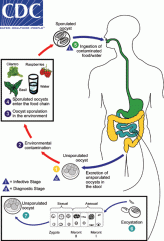
CIDRAP Cyclospora_LifeCycle201

In its annual report summing up the latest trends with pathogens that are common sources of foodborne illness, the Centers for Disease Control and Prevention (CDC) said today that the incidence of most illnesses increased in 2018, especially Cyclospora infections.

A team from the CDC and partners in 10 states that are part of the FoodNet surveillance network looked at levels for 2018 and compared them with levels for 2015 through 2017. The pathogens they tracked included CampylobacterCryptosporidiumCyclosporaListeriaSalmonella, Shiga toxin-producing Escherichia coli (STEC), ShigellaVibrio, and Yersinia. They published their findings today in the latest edition of Morbidity and Mortality Weekly Report.

In preliminary findings for 2018, the FoodNet system flagged 25,606 infections, 5,893 hospitalizations, and 120 deaths. They note that the incidence for most infections is rising, including Campylobacter and Salmonella. However, they added an important caveat that some of the increase might be partly due to the increased use of culture-independent diagnostic tests (CIDTs), which can identify pathogens not regularly found by other testing methods — complicating data interpretation.

USA – 53,200 and 113,424 pounds of raw ground beef products recalled in E. coli O103 Outbreak – more recalls likely

Food Poison Journal

As of this week, a total of 156 people infected with the outbreak strain of E. coli O103 have been reported from 10 states – Minnesota, Illinois, Indiana, Ohio, Kentucky, Tennessee, Virginia, Mississippi, Georgia and Florida.

To date there have been two recalls.  Link between two producers of meat and the recalls remain unclear (How are the two connected?  Presumably a common supplier?) except that both recalls were prompted by positive E. coli O103 tests on “Unopened, intact, packages of ground beef collected as part of the ongoing investigation tested positive for E. coli O103 at an FSIS laboratory.”

It is likely that more recalls will happen as FSIS, CDC and state health authorities continue their efforts to find the source.

Food Poison Journal

What we know is that illnesses began March 1 and it is now almost May 1 – why did it take so long to figure out that 177 people with E. coli O103 were linked to ground beef? Why do we do not yet know the original source of the contamination?  Why is the public not being told the location where known illnesses occurred? Finally, are more people going to get sick?

Canada – 73 with Salmonella Enteritidis in Canada linked to Profiteroles and Eclairs – 2 Dead

Food Poison Journal

Frozen profiteroles and mini eclairs sold in grocery stores are the apparent sources of two deaths among at least 73 lab-confirmed cases of Salmonella Enteritidis infections in Canada as of April 27, 2019, according to the Public Health Agency of Canada (PHAC).

The outbreak, which was first announced on April 5, 2019, has spread to six Canadian provinces: British Columbia (27), Alberta (12), Saskatchewan (9), Manitoba (10), Ontario (13) and Quebec (2).

The outbreak began in early November 2018 and remains ongoing, with the most recent case having been reported in late March 2019. Outbreak victims range in age between 1 and 88 years of age.

PHAC has not determined whether or not Salmonella was a contributing factor in either of the deaths. Nineteen outbreak victims have been hospitalized.

Sweden – Yersinia enterocolitica outbreak is being investigated in Sweden

Outbreak News Today

kswfoodworld.com

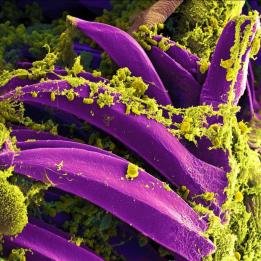
Image CDC

Swedish health officials (Folkhälsomyndigheten) report investigating (computer translated) an outbreak of Yersinia enterocolitica cases throughout the country since March. Cases have been reported in nearly all regions of the country and affected adults the most.

The investigation into a foodborne source is ongoing with collaboration of the Public Health Authority, the National Food Administration, municipalities and the County Administrative Board.To date, 26 cases in ten regions have been confirmed in the outbreak. Another thirty cases are being investigated. Health officials say since the current outbreak strain of Y. enterocolitica type O3 has been found in different parts of the country, it is likely that a food borne infection will occur.

Sweden reports between 200 to 300 cases reported annually.

USA – E.coli O103 Outbreak Updates

FSIS USDA

K2D Foods Recalls Raw Ground Beef Products Due to Possible E. coli O103 Contamination

FSIS USDA

Grant Park Packing Recalls Raw Ground Beef Products Due to Possible E. coli O103 Contamination

Food Poisoning Bulletin

The ground beef E. coli O103 outbreak has now sickened at least 156 people in 10 states. according to the Centers for Disease Control and Prevention (CDC). Twenty people are hospitalized because they are so ill. UPDATE: K2D Foods has recalled more than 100,000 pounds of ground beef for possible E. coli O103 contamination. But the recall notice states that “At this time, there is no definitive link between this positive product and the ongoing E. coli O103 outbreak.”

USA – FDA Investigating a Multistate Outbreak of Salmonella Carrau Linked to Pre-cut Melons

FDA

April 24, 2019

Pre-cut Melons

The United States Food and Drug Administration (FDA), along with the Centers for Disease Control and Prevention (CDC), and state and local partners, is investigating a multistate outbreak of Salmonella Carrau illnesses linked to pre-cut melon products. These products contain cantaloupe, honeydew, or watermelon, or may be mixes of some or all of these melons and other pre-cut fruit.

On April 12, 2019, Caito Foods, LLC, of Indianapolis, Ind., recalled products containing pre-cut melons because they are potentially contaminated with Salmonella.  Additionally, Caito Foods, LLC temporarily suspended producing and distributing these products. Salmonella Carrau is a rare type of Salmonella but has been historically seen in imported melons. Reports from Caito Foods, LLC indicate that imported melons were used in the suspect pre-cut melon products.

FDA and Indiana authorities continue to inspect and investigate the Caito Foods, LLC processing facility where these melons were cut and packed, including collecting samples for laboratory analysis. FDA is also continuing its traceback investigation, examining shipping records to try to identify the specific source of these melons.

Recommendation

Consumers should not eat the recalled pre-cut melon products. The products were packaged in clear, plastic clamshell containers and distributed in Illinois, Indiana, Iowa, Kansas, Kentucky, Michigan, Minnesota, Missouri, Nebraska, New York, North Carolina, Ohio, Pennsylvania, Tennessee, West Virginia, and Wisconsin. Consumers in these states who have purchased pre-cut melon products and cannot determine whether they were produced by Caito Foods, LLC should throw those products out.

These products were sold at the following retailers:

  • Kroger under the Renaissance Food Group label
  • Kroger under Boar’s Head Private Label
  • Target under the Garden Highway Label
  • Trader Joes under the Trader Joes label
  • Walmart under a Freshness Guaranteed label
  • Amazon/Whole Foods under the Whole Foods Market Label

A list of retail establishments that may have sold these products is available on the FDA website.

Retailers and restaurants should also not serve the recalled pre-cut melon products and should throw the product out.

These products were distributed by:

  • Caito Foods Distribution with the label “Distributed by Caito Foods”
  • Gordon Food Service with the label “Distributed by Caito Foods”
  • SpartanNash Distribution with the label “Open Acres”

Research – More severe salmonella outbreaks ahead

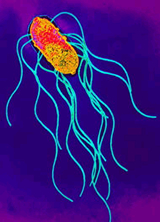
Science Daily Salmonella kswfoodworld

Australia has more salmonella outbreaks than any other country in the world, with the number of cases doubling over the last decade.

Over the past month alone, there have been numerous reports of the salmonella pathogen infecting eggs, leading to vast recalls of products and sparking calls from experts for more stringent hygiene practices.

In a study published in Scientific Reports, University of Sydney researchers developed a model that can predict outbreaks several months in advance.

While this prediction can provide early warning signs for disease surveillance and enable a more timely and precise allocation of health resources, the team discovered future salmonella outbreaks are likely to become more severe.

Led by the Director of Complex Systems Research Group Professor Mikhail Prokopenko, the team used 2008-2016 strain data to demonstrate that genetic networks of salmonella pathogens are linked through just a few degrees of separation, indicating an increasing severity of future epidemics.

“The data on salmonella outbreaks in NSW in the last decade or so highlights a continuing “arms race” between pathogens and their human hosts,” explained Professor Prokopenko.

“In a classical Darwinian evolution scenario, the pathogens spread over time by initially creating many mutated variants, with the more infectious “clones” soon becoming the most dominant within their own population,” he explained.

Vietnam – 14 Lao tourists hospitalized with food poisoning symptoms in central Vietnam

VNE Express

Da Nang City authorities are investigating the hospitalization of 14 Lao tourists with food poisoning symptoms.

The group of tourists had a buffet breakfast at their hotel in Da Nang before traveling to the nearby Hoi An Town; and had lunch at an out of town restaurant in Cham Islands.

In the afternoon, they began suffering stomach pain, vomiting and diarrhea and were sent to the emergency room at a hospital in downtown Da Nang.

Doctors diagnosed digestive disorders and acute gastritis. All the tourists victims are now in stable condition and were discharged from the hospital Tuesday.

The hospital reported the incident to city authorities.

In 2017, 46 tourists from Laos were hospitalized with food poisoning after having lunch at a restaurant in Da Nang. The restaurant was later fined VND25 million ($1,080) for failing to meet food safety standards.