Ferrero is expanding its recall of Kinder products made in Arlon, Belgium with three more products: Kinder Happy moments mini mix, Kinder maxi and Kinder Schokobons. This in connection with ongoing salmonella investigations.
KSWFoodWorld

Ferrero is expanding its recall of Kinder products made in Arlon, Belgium with three more products: Kinder Happy moments mini mix, Kinder maxi and Kinder Schokobons. This in connection with ongoing salmonella investigations.
Posted in food bourne outbreak, food contamination, food handler, Food Hazard, Food Hygiene, Food Illness, Food Inspections, Food Micro Blog, Food Microbiology, Food Microbiology Blog, Food Microbiology Research, Food Microbiology Testing, Food Pathogen, food recall, Food Safety, Food Safety Alert, Food Testing, Foodborne Illness, foodborne outbreak, foodbourne outbreak, Illness, outbreak, Salmonella, Salmonella in Chocolate
A whistle blower document regarding product safety at a plant that manufactured infant formula linked to a deadly, ongoing outbreak provides damning information against Abbott Nutrition, the maker of Similac and other popular formulas that have been recalled in relation to the outbreak.
The document, sent to top officials at the Food and Drug Administration in October 2021, sparked outrage from U.S. Rep. Rosa DeLauro who has already demanded information from the FDA regarding the Cronobacter outbreak among babies. DeLauro, D-CT, on April 28 shared a redacted version of the whistle blower complaint and renewed her criticism of FDA and Abbott Nutrition for their slow response to the outbreak in which at least four babies have been hospitalized, with two having died.
“I am deeply concerned about the practices at this Abbott facility and their apparent failure to implement and enforce internal controls at this facility. We need to know exactly who in the company was aware of this failure and the alleged attempts to hide this information from the FDA,” DeLauro said during a meeting on the Fiscal Year 2023 Budget Request for the United States Department of Agriculture.
“I am equally concerned that the FDA reacted far too slowly to this report. The report was submitted to the FDA on October 20, 2021. The FDA did not interview the whistleblower until late December 2021. According to news reports, FDA did not inspect the plant in person until January 31, 2022, and the recall was not issued until February 17, 2022.”
Read the full story at the link above.
Posted in Cronobacter sakazakii, Death, food bourne outbreak, food contamination, food death, food handler, Food Hazard, Food Hygiene, Food Illness, Food Inspections, Food Micro Blog, Food Microbiology, Food Microbiology Blog, Food Microbiology Testing, Food Pathogen, Food Poisoning Death, food recall, Food Safety, Food Safety Alert, Food Testing, Foodborne Illness Death, foodborne outbreak, foodbourne outbreak, outbreak
Strauss has expanded a recall announced earlier this week to all Elite, Energy, gum and toffee products after traces of salmonella were found on production lines.
All Elite chocolates, cakes and wafers, Energy cereal bars and chocolate-covered rice cakes and all Strauss chewing gum and toffees will be removed from store shelves regardless of the expiration date.
Strauss said it would reset the operations at its confectionery factory and restart operations after the issues are fixed. The company found two samples that are suspected of being salmonella from two chocolate products that were returned as part of the recall, out of 270 samples taken.
On Wednesday, a 10-year-old boy was diagnosed with salmonella after being hospitalised with severe dehydration as a result of extensive vomiting and diarrhoea.
Posted in food bourne outbreak, food contamination, food handler, Food Hazard, Food Hygiene, Food Illness, Food Inspections, Food Micro Blog, Food Microbiology, Food Microbiology Blog, Food Microbiology Testing, Food Pathogen, food recall, Food Safety, Food Safety Alert, Food Testing, Foodborne Illness, foodborne outbreak, foodbourne outbreak, Illness, outbreak, Salmonella, Salmonella in Chocolate
On 27 March 2022, WHO was informed by the IHR National Focal Point of the United Kingdom of Great Britain and Northern Ireland (the United Kingdom) of a widely distributed cluster of Salmonella enterica serovar Typhimurium (S. Typhimurium) with an unidentified source. Molecular typing confirmed isolation of the bacteria S. Typhimurium sequence typing (ST) 34 and epidemiological evidence has subsequently linked the outbreak to chocolate products from Belgium, which, as of 25 April 2022, have been found to be distributed to at least 113 countries and territories1 across all WHO Regions
Monophasic S. Typhimurium matching the human outbreak cases were identified in buttermilk tanks at the Ferrero Corporate plant in Arlon, Belgium in December 2021 and January 2022. After implementing hygiene measures and negative Salmonella testing, the implicated products (all Kinder products manufactured at the implicated facility (Arlon) including Kinder Surprise, Kinder Mini Eggs, Kinder Surprise Maxi 100g and Kinder Schoko-Bons) were distributed across Europe and globally.
According to the analyses of the United Kingdom Health Security Agency (UKHSA), the outbreak strain is resistant to six types of antibiotics: penicillins, aminoglycosides (streptomycin, spectinomycin, kanamycin, and gentamycin), phenicols, sulfonamides, trimethoprim, tetracyclines.
As of 25 April 2022, a total of 151 genetically related cases of S. Typhimurium suspected to be linked to the consumption of the implicated chocolate products have been reported from 11 countries (Figure 1): Belgium (26 cases), France (25 cases), Germany (10 cases), Ireland (15 cases), Luxembourg (1 case), the Netherlands (2 cases), Norway (1 case), Spain (1 case), Sweden (4 cases), the United Kingdom (65 cases) and the United States of America (1 case).

Posted in food bourne outbreak, food contamination, food handler, Food Hazard, Food Hygiene, Food Illness, Food Inspections, Food Micro Blog, Food Microbiology, Food Microbiology Blog, Food Microbiology Testing, Food Pathogen, food recall, Food Safety, Food Safety Alert, Food Testing, Foodborne Illness, foodborne outbreak, foodbourne outbreak, Illness, outbreak, Salmonella, Salmonella in Chocolate
Update on 04/27/22 following the recall of several Kinder range products manufactured in a factory in Belgium due to suspected contamination by Salmonella Typhimurium .
Following the investigations carried out by the Belgian health authorities, together with their English, European and in particular French counterparts, the company Ferrero proceeded on April 5, 2022 to the recall of several Kinder range products manufactured in a factory in Belgium due to suspected contamination by Salmonella Typhimurium . On April 8, 2022, the recall finally affected all Kinder products from this factory, regardless of their expiry date. On April 14, 2022, an update of the recalled products, including the 2021 Christmas Advent Calendars, was released.
In total, as of 04/27/2022: 59 cases of salmonellosis with a strain belonging to the epidemic have been identified by the National Reference Center (CNR) for salmonella at the Institut Pasteur in France.
The 59 cases are spread over 11 regions (Ile-de-France (11 cases), Grand-Est (10 cases), Provence-Alpes-Côte d’Azur (9 cases), Auvergne-Rhône-Alpes (7 cases) , Hauts-de-France (6 cases), Bourgogne-Franche-Comté (4 cases), Normandy (4 cases), New Aquitaine (3 cases), Brittany (2 cases), Occitanie (2 cases), and Corsica ( 1 case)), with a median age of 3 years, and involved 29 boys and 30 girls.
Forty-two cases were able to be questioned by Public Health France. All the cases report, before the onset of their symptoms (which occurred between 20/01 and 31/03/2022), the consumption of chocolates of the brand cited here. Seventeen people were hospitalized for their salmonellosis, all since discharged. No deaths were reported.
Public Health France is continuing its investigations with the families of cases recently reported by the CNR.
The successive withdrawals and recalls of the Kinder brand products concerned, produced by the Belgian factory with its closure by the Belgian authorities, should limit the occurrence in France of new cases of salmonellosis in the coming days/weeks.
To find out the list of products concerned by the withdrawal-recall: https://rappel.conso.gouv.fr/
People who have consumed the products mentioned above and who present symptoms (gastrointestinal disorders, fever within 72 hours of consumption), are invited to consult their doctor without delay, notifying him of this consumption.
In order to limit person-to-person transmission (especially in households with young children), it is recommended to wash your hands well with soap and water after using the toilet, after changing your child, and before to cook.
Posted in food bourne outbreak, food contamination, food handler, Food Hazard, Food Hygiene, Food Illness, Food Inspections, Food Micro Blog, Food Microbiology, Food Microbiology Blog, Food Microbiology Research, Food Microbiology Testing, Food Pathogen, food recall, Food Safety, Food Safety Alert, Food Testing, Foodborne Illness, foodborne outbreak, foodbourne outbreak, Illness, outbreak, Salmonella, Salmonella in Chocolate
Update on April 25, 2022 on the grouped cases of haemolytic-uremic syndrome and E. coli infections producing shiga-toxin and the consumption of frozen pizzas from the Fraîch’Up range of the Buitoni® brand.
Public Health France and the National Reference Center (CNR) E. coli and its associated laboratory (Institut Pasteur, Paris, and Microbiology Laboratory of the Robert Debré Hospital, Paris), in conjunction with the Directorate General for Food, the Directorate General for Competition, Consumer Affairs and Fraud Prevention, and in coordination with the Directorate General for Health, have been investigating since 02/10/2022 an increase in the number of cases of haemolytic uremic syndrome (HUS) pediatric infections and Shiga toxin-producing Escherichia coli (STEC) infections.
The epidemiological, microbiological and traceability investigations carried out since that date have confirmed a link between the occurrence of these grouped cases and the consumption of frozen pizzas from the Buitoni brand Fraîch’Up range contaminated with STEC bacteria. On 03/18/2022, the company proceeded with the withdrawal-recall of all the pizzas in the Fraîch’Up range, marketed since June 2021 and the authorities asked the people who hold these pizzas not to consume them and to destroy them.
The total number of HUS cases linked to the consumption of these pizzas seems to have stabilized since the withdrawal-recall.
As of 04/25/2022, 55 confirmed cases have been identified, of which 53 are linked to STEC O26 strains, and 2 to STEC O103 strains.
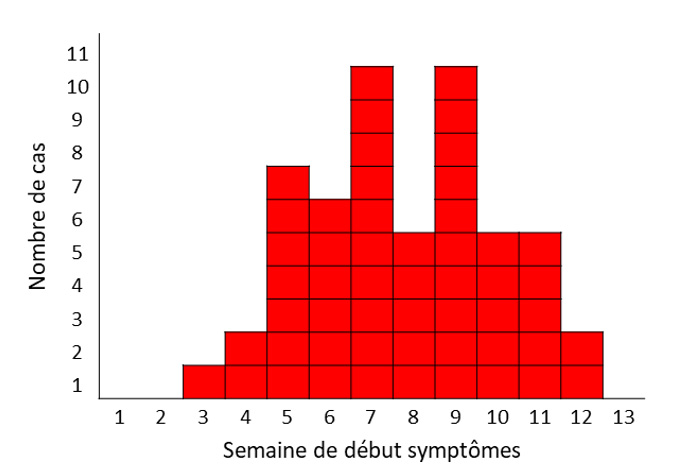
These 55 cases occurred in 54 children and 1 adult, who presented symptoms between 18/01/2022 (week 3) and 25/03/2022 (week 12) (Figure 1). The epidemic peak is in week 7 (14/02 to 20/02) and week 9 (28/02 to 06/03), with 10 cases each of these weeks.
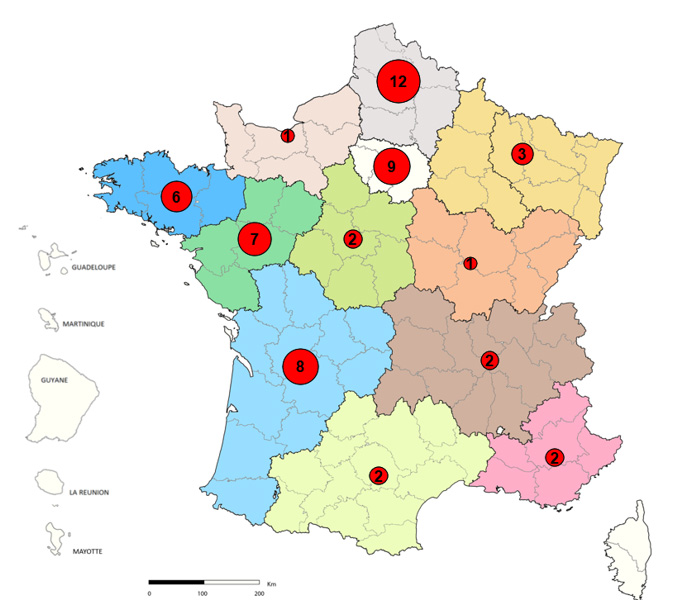
These 55 cases occurred in 12 regions of metropolitan France: Hauts-de-France (12 cases), Ile-de-France (9 cases), New Aquitaine (8 cases), Pays de la Loire (7 cases), Brittany ( 6 cases), Grand Est (3 cases), Auvergne-Rhône-Alpes (2 cases), Occitanie (2 cases), Provence-Alpes-Côte d’Azur (2 cases), Center Val-de-Loire (2 cases) , Bourgogne Franche-Comté (1 case) and Normandy (1 case) (figure 2).
The 54 sick children are aged from 1 to 17 years with a median age of 7 years; 24 (44%) are female; 47 (87%) presented with HUS, 7 (13%) with STEC gastroenteritis. Two children died. The adult did not present with HUS.
Posted in E.coli O26, food bourne outbreak, food contamination, food handler, Food Hazard, Food Hygiene, Food Illness, Food Inspections, Food Micro Blog, Food Microbiology, Food Microbiology Blog, Food Microbiology Testing, Food Pathogen, food recall, Food Safety, Food Safety Alert, Food Testing, Foodborne Illness, foodborne outbreak, foodbourne outbreak, Illness, Microbiology Investigations, outbreak, Shigatoxin, STEC, STEC E.coli
(n) Notifying | (o) Origin | (d) Distribution | (op) Operator
(ffup) Flagged for Follow-Up | (ffa) Flagged For Attention
Posted in food bourne outbreak, food contamination, Food Hazard, Food Hygiene, Food Illness, Food Inspections, Food Micro Blog, Food Microbiology, Food Microbiology Blog, Food Poisoning, food recall, Food Safety, Food Safety Alert, Food Testing, foodborne outbreak, foodbourne outbreak, outbreak, Salmonella, Salmonella in Chocolate
Date published: 28 April 2022
Benedikt Imports Ptd Ltd is conducting a recall of the various Elite branded confectionery products including Elite Chocolate, Elite Cakes, Elite Wafers, Energy Grain Snacks, Energy Chocolate Rice Cakes, Gum and Toffee Candies from all expiration dates. The products have been available for sale nationally at Coles, Woolworths, IGAs, 7/11, Independent Kosher stores and Milk bars.
All batches, best before, used by and made on dates are being recalled.

The recall is due to potential microbial (Salmonella) contamination.
Food products contaminated with Salmonella may cause illness if consumed.
Israel
Consumers should not eat this product. Any consumers concerned about their health should seek medical advice and should return the products to the place of purchase for a full refund.
For further information please contact:
Benedikt Imports Ptd Ltd
03 9577 3000
Related links:
Because salmonella is a pathogen that is prevalent in the gut of many animals and insects, it can spread by the animal’s feces into the soil, water and food. From there it can easily be introduced into and spread throughout a food production facility by way of raw ingredients, as was the case with the Strauss facility. It can also spread through the facility via contaminated packaging, equipment and workers’ hands and clothing.
Salmonella thrives in moist, warm environments such as drains, floors and processing equipment, making a food production facility the perfect environment for it.
However, there are several ways to ensure that the risk of salmonella contamination in a food facility is lessened, according to international cleaning equipment supplier Vikan’s hygiene and compliance manager Stine Lønnerup Bislev.
The first step to controlling the spread of the bacteria is to ensure that only clean and disinfected equipment, tools and utensils are brought into the processing area, Bislev explains on the company’s website. Then, all incoming ingredients and materials that pose a risk for contamination should be tested for salmonella ahead of production.
Ingredients must be cleaned and disinfected properly, using either a wet or dry cleaning method, depending on the moisture content of the ingredient. High moisture ingredients that require wet cleaning include meat, vegetables and dairy products, Bislev notes.
To avoid the spread of contamination, raw and processed foods must be handled in separate areas, using separate tools and equipment. Cleaning equipment should meet the appropriate hygiene standards to facilitate easy cleaning and prevent microbial growth.
Hygenic design features include smooth surfaces, one-piece construction, easy dismantling and a lack of crevices.
Finally, Bislev states, a program should be developed by the production facility’s management in order to routinely sample the space for salmonella.
“An environmental monitoring program will assess the effectiveness of your overall hygienic practices, monitor the environment for transient pathogens and help mitigate potential harborage and growth niches,” she concludes.
Read more at the link above.
Posted in food bourne outbreak, food contamination, food handler, Food Hazard, Food Hygiene, Food Illness, Food Inspections, Food Micro Blog, Food Microbiology, Food Microbiology Blog, Food Microbiology Research, Food Microbiology Testing, Food Pathogen, food recall, Food Safety, Food Safety Alert, Food Testing, Foodborne Illness, foodborne outbreak, foodbourne outbreak, Illness, outbreak, Research, Salmonella, Salmonella in Chocolate
At least two children and one adult have sought out medical attention with suspected cases of salmonella poisoning following a massive recall of Strauss products ranging from chocolate to ice cream, pudding, cookies and other snacks over contamination fears.
According to Hebrew media reports, two children who recently sought care at the Assuta Medical Center in Ashdod are suspected of being poisoned by salmonella, pending full lab results. In addition, a man who was treated at an urgent care facility in Bnei Brak with relevant symptoms said that he had consumed some of the infected products recently.
Health Minister Nitzan Horowitz said Tuesday that the incident will be fully investigated and the factory will not be allowed to resume operation before it is fully cleared.
Posted in food bourne outbreak, food contamination, Food Hazard, Food Hygiene, Food Illness, Food Inspections, Food Micro Blog, Food Microbiology, Food Microbiology Blog, Food Microbiology Testing, Food Pathogen, food recall, Food Safety, Food Safety Alert, Food Testing, Foodborne Illness, foodborne outbreak, foodbourne outbreak, Illness, outbreak, Salmonella in Chocolate


