Category Archives: Food Hygiene

Canada – Notice not to consume ground beef sold by Fouquet Morel inc. – E.coli O157

MAPAQ

QUEBEC, June 22, 2021 / CNW Telbec / – The Ministry of Agriculture, Fisheries and Food (MAPAQ), in collaboration with Fouquet Morel Inc., located at 730, boulevard des Récollets, in Trois -Rivers, advise the population not to consume the products indicated in the table below, as these foods are likely to contain the bacterium E. coli O157.

Product name

Format

Packing date

Retention deadline

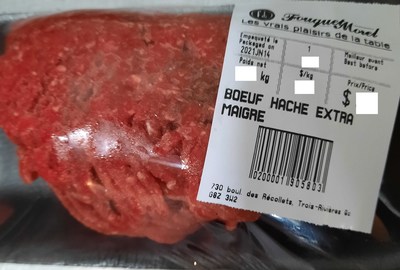
“EXTRA LEAN GROUND BEEF”

Variable


“Emb. :

on 2021JN13

on 2021JN14 “

ND

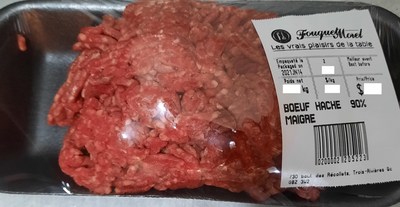
“90% LEAN GROUND BEEF”

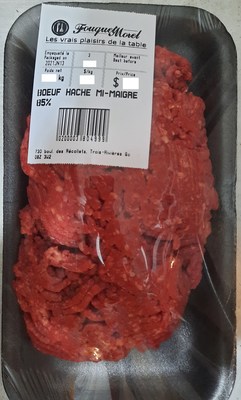
“MID-LEAN GROUND BEEF 85%”

The products that are the subject of this warning were packaged between June 13 and 14 inclusively and were offered for sale only at the establishment mentioned above. They were packaged in trays covered with transparent plastic wrap. They were offered in a refrigerated state. The product label includes, in addition to their name, the words “Fouquet Morel – The real pleasures of the table”.

The operator is voluntarily recalling the products in question. He agreed with MAPAQ to disseminate this warning as a precautionary measure. In addition, people who have any of these products in their possession are advised not to consume it. They must return it to the establishment where they bought it or throw it away.

It should be noted that proper cooking of meat destroys the E. coli O157 bacteria in all cases. Preparing ready-made meals, such as spaghetti sauce, shepherd’s pie, or meat pie, requires a fairly long cooking time and a temperature high enough to destroy the bacteria.

Food contaminated with E. coli O157 may not look or smell spoiled, but eating such foods can cause serious illness or death. They are manifested by diarrhea and abdominal pain, often accompanied by blood in the stool. These symptoms usually appear two to ten days after eating a contaminated food. Nausea, vomiting and sometimes fever can be associated with it. When these symptoms appear, it is strongly recommended to consult a doctor without delay. Most symptoms go away within five to ten days. It should be noted that no case of illness associated with the consumption of these foods

Additional information

The Ministry publishes various information documents concerning food safety. Those interested can consult them in the “Food consumption” section of the MAPAQ website: www.mapaq.gouv.qc.ca/consommation This link will open in a new window. . They also have the option of registering online, by visiting www.mapaq.gouv.qc.ca/rappelsaliments This link will open in a new window. , to receive, by email, the food recall releases published by the Department. Finally, it is possible to follow “MAPAQaliments” on Twitter at the following address: www.twitter.com/MAPAQaliments This link will open in a new window. .

Extra Lean Ground Beef (CNW Group / Ministry of Agriculture, Fisheries and Food) This link will open in a new window.

90% lean ground beef (CNW Group / Ministry of Agriculture, Fisheries and Food) This link will open in a new window.

Medium-lean ground beef (CNW Group / Ministry of Agriculture, Fisheries and Food) This link will open in a new window.

Risk  classification : class 1
Reference number:  4351

Source:
Media relations
Communications
Department Ministry of Agriculture, Fisheries
and Food
Tel. : 418 380-2100, extension 3512
www.mapaq.gouv.qc.ca This link will open in a new window.

CisionView original content to download multimedia: http://www.newswire.ca/en/releases/archive/June2021/22/c5135.html This link will open in a new window.

Denmark – Risk of mold growth in Organic mayonnaise

DVFA

Scandic Food A / S is recalling REMA 1000 Organic Mayonnaise, as there is a risk of mold growth in the product

Recalled Foods , Published: June 21, 2021

What food:
REMA 1000 Organic Mayonnaise
Net content: 210g
Best before date: 21-02-2022
Lot: L2
Sold in:
REMA 1000 stores nationwide
Company recalling:
Scandic Food A / S
Cause:
There is a risk of mold growth in the product.
Risk:
Mold growth means that the product is considered unsuitable as food.
Advice for consumers:
The Danish Veterinary and Food Administration advises consumers to deliver the product back to the store where it was purchased or to discard it.

France – Product recall: Traditional ham from Le Père Champain

Oulah

ENCOUNTERED PROBLEM

Presence of Listeria monocytogenes

PROPOSED SOLUTION

People who may have this product are asked not to consume it and to return it to the point of sale where it was purchased.

People who have consumed this product and who present with fever, isolated or accompanied by headaches, are invited to consult their attending physician, notifying him of this consumption.
Pregnant women should pay special attention to these symptoms, as well as immunocompromised people and the elderly. These symptoms may suggest listeriosis, a disease that can be serious and can take up to eight weeks to incubate.

FURTHER INFORMATION

▸ Names of models or references
Ham sold in slices in the traditional delicatessen section


▸ Barcode
393233970910141


▸ Lot
21122


▸ DLC – DDM
07/15/2021


▸ Packaging
Whole ham sold by the slice in the cut section.


▸ Start date / End of marketing
From 06/02/2021 to 06/21/2021


▸ Geographical sales area
Departments: INDRE-ET-LOIRE (37), LOIR-ET-CHER (41), LOIRE (42), LOIRE-ATLANTIQUE (44), LOIRET (45), SEINE-MARITIME (76), SEINE -ET-MARNE (77), YVELINES (78), HAUTE-VIENNE (87), SEINE-SAINT-DENIS (93), VAL-DE-MARNE (94), VAL-D’OISE (95)


▸ Distributors
M Mercier, Passion salaison, Artisan du Choix, Intermarché, La Sobreda 2 Nantes, Carrefour market, Auchan, Super U Bonny, JCC Viandes, Yvas, Cora, SARL Ordirest, Negotours, Dispere, Ilgo, Boucherie de sologne, M Desoeuvre .


▸ Consumer service contact
0247550605


▸ Source
REGIONAL SALAISONS

Czech Republic – Ham – Listeria monocytogenes

Potravinynapranyri

Place of inspection:
Studena ( Vrsi 544, 37856 Studena )
Company ID: 06651640
Unsatisfactory parameter:

Listeria monocytogenes

The product has been found to have the pathogenic bacterium Listeria monocytogenes , which can cause a condition called listeriosis.

Expiration date: 5/21/2021
Packaging: Plastic foil
Producer: MEFFISTO Studená sro, Vrší 544, Studená 378 56
Country of origin:  Czechia
Date of sampling: 5. 5. 2021
Reference number: 21-000020-SVS-EN
The sample was found by official inspection of the State Veterinary Administration.

Czech Republic – Chilled chicken breast fillet – Salmonella

Potravinynapranyri

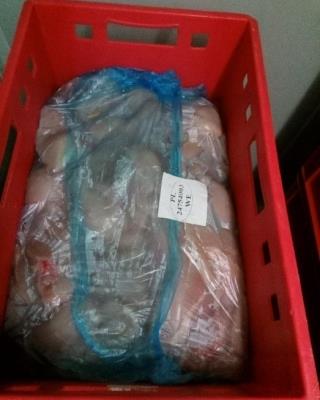
Illustration photo no. 1

Place of inspection:
Cesky Tesin ( Hrabinska 1930 / 28b, 73701 Cesky Tesin )
Company ID: 02179440
Food group: Meat and meat products / Unpacked: meat, minced meat, meat preparations

Chilled chicken breast fillet
Category: Dangerous food
Unsatisfactory parameter:

Salmonella enterica serum. Enteritidis

The pathogenic bacterium Salmonella enterica serum was detected in chilled chicken breasts . Enteritidis , which can cause a condition called salmonellosis.

Expiration date: 5/23/2021
Producer: PPHU Pawel Kaczorek Zaklad Rozbioru Drobiu, 42-500 Bedzin, Zawale 22, PL 24754003
Distributor: Kama trade CZ – re-dispatch meat warehouse
Country of origin:  Poland
Date of sampling: May 20, 2021
Reference number: 21-000019-SVS-CZ
The sample was found by official inspection of the State Veterinary Administration

UK – Almost half the adults (46%) who cook coated frozen chicken products do not always check cooking instructions on packaging before cooking

FSA

The Food Standards Agency (FSA), Food Standards Scotland (FSS) with Ipsos MORI have published a survey of consumer practices relating to coated frozen chicken products.

This survey identifies behaviours which could increase people’s risk to foodborne disease. It was commissioned as a result of a Salmonella incident linked to frozen chicken products such as nuggets, goujons, dippers, poppers and kievs. While these products may appear cooked on the outside, they often contain raw chicken and so they must be cooked thoroughly to help kill Salmonella bacteria.

Findings show that two thirds of adults aged 16-75 (67%) say they have recently cooked or eaten coated frozen chicken products at home. These products are particularly popular with younger adults, with 88% of those aged 16-24 having recently consumed them or cooked them at home. Participants were also more likely to have cooked or eaten these products if they have children aged 15 or under in their household (86%).

The survey also included questions on the storage and handling of these products pre and post-cooking:

  • Almost two thirds of those who cook these products (62%) say uncooked coated frozen chicken products at least sometimes come into contact with other surfaces such as worktops and plates
  • Over half of those who cook these products (58%) say they always wash their hands after handling coated frozen chicken products
  • Almost a quarter of consumers who personally cook products say they defrost them before cooking (23%), 62% say they do not. Among those who defrost products, half say they leave them at room temperature (53%)

Most participants who use an oven to cook coated frozen chicken products say they sometimes cook them together with other products, such as chips or vegetables (84%). Cooking these chicken products at a lower temperature or for a shorter time than advised may mean they are not thoroughly cooked before serving.

Narriman Looch, Head of Animal Feed and Foodborne Disease Control Branch said: ‘It’s important to understand that frozen chicken products often contain raw chicken, even though they may look pre-cooked on the outside. While additional measures have been put in place by food businesses to improve the safety of these products, consumers need to handle these products as they should other raw meat products. Cooking food at the right temperature and for the right amount of time will kill any Salmonella bacteria that may be in food. Therefore, we are urging consumers to follow cooking instructions for these products to protect themselves and their families.’

Food safety tips for frozen breaded chicken products:

  • Treat these products as raw chicken, ensuring they are steaming hot after cooking and surfaces they have touched are cleaned to avoid the spread of bacteria
  • Make sure the oven is up to temperature before cooking
  • Check the instructions on packaging and cook at the correct temperature and for the time stated
  • Wash your hands, utensils and clean surfaces after handling these products
  • If products require defrosting, follow the storage instructions on packaging and always defrost in the fridge

About this poll

The FSA and FSS commissioned an online survey via three waves of Ipsos MORI’s online omnibus of 5,599 adults (aged 16-75) living in the UK. Of these 3,740 had cooked or eaten coated frozen chicken products recently and went on to complete the full survey. The data was weighted to be representative of the UK adult population aged 16 – 75.

The full report is available in the research section of our website.

About the outbreak

FSA and FSS are continuing to work with Public Health England (PHE) and devolved public health authorities as well as our international food safety partners, via the United Nations’ World Health Organization, (WHO) and the Food and Agriculture Organization’s (FAO’s) International Food Safety Network (INFOSAN), to address the causes of the outbreak at source to prevent further cases of Salmonella Enteritidis.

Between January 2020 and May 2021 there have been 511 cases of Salmonellosis in the UK caused by two strains of Salmonella Enteritidis and linked to consumption of frozen, raw, breaded chicken products.

Authorities in Poland and UK retailers have taken action to reduce the risk from these products. Where non-compliant or unsafe food has been identified by the UK, action has been taken to protect consumers.

Italy – Genoese pesto without garlic – Listeria monocytogenes

Salute

Brand : Pastificio Novella Sas

Name : Genoese pesto without garlic

Reason for reporting : Recall due to microbiological risk

Publication date : 22 June 2021

Documentation

Documentation

UK – UK patient count in Salmonella melon outbreak doubles.

Food Safety News

The number of people sick in the United Kingdom in an outbreak linked to melons has almost doubled.

The Food Standards Agency (FSA) and Public Health England (PHE) are investigating the incident with 99 people sick since April. It was previously known that 52 people were ill in the UK.

Those more than 70 and less than 9 years old are the age groups mostly affected. Investigations are focusing on the supply chain of galia, cantaloupe and honeydew melons from Honduras and Costa Rica.

FSA is working with trade associations and retail businesses to get information relevant to the outbreak. A quick rise in confirmed infections occurred in the week commencing May 24.

New Zealand – Real Milk Timaru brand raw (unpasteurised) drinking milk – Listeria monocytogenes

MPI

Product identification
Product type Raw (unpasteurised) drinking milk
Name of product (size) Real Milk Timaru brand raw (unpasteurised) drinking milk (1L)
Date marking Use by date: 17/06/21, 18/06/21 and 19/06/21
Batch marking Purchased on and between 13 and 15 June 2021.

Lot numbers: 210613, 210614 and 210615

Package size and description The product is sold in a 1L glass bottle.
Distribution The product was sold via a vending machine at 22 Fairview Road, Timaru. The product was also available via home deliveries in the South Canterbury area and online at:

The product has not been exported.

Notes This recall does not affect any other batches of Real Milk Timaru brand raw (unpasteurised) drinking milk.

Consumer advice

Customers are asked to check the lot number, use by date written on the product and date of purchase.

If you have purchased any of the affected product listed on this notice, do not consume it. Customers should return the product to Real Milk Timaru for a full refund. Alternatively, consume after heating to 70°C and holding at this temperature for one minute. If you don’t have a thermometer, heat the milk until it nearly reaches a boil (or scald the milk) before drinking it.

There have been no reports of associated illness in New Zealand. If you have consumed any of this product and have any concerns about your health, seek medical advice.

MPI’s advice on how to reduce the risk of illness if you drink raw unpasteurised milk

More information on Listeria

Who to contact

If you have questions, contact Real Milk Timaru:

  • Phone: ​027 221 4552
  • Address: 22 Fairview Road, Timaru.

Belgium – “Seafood” brand 150g Zeelandia’s garnalen – Listeria monocytogenes

AFSCA

Recall Levenstond NV Seafood
Product: “Seafood” brand 150g Zeelandia’s garnalen.
Problem: possible presence of Listeria monocytogenes.


In consultation with the AFSCA Levenstond Seafood NV has decided to withdraw the Seafood (150g) of the brand “Zeelandia’s garnalen” from the sale.

This following a press release from the supplier of this product, in which he informed us of the possible presence of Listeria monocytogenes.

This product is being withdrawn from sale and is being recalled from consumers.

Levenstond Seafood NV asks consumers not to use the product and to return it to the point of sale.

Product description:

Name: Zeevruchtenmix, Fruits de Mer, Meeresfrüchte Lot
numbers – expiry dates (
BBD ): lot 260521 –
06/16/2021
lot 010621 – 06/22/2021 lot 040621 – 06/25/2021
Weight: 150 g

This product has been distributed by the following points of sale in Belgium:

De Vis Factorij Riemst – Allewijstraat 1, 3770 Riemst
Agora Culinair Seafood – Atealaan 21, 2200 Herentals
Carrefour market Diepenbeek – Wijkstraat 37, 3590 Diepenbeek
Carrefour market Houthalen – Weg naar Zwartberg 75 , 3530 Houthalen-Helchteren
Carrefour market Terbiest – Hasseltsesteenweg 39, 3800 Sint-Truiden

For more information , you can contact the contact point of Levenstond Seafood NV (012 / 42.01.10, marieke@levenstondseafood.be ).