Category Archives: Food Hygiene

Hong Kong – Stop consuming a kind of French cheese suspected to be contaminated with Listeria monocytogenes

CFS

Issue Date 18.4.2018
Source of Information Rapid Alert System for Food and Feed (RASFF) of the European Commission
Food Product A kind of cheese imported from France
Product Name and Description Product name: Brillat Savarin
Place of origin: France
Producer: Sarl ETS Beillevaire
Lot No.: 180140 and 1801579
Best-before dates: March 9, 2018, and March 11, 2018
Reason For Issuing Alert
  • The Centre for Food Safety (CFS) received a notification from the RASFF that the above-mentioned product might have been contaminated with Listeria monocytogenes and is being recalled.  According to the information provided by the RASFF, a local importer, K-Element Limited, had imported some of the affected product into Hong Kong.
Action Taken by the Centre for Food Safety
  • The CFS immediately contacted the importer concerned for follow-up. The importer confirmed that it had imported about 4 kilograms of the affected product and all of them were distributed. It has initiated a recall according to the CFS’ advice.
  • The CFS will alert the trade to the incident, and will continue to monitor the case and take appropriate follow-up action. Investigation is ongoing.
Advice to the Trade
  • Stop using or selling the product concerned immediately if they possess it.
Advice to Consumers
  • Stop consuming the affected product if they have bought any.
Further Information The CFS press release

  • Enquiries about the recall can be made to the importer’s hotline at 3106 4722 during office hours.

USA – Multistate Outbreak of E. coli O157:H7 Infections Linked to Chopped Romaine Lettuce – CDC Update

CDC Eurofins Food Testing UK

What’s New?

  • Eighteen more ill people have been added to this investigation since the last update on April 13, 2018.
  • Five more states have reported ill people: Alaska, Arizona, California, Louisiana, and Montana.
  • Nine more hospitalizations have been reported, including two people who developed a type of kidney failure called hemolytic uremic syndrome.


Highlights

  • Information collected to date indicates that chopped romaine lettuce from the Yuma, Arizona growing region could be contaminated with E. coli O157:H7 and could make people sick.
    • At this time, no common grower, supplier, distributor, or brand has been identified.
  • Advice to Consumers(https://www.cdc.gov/ecoli/2018/o157h7-04-18/advice-consumers.html):
    • Consumers anywhere in the United States who have store-bought chopped romaine lettuce at home, including salads and salad mixes containing chopped romaine lettuce, should not eat it and should throw it away, even if some of it was eaten and no one has gotten sick. If you do not know if the lettuce is romaine, do not eat it and throw it away.
    • Before purchasing romaine lettuce at a grocery store or eating it at a restaurant, confirm with the store or restaurant that it is not chopped romaine lettuce from the Yuma, Arizona growing region. If you cannot confirm the source of the romaine lettuce, do not buy it or eat it.
  • Advice to Restaurants and Retailers(https://www.cdc.gov/ecoli/2018/o157h7-04-18/advice-consumers.html):
    • Restaurants and retailers should not serve or sell any chopped romaine lettuce, including salads and salad mixes containing chopped romaine lettuce, from the Yuma, Arizona growing region.
    • Restaurants and retailers should ask their suppliers about the source of their chopped romaine lettuce.
  • CDC, public health and regulatory officials in several states, and the U.S. Food and Drug Administration are investigating a multistate outbreak of Shiga toxin-producing Escherichia coli O157:H7 (E. coli O157:H7) infections.
  • 53 people infected with the outbreak strain of E. coli O157:H7 have been reported from 16 states.
    • 31 people have been hospitalized, including five people who have developed a type of kidney failure called hemolytic uremic syndrome.
    • No deaths have been reported.
  • This investigation is ongoing, and CDC will provide updates when more information is available.

Canada – Updated Food Recall Warning – Fresh 2 Go brand Roast Beef Paninis recalled due to Listeria monocytogenes

CFIA


Recall details

Ottawa, April 18, 2018 – The food recall warning issued on April 17, 2018 has been updated to include additional product information. This additional information was identified during the Canadian Food Inspection Agency’s (CFIA) food safety investigation.

Metro Ontario Inc. is recalling Fresh 2 Go brand Roast Beef Paninis from the marketplace due to possible Listeria monocytogenes contamination. Consumers should not consume the recalled products described below.

The following products were sold from Metro locations in Ontario.

Recalled products

Brand Name Common Name Size Code(s) on Product UPC
Fresh 2 Go (F2GO) Roast Beef Panini 2-pack All units sold up to and including April 18, 2018 Starts with 0219274
Fresh 2 Go (F2GO) Roast Beef Panini 4-pack All units sold up to and including April 18, 2018 Starts with 0219149

New Zealand – Up to 90 per cent of NZ chicken could be contaminated with Camplobacteria – new study

TVNZ 


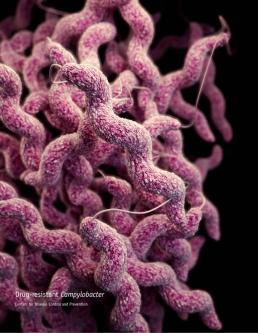
A University of Otago, Wellington study, published last week in the international journal BMC Public Health, found only 15 per cent of consumers were aware that most of fresh chicken meat for sale in New Zealand is contaminated with Campylobacter.

The researchers also found deficiencies in the safety information provided to consumers.

“New Zealand has one of the highest rates of campylobacteriosis in the world and at least half of cases can be attributed to contaminated chicken,” says Philip Allan, one of the study’s authors and a medical student attached to the Department of Public Health.

Most survey participants were aware of the need to thoroughly cook chicken and to use separate utensils during preparation, but many were unaware that rinsing fresh chicken under the tap could spread the infection or that freezing chicken reduced Campylobacter contamination.

The study authors expect food safety regulators and chicken producers and retailers to be taking all reasonable steps to protect consumers.

How to cook the Campylobacter out of your chicken

UK – Northern Ireland – Dunnes Stores recalls Chicken, Bacon & Sweetcorn Deli Filler due to possible contamination with Listeria monocytogenes

FSA NI

Product details

Product: Dunnes Stores Chicken, Bacon & Sweetcorn Deli Filler
Pack size: 175g
‘Use By’ dates: all use by dates from 13 April 2018 to 20 April 2018 (inclusive)

No other Dunnes Stores products are known to be affected

Risk

The product listed above might be contaminated with Listeria monocytogenes.

Symptoms caused by this organism can be similar to flu and include high temperature, muscle ache or pain, chills, feeling or being sick and diarrhoea.

Some people are more vulnerable to listeria infections, including those over 65 years of age, pregnant women and their unborn babies, babies less than one month old and people with weakened immune systems.

Our advice to consumers

If you have bought the above product, do not eat it. Instead, return it to the store from where it was bought for a full refund.

Action taken by the company

Dunnes Stores is recalling the above product. Point of sale notices will be displayed in all retail stores that are selling this product. These notices explain to customers why the products are being recalled and tell them what to do if they have bought the product. Please see the attached notice.

Recall Notice

New Zealand – Food safety labelling of chicken to prevent Campylobacteriosis: consumer expectations and current practices

BMC Public Health 


Campylobacteriosis from contaminated chicken meat is one of the most important food safety problems in western countries, and dissemination of antibiotic resistant
organisms is a growing concern. It is also a preventable disease. Food labels are a universally accessible means of conveying safe chicken preparation information to
consumers. Our research identified demand for comprehensive safe chicken preparation and handling information on labels and demonstrated several gaps in consumer
knowledge. Consumers currently underestimate the level of Campylobacter
contamination on fresh raw chicken, and have stated a desire to have such information presented on labels to inform their purchasing decisions. Furthermore, our chicken label analysis demonstrated a lack of consistent safety messages in an easily-useable
format, highlighting a key deficiency to be addressed. We recommend mandatory introduction of comprehensive, high-quality, chicken safety labelling, along with
evaluation to establish whether this intervention leads to changes in consumer behaviour and reductions in the incidence of Campylobacter infection.

Europe – Multistate foodborne hepatitis A outbreak among European tourists returning from Egypt– need for reinforced vaccination recommendations, November 2012 to April 2013

Eurosurveillance

A multistate outbreak of hepatitis A virus (HAV) among European travellers returning from Egypt occurred between November 2012 and April 2013. A total of 14 European Union (EU)-European Free Trade Association (EFTA) countries reported 107 cases. Twenty-one cases from six countries were affected by strains of sub-genotype IB harbouring identical RNA sequences, suggesting a common source outbreak. An international outbreak investigation team interviewed a number of cases with a trawling questionnaire to generate hypotheses on potential exposures. Some of these exposures were further tested in a case–control study based on a more specific questionnaire. Both trawling and case–control questionnaires aimed to collect cases’ vaccination details as well as epidemiological information. Most cases participating in either questionnaire (35/43) had been staying in all-inclusive hotels located along the Red Sea. The case–control study found cases associated with exposure to strawberries or mango (multivariable analysis p value: 0.04). None of the 43 cases interviewed in any of the two questionnaires had been vaccinated. The most common reasons for non-vaccination was unawareness that HAV vaccination was recommended (23/43, 53%) and perceiving low infection risk in all-inclusive luxury resorts (19/43, 44%). Vaccination had not been recommended to five of the six cases who sought travel medical advice before travelling. Public health authorities should strongly reinforce measures to remind travellers, travel agencies and healthcare providers of the importance of vaccination before visiting HAV-endemic areas, including Egypt.

Canada – Updated Food Recall Warning – Roast beef products recalled by Erie Meat Products Ltd. due to Listeria monocytogenes

CFIA

Recall details

Ottawa, April 17, 2018 – The food recall warning issued on April 9, 2018 has been updated to include additional product information. This additional information was identified during the Canadian Food Inspection Agency’s (CFIA) food safety investigation.

Erie Meat Products Ltd. is recalling roast beef products from the marketplace due to possible Listeria monocytogenes contamination. Consumers should not consume and distributors, retailers and food service establishments such as hotels, restaurants, cafeterias, hospitals and nursing homes should not sell or use the recalled products described below.

The following products have been sold in Alberta, Ontario, Quebec and Newfoundland and Labrador, and may have been distributed to other provinces or territories. These products may have been portioned and sold without a label, coding or under a different brand. Consumers who are unsure if they have purchased an affected product are advised to contact their retailer.

Recalled products

Brand Name Common Name Size Code(s) on Product UPC
Butcher’s Selection Seasoned Cooked Roast Beef Round 300 g All Best Before dates up to and including 2018JN06 8 29810 91630 7
Chicago 58 Seasoned Cooked Roast Beef Variable weight All Best Before dates up to and including 2018JN06 None
Deli Classic Seasoned Cooked Roast Beef Round Variable weight All Best Before dates up to and including 2018JN06 None
Deli Classic Seasoned Cooked Roast Beef Brisket Variable weight All Best Before dates up to and including 2018JN06 None
Druxy’s Seasoned Cooked Roast Beef Variable weight All Best Before dates up to and including 2018JN06 None
None – Prepared for European Quality Meats & Sausages Cooked Roast Beef Seasoned Rubbed with Caramel 2 x 2 kg All Best Before dates up to and including 2018JN06 None
None – Prepared for European Quality Meats & Sausages Sliced Cooked Seasoned Roast Beef 2.00 kg All Best Before dates up to and including 2018JN06 10623392122173

Hong Kong – Eggs imported from US suspected to be contaminated with Salmonella

CFS logo

Issue Date 17.4.2018
Source of Information The Food and Drug Administration of the United States
Food Product Poultry eggs
Product Name and Description Poultry eggs produced by a plant (Plant No. P – 1065) of Rose Acre Farms’ Hyde County farm in Hyde County, North Carolina, the United States (US)
Reason For Issuing Alert
  • The Centre for Food Safety (CFS), through its Food Incident Surveillance System, noted a notice issued by the Food and Drug Administration of the US about a recall of eggs produced by the above-mentioned plant as they might have been contaminated with Salmonella.
  • The CFS contacted the major local importers and retailers for follow-up. Preliminary investigation found that five Hong Kong importers, namely General Hero Ltd, Shun Hing Hoo, Tai Cheong Eggs Company Ltd, Luen Tai Hong and Maxim’s Caterers Ltd, had imported in different batches a total of about 6,000 cartons of the affected products into Hong Kong.
  • According to the information provided by them, except for Maxim’s Caterers Ltd which has all the affected products stored in the warehouse without any entering the market, the remaining four have distributed all the affected products. The four importers have initiated a recall according to the CFS’ advice. Maxim’s Caterers Ltd will dispose of all affected products.
Action Taken by the Centre for Food Safety
  • For the sake of prudence, the CFS has immediately suspended the import into and sale in Hong Kong of the poultry eggs produced by the plant concerned.
  • The CFS is tracing the distribution of the affected products.
  • The CFS has contacted the US authorities concerned over the incident. It will alert the trade, continue to follow up on the incident and take appropriate action. Investigation is ongoing.
Advice to the Trade
  • Stop using or selling the affected products.
Advice to Consumers
  • Consumers, particularly the elderly, infants and pregnant women, should avoid eating raw or inadequately cooked eggs and egg products. Eggs should be thoroughly cooked until the yolk and white are firm.
  •  Consumers should choose pasteurised eggs or egg products or dried egg powder to prepare dishes not requiring heat treatment.
Further Information
  • The CFS press release
  • Members of the public may call the importers’ hotlines at 2381 9138 (General Hero Ltd), 2543 4655 (Shun Hing Hoo), 2546 1834 (Tai Cheong Eggs Company Ltd) and 2857 9389 (Luen Tai Hong) during office hours to enquire about the recall.

South Africa -Listeriosis: Four more killed, death toll approaches 200

The South African

More than 16 months after this listeriosis outbreak began, the disease is still claiming lives across South Africa.

Although the amount of deaths per week is on the decline, listeriosis remains a highly dangerous threat. On 4 March, the source of the outbreak was traced back to Enterprise Foods’ Polokwane facility.

Full product recalls were issued for all ready-to-eat foods produced by both Enterprise Foods and Rainbow Chicken.

How many people has Listeriosis killed?

The National Institute for Communicable Diseases (NICD) released a report over the weekend which now places the death toll at 193 – that’s four more fatalities in the last week.

The disease particularly affects elderly citizens and neo-natal infants – babies aged 28 days or less. A staggering 81 deaths attributed to this outbreak have been of newborns.