Category Archives: Food Hygiene

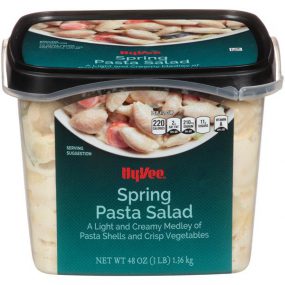
USA – Outbreak of Salmonella Infections Linked to Hy-Vee Spring Pasta Salad – Update

CDC   salad-with-label-small

  • Fifty-eight more ill people from nine states were added to this outbreak since the last update on July 18, 2018. Four more states reported ill people: Illinois, Kansas, North Dakota, and Tennessee.
  • Salmonella enterica subspecies IIIb has been added to this investigation because two people were infected with this strain of Salmonella and with the outbreak strain of Salmonella Sandiego at the same time. A search of the CDC PulseNet database found six additional people infected with the strain of Salmonella enterica subspecies IIIb and these cases have also been added to the outbreak.
  • A total of 79 people infected with the outbreak strains of Salmonella have been reported from nine states.
  • Illnesses started on dates ranging from June 21, 2018, to July 15, 2018.
  • Epidemiologic evidence(https://www.cdc.gov/foodsafety/outbreaks/investigating-outbreaks/index.html) indicates that Spring Pasta Salad purchased at Hy-Vee grocery stores is a likely source of the outbreak.
  • This investigation is ongoing, and CDC will provide updates when more information is available.


Australia – Recall: Woombye Cheeses (various) – E.coli

Food Authority NSW  

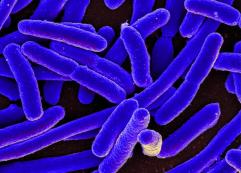
CDC E.coli

Image CDC Enter a caption

The NSW Food Authority advises:

Blackall Country Cheese Pty Ltd trading as Woombye Cheese Company has recalled assorted cheese products from fresh food markets, grocers, independents and selected IGA stores in NSW and QLD due to microbial (high E.coli count) contamination.

Product details:

  • Camembert 200g, Best Before 06.09.18
  • Truffle Triple Cream Brie food service size only, various weights, approx. 1.4kg each, Best Before 17.09.18
  • Triple Cream Brie 200g, Best Before 17.09.18
  • Blackall Gold Washed Rind 200g, (QLD only) wrapped in clear lined cheese wrap, Best Before 10.09.18

Food products contaminated with E.coli may cause illness if consumed. Consumers should not consume this product and should return it to the place of purchase for a full refund.

If you are concerned about your health you should seek medical advice.

For more information on this recall, contact Blackall Country Cheese Pty Ltd on 0413 808 489 or via www.woombyecheese.com.

Information -Fish histamine poisoning

Food Authority NSW

Histamine fish poisoning (or Scombroid poisoning) is a type of food poisoning caused by elevated levels of histamine being present in the fish.

Naturally occurring bacteria in fish produce an enzyme which converts histidine in the fish to histamine.

Histamine fish poisoning usually occurs in certain species of fish, such as tuna, sardines, mackerel, swordfish and marlin.

Information at the Link above.

USA -Beef, Pork and Poultry salad and wrap recalled over Cyclospora

Food Poison Journal

The U.S. Department of Agriculture’s Food Safety and Inspection Service (FSIS) is issuing a public health alert out of an abundance of caution due to concerns about contamination with Cyclospora. The beef, pork and poultry salad and wrap products were distributed by Caito Foods LLC, an Indianapolis, Ind. establishment.

The beef, pork and poultry salad and wrap items were produced between July 15 to 18, 2018, with the either “Best By,” “Enjoy by,” Best if Sold By” or “Sell By” dates ranging from July 18 through July 23, 2018. [View Label (PDF only)]

The complete list of products, product labels, the UPC code numbers and other identifying information can be found here.

The products bear establishment number “EST. 39985 or P-39985” inside or next to the USDA mark of inspection. These items were shipped to distribution centers nationwide.

The problem was discovered when Caito Foods LLC received notification from their lettuce supplier, Fresh Express, that the chopped romaine that is used to manufacture some of their salads and wraps was being recalled.

France -French firm allowed to restart cheese sales from site linked to E. coli outbreak

Food Safety News

French officials have allowed a dairy company to resume operations at a site linked to a deadly E. coli outbreak earlier this year.

The dairy, Chabert, was permitted to restart the marketing of raw milk reblochon cheese from its site in Cruseilles, a town in the Haute-Savoie department of the country, last week.

Fifteen children aged 1 to 5 years old from across France were infected with E. coli O26 between February and May. Laboratory tests confirmed 12 were affected by one strain of E. coli O26. Eleven of the infected children developed a type of kidney failure called hemolytic uremic syndrome (HUS). One child died.

HUS is not common in France with between 100 and 160 cases being reported each year. Young children, the elderly, pregnant women and others with weakened immune systems are particularly vulnerable to HUS, a life-threatening disease characterized by acute renal failure and low blood platelets.

Of the other three children, two were infected with an E. coli O26 strain different from that of the other 12 and for one child no strain could be isolated.

France -French frisbee meet off after food poisoning scare

Channel News Asia

LYON: French authorities on Monday (Jul 30) cancelled an ultimate frisbee youth tournament after dozens of foreign participants were struck down with suspected food poisoning and 11 required hospitalisation.

Twenty Israelis, 10 Belgians and four Colombians began suffering from nausea and vomiting after eating lunch on Sunday at the tournament in Feurs, outside the southeast city of Lyon, police said.

Australia -Recall: Black & Gold Mixed Vegetables 1kg – Listeria monocytogenes

Food Authority NSW 

The NSW Food Authority advises:

Metcash has recalled Black & Gold Mixed Vegetables 1kg from IGA, Campbells and Independent Grocers in NSW, VIC and TAS due to possible microbial (Listeria monocytogenes) contamination.

Product details:

  • Black & Gold Mixed Vegetables 1kg, plastic bag
  • Best Before – All stock

Listeria may cause illness in pregnant women and their unborn babies, the elderly and people with low immune systems. Consumers should not consume this product and should return it to the place of purchase for a full refund.

If you are concerned about your health you should seek medical advice.

For more information on this recall, contact Metcash Consumer Support on 1300 135 690.

Europe – Multi-country outbreak of Salmonella Agona infections possibly linked to ready-to-eat food

ECDC 


A multi-country outbreak of Salmonella enterica subspecies enterica serovar Agona (S. Agona) is under investigation in the European Union (EU), with cases retrospectively identified back to 2014. Overall, 147 outbreak cases have been reported by five EU countries: 122 cases since 1 January 2017, and 25 historical cases between 2014 and 2016. The United Kingdom is reporting most outbreak cases (129), with Finland (15), Denmark, Germany and Ireland (one case each) reporting the other cases. The Irish case was probably infected while visiting the United Kingdom.

The outbreak was first detected in the United Kingdom using whole genome sequencing (WGS). All S. Agona isolates from the five countries are genetically close with a maximum difference of 2 alleles from any other single isolate by core genome multilocus sequence typing scheme (cgMLST) using the ECDC Enterobase pipeline. The cases peaked in April 2017 and 2018. The close genomic relationship and the distinct seasonal spring peaks suggest that cases are part of an intermittent common source outbreak.

Seventeen S. Agona food isolates from 2018, detected in the United Kingdom, were found to be closely genetically related to the human strains. The food isolates were from cucumbers sampled during processing before and after washing (11 isolates) and ready to eat (RTE) food products containing cucumbers (six isolates). The contaminated food isolates were sampled in the United Kingdom at four plants owned by Company A and a Company C plant.

At present, there is insufficient epidemiological information available on the consumption of contaminated products by humans to support the microbiological evidence provided by the isolation of the outbreak strain in food. The epidemiological investigations in the other affected countries did not generate any strong hypothesis about the vehicle or source of infection.

Although the cucumbers used in all final contaminated products originated from Spain for a limited period (from November 2017 to April 2018), no connection between supply chains was identified: primary producers of cucumbers were different (producers A and B), and cucumbers were delivered to different processing companies through different distributors in the United Kingdom. The laboratory results for Salmonella in all cucumber samples, taken either at primary production level in Spain or during distribution to/within UK, were negative.

Based on the information available, the microbiological evidence suggests RTE products containing cucumbers as a possible vehicle of infection but so far it has not been possible to identify the specific point in the production chain where the contamination occurred.

Further investigations along the food chain are needed to identify the source of contamination. These should include collection of information about various production and processing stages for the RTE products implicated in this event, as well as thorough sampling and testing.

ECDC Link


Research -Occurrence, virulence factors, and antimicrobial susceptibility patterns of Vibrio spp. isolated from live oyster (Crassostrea gigas) in Korea

Wiley Online

Abstract

This study determined the incidence, virulence factors, and antimicrobial susceptibility patterns of Vibrio spp. in live oysters (Crassostrea gigas) marketed in Korea. A total of 41 Vibrio spp. isolates including 23 Vibrio alginolyticus, 11 Vibrio fluvialis and 7 Vibrio antiquarius were isolated and identified. All Vibrio spp. isolates showed DNase, amylase, lipase, phospholipase, and gelatinase activities. For slime production, caseinase and β‐hemolysis isolates were positive in 68%, 78%, and 56%, respectively. PCR‐based assays showed that V. alginolyticus expressed collagenase, tlh, toxR, ctxAB, and VPI virulence genes in 100%, 100%, 78%, 39%, and 48% of the isolates, respectively. All V. fluvialis strains harbored hupO gene while 64% and 55% isolates were positive for toxR and vfh. Besides, V. antiquarius strains were positive for toxR, tlh, ctxAB, and VPI virulence genes in 57%, 86%, 43%, and 43% of the isolates, respectively. Multiple Antibiotic Resistance (MAR) index calculated with disk diffusion test results revealed that 54% of the isolates were having MAR indices >0.2. Our results reveal that consumption of raw oysters may cause potential risk for public health owing to the Vibrio spp. comprising putative virulence properties and antimicrobial resistance.

Practical applications

The genus Vibrio are most commonly associated with seafood‐borne diseases. Oysters are one of the most preferred seafood in Korea as well as throughout the world. However, it may harbor pathogenic Vibrio spp., can cause foodborne illnesses if consumed as raw or undercooked product. In this study, the prevalence and characteristics of Vibrio spp. isolated from oysters in Korean markets was investigated. Among a total of 41 isolates presumptively identified by biochemical tests as vibrios, the incidence of three Vibrio species was confirmed by gyrB sequencing. Most of the isolates showed positive results for pathogenicity tests and virulence gene tests indicating the putative virulence of Vibrio spp. Susceptibility for 14 antimicrobials were tested using disk diffusion method. All the isolates were resistant to ampicillin while resistance to some other antimicrobials were also observed. According to these results, it is worthwhile to raise consumer awareness that consumption of oysters from markets in Korea may pose a risk of Vibrio infection.

Nigeria -NAFDAC Seizes 3,300kg of Banned Frozen Vegetables – DG – Listeria monocytogenes

All Africa

The National Agency for Food and Drug Administration and Control (NAFDAC) said it had seized 3,300 kilogrammes of PINGUIN brand of frozen mixed vegetables across the country.

The Director-General of NAFDAC, Mojisola Adeyeye, made this known in a statement in Abuja on Monday.

Ms. Adeyeye explained that she was informed on July 11 by Food Safety and Applied Nutrition (FSAN) that Rapid Alert System on Food and Feed (RASFF) had confirmed that the compromised food (frozen mixed vegetables) was shipped to Nigeria.

She said that her agency immediately gave a directive for a nation-wide surveillance and NAFDAC’s FSAN directorate went into action and confirmed that some of the implicated products actually arrived Nigeria.

“Teams dispatched to the field found large quantities of the implicated products and placed them on HOLD. Placing on HOLD means the item cannot be distributed or sold.

“The outbreak of Listeriosis in Europe was linked to frozen corn and other frozen mixed vegetables.