Category Archives: food death

UK – Drinking raw milk – has led to a dangerous rise in food poisoning and killed TWO people, experts warn

The Daily Mail

Drinking raw milk has led to a dangerous rise in food poisoning, say experts   

  • A child fed raw milk in Wales died from a type of E. coli poisoning, while a man died of listeriosis after eating cheese made with raw milk 
  • Unlike pasteurised milk, which is heat-treated to kill bacteria, raw milk can harbour dangerous germs


Research – Bacteria found in ancient Irish soil halts growth of superbugs: New hope for tackling antibiotic resistance

Science Daily

Researchers analyzing soil from Ireland long thought to have medicinal properties have discovered that it contains a previously unknown strain of bacteria which is effective against four of the top six superbugs that are resistant to antibiotics, including MRSA. Antibiotic-resistant superbugs could kill up to 1.3 million people in Europe by 2050, according to recent research. The World Health Organisation (WHO) describes the problem as ‘one of the biggest threats to global health, food security, and development today.’

USA -Outbreak of Multidrug-Resistant Salmonella Infections Linked to Raw Turkey Products – Investigation Notice

CDC

  • Since the last update on November 8, 2018, 52 ill people from 26 states and the District of Columbia have been added to this investigation.
  • As of December 18, 2018, 216 people infected with the outbreak strain of Salmonella Reading have been reported from 38 states and the District of Columbia.
    • 84 people have been hospitalized, and one death has been reported from California.
  • Epidemiologic and laboratory evidence(https://www.cdc.gov/foodsafety/outbreaks/investigating-outbreaks/index.html) indicates that raw turkey products from a variety of sources are contaminated with Salmonella Reading and are making people sick.
  • In interviews, ill people report eating different types and brands of turkey products purchased from many different locations. Three ill people lived in households where raw turkey pet food was fed to pets.
  • The outbreak strain has been identified in samples taken from raw turkey pet food, raw turkey products, and live turkeys.
    • On November 15, 2018, Jennie-O Turkey Store Sales in Barron, Wisconsin recalled approximately 91,388 pounds of raw ground turkey products.
    • On December 21, 2018, Jennie-O Turkey Store Sales, LLC, in Faribault, Minnesota recalled approximately 164,210 pounds of raw ground turkey products.
    • A single, common supplier of raw turkey products or of live turkeys has not been identified that could account for the whole outbreak.
  • The Public Health Agency of Canada has identified ill people infected with the same DNA fingerprint of Salmonella Reading bacteria in Canada.
  • The outbreak strain of Salmonella Reading is present in live turkeys and in many types of raw turkey products, indicating it might be widespread in the turkey industry. CDC and USDA-FSIS have shared this information with representatives from the turkey industry and asked about steps that they may be taking to reduce Salmonella contamination.


USA -Jennie-O – 216 with Salmonella, 175 Hospitalized with 1 Death from Ground Turkey

Food Poisoning Journal 

Since the last update on November 8, 2018, 52 ill people from 26 states and the District of Columbia have been added to this investigation. As of December 18, 2018, 216 people infected with the outbreak strain of Salmonella Reading have been reported from 38 states and the District of Columbia. A list of the states and the number of cases in each can be found on the Map of Reported Cases page.

Illnesses started on dates from November 20, 2017, to December 6, 2018. Ill people range in age from less than 1 year to 99, with a median age of 40. Fifty-five percent of ill people are female. Of 175 people with information available, 84 (48%) have been hospitalized. One death has been reported from California.

USA – FDA Investigating Multistate Outbreak of E. coli O157:H7 Infections Likely Linked to Romaine Lettuce Grown in California

FDA Eurofins Food Testing UK

Update: December 17, 2018

The FDA, along with CDC, state and local agencies, is investigating a multistate outbreak of E. coli O157:H7 illnesses linked to romaine lettuce grown in California this fall. The Public Health Agency of Canada (PHAC) and Canadian Food Inspection Agency (CFIA) are also coordinating with U.S. agencies as they investigate a similar outbreak in Canada.

On December 13, 2018, Adam Bros. Farming, Inc., in Santa Barbara County, recalled products that may have come into contact with water from the water reservoir where the outbreak strain was found. The firm recalled red leaf lettuce, green leaf lettuce and cauliflower harvested on November 27 through 30, 2018. According to the firm, cauliflower was distributed to wholesalers in the U.S. Mexico, and Canada.

The Adam Bros. recall has prompted a sub-recall by Spokane Produce Inc. of Spokane, WA. The firm recalled sandwiches and other products under the Northwest Cuisine Creations and Fresh&Local labels.

Recommendation:

Consumers:

Consumers should not eat recalled products and should throw them away. Consumers also should not eat romaine from Monterey, San Benito, and Santa Barbara counties in California.

Based on discussions with producers and distributors, romaine lettuce entering the market will now be voluntarily labeled with a harvest location and a harvest date or labeled as being hydroponically- or greenhouse-grown. Romaine lettuce with the new labeling is available in stores. Consumers should look for signs in stores where labels are not an option. If signs or labels do not have this information, you should not eat or use it.

If it does have this information, we advise avoiding romaine from Monterey, San Benito, and Santa Barbara counties in California. Romaine from outside those regions need not be avoided. Additional counties may be added or subtracted as FDA traceback investigation continues.

For example, romaine lettuce harvested from areas that include, but are not limited to, the following do not appear to be related to the current outbreak:

  • the desert growing region near Yuma, Arizona
  • the California desert growing region near Imperial County and Riverside County
  • the counties of Ventura, San Luis Obispo, and Santa Cruz in California
  • the state of Florida
  • Mexico

Additionally, there is no evidence hydroponically- and greenhouse-grown romaine is related to the current outbreak, and there is, also, no recommendation to avoid romaine from these sources.

Restaurants and Retailers:

Restaurants and retailers should not serve or sell romaine from Monterey, San Benito, and Santa Barbara counties in California. Romaine from outside those regions need not be avoided. See the list above of examples of growing areas not related to the current outbreak. Retailers and restaurants should discard any recalled product.

Retailers should ensure that there is labeling with the harvest date and location on each bag of romaine, or that there is signage when labels are not an option.

Suppliers and Distributors:

Suppliers, distributors and others in the supply chain should not ship or sell romaine from Monterey, San Benito, and Santa Barbara counties in California. Romaine from outside those regions need not be. Distributors and suppliers should discard any recalled product.

FDA recommends that labels are placed on romaine lettuce entering the market to help consumers, restaurants and retailers determine that the romaine is from unaffected growing regions outside of Monterey, San Benito, or Santa Barbara counties in California.

India – 11 dead in suspected religious food poisoning incident in India

CNN

New Delhi (CNN)Food shared among participants in a religious ceremony is believed to have caused at least 11 deaths and put more than 90 worshipers in hospital, police in the southern Indian state of Karnataka said Saturday.

The religious food offering, or “prasad,” involved was vegetable rice. “We believe the ‘prasad’ was poisoned,” Dharmender Kumar Meena, Police Superintendent of Chamarajanagar district, told CNN.
“There was a foundation-laying ceremony of a new Hindu temple and following the event the ‘prasad’ was distributed. People started vomiting shortly after,” Meena said.
Samples of the food have been sent to a laboratory for examination, Meena said.

Research – New study reveals hypervirulent Listeria strains and emerging clones

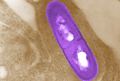
Medical Express kswfoodworld Listeria monocytogenes

Listeria monocytogenes is a major cause of severe foodborne illness in the United States. But recent research at NC State indicates that not all strains of the bacteria are equally virulent.

team led by Sophia Kathariou, professor of food science and microbiology, found that certain Listeria strain groups, or clones, acquired unique genetic determinants associated with hypervirulence – unusually high propensity to cause disease – and one of these clones has been responsible for three listeriosis outbreaks since 2014, all traced to .

“We looked in depth into especially problematic groups of Listeria, and we wanted to know if we could identify that are more prone to be found in than others,” Kathariou says. “We examined Listeria from various sources such as food and food processing environments, human disease, other animals and the natural such as soil and water.”

The study will provide baseline data critical for the development of targeted strategies to reduce food safety threats associated with Listeria-contaminated produce and other ready-to-eat foods.

Kathariou describes Listeria as “really problematic” because after ingestion through contaminated food it quickly leaves the gut and enters the bloodstream, becoming an invasive organism.

In people who are at risk (, the elderly and immunosuppressed patients) Listeria can spread to the placenta in the case of pregnancy, causing abortions and stillbirths, or to the central nervous system, causing meningitis. That’s a big part of the reason why she and her team have been working to further understand the ecology and virulence of Listeria and eventually help eliminate it from food processing environments.

UK – Dorset declared as E.coli hotspot

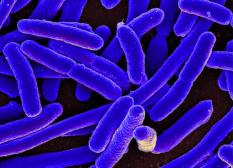
Dorset Echo CDC E.coli

Dorset has been ranked as the third highest hotspot for E.coli in the country, according to research by chemist-4-u.com.Between September 2017 and September 2018, 733 cases of E.coli were recorded by the NHS Dorset Clinical Commissioning Group (CCG).

Birmingham and Solihull CCG recorded the highest number of cases with 987, followed by Northern, Eastern and Weston Devon CCG in second with 781 recorded cases.

E.coli is a type of bacteria common in human and animal intestines, and forms part of the bacteria that exist in the bowel.Symptoms of E.coli include stomach cramps, diarrhoea, blood in diarrhoea, and occasionally a fever.

There are a number of different types of E.coli and, while the majority are harmless, some can cause serious food poisoning and serious infection.

In October, two children from the same family died after contracting E.coli. The pair died from a complication of E.coli called hemolytic uremic syndrome (HUS) which affects the kidneys.

The bacteria appears to be on the rise. 3791 cases were recorded in the 12 months to September this year across 195 CCGs in England, compared with 3535 during the same period the year before.

USA – E. coli O157:H7 Romaine Outbreak Increases With 52 Sick and 19 Hospitalized

Food Poisoning Bulletin

E. coli O157:H7 Romaine Outbreak 12618

The E. coli O157:H7 romaine outbreak has grown, according to an update posted by the Centers for Disease Control and Prevention (CDC). Since the last update posted in November 26, 2018, an additional nine patients have been added to the total for 52 sick. Those patients live in 15 states. Nineteen people have been hospitalized.

Singapore – Over 400 ill from food poisoning in November alone

TNP SG

In the second half of the year alone, Singapore has seen a series of food poisonings, with threethis month.

In July, about 200 students of CHIJ Secondary (Toa Payoh) had symptoms of food poisoning, including diarrhoea and abdominal pain.

None of the affected students was hospitalised and most returned to school soon after, said the school’s principal Karen Tay.

Last month, days before the A-level examinations, about 200 Raffles Institution students showed symptoms of food poisoning after a buffet prepared by an external caterer.

Most of the affected students were in Year 6 and had symptoms such as diarrhoea and stomachache. One student was hospitalised.

In the past three weeks, over 400 people fell ill after consuming catered food.