Category Archives: food contamination

Research – Evaluation of avocados as a possible source of Listeria monocytogenes infections, United States, 2016–2019

Journal of Food Protection


Outbreaks of Listeria monocytogenes (L. monocytogenes) infections have historically been associated with contaminated deli meats, but recent outbreaks have been linked to produce. To date, avocados have not been identified as the source of any outbreaks of L. monocytogenes infections in the United States, but avocado samples have yielded strains that were closely related genetically to clinical L. monocytogenes isolates. To determine whether avocados have been a source of listeriosis, we conducted a retrospective review of epidemiological data for clinical isolates that were genetically related to isolates from avocados. Using a national database, we identified clusters containing clinical and at least one avocado isolate. We then selected clusters based upon isolation dates, cluster and composition size, and available food history data. For each cluster, we assessed whether (1) avocado consumption was higher among case-patients in the cluster than among those with sporadic illnesses, and (2) whether the only food isolates within the cluster were from avocados. If both conditions were met, the link was considered “likely,” if one condition was met the link was considered “possible,” and if neither condition was met evidence was “limited.” Five of fifteen clusters met criteria for assessment. Of these, two were classified as having “limited” evidence for a link to avocados, two as “possible,” and one as “likely.” For the cluster considered “likely”, avocado consumption was significantly higher among case-patients in the cluster compared to sporadic illnesses (Odds ratio: 8.5, 95% CI 1.5-86.5). We identified three clusters that were likely or possibly linked to avocados, suggesting avocados could be a source of listeriosis in the United States. Messaging on safe handling might be warranted for groups at higher risk, but further research is first needed to better characterize the ecology of pathogens on avocados and likelihood of internalization of L. monocytogenes.

Germany and Morocco: Working together for safe food

bfr

The German Federal Institute for Risk Assessment (BfR) and the Moroccan Food Safety Authority (ONSSA) agree on close cooperation

Food and feed must also be safe along global and increasingly complex commodity chains. With a volume of 3.6 billion euros, Morocco is an important trading partner for Germany in North Africa. Against this background, the German Federal Institute for Risk Assessment (BfR) has signed a Memorandum of Understanding with the Moroccan Food Safety Authority (ONSSA). The aim is to strengthen cooperation between the two authorities through a continuous partnership dialogue in consumer health protection “The focal points of the future alliance are the risk assessment of plant protection products and risk communication, especially in connection with foodborne disease outbreaks”, says BfR President Professor Dr. Dr. Andreas Hensel. This project also implements the Africa concept of the Federal Ministry of Food and Agriculture (BMEL).

In view of the liberalisation of global trade, it is, in the view of the BfR, indispensable in the sense of consumer health protection that the risk assessment of foodstuffs is harmonised and standardised internationally. In this context, cooperation with the countries of the European Neighbourhood Policy, to which Morocco belongs, is also increasingly important. Therefore, the Memorandum of Understanding with Morocco is an important milestone.

For the first time, BfR and ONSSA worked together with the BMEL and the Federal Office of Consumer Protection and Food Safety (BVL) from 2015 to 2018 in the project “Control of plant protection products, fertilisers and growing media”. Since then, contact has grown continuously through mutual visits by experts and discussions at management level.

The Moroccan Food Safety Authority (ONSSA) is a scientific body under the Moroccan Ministry of Agriculture, Fisheries, Rural Development, Water and Forests. It works on behalf of the Moroccan government for consumer protection and in the field of animal and plant health. Within this framework, the ONSSA is also responsible for the risk management of food and feed.

About the BfR

Canada – Salmonella outbreak sickens dozens in Newfoundland and Labrador and Nova Scotia

Outbreak News Today

hazegg.jpg

The Public Health Agency of Canada (PHAC) reports investigating an outbreak of Salmonella infections infections involving Newfoundland and Labrador, and Nova Scotia.

As of February 18, 2021, there have been 57 laboratory-confirmed cases of Salmonella Enteritidis illness investigated in the following provinces: Newfoundland and Labrador (25), and Nova Scotia (32). Individuals became sick between late October 2020 and late January 2021. Nineteen individuals have been hospitalized. No deaths have been reported.

Based on the investigation findings to date, exposure to eggs has been identified as a likely source of the outbreak. Many of the individuals who became sick reported consuming, preparing, cooking and baking at home with eggs. Some individuals reported exposure to eggs at an institution (including nursing homes and hospitals) where they resided or worked before becoming ill.

Belgium – Ringworst & Droge worst (dry sausages) of Vleeswaren cd brand – Listeria monocytogenes

AFSCA

Finartes Recall nv
Products: Ringworst & Droge worst (dry sausages) of Vleeswaren cd brand.
Problem: Possible presence of Listeria monocytogenes.


In agreement with the AFSCA, Finartes is withdrawing the “Ringworst” and “Droge worst” dry sausages from sale and is recalling them to consumers because of the possible presence of Listeria monocytogenes.

Finartes asks its customers not to consume these products and to bring them back to the point of sale where they were purchased.

Product description
– Product name: Ringworst – droge worst
– Brand: Vleeswaren cd
– Use by date (DLC) (“To be consumed until”): 03/30/2021
– Lot number: 21041
– Sales period : from 3/02/2021 to 9/02/2021
– Type of packaging: plastic packaging in a protective atmosphere
– Weight: Ringworst 245 grams (1 piece) – worst droge 245 grams (5 pieces)

The product was sold via:
– DB-center nv – Sint-Andreaslaan 20, 8730 Beernem.
– Vandewoestyne bvba – Veldestraat 86, 9850 Merendree.

For any further information , contact:
Cederik Decorte
info@finartes.be

USA – CORE Investigation Table – Updates

FDA

FDA

12/23/2020

11

Salmonella Potsdam

Not Yet Identified

1/13/2021

10

Salmonella Miami

Not Yet Identified

2/17/2021

14

E. coli O157:H7

Not Yet Identified

2/17/2021

15

Listeria monocytogenes

Hispanic-style fresh and soft cheese


USA – El Abuelito Cheese Listeria Warning Letter Sent by FDA in June 2020

Food Poisoning Bulletin

An El Abuelito Cheese Listeria warning letter was sent to the company by the FDA in June, 2020. This is the brand that may be associated with the current Listeria monocytogenes outbreak linked to Hispanic-style soft and fresh cheeses that has sickened seven people in four states, according to testing conducted by the Connecticut Department of Health.

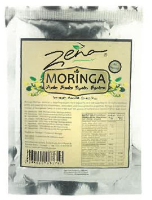
Belgium – Zena brand “Moringa powder” flavor enhancer (powder) -Salmonella

AFSCA

AFSCA recall
Product: Zena brand “Moringa powder” flavor enhancer (powder).
Problem: possible presence of Salmonella.


The AFSCA is today recalling consumers of the flavor enhancer (powder) “Moringa powder” of the Zena brand (100g).
The AFSCA asks not to consume this product and to contact the point of sale through which it was purchased.

Product Description

– Product: Moringa powder
– Brand: Zena
– Expiry date (DDM): 31-12-2023
– Bar code: 6044000063713
– Weight: 100g

This product was sold through various stores in Belgium:

SHABANI JUMA (LEOPOLDSTRAAT 25, 2850 BOOM)
X-SPEED SPRL (CH. PAUL HOUTART 281, 7110 HOUDENG-GOEGNIES)
ISS DELIVERY EXPRESS (CH. DE WAVRE 118, 1082 S. AGATHA BERCHEM)
SHOP 20 (RUE ROPSY CHAUDRON 20, 1070 ANDERLECHT)
OSS GROUP SRL (R. ROPSY CHAUDRON 21, 1070 ANDERLECHT)
KAALA (RUE DU BATEAU 40, 1080 S. JANS MOLENBEEK)
GANJESHA (JP MINCKELERSTRAAT 23, 3000 LEUVEN)
BVREE (SINT BERNARDSSTEENWEG 594, 2660 HOBOKEN)
UNIMAX SPRL (R. ROPSY CHAUDRON 37, 1070 ANDERLECHT)
SHOP 20 (RUE ROPSY CHAUDRON 20, 1070 ANDERLECHT)
ROMEO SUNUMARKET (DAMBRUGGESTRAAT 150, 2060 ANTWERPEN)
MASTER BUSINESS BV (RESEARCHDREEF 59, 10170 ANDERLECHT)
HANSKIN SPRL (BLD DU MIDI, 98, 1000 BRUSSELS)
JAMIL CHOUDRY (DAMBRUGGESTRAAT 240, 2060
ANTWERP ) JESTINA (BREDABAAN 427, 2170, MERKSEM)
RUSHA BVBALE 63 (PLANITIN EN MORETUSVERS 2018) )
SIMRAN ASIAN & AFRO FOODS (RUE DE PONT 39, 4000 LIEGE)
SPRL KHALSA SARWAN SINGH (CHAUSSEE DE NEERSTALLE 21, 1190 FOREST)
SUNSHINE AFRICAN FOODS (RUE DE L’ARGONNE 12, 1060 SAINT-GILLES)

It is possible that this product recall is still subject to updates. If you consume this type of product, check this page or our social networks regularly.

For any further information, you can contact the AFSCA contact point for consumers: 0800 / 13.550 or pointdecontact@afsca.be .

USA – Outbreak Investigation of Listeria monocytogenes – Hispanic-style Fresh and Soft Cheeses (February 2021)

FDA

The FDA, along with CDC and state and local partners, are investigating a multistate outbreak of Listeria monocytogenes infections potentially linked to Hispanic-style fresh and soft cheeses.

FDA has initiated an investigation and is collecting information to try to determine the source of the outbreak. Although the investigation is ongoing, CDC’s analysis of epidemiologic information indicates that Hispanic-style fresh and soft cheeses are the leading hypotheses for the cause of the illnesses. No specific type or brand of cheese has been confirmed as the source of illness. CDC reported that seven people infected with the outbreak strain of Listeria monocytogenes have been reported in Connecticut, Maryland, New York, and Virginia. Six of the seven ill people are Hispanic. Of the four people interviewed, three reported eating at least one type of Hispanic-style fresh and soft cheeses, and each of the three reported eating queso fresco.

As part of this outbreak investigation, the Connecticut Department of Public Health collected product samples of El Abuelito-brand Hispanic-style fresh and soft cheeses from a store where a sick person bought cheeses. Sample analysis showed the presence of Listeria monocytogenes in samples of El Abuelito Queso Fresco sold in 10 oz packages, marked as Lot A027 with an expiration date of 02/26/2021. Samples are currently undergoing Whole Genome Sequencing (WGS) analysis to determine if the Listeria monocytogenes found in these samples is a match to the outbreak strain. At this time, there is not enough evidence to determine if this outbreak is linked to El Abuelito Queso Fresco.

FDA and state partners are working with the firm to recall the affected lot and to determine if additional products should be recalled. Additional information will be provided as it becomes available.

Recommendations

Consumers, restaurants, and retailers should not eat, sell, or serve El Abuelito Queso Fresco cheese until more information is known.

If you are at higher risk for severe Listeria illness (if you are pregnant, aged 65 or older, or have a weakened immune system due to certain medical conditions or treatments) do not eat any Hispanic-style fresh and soft cheeses, including El Abuelito brand queso fresco cheese, until we identify which cheeses are making people sick in this outbreak.

Call your healthcare provider right away if you have these symptoms after eating Hispanic-style fresh and soft cheeses:

  •  Pregnant people typically experience only fever, fatigue, and muscle aches. However, Listeria infection during pregnancy can lead to miscarriage, stillbirth, premature delivery, or life-threatening infection of the newborn.
  •  People who are not pregnant may experience headache, stiff neck, confusion, loss of balance, and convulsions, in addition to fever and muscle aches.

Generally, make sure the Hispanic-style fresh and soft cheeses (like queso fresco) you eat have labels that state, “Made with pasteurized milk.”

Be aware that Hispanic-style fresh and soft cheeses made from pasteurized milk have caused Listeria outbreaks. Although pasteurization of milk kills Listeria, products made from pasteurized milk can still become contaminated if they are produced in facilities with unsanitary conditions.

Restaurants and retailers that serve or sell Hispanic-style fresh and soft cheeses should follow FDA’s safe handling and cleaning advice.


Case Count Map Provided by CDC

CDC Case Count Map for the Outbreak Investigation of Listeria monocytogenes in Hispanic-style Fresh and Soft Cheeses - 2/12/2021

Case Counts

Total Illnesses: 7
Hospitalizations: 7
Deaths: 0
Last Illness Date: 1/22/2021
States with Cases: MD (4), CT (1), NY (1), and VA (1)

Germany – “Schildauer” brand pork cracker – Salmonella

LMW

Warning type:Food
Date of first publication:02/18/2021
Product name:

“Schildauer” brand pork cracker

Manufacturer (distributor):SFW Schildauer Fleisch- und Wurstwaren GmbH Sitzenrodaer Straße 5 04889 Belgern-Schildau
Reason for warning:

Detection of salmonella. It cannot be ruled out that Salmonella can be found in individual packs of the “pork cracker” item concerned.

Packaging Unit:7 x 100g
Durability:02/24/2021
Lot identification:210404
Further information:

Reference is made to the company’s press release attached.

Contact to the responsible authorities:
Brandenburg:Konsumenterschutz@Msgiv.Brandenburg.de
Hesse:Schnellwarnung@rpda.hessen.de
Mecklenburg-Western Pomerania:poststelle@lm.mv-regierung.de
Lower Saxony:poststelle@ml.niedersachsen.de
Saxony:poststelle@sms.sachsen.de
Saxony-Anhalt:poststelle@ms.sachsen-anhalt.de
Thuringia:LM-Ueberendung@tlv.thueringen.de
Press releases and information
title Attachment or web link
Press release_Schildauer

Germany – Zena Moringa Powder – Salmonella

LMW

2021_02_18SmaakversterkerMoringapowderFAVV_foto.jpg

Warning type:Food
Date of first publication:02/18/2021
Product name:

Zena Moringa Powder

Manufacturer (distributor):Unidex BV
Reason for warning:

Salmonella

Packaging Unit:100 g
Durability:December 31, 2023
Further information:

Salmonella
A salmonella disease manifests itself within a few days after infection with diarrhea, abdominal pain and occasionally vomiting and a slight fever. The symptoms usually subside on their own after several days. Infants, young children, the elderly and people with a weakened immune system in particular can develop more severe disease courses. People who have eaten this food and develop severe or persistent symptoms should seek medical attention and advise them of a possible salmonella infection.
Seeking preventive medical treatment without symptoms does not make sense.

Contact to the responsible authorities:
Baden-Württemberg:poststelle@mlr.bwl.de
Bavaria:poststelle@lgl.bayern.de
North Rhine-Westphalia:poststelle@mulnv.nrw.de
Saxony-Anhalt:poststelle@ms.sachsen-anhalt.de