
Category Archives: food contamination

Hong Kong – Food Alert -Not to consume a kind of pancake imported from Japan with possible presence of mould

CFS Mold Mould Mycotoxin kswfoodworld

Issue Date 15.9.2018
Source of Information Agri-Food and Veterinary Authority of Singapore
Food Product Prepackaged pancake imported from Japan
Product Name and Description Product name: Mini Dorayaki – Red Bean Jam Pancake

Brand: Muji

Country of Origin: Japan

Packing: 135 grams per pack

Expiry dates: September 12 to December 5, 2018

Reason For Issuing Alert The Centre for Food Safety (CFS), through its routine Food Incident Surveillance System, noted an announcement by the Agri-Food and Veterinary Authority of Singapore that Muji (Singapore) is recalling the above-mentioned batch of pancake due to the possible presence of mould in the package of the product.
Action Taken by the Centre for Food Safety
  • Upon learning of the incident, the CFS immediately followed up with Muji (Hong Kong) Company Limited. According to information provided by the company, it had imported the affected product which was put on sale at its outlets. The company has already removed from shelves and stopped sale of the affected product earlier, and initiated a recall.
  •  The CFS will continue to follow up on the incident and take appropriate action.
Advice to the Trade Stop using or selling the product concerned immediately if they possess them.
Advice to Consumers Not to consume the affected products if they have bought any.
Further Information
  • CFS Press Release
  •  Members of the public may call the company’s hotline at 2694 9309 during office hours for enquiries about the recall.

Research – Escherichia coli ST131-H22 as a Foodborne Uropathogen

MBIO

ABSTRACT

Escherichia coli sequence type 131 (ST131) has emerged rapidly to become the most prevalent extraintestinal pathogenic E. coli clones in circulation today. Previous investigations appeared to exonerate retail meat as a source of human exposure to ST131; however, these studies focused mainly on extensively multidrug-resistant ST131 strains, which typically carry allele 30 of the fimH type 1 fimbrial adhesin gene (ST131-H30). To estimate the frequency of extraintestinal human infections arising from foodborne ST131 strains without bias toward particular sublineages or phenotypes, we conducted a 1-year prospective study of E. coli from meat products and clinical cultures in Flagstaff, Arizona. We characterized all isolates by multilocus sequence typing, fimH typing, and core genome phylogenetic analyses, and we screened isolates for avian-associated ColV plasmids as an indication of poultry adaptation. E. coli was isolated from 79.8% of the 2,452 meat samples and 72.4% of the 1,735 culture-positive clinical samples. Twenty-seven meat isolates were ST131 and belonged almost exclusively (n = 25) to the ST131-H22 lineage. All but 1 of the 25 H22 meat isolates were from poultry products, and all but 2 carried poultry-associated ColV plasmids. Of the 1,188 contemporaneous human clinical E. coli isolates, 24 were ST131-H22, one-quarter of which occurred in the same high-resolution phylogenetic clades as the ST131-H22 meat isolates and carried ColV plasmids. Molecular clock analysis of an international ST131-H22 genome collection suggested that ColV plasmids have been acquired at least six times since the 1940s and that poultry-to-human transmission is not limited to the United States.

IMPORTANCE E. coli ST131 is an important extraintestinal pathogen that can colonize the gastrointestinal tracts of humans and food animals. Here, we combined detection of accessory traits associated with avian adaptation (ColV plasmids) with high-resolution phylogenetics to quantify the portion of human infections caused by ST131 strains of food animal origin. Our results suggest that one ST131 sublineage—ST131-H22—has become established in poultry populations around the world and that meat may serve as a vehicle for human exposure and infection. ST131-H22 is just one of many E. coli lineages that may be transmitted from food animals to humans. Additional studies that combine detection of host-associated accessory elements with phylogenetics may allow us to quantify the total fraction of human extraintestinal infections attributable to food animal E. coli strains.

UK – Dearne Valley Foods recalls McWurst Scotch Egg products because of the possible presence of Listeria monocytogenes

FSA

Dearne Valley Foods is recalling batches of McWurst Scotch Egg products because Listeria monocytogenes has been found in two separate batches. These products are sold in Booths and Booker.

Product details

McWurst Scotch Eggs 2 eggs / pack chilled

Use by 13 September 2018 to 25 September 2018
McWurst Mini Savoury Eggs 12 eggs / pack chilled

Use by 13 September 2018 to 24 September 2018

No other Dearne Valley Foods products are known to be affected.

Risk statement

The possible presence of Listeria monocytogenes in the products listed above

Symptoms caused by this organism can be similar to flu and include high temperature, muscle ache or pain, chills, feeling or being sick and diarrhoea. However, in rare cases, the infection can be more severe, causing serious complications, such as meningitis.

Some people are more vulnerable to listeria infections, including those over 65 years of age, pregnant women and their unborn babies, babies less than one month old and people with weakened immune systems.

Action taken by the company

Dearne Valley Foods is recalling the above products. Point-of-Sale notices will be displayed in all stores that are selling these products. These notices explain to customers why the products are being recalled and tell them what to do if they have bought the products. A copy of the Point-of-Sale notice is attached.

RASFF Alerts – Salmonella – Whipped Cream – White Sesame Seeds – Chicken Livers -Chicken Fillet Strips

RASFF-Logo

RASFF-Salmonella (presence /25g) in whipped cream from Belgium in France

RASFF-Salmonella (presence /25g) in white sesame seeds from Nigeria in Poland

RASFF -Salmonella (presence /25g) in chilled chicken livers from the Netherlands in the Netherlands

RASFF-Salmonella (presence /25g) in frozen chicken fillet strips from the Netherlands in France

RASFF-Salmonella (presence /25g) in white sesame seeds from Nigeria in Poland

RASFF Alert – E.coli – Chilled Mussels

RASFF-Logo

RASFF-too high count of Escherichia coli (up to 1300 MPN/100g) in chilled mussels from Italy in Italy

RASFF Alerts – Campylobacter – Chilled Chicken Breast – Chilled Chicken Thighs – Chilled Chicken Meat

RASFF-Logo

RASFF -Campylobacter coli (up to 3200 CFU/g) and Campylobacter jejuni (up to 65000 CFU/g) in chilled chicken breast from France in Denmark

RASFF-Campylobacter jejuni (200-24000 CFU/g) in chilled chicken thighs from the Netherlands, via Germany in Denmark

RASFF-Campylobacter (1100, 20000, 3200, 6400, 58000, 2600, 600, 3500, 7000, 500, 30000, 4800 CFU/g) in chilled chicken meat from France in Denmark

RASFF Alerts – Listeria monocytogenes – Various Chilled RTE Chicken Products – Shrimps in Brine

RASFF-Logo

RASFF-Listeria monocytogenes in various chilled ready-to-eat chicken products from Sweden into Sweden

RASFF-Listeria monocytogenes (<10 CFU/g) in shrimps in brine from Poland in Denmark

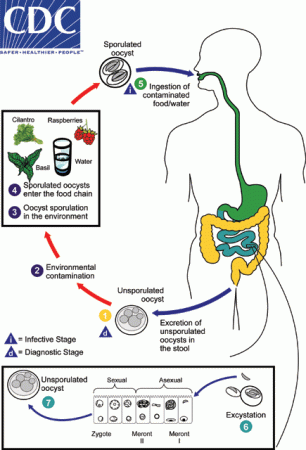
USA – FDA Investigation of a Multistate Outbreak of Cyclospora Illnesses Linked to Fresh Express Salad Mix Served at McDonald’s Ends

FDA Cyclospora_LifeCycle201

The FDA, CDC, along with state and local officials investigated a multi-state outbreak of cyclosporiasis illnesses likely linked to salads from McDonald’s restaurants.

Update – September 12, 2018

As of September 11, 2018, this outbreak appears to be over. A total of 511 laboratory-confirmed cases of Cyclospora infection were reported in people who consumed salads from McDonald’s restaurants; the cases were reported by 15 states and New York City.

The FDA investigated distribution and supplier information for romaine and carrots but did not identify a single source or potential point of contamination for this outbreak.

Recommendations

Consumers who have symptoms of cyclosporiasis should contact their health care provider to report their symptoms and receive care.

RASFF Alerts – Moulds -Sweet and Hot Peppers – Chocolate Cakes with Coconut Topping

RASFF-Logo

RASFF-sweet and hot peppers from Egypt infested with moulds in Slovenia

RASFF-chocolate cakes with coconut topping from Sweden infested with moulds in Denmark

RASFF Alerts – Aflatoxin – Almonds – Groundnuts – Pistachios

RASFF-Logo

RASFF-aflatoxins (B1 = 15.7; Tot. = 17.6 µg/kg – ppb) in almonds from the United States in Spain

RASFF-aflatoxins (B1 = 4.0 µg/kg – ppb) in groundnut kernels from Argentina in the Netherlands

RASFF-aflatoxins (B1 = 13; Tot. = 15 µg/kg – ppb) in groundnuts from Argentina in the Netherlands

RASFF-aflatoxins (B1 = 7.2 µg/kg – ppb) in groundnut kernels from Argentina in the Netherlands

RASFF-aflatoxins (B1 = 2.8 µg/kg – ppb) in groundnut kernels from Argentina in the Netherlands

RASFF-aflatoxins (B1 = 25; Tot. = 62 µg/kg – ppb) in groundnuts from Argentina in the Netherlands

RASFF-aflatoxins (B1 = 25; Tot. = 28 µg/kg – ppb) in groundnut kernels from Argentina in the Netherlands

RASFF-aflatoxins (B1 = 86.5; Tot. = 93 µg/kg – ppb) in pistachios in shell from Iran in Greece

RASFF-aflatoxins (B1 = 4.1; Tot. = 4.4 µg/kg – ppb) in groundnut kernels from Argentina in the Netherlands

RASFF-aflatoxins (B1 = 2,8 µg/kg – ppb) in shelled groundnuts from Sudan in Greece