Category Archives: FDA

USA – Investigation of E. coli O157:H7 Outbreak Linked to Romaine from Salinas, California, November 2019

FDA

kswfoodworld E.coli O157

Image CDC


Recommendation

FDA, CDC, and state health authorities are investigating an outbreak of illnesses caused by E. coli O157:H7 in the United States. Epidemiologic, laboratory, and traceback evidence indicates that romaine lettuce from the Salinas, California growing region is a likely source of this outbreak. According to CDC, there have been 102 cases reported in 23 states.  The latest date that one of these patients reports becoming ill was on November 18, 2019.

Romaine from Salinas, California Label Enjoy By December 2, 2019


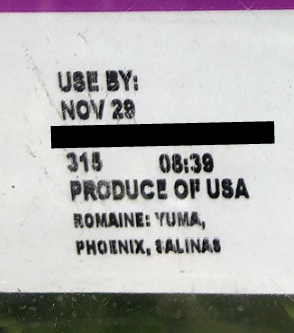
Romaine from Salinas, California Label Use By November 29, 2019

Consumers: Consumers should not eat romaine lettuce harvested from Salinas, California. Additionally, consumers should not eat products identified in the recall announced by the USDA on November 21, 2019.

Romaine lettuce may be voluntarily labeled with a harvest region. If this voluntary label indicates that the romaine lettuce was grown in “Salinas” (whether alone or with the name of another location) do not eat it. Throw it away or return it to the place of purchase.  If romaine lettuce does not have information about harvest region or does not indicate that it has been grown indoors (i.e., hydroponically- and greenhouse-grown), throw it away or return it to the place of purchase. Consumers ordering salad containing romaine at a restaurant or at a salad bar should ask the staff whether the romaine came from Salinas.  If it did, or they do not know, do not eat it.

At this time, romaine lettuce that was harvested outside of the Salinas region has not been implicated in this outbreak investigation. Hydroponically- and greenhouse-grown romaine, which is voluntarily labeled as “indoor grown,” from any region does not appear to be related to the current outbreak. There is no recommendation for consumers to avoid using romaine harvested from these other sources.

Restaurants and Retailers: Restaurants and retailers should not serve or sell romaine harvested from Salinas, California.  If you do not know the source of your romaine lettuce, and if you cannot obtain that information from your supplier, you should not serve, nor sell it.

Suppliers and Distributors: Suppliers, distributors and others in the supply chain should not ship or sell romaine harvested in Salinas, California. If the source of the romaine lettuce is unknown, you should not ship, nor sell the product.

For Restaurants, Retailers, Suppliers and Distributors: Currently, the FDA does not have enough traceback information to identify the specific source of the contamination that would allow us to request a targeted recall from specific growers.

FDA requested that industry voluntarily withdraw romaine grown in Salinas from the market and is requesting that industry withhold distribution of Salinas romaine for the remainder of the growing season in Salinas. Without more specific traceback information, this was the most efficient way to ensure that contaminated romaine was off the market.

At this time, romaine lettuce that was harvested outside of the Salinas region has not been implicated in this outbreak investigation. Hydroponically- and greenhouse-grown romaine, which is voluntarily labeled as “indoor grown,” from any region does not appear to be related to the current outbreak. There is no recommendation for consumers or retailers to avoid using romaine harvested from these other sources.

Update

According to the CDC, as of December 2, 2019, 102 people infected with the outbreak strain of E. coli O157:H7 have been reported from 23 states. The case patients report that illnesses started on dates ranging from September 24, 2019 to November 18, 2019. Illness onset dates reported to date are prior to the public warning issued on November 22.

Based on available traceback data, FDA requested that industry voluntarily withdraw romaine grown in Salinas from the market and is requesting that industry  withhold distribution of Salinas romaine for the remainder of the growing season in Salinas. This was the most efficient way to ensure that contaminated romaine was off the market.

Products that were part of the U.S. Department of Agriculture’s Food Safety and Inspection Service (FSIS) announced recall related to this outbreak investigation had a “Best By” of Nov. 1 or earlier, more than one month ago, and should no longer be on the market.

FDA continues to actively investigate the cause of this outbreak. FDA, with the assistance of staff from the California Department of Public Health and the California Department of Food and Agriculture, immediately deployed investigators to three farms in the Salinas area that were identified based on the traceback investigation. On the farms, investigators sampled soil and animal droppings, compost, water, and other potential environmental sources. The samples and information collected during the farm investigations are currently being analyzed. Investigators are attempting to identify any factors that could have led to contamination. Additionally, state partners are testing romaine lettuce samples for E. coli that they have collected from stores and from case patients’ homes.

The FDA and state partners are conducting a traceback investigation to determine whether a common supplier or source of contamination can be identified.  This investigation involves collecting and analyzing potentially hundreds of distribution records to trace the romaine that may have been available at points of exposure reported by ill people to their source. We are continuing to collect these records.

This remains an evolving and fluid situation. Information about our findings will be forthcoming as the investigation proceeds.

The Salinas region as defined by the United Fresh Produce Association and the Produce Marketing Association Romaine Taskforce ReportExternal Link Disclaimer includes: Santa Cruz, Santa Clara, San Benito, and Monterey counties in California.

Case Counts

Total Illnesses: 102
Hospitalizations: 58
Deaths: 0
Last illness onset: November 18, 2019
States with Cases:  AZ (3), CA (4), CO (6), FL (1), IA (1), ID (3), IL (1), MD (4), MI (1), MN (3), MT (1), NE (1), NJ (7), NC (1), NM (2), OH (12), OR (1), PA (8), SD (1), TX (4), VA (4), WA (2), WI (31)

USA – Outbreak Investigation of Hepatitis A Potentially Linked to Fresh Conventional Blackberries from Fresh Thyme Farmers Market, Fall 2019

FDA

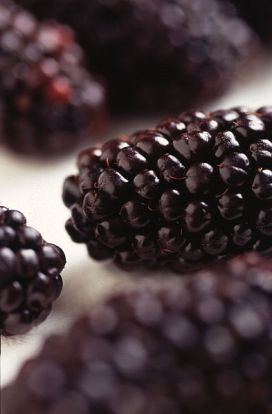
The U.S. Food and Drug Administration (FDA), along with the Centers for Disease Control and Prevention (CDC), and state and local partners, are investigating a multistate outbreak of hepatitis A illnesses in Indiana, Michigan, Minnesota, Missouri, Nebraska, and Wisconsin potentially linked to fresh conventional (non-organic) blackberries from the grocery store, Fresh Thyme Farmers Market.

On December 3, 2019, CDC updated their case counts to 16 illnesses, with the most recent illness onset date on November 15, 2019.

Based on the epidemiological information collected in the investigation thus far, ill patients reported consuming fresh conventional blackberries from Fresh Thyme Farmers Market stores in six states: Indiana, Michigan, Minnesota, Missouri, Nebraska, and Wisconsin.

However, traceback information to date shows that these berries came from a distribution center that ships fresh berries to Fresh Thyme Farmers Market stores in 11 states: IA, IL, IN, KY, MI, MO, MN, NE, OH, PA, and WI. As this investigation continues, the FDA will work with our federal and state partners to obtain additional information during the traceback investigation and will update this advisory as more information becomes available.

Recommendation
The FDA is urging consumers to not eat any fresh conventional blackberries if purchased between September 9 and September 30, 2019, from Fresh Thyme Farmers Market stores in the 11 states mentioned above. People who purchased the fresh blackberries and then froze those berries for later consumption should not eat these berries. They should be thrown away.

If consumers purchased fresh conventional blackberries from Fresh Thyme Farmers Market stores in the 11 states listed above between September 9-30, ate those berries in the last two weeks, and have not been vaccinated for the hepatitis A virus (HAV), they should consult with their healthcare professional to determine whether post exposure prophylaxis (PEP) is indicated. PEP is recommended for unvaccinated people who have been exposed to HAV in the last two weeks. Those with evidence of previous hepatitis A vaccination or previous hepatitis A infection do not require PEP.

Contact your healthcare provider if you think you may have become ill from eating these blackberries, or if you believe that you have eaten these berries in the last two weeks.

USA – UNFI Voluntarily Recalls Wild Harvest® Organic All-Purpose Flour, Unbleached – E.coli

FDA

UNFI announced today a voluntary national recall of five-pound bags of its Wild Harvest® Organic All-Purpose Flour, Unbleached, with a Code of AA BEST IF USED BY 010820 CC 15:58 and UPC Code 711535509158. The recall is being issued for the potential presence of E. coli. During routine FDA sampling of the five-pound bag product, results were found to be positive for E.coli.

E. coli can cause serious and sometimes life-threatening infections in infants, older people, pregnant women, and people with weakened immune systems. The most common symptoms of E. coli are diarrhea, abdominal cramps, nausea and vomiting, which develop within three or four days of eating contaminated food. The illness usually lasts about a week and most people recover without treatment. Guidance from FDA and the Centers for Disease Control (CDC) continues to warn that consumers should refrain from consuming any raw products made with flour and that all surfaces, hands and utensils should be properly cleaned after contact with flour or dough.

To date, UNFI has not received any direct consumer reports of confirmed illnesses related to this product. This recall is being issued out of an abundance of care.

This recall only affects the following code date of Wild Harvest® Organic All-Purpose Flour, Unbleached five-pound bags currently in stores or consumers’ pantries. No other types of Wild Harvest® Flour are affected by this recall.

Wild Harvest® Organic All-Purpose Flour, Unbleached (sample label below) Package UPC: 711535509158 Best if Used by Date: 010820 CC 15:58 (can be found on top of the product, see sample below)

Consumers are asked to check their pantries and dispose of the product affected by this recall. Consumers with questions may contact UNFI at 855-423-2630 (customer support is available seven days-a-week between 8:00 AM to 8:00 PM CST). Any consumers concerned about an illness should contact a physician.

USA -Hodgson Mill Issues Voluntary Recall of Unbleached All-Purpose White Wheat Flour Due to Potential Presence of Pathogenic E.coli

FDA

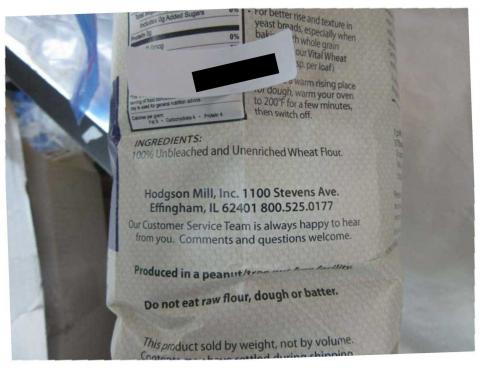
Hodgson Mill of Effingham, IL, announced today a voluntary national recall of specific lots of its Unbleached All-Purpose White Wheat Flour (5 lb.)

We are taking this voluntary precautionary step because of the potential presence of pathogenic E. coli which was discovered through sampling raw uncooked flour. Hodgson Mill has not received any confirmed reports of illnesses related to this product.

The only product affected by this voluntary recall is:

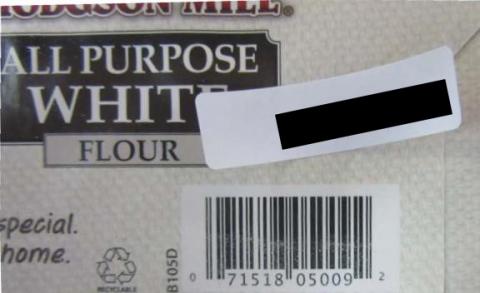
Unbleached All-Purpose White Wheat Flour (5 lb.) UPC 0-71518-05009-2
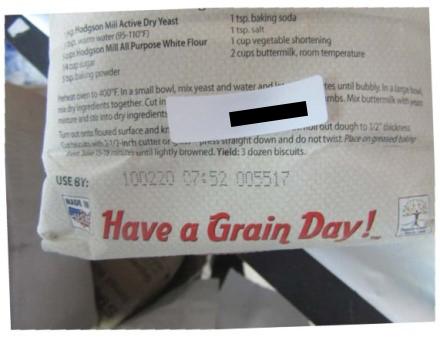
Best By Date 10-01-2020 and 10-02-2020 with lot codes listed Lot# 001042 & 005517

Use By and Lot Code information can be found on the bottom back panel of the 5 lb. Bag. Used By date and Lot Code, along with their location on the bag, must all match in order to represent flour affected by this recall.

Consumer safety is our top priority. Hodgson Mill package states “do not eat raw flour, dough or batter”. The Centers for Disease Control (CDC) warns consumers to not consume raw flour or uncooked raw dough.

E. coli is killed by heat through baking, frying, sautéing, or boiling products made with flour. For more information, refer to the following: https://www.cdc.gov/features/no-raw-dough/index.html. Symptoms of pathogenic E. coli illness include acute, often bloody diarrheal illness and abdominal cramps. Most people recover within a week. However, children, the elderly, and immunosuppressed individuals may develop hemolytic uremic syndrome (HUS), a severe illness which may cause the kidneys to fail.

Consumers are reminded to wash their hands, work surfaces, and utensils thoroughly after contact with raw dough products or flour, and to never eat raw dough or batter.

This lot of flour was milled at an ADM Milling Facility in St Louis, MO and repacked at Hodgson Mill, Inc. facility in Effingham, IL and was distributed by Hodgson Mill through retailers and distribution nationwide and sold through our website www.hodgsonmill.comExternal Link Disclaimer.

Consumers who have purchased 5 lb packages of Unbleached All-Purpose White Wheat Flour with specific lot codes are urged to stop using the product immediately and return them to the place of purchase for a full refund. Consumers with questions may contact the company customer service M-F 9am to 3pm at 1-888-417-9343 x 1.

Any consumers concerned about an illness should contact a physician.

Bakers have trusted Hodgson Mill flour products in their kitchens for many years and because of that trust we have issued this voluntary recall. We remain committed to providing our consumers safe and superior products.


Company Contact Information

Consumers:
 888-417-9343

Product Photos

USA -California-based food manufacturer agrees to stop production after repeated food safety violations – Listeria monocytogenes

FDA

The U.S. Food and Drug Administration announced that recently Golden Gate Soy Products, a California-based food manufacturer, has agreed to discontinue selling food products until the company complies with federal regulations and other requirements. This action follows several inspections conducted by the FDA, which found Listeria monocytogenes (L. mono) in the company’s food preparation area and that the company was holding food for distribution in insanitary conditions.

U.S. Magistrate Judge Jacqueline Scott Corley for the Northern District of California entered a consent decree of permanent injunction on Nov. 22, 2019, between the U.S. and Golden Gate Soy Products Inc., and the company’s representatives, Yong Li Chen and Ling Hong Tang. Golden Gate Soy Products specializes in manufacturing a variety of tofu and soy-based products, including soy milk.

“The FDA takes its role to protect our food supply very seriously. The inappropriate and unsafe practices of Golden Gate Soy Products not only violated the law, but also put consumers in harm’s way,” said FDA Associate Commissioner for Regulatory Affairs Melinda K. Plaisier. “This type of behavior is unacceptable and is why we took action to prevent the defendants from introducing contaminated or potentially contaminated food products into the marketplace.”

The consent decree prohibits the defendants from receiving, preparing, processing, packing, holding, labeling and/or distributing foods at or from their facility, or any other facility, until certain requirements are met. If the defendants choose to resume operations, the consent decree requires them to notify the FDA and take corrective actions before resuming operations.

L. mono is a species of disease-causing bacteria. When people eat food contaminated with L. mono., they may develop a disease called listeriosis. This infection can have serious adverse effects for consumers, particularly women who are or may become pregnant, the elderly and people with weakened immune systems.

According to the complaint, filed by the U.S. Department of Justice on behalf of the agency, the FDA inspected the facility several times since 2017 and found L. mono in the facility during two separate inspections. The inspections also documented multiple violations of the Federal Food, Drug, and Cosmetic Act where the defendants were processing food under insanitary conditions.

The FDA issued the defendants inspection observations noting the violations during each inspection through the use of FDA Form 483s. On Mar. 5, 2019, the defendants responded to the FDA in writing with promised corrective actions. However, the FDA’s follow up inspection found that none of these promised actions were adequate, resulting in today’s injunction.

The FDA is not aware of any confirmed illnesses related to these products. However, consumers who think they may have been sickened by these products should seek the assistance of a health care professional and contact the FDA to report problems with any FDA-regulated products.

The FDA, an agency within the U.S. Department of Health and Human Services, protects the public health by assuring the safety, effectiveness, and security of human and veterinary drugs, vaccines and other biological products for human use, and medical devices. The agency also is responsible for the safety and security of our nation’s food supply, cosmetics, dietary supplements, products that give off electronic radiation, and for regulating tobacco products.

USA -Investigation of E. coli O157:H7 Outbreak Linked to Romaine from Salinas, California, November 2019

FDA

November 26, 2019

Recommendation

FDA, CDC, and state health authorities are investigating an outbreak of illnesses caused by E. coli O157:H7 in the United States. Epidemiologic, laboratory, and traceback evidence indicates that romaine lettuce from the Salinas, California growing region is a likely source of this outbreak. The CDC is reporting an increase in the case count to 67 and that the most recent illness onset date is November 14, 2019.

Romaine from Salinas, California Label Enjoy By December 2, 2019


Romaine from Salinas, California Label Use By November 29, 2019

Consumers: Consumers should not eat romaine lettuce harvested from Salinas, California. Additionally, consumers should not eat products identified in the recall announced by the USDA on November 21, 2019.

Romaine lettuce may be voluntarily labeled with a harvest region. If this voluntary label indicates that the romaine lettuce was grown in “Salinas” (whether alone or with the name of another location) do not eat it. Throw it away or return it to the place of purchase.  If romaine lettuce does not have information about harvest region or does not indicate that it has been grown indoors (i.e., hydroponically- and greenhouse-grown), throw it away or return it to the place of purchase. Consumers ordering salad containing romaine at a restaurant or at a salad bar should ask the staff whether the romaine came from Salinas.  If it did, or they do not know, do not eat it.

At this time, romaine lettuce that was harvested outside of the Salinas region has not been implicated in this outbreak investigation. Hydroponically- and greenhouse-grown romaine, which is voluntarily labeled as “indoor grown,” from any region does not appear to be related to the current outbreak. There is no recommendation for consumers to avoid using romaine harvested from these other sources.

Restaurants and Retailers: Restaurants and retailers should not serve or sell romaine harvested from Salinas, California.  If you do not know the source of your romaine lettuce, and if you cannot obtain that information from your supplier, you should not serve, nor sell it.

Suppliers and Distributors: Suppliers, distributors and others in the supply chain should not ship or sell romaine harvested in Salinas, California. If the source of the romaine lettuce is unknown, you should not ship, nor sell the product.

For Restaurants, Retailers, Suppliers and Distributors: Currently, the FDA does not have enough traceback information to identify the specific source of the contamination that would allow us to request a targeted recall from specific growers. At this stage in the investigation, the most efficient way to ensure that contaminated romaine is off the market would be for industry to voluntarily withdraw product grown in Salinas, and to withhold distribution of Salinas romaine for the remainder of the growing season in Salinas. FDA has made this request of industry.

At this time, romaine lettuce that was harvested outside of the Salinas region has not been implicated in this outbreak investigation. Hydroponically- and greenhouse-grown romaine, which is voluntarily labeled as “indoor grown,” from any region does not appear to be related to the current outbreak. There is no recommendation for consumers or retailers to avoid using romaine harvested from these other sources.

Background

According to the CDC, as of November 25, 2019, 67 people infected with the outbreak strain of E. coli O157:H7 have been reported from 19 states. The case patients report that illnesses started on dates ranging from September 24, 2019 to November 14, 2019.

The Maryland Department of Health identified E. coli O157:H7 in an unopened package of Ready Pac Bistro® Chicken Caesar Salad collected from an ill person’s home in Maryland. Analysis of this salad, through Whole Genome Sequencing (WGS), has linked strain E. coli O157:H7 to three Maryland cases and the multi-state outbreak.

The FDA and state partners are conducting a traceback investigation to trace romaine exposures to the source. Preliminary information indicates that ill people in Maryland were exposed to romaine lettuce harvested in Salinas, California.

FDA has deployed investigators to the farms in question to try to determine the source and extent of the contamination. More information will be forthcoming as the investigation proceeds.

Additionally, state partners are conducting laboratory analyses of romaine lettuce samples from case patients potentially linked to the outbreak.

The Salinas region as defined by the United Fresh Produce Association and the Produce Marketing Association Romaine Taskforce ReportExternal Link Disclaimer includes: Santa Cruz, Santa Clara, San Benito, and Monterey counties in California.

Genetic analysis of the E. coli O157:H7 strains from patients in this current outbreak are similar to strains of E. coli O157:H7 associated with a previous outbreak from the Fall of 2017 and the Fall of 2018 that affected consumers in both Canada and the U.S. The 2017 outbreak of E. coli O157:H7 was associated with leafy greens in the U.S. and romaine in Canada. The 2018 outbreak of E. coli O157:H7 was associated with romaine in both countries.

USA-Northern Fisheries LTD. Voluntary Expanded Tuna Recall Press Release

FDA

Northern Fisheries LTD of Little Compton, RI, has expanded their voluntary recall of frozen, wild-caught yellowfin Tuna Medallions (product of Vietnam) to include product sold directly to consumers. This recall is due to potentially elevated levels of histamine. Elevated levels of histamines can produce an allergic reaction called scombroid fish poisoning that may result in symptoms that can generally appear within minutes to several hours after eating the affected fish.

The most common symptoms of histamine or scombroid fish poisoning are tingling or burning sensation in the mouth, facial swelling, rash, hives and itchy skin, nausea, vomiting or diarrhea; these symptoms usually resolve within several hours without medical intervention. However, each individual may experience symptoms differently. If symptoms are severe an individual should seek immediate medical attention for treatment.

These tuna products were sold to customers in: CT, MI, MN, RI and WI.

ALL LOTS WITH PRODUCTION DATE: 06/13/2019 UPC Code: 815838020638

Production date and UPC Code can be found on back of the Tuna King Brand rider card.

BRAND DESCRIPTION PRODUCTION DATE: NORTHERN
LOT #
UPC CODE
Tuna King Tuna Medallions 2-3oz 10x1lb 06/13/2019 0058797 815838020638

Customers who received products with the listed Production Date of: 06/13/2019 should not consume them and should discard them immediately.

Customers with questions or concerns may contact Northern Fisheries LTD by calling (401) 592-0600, Monday through Friday, 9 a.m. to 5 p.m., Eastern Time or email.

northfish@northfishltd.com

USA -Outbreak Investigation of Cyclospora Illnesses Linked to Imported Fresh Basil, July 2019 – Final Update

FDA Cyclospora_LifeCycle201

November 19, 2019

In 2019 multiple outbreaks of cyclosporiasis were identified and found to be linked to different produce items, including imported fresh basil. On November 19, 2019, CDC issued a final update for the total number of domestically-acquired cases of Cyclospora in 2019, stating that 10% of the 2019 cases were linked to this outbreak associated with imported fresh basil.

Case Counts

Total Illnesses: 241
Hospitalizations: 6
Deaths: 0
Last illness onset: July 26, 2019
States with Cases: CT, FL, GA, IA, MA, MN, NY, OH, RI, SC, WI. Exposures occurred at restaurants in five states: FL, MN, NY, OH, WI

USA -Outbreak Investigation of lllnesses caused by E. coli O157:H7 November 2019

FDA

November 20, 2019

Recommendation

Consumers are advised not to eat Ready Pac Bistro® Chicken Caesar Salad, lot #255406963, UPC  0 77745 27249 8, “Best By” date Oct. 31, 2019, purchased from Sam’s Club stores in Maryland. State testing of unopened salad purchased by an ill person identified the presence of E. coli O157 in the romaine lettuce.  It should be noted that the “Best By” date was almost 3 weeks ago, so this product is not likely in stores. Consumers should not eat this specific product, regardless of where it was purchased.

Background

Chicken Caesar Salads

FDA, CDC and state health authorities are investigating an outbreak of illnesses caused by E. coli O157:H7  in the U.S.

According to the CDC, as of November 18, 2019, 17 people infected with the outbreak strain of E. coli O157:H7 have been reported from eight states. The case patients report that illnesses started on dates ranging from September 24, 2019 to November 8, 2019.

Two cases reported from Maryland have been linked to this outbreak by Whole Genome Sequencing (WGS), through analysis of clinical samples taken from those patients. The Maryland Department of Health identified E. coli O157 in an unopened package of Ready Pac Bistro® Chicken Caesar Salad collected from a ill person’s home in Maryland which was purchased from a Sam’s Club in that state. Preliminary information indicates that romaine lettuce used in the product that tested positive was harvested in mid-October and is no longer within current expiration dates. To date, the food sample has not yet been definitively linked to the Maryland cases or other E. coli O157 illnesses in the multi-state outbreak. WGS analysis is currently underway for this sample to determine if it is closely related genetically to the E. coli found in people in this outbreak.

As analysis is underway, FDA is tracing back the supply of the romaine lettuce in the Caesar salad. FDA has identified possible farms in Salinas, California. FDA is deploying investigators to the farms in question to determine the source and extent of the contamination. More information will be forthcoming as the investigation proceeds.

Although the ill people interviewed in Maryland reported eating Ready Pac Bistro® Chicken Caesar Salad, at this time, ill people in other states have not reported eating this particular salad. Therefore, exposure to this product alone does not fully explain other cases in the outbreak.

State and local public health officials are interviewing ill people to determine what they ate and other exposures of interest in the week before their illness started.

USA -Outbreak Investigation of Hepatitis A Potentially Linked to Fresh Conventional Blackberries from Fresh Thyme Farmers Market, Fall 2019

FDABlack_Butte_blackberry

November 20, 2019

The U.S. Food and Drug Administration (FDA), along with the Centers for Disease Control and Prevention (CDC), and state and local partners, are investigating a multistate outbreak of hepatitis A illnesses in Indiana, Nebraska, and Wisconsin potentially linked to fresh conventional (non-organic) blackberries from the grocery store, Fresh Thyme Farmers Market.

Based on the epidemiological information collected in the investigation thus far, ill patients reported consuming fresh conventional blackberries from Fresh Thyme Farmers Market stores in three states: Indiana, Nebraska, and Wisconsin.

However, traceback information to date shows that these berries came from a distribution center that ships fresh berries to Fresh Thyme Farmers Market stores in 11 states: IA, IL, IN, KY, MI, MO, MN, NE, OH, PA, and WI. As this investigation continues, the FDA will work with our federal and state partners to obtain additional information during the traceback investigation and will update this advisory as more information becomes available.

Recommendation

The FDA is urging consumers to not eat any fresh conventional blackberries if purchased between September 9 and September 30, 2019, from Fresh Thyme Farmers Market stores in the 11 states mentioned above. People who purchased the fresh blackberries and then froze those berries for later consumption should not eat these berries. They should be thrown away.

If consumers purchased fresh conventional blackberries from Fresh Thyme Farmers Market stores in the 11 states listed above between September 9-30, ate those berries in the last two weeks, and have not been vaccinated for the hepatitis A virus (HAV), they should consult with their healthcare professional to determine whether post exposure prophylaxis (PEP) is indicated. PEP is recommended for unvaccinated people who have been exposed to HAV in the last two weeks. Those with evidence of previous hepatitis A vaccination or previous hepatitis A infection do not require PEP.

Contact your healthcare provider if you think you may have become ill from eating these blackberries, or if you believe that you have eaten these berries in the last two weeks.