For the investigation with the not yet identified cause of illness (ref # 1152), preliminary information reported by Gallatin City- County Health Department and the Montana Department of Public Health and Human Services indicates that a food containing imported morel mushrooms consumed at a single restaurant in Montana may be the exposure of concern. This restaurant is temporarily closed. The product linked to illnesses has been updated to morel mushrooms (suspect), the case count has increased from 13 cases to 30 cases, and sample collection and analysis have been initiated. FDA is assisting in this investigation, but at this time it appears to be a localized issue and no illnesses have been identified outside of this restaurant cluster. This is an ongoing investigation and more information will be provided as it becomes available.
An Outbreak Advisory was issued for the outbreak of Salmonella Infantis (ref # 1141) linked to specific lots of General Mills Gold Medal Unbleached and Bleached All Purpose Flour. On 4/28/2023, General Mills, Inc. issued a voluntary recall.
Consumers reminded that flour is not a ready-to-eat ingredient
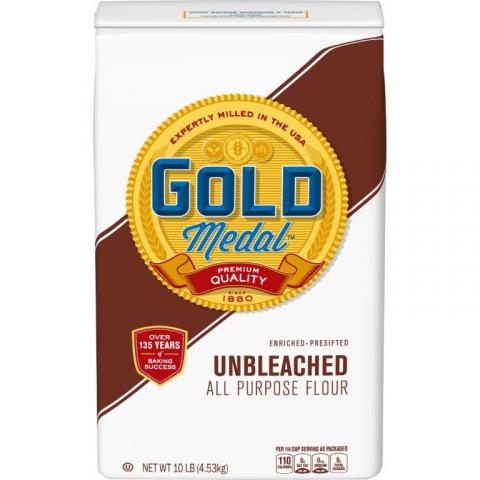
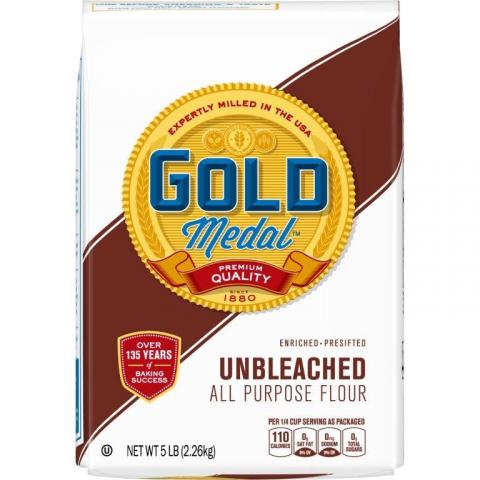
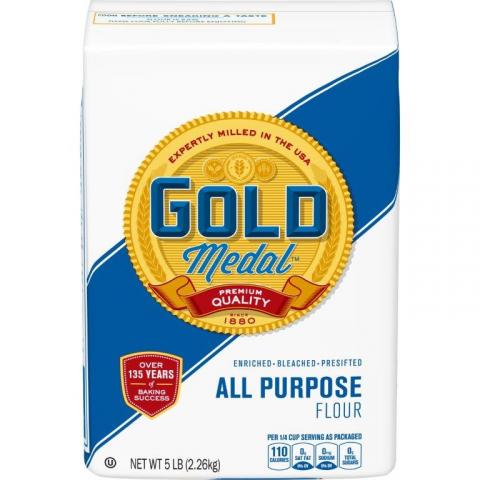
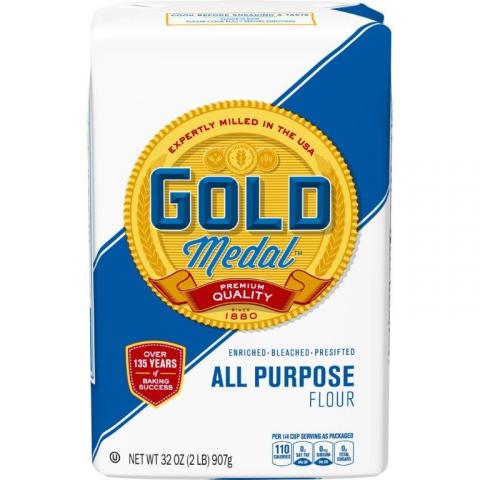
MINNEAPOLIS (April 28, 2023) – General Mills today announced a voluntary national recall of two-, five- and 10-pound bags of its Gold Medal Unbleached and Bleached All Purpose Flour with a “better if used by” date of March 27, 2024, and March 28, 2024. The recall is being issued for the potential presence of Salmonella Infantis,which was discovered during sampling of the five-pound bag product.
This recall affects two date codes of Gold Medal Unbleached All Purpose Flour in the five- and ten pound bags and two date codes of Gold Medal Bleached All Purpose Flour in the two- and five-pound bags. All other types of Gold Medal Flour are not affected by this recall.
Consumers are asked to check their pantries and dispose of the product affected by this recall. Consumers who have had to discard products covered by this recall may contact General Mills Consumer Relations at 1-800-230-8103.
Guidance from the Food and Drug Administration(FDA) and the Centers for Disease Control(CDC) warn that consumers should refrain from consuming any raw products made with flour. Salmonella Infantisis killed by heat through baking, frying, sautéing or boiling products made with flour. All surfaces, hands and utensils should be properly cleaned after contact with flour or dough.
This voluntary recall includes the following code dates currently in stores or consumers’ pantries:
Gold Medal Unbleached All Purpose 5LB Flour
Package UPC
000-16000-19610
Recalled Better if Used by Date
27MAR2024 and 28MAR2024
Gold Medal Unbleached All Purpose 10LB Flour
Package UPC
000-16000-19580
Recalled Better if Used by Date
27MAR2024 and 28MAR2024
Gold Medal Bleached All Purpose 2LB Flour
Package UPC
000-16000-10710
Recalled Better if Used by Date
27MAR2024 and 28MAR2024
Gold Medal Bleached All Purpose 5LB Flour
Package UPC
000-16000-10610
Recalled Better if Used by Date
27MAR2024 and 28MAR2024
Healthy persons infected with Salmonella Infantis, a bacteria, often experience nausea, diarrhea, fever and abdominal pains. The CDC estimates there are 1.2 million cases annually in the U.S. Typically, symptoms start within six hours to six days after infection and last four to seven days. Any consumers concerned about an illness should contact a physician.
About General Mills
General Mills makes the food the world loves. The company is guided by its Accelerate strategy to drive shareholder value by boldly building its brands, relentlessly innovating, unleashing its scale, and standing for good. Its portfolio of beloved brands includes household names such as Cheerios, Nature Valley, Blue Buffalo, Haagen-Dazs, Old El Paso, Pillsbury, Betty Crocker, Yoplait, Annie’s, Wanchai Ferry, Yoki, and more. Headquartered in Minneapolis, Minnesota, General Mills generated fiscal 2022 net sales of $19.0 billion. In addition, the company’s share of non-consolidated joint venture net sales totaled $1.1 billion.
The U.S. Food and Drug Administration (FDA) has released a report on its investigation of the Salmonella Typhimurium outbreak that caused 88 reported illnesses and 32 hospitalizations in the U.S. between July and September 2022. The FDA worked with the U.S. Centers for Disease Control and Prevention (CDC) and state partners to investigate the outbreak, which was linked through epidemiology and traceback to cantaloupe grown in Southwest Indiana during the summer of 2022. The report released today includes an overview of the traceback investigation, investigation results, and various factors that potentially contributed to the contamination of cantaloupe with Salmonella.
As a result of the traceback, FDA conducted investigations in Indiana at three farms, their common packinghouse and nearby public lands. Salmonella positive environmental samples were found at each location, but none of the resulting Salmonella isolates conclusively matched the outbreak strain by whole genome sequencing (WGS). Although the investigation did not result in identification of a specific microbial source or route that resulted in this outbreak, the agency identified Salmonella spp. in on-farm, post-harvest, and off-farm environments.
In light of the investigational findings, FDA highlights the following recommendations and requirements applicable to firms, such as growers of melons and similar produce:
Review current conditions and practices to determine whether they are adequate or if additional prevention measures are warranted.
Understanding previous land use can help farms identify and address potential sources of pathogens that may affect their farming operations.
Be cognizant of and assess risks that may be posed by adjacent and nearby land uses, especially as it relates to the presence of livestock, including poultry, and the interface between farmland, and other agricultural areas.
Consider additional tools such as pre-harvest and/or post-harvest sampling and testing of products to help inform the need for specific prevention measures.
Poultry manure, while valued for its fertilizer value, is a known reservoir for Salmonella spp. Proper application of a manure that has been treated with a validated and verified process to reduce pathogens (e.g. composting with time and temperature measurements) can significantly reduce the potential for the integration of Salmonella or other human pathogens into soils (as compared to the use of raw manures).
Inspect, maintain, and clean and, when necessary and appropriate, sanitize all food contact surfaces of equipment and tools used as frequently as reasonably necessary to protect against contamination.
When appropriate, use EPA-approved products according to the label for cleaning and sanitizing.
Inconsistent adherence to or deviation from existing SOPs for cleaning and sanitizing by farms can affect produce safety. Effective communication on farms about SOPs and any changes to those SOPs can help ensure that food safety practices are being followed.
Root cause analyses may be useful in identifying for growers how human pathogen sources in the broader agricultural environment may contribute to contamination.
Improve traceability through increased digitization, interoperability, and standardization of traceability records which would expedite traceback and help remove contaminated product from the marketplace more quickly, thereby preventing further illnesses. This is not only important for growers, but also critical for shippers, manufactures, and retailers as well, to improve overall traceability throughout the supply chain.
FDA will work in conjunction with the Indiana State Department of Health to increase awareness amongst the melon growing industry of pathogenic environmental strains in the region to develop and promote risk reduction strategies related to melon growing and harvesting to minimize the impact of these strains.
Food safety is a shared responsibility that involves food producers, distributors, manufacturers, retailers, and regulators. Recognizing the interconnection between people, animals, plants, and their shared environment when it comes to public health outcomes, we encourage collaboration among various groups in the broader agricultural community (i.e., produce growers, state government and academia) to address this issue.
For the outbreak of hepatitis A virus (ref #1143), cases have increased from 7 to 8. This change has been made on the advisory for this outbreak.
A new investigation has been added to the table (ref#1152). Although the pathogen/cause of illness and products linked to illnesses is not yet identified, there are 13 illnesses from one state linked to a single restaurant that has suspended operations. FDA has initiated traceback in coordination with state partners.
Listeria Outbreak linked to unknown source has sickened 18 since 2018 – 17 have been hospitalized.
A total of 18 people infected with the outbreak strain of Listeria have been reported from 15 states – Arkansas 1, California 1, Colorado 1, Illinois 1, Louisiana 1, Michigan 2, Missouri 1, Nebraska 1, New York 1, North Carolina 2, Pennsylvania 1, South Dakota 1, Texas 1, Washington 1 and Wisconsin 2.
A specific food item has not yet been identified as the source of this outbreak.
CDC, public health and regulatory officials in several states, and the U.S. Food and Drug Administration (FDA) are collecting different types of data to investigate a multistate outbreak of Listeria monocytogenes infections.
As of April 20, 2023, a total of 18 people infected with the outbreak strain of Listeria have been reported from 15 states – Arkansas 1, California 1, Colorado 1, Illinois 1, Louisiana 1, Michigan 2, Missouri 1, Nebraska 1, New York 1, North Carolina 2, Pennsylvania 1, South Dakota 1, Texas 1, Washington 1 and Wisconsin 2.
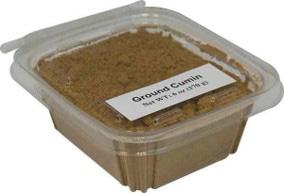
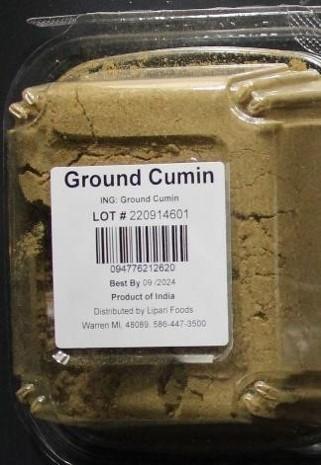
WARREN, Mich. – Lipari Foods has issued a voluntary recall of a specific lot of Lipari Branded Ground Cumin Tubs manufactured by International Food due to potential presence of Salmonella contamination. Salmonella is an organism, which can cause serious and sometimes fatal infections in young children, frail or elderly people, and others with weakened immune systems. Healthy persons infected with Salmonella often experience fever, diarrhea (which may be bloody), nausea, vomiting and abdominal pain. In rare circumstances, infection with can result in the organism getting into the bloodstream and producing more severe illnesses such as arterial infections (i.e., infected aneurysms), endocarditis and arthritis.
The products were distributed to retail stores throughout Alabama, Arkansas, Florida, Georgia, Illinois, Indiana, Kentucky, Michigan, Missouri, North Carolina, Ohio, Oklahoma, Pennsylvania, Texas, Virginia, and Wisconsin.
Products were distributed as generic product with “Distributed by Lipari Foods” listed on the label.
The affected products can be identified by:
Brand
Product
Size
Lot Code
Best By Date
UPC
LIPARI
GROUND CUMIN
6 OZ. TUB
220914601
09/2024
094776212620
There are no reported illnesses in connection with this product to date.
This was brought to our attention by The United States Food and Drug Administration (FDA) and The Michigan Department of Agriculture and Rural Development (MDARD), after they were alerted that a sample of the Ground Cumin collected by the Florida Department of Agriculture and Consumer Services tested positive for Salmonella. The Lipari Branded Ground Cumin Tubs manufactured by International Food are being recalled as they are potentially adulterate with Salmonella. We are working closely with the FDA to ensure that all affected product has been pulled from commerce.
Consumers who have purchased this recalled product should not consume it. They should return it to the point of purchase. Consumers with questions should call Customer Service at 800-729-3354, 8:15 am – 4:30 pm, EST, Monday through Friday.
For the outbreak of Salmonella Infantis (ref #1141), an onsite inspection and sample collection and analysis has been initiated.
For the outbreak of Salmonella Hartford (ref #1144), the case count has increased from 53 to 54 cases. This outbreak has ended and the investigation has closed, with no vehicle identified.
For the outbreak of hepatitis A virus (ref #1143), an onsite inspection has been initiated.
The Food and Drug Administration has expanded its investigation into an outbreak of infections caused by Salmonella Infantis that has been linked to flour.
As of the most recent update, on March 30, from the Centers for Disease Control and Prevention, the outbreak has sickened at least a dozen people across 11 states. Three of the patients have required hospitalization. No deaths have been reported.
Although a specific brand of flour has not been revealed by federal officials, the FDA reports that it has begun onsite inspection of an unnamed location and sample collection.
Illnesses started on dates ranging from Dec. 6, 2022, to Feb. 13, 2023, but there are likely more sick people who have not yet been confirmed because of the time it takes for testing and reporting.
Two or more of the following: Email, Fax, Letter, Press Release, Telephone, Visit
Status: Ongoing
Distribution Pattern: Product distributed to distribution centers in IL, SC, MO, WA, GA, MN, FL, NC, ME, and CA. Then further distributed to retail stores in IA, IL, VA, WI, and NC.
Recalling Firm:
Clio LLC
141 Ethel Rd W
Piscataway, NJ 08854-5928
United States



 FoodWorld