Category Archives: E.coli

USA – Old Silvana Creamery recalls Jim’s Jerseys Raw Milk due to E. coli

Food Poison Journal

The Washington State Department of Health (WA DOH) is advising residents not to consume one lot of Jim’s Jerseys raw milk produced by Old Silvana Creamery in Arlington, WA, which has been voluntarily recalled due to potential contamination with Escherichia coli (E. coli) bacteria. The recall applies only to raw milk with a “best buy” date of 8/23, sold in ½ gallon and gallon containers at the farm store and various retail outlets across Western Washington, including Community Food Co-op in Bellingham and Cost Cutter in Blaine.

In collaboration with local and state partners, including the Washington State Department of Agriculture (WSDA), the Old Silvana Creamery is investigating the potential E. coli contamination. The routine testing by WSDA revealed the presence of toxin-producing E. coli in a sample with the best buy date of 8/23, while independent lab testing by the creamery did not detect the bacteria. Currently, there are no reported illnesses associated with the recalled product.

Old Silvana Creamery and WSDA are continuing their investigation into the source of the contamination. Raw milk is legal to sell and buy in Washington State, but consumers are advised to be aware of the potential health risks and ensure that any raw milk purchased is from a WSDA-licensed operation.

Consumers who have purchased Jim’s Jerseys raw milk with the best buy date of 8/23 should take the following precautions:

◦               Do not consume the raw milk.

◦               Return the product to the place of purchase for a full refund.

◦               Contact a healthcare provider immediately if you experience severe symptoms such as:

◦               Severe diarrhea or diarrhea lasting more than three days

◦               Stomach cramps

◦               Blood in the stool

◦               Note: Usually, little or no fever is present. People usually get sick from E. coli between one and eight days (usually two to three days) after swallowing the bacteria.
Research – Microbiological Quality and Antibiotic Resistance of Relevant Bacteria from Horsemeat

MDPI

Abstract

The aim of this work was to assess the microbiological safety and quality of horsemeat. A total of 19 fresh horsemeat samples were analysed. Mesophile counts were 4.89 ± 1.08 log CFU/g, and EnterobacteriaceaeStaphylococcus spp., and enterococci were only isolated from 36.84%, 21.05%, and 15.79% of the samples, respectively. Neither Staphylococcus aureus nor Escherichia coli were found in any sample. Listeria spp. and Listeria monocytogenes were detected in 31.58% and 21.05% of the samples, respectively. Campylobacter jejuni was not detected in any sample. The dominant bacteria were lactic acid bacteria. Seven different Staphylococcus spp. were identified, the most common being S. delphiniS. saprophyticus, and S. warneriS. delphini showed resistance against mupirocin and cefoxitin. All the L. monocytogenes strains showed resistance against ampicillin, cefotaxime, and oxacillin. Multi-resistant Yersinia enterocoliticaStenotrophomonas maltophilia, and Vagococcus. fluvialis strains were found, with resistance to 11, 7, and 8 antibiotics, respectively, causing significant concern. Therefore, specific actions should be taken to decrease the contamination of horsemeat.

Research – Response of Escherichia coli to Acid Stress: Mechanisms and Applications—A Narrative Review

MDPI

Abstract

Change in pH in growth conditions is the primary stress for most neutralophilic bacteria, including model microorganism Escherichia coli. However, different survival capacities under acid stress in different bacteria are ubiquitous. Research on different acid-tolerance mechanisms in microorganisms is important for the field of combating harmful gut bacteria and promoting fermentation performance of industrial strains. Therefore, this study aimed to carry out a narrative review of acid-stress response mechanism of E. coli discovered so far, including six AR systems, cell membrane protection, and macromolecular repair. In addition, the application of acid-tolerant E. coli in industry was illustrated, such as production of industrial organic acid and developing bioprocessing for industrial wastes. Identifying these aspects will open the opportunity for discussing development aspects for subsequent research of acid-tolerant mechanisms and application in E. coli.

RASFF Alert – E.coli – Bivalve Molluscs

RASFF

Presence of E. Coli 3 samples of 5 exceeding limits 230 MPN/100g from Bulgaria in Romania

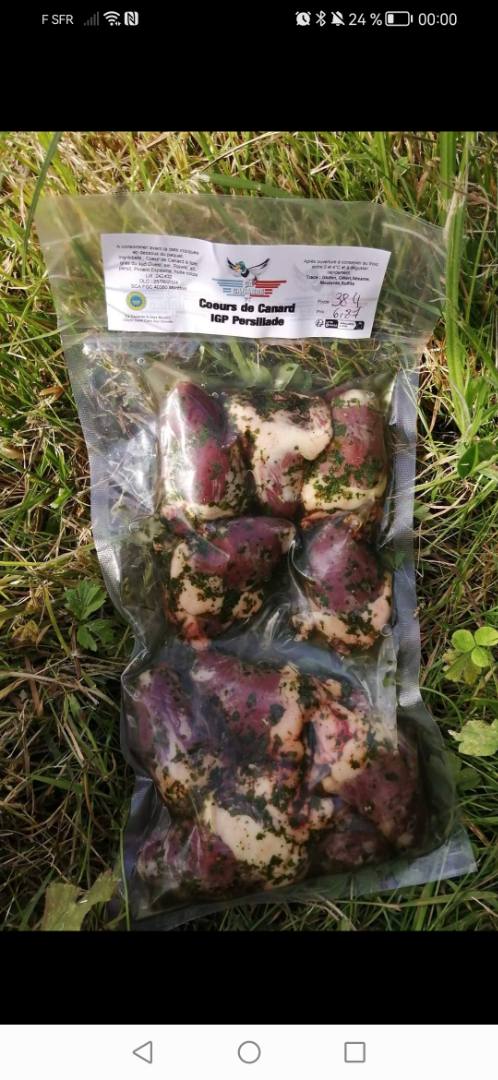
France – IGP Duck Heart in Parsley – E.coli – Clostridium perfringens

Gov France

Product Category
Food
Product subcategory
Meats
Product brand name
It’s Ducking
Model names or references
Lot 243202
Product identification
Batch Date
L 243202 Expiry date 08/20/2024
Packaging
Under a vacuum
Start/End of marketing date
From 08/09/2024 to 08/11/2024
Storage temperature
Product to be kept in the refrigerator
Geographic area of ​​sale
Sale in Blaye and Saint Ciers on Gironde
Distributors
It’s Ducking

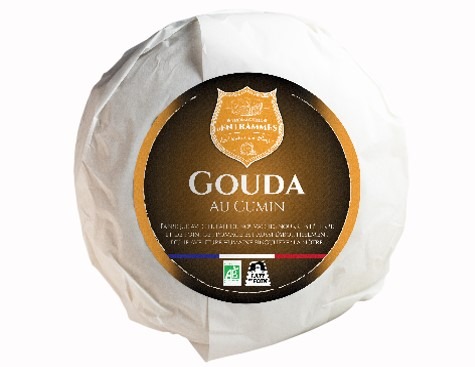
France – Gouda – Listeria monocytogenes – E.coli

Gov France

Product Category
Food
Product subcategory
Milk and dairy products
Product brand name
Entrammes Cheese Factory
Model names or references
Vicoin Fenugreek Cumin
Product identification
GTIN Batch Date
3760205423406 All lots Minimum durability date between 06/08/2024 and 12/05/2024
3760205420511 All lots Minimum durability date between 06/08/2024 and 12/05/2024
3760205420504 All lots Minimum durability date between 06/08/2024 and 12/05/2024
Storage temperature
Product to be kept in the refrigerator
Health mark
FR 53.094.002 CE
Geographic area of ​​sale
Whole France
Distributors
Leclerc, Super U, Biocoop

Canada – Malpeque brand Large Standard Oysters recalled due to generic E. coli

CFIA

Product
Large Standard Oysters
Issue
Food – Microbial Contamination – E. Coli – non-pathogenic
What to do

Do not use, sell, serve or distribute the affected product.

Audience
Retail
Distribution
Prince Edward Island

Issue

Malpeque brand Large Standard Oysters recalled due to generic E. coli.

RASFF Alert- E.coli – Pacific Oysters

RASFF

Detection of E. coli in Pacific oysters from France in Moldova

Research – Comparative Study of the Antibacterial Effects of S-Nitroso-N-acetylcysteine and Sodium Nitrite against Escherichia coli and Their Application in Beef Sausages

MDPI

Abstract

This study investigated the antibacterial effects of S-nitroso-N-acetylcysteine (SNAC) and sodium nitrite (NaNO2) against Escherichia coli and their application in beef sausages. Both SNAC and NaNO2 demonstrated pH-responsive antibacterial activity, with SNAC showing greater efficacy than NaNO2 (p < 0.05) at the same pH (3, 5, and 7). The reactive oxygen species (ROS) and reactive nitrogen species (RNS) induced in E. coli by SNAC were significantly higher than those induced by NaNO2 (p < 0.05), and both ROS and RNS values increased as the pH decreased. In addition, a lower pH led to more pores on the E. coli cell surface and increased membrane permeability, resulting in a more pronounced inhibitory effect. When applied to a beef sausage, SNAC-treated sausages had significantly lower total colony counts and carbonyl content compared to NaNO2-treated ones (p < 0.05). Consequently, SNAC shows great potential as a replacement for NaNO2 in meat products.

Research – Foodborne bacteria in milk and milk products along the water buffalo milk chain in Bangladesh

Nature

Abstract

Controlling foodborne pathogens in buffalo milk is crucial for ensuring food safety. This study estimated the prevalence of nine target genes representing seven critical foodborne bacteria in milk and milk products, and identified factors associated with their presence in buffalo milk chain nodes in Bangladesh. One hundred and forty-three milk samples from bulk tank milk (n = 34), middlemen (n = 37), milk collection centers (n = 37), and milk product shops (n = 35) were collected and analyzed using RT-PCR. Escherichia (E.) coli, represented through yccT genes, was the most prevalent throughout the milk chain (81–97%). Chi-squared tests were performed to identify the potential risk factors associated with the presence of foodborne bacteria encoded for different genes. At the middleman level, the prevalence of E. coli was associated with the Mymensingh, Noakhali, and Bhola districts (P = 0.01). The prevalence of Listeria monocytogenes, represented through inlA genes, and Yersinia (Y.) enterocolitica, represented through yst genes, were the highest at the farm level (65–79%). The prevalence of both bacteria in bulk milk was associated with the Noakhali and Bhola districts (P < 0.05). The prevalence of Y. enterocolitica in bulk milk was also associated with late autumn and spring (P = 0.01) and was higher in buffalo-cow mixed milk than in pure buffalo milk at the milk collection center level (P < 0.01). The gene stx2 encoding for Shiga toxin-producing (STEC) E. coli was detected in 74% of the milk products. At the middleman level, the prevalence of STEC E. coli was associated with the use of cloths or tissues when drying milk containers (P = 0.01). Salmonella enterica, represented through the presence of invA gene, was most commonly detected (14%) at the milk collection center. The use of plastic milk containers was associated with a higher prevalence of Staphylococcus aureus, represented through htrA genes, at milk product shops (P < 0.05). These results suggest that raw milk consumers in Bangladesh are at risk if they purchase and consume unpasteurized milk.