Category Archives: Cyclospora

Research – The Rise of Cyclospora

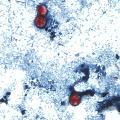
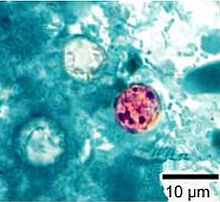
The Food Poisoning Bulletin 220px-Cyclospora_cayetanensis_stained

The parasite Cyclospora was first described by Dr. Ashford, a British parasitologist, in 1979. He found the parasite in stool samples from sickened people in Papua New Guinea in 1977 and 1978. In the 1990s, Cyclospora garnered increasing interest from the scientific and public health communities after it was identified as the cause of outbreaks of diarrheal illness in the United States. Since then, scientific understanding of Cyclospora’s source and infectious process has grown substantially.

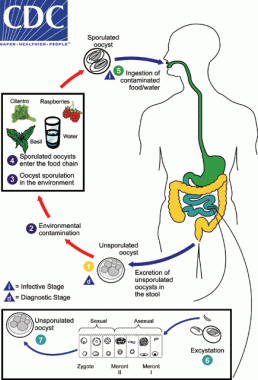
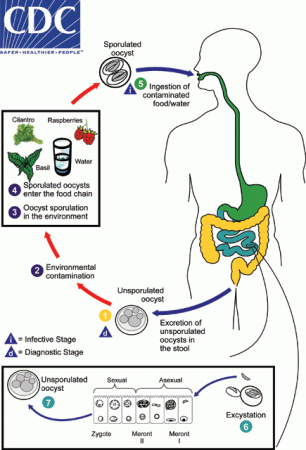
Humans contract Cyclosporainfections from eating food or drinking water contaminated with Cyclospora.  Contamination of food often occurs when produce is irrigated or washed in water contaminated with human feces. Cyclospora uses the human body to complete part of its reproductive life cycle.

Cyclospora is not endemic to the United States. The illness is most common in tropical and subtropical regions, and it is more common in summer months. Numerous previous outbreaks of Cyclosporain the United States have been associated with consumption of fecally-contaminated fruits and vegetables, including raspberries, mesclun, basil, lettuce, and cilantro.

USA -McDonald’s Cyclospora Outbreak Was Number One in 2018

Food Poisoning Bulletin Cyclospora_LifeCycle201

The McDonald’s cyclospora outbreak was the number one outbreak of 23018, with 511 people in 16 states sickened. Twenty four people were hospitalized because they were so sick

Epidemiologic and traceback evidence found that salads purchased from McDonald’s were “one likely source of this outbreak.” The FDA did not name other sources.

On July 26, 2018, the FDA completed analysis of an unused package of romaine lettuce and carrot mix that was distributed to McDonald’s by the Fresh Express processor in Streamwood, Illinois. They confirmed the presence of the cyclospora parasite in the sample. However, the FDA did not identify a single source of point of contamination for this outbreak.

USA – Notable Outbreaks and Recalls of 2018 – A Busy Year!

Food Safety Tech


As stated by CDC’s John Besser, Ph.D. last month at the Food Safety Consortium, “It’s been quite a year for outbreaks.” Here’s a not-so-fond look back at some of the noteworthy outbreaks and recalls of 2018.

Romaine Lettuce –E.coli O157:H7

Raw Beef Products – Salmonella

Shell Eggs – Salmonella

Pre-cut Melon – Salmonella

Vegetable Trays – Cyclospora

Salad Mix – Cyclospora

Raw Turkey – Salmonella

Honey Smacks Cereal – Salmonella

Duncan Hines Cake Mix – Salmonella

Johnston County Hams – Listeria monocytogenes

UK – Brit vomits BLOOD after being struck down by Mexican food poisoning bug that holiday giant Tui is accused of ‘covering up’ after hundreds of holidaymakers fall ill – Cyclospora

The Sun Cyclospora_LifeCycle201

A BRIT tourist repeatedly vomited blood after being struck down by a bug linked to food contaminated by human poo while on a luxury TUI holiday.

Chris Gillan was so weak he thought he would die and had to be stretchered from his room to hospital when he was was hit by parasite cyclospora in Mexico.

He is one of hundreds of holidaymakers now suing TUI amid claims the company is trying to cover up what it knew about the scale of the problem at the country’s Riviera Maya resort.

There have been outbreaks of the past four years and it has been claimed the cases that have come to court are the “tip of the iceberg”.

Chris said he spent nearly 18 hours being treated and had to have nine saline drips as he was so dehydrated from the crippling illness.


UK -Tui faces legal action from 400 people over Mexico sickness – Cyclospora

TTG Media 

A judge sitting at Manchester county court has ordered the disclosure of all documentary evidence relating to investigations carried out by Public Health England (PHE) surrounding cyclospora — a parasite spread by food contaminated with infected human faeces.

According to The Times, many customers claimed Tui did not tell them the Riviera Maya region of Mexico was subject to a public health warning due to cyclosporiasis before they booked.

This is in spite of 359 of the 440 British cases reported between June and October 2016 “involving travel to Mexico”, it is claimed.

Others customers allege they were handed a warning letter “only after their plane landed”.

Tui told TTG it would be inappropriate to comment on the legal process, but added: “We’d like to reassure customers that we regularly audit all of the hotels we feature in respect of health and safety.”

USA – Notes from the Field: Multiple Cyclosporiasis Outbreaks — United States, 2018

CDC Cyclospora_LifeCycle201

Cyclosporiasis is an intestinal illness caused by the parasite Cyclospora cayetanensis through ingestion of fecally contaminated food or water. Symptoms of cyclosporiasis might include watery diarrhea (most common), loss of appetite, weight loss, cramping, bloating, increased gas, nausea, and fatigue. Typically, increased numbers of cases are reported in the United States during spring and summer; since the mid-1990s, outbreaks have been identified and investigated almost every year. Past outbreaks have been associated with various types of imported fresh produce (e.g., basil, cilantro, and raspberries) (1). There are currently no validated molecular typing tools* to facilitate linking cases to each other, to food vehicles, or their sources. Therefore, cyclosporiasis outbreak investigations rely primarily on epidemiologic data.

The 2018 outbreak season is noteworthy for multiple outbreaks associated with different fresh produce items and the large number of reported cases. Two multistate outbreaks resulted in 761 laboratory-confirmed illnesses. The first outbreak, identified in June, was associated with prepackaged vegetable trays (containing broccoli, cauliflower, and carrots) sold at a convenience store chain in the Midwest; 250 laboratory-confirmed cases were reported in persons with exposures in three states (illness onset mid-May–mid-June) (2). The supplier voluntarily recalled the vegetable trays (3). The second multistate outbreak, identified in July, was associated with salads (containing carrots, romaine, and other leafy greens) sold at a fast food chain in the Midwest; 511 laboratory-confirmed cases during May–July occurred in persons with exposures in 11 states who reported consuming salads (4). The fast food chain voluntarily stopped selling salads at approximately 3,000 stores in 14 Midwest states that received the implicated salad mix from a common processing facility (5). The traceback investigation conducted by the Food and Drug Administration (FDA) did not identify a single source or potential point of contamination for either outbreak.

USA – Statement from FDA Commissioner Scott Gottlieb, M.D., on the FDA’s ongoing efforts to prevent foodborne outbreaks of Cyclospora

FDA 220px-Cyclospora_cayetanensis_stained

The safety of the American food supply is one of the U.S. Food and Drug Administration’s highest priorities. A key part of our work in this space focuses on implementing the principles and measures of the FDA Food Safety Modernization Act (FSMA). The actions directed by FSMA are designed to prevent foodborne illness and food safety problems from happening.

As part of these efforts, we conduct surveys that involve collecting a robust sample of certain food commodities available in the U.S. marketplace to monitor for the presence of foodborne pathogens. Over time, the FDA has increased its surveillance sampling efforts. We’ve also advanced new technology for pursuing these efforts and expanded the list of foodborne pathogens that the FDA monitors. Owing to these efforts, including a new FDA laboratory testing method, we’ve recently been able to add screening for Cyclospora – a parasite that causes intestinal infection after people ingest something, such as fresh or uncooked produce, or water that was contaminated with human waste – to the list of foodborne pathogens that we can routinely test for in appropriate commodities.

The availability of new testing methods for Cyclospora played an important role in helping the FDA identify a number of positive samples this summer. We detected Cyclospora in domestically grown cilantro that was tested as part of an ongoing sampling assignment of herbs. This cilantro sample has not been linked to any illnesses, but it was the first time we identified Cyclospora in any domestically grown produce item.  Our domestic oversight efforts will evolve to confront this new risk.

This year has been notable for the number of cyclosporiasis cases reported by state and local health departments. Our partners at the Centers for Disease Control and Prevention (CDC) today announced that 2,173 cases of domestically acquired cyclosporiasis have been recorded this spring and summer as of Sept. 12. Although this case count represents a significant increase from our previous experience with this parasite over the last several years, some of this increase is likely the result of improved public health monitoring for human illness, including better diagnostic tests.

Many of this year’s illnesses with Cyclospora are linked to two very large produce-associated outbreaks that we announced over the last several months. One of these outbreaks occurred in the spring. It resulted in 250 illnesses in four states and was linked to Del Monte vegetable trays containing broccoli, cauliflower, and carrots that were sold mostly in convenience stores in the Upper Midwest. Our traceback efforts to determine the source of the contamination indicate that the ingredients could have come from either domestic or imported sources. While our findings were not conclusive regarding the source, we were able to work with Del Monte to voluntarily recall the vegetable trays to limit the extent of illness and on Sept. 6, the FDA and CDC declared this outbreak over.

The second outbreak occurred this summer when 511 Cyclospora illnesses were reported by 16 states. Most of these illnesses occurred in the Midwest. This outbreak was linked to McDonald’s salads sold in 14 states in the Midwest that contained a romaine lettuce and carrot mix supplied by Fresh Express. The FDA worked with McDonald’s to quickly remove implicated salad from the stores. Testing conducted by the FDA identified the parasite in an unopened package of the bagged salad mix, supporting epidemiologic evidence that the salad mix is the source of the outbreak. Fresh Express took the additional precautionary step of recalling lots of romaine lettuce outside the positive lot contained in the salad mix. On Sept. 12, the FDA and CDC announced that this outbreak had ended.

Our experts worked with both McDonald’s and Fresh Express to trace the bagged salad mix ingredients back to where they were grown. We found that the products came from primarily domestic growers. During our investigation, two samples of domestically grown romaine lettuce were also found to be positive for Cyclospora even though they were not sourced from locations associated with the lettuce that was linked to this outbreak. None of the romaine lettuce associated with these positive test results for Cyclospora went into the marketplace and all of the produce suspected of being contaminated was destroyed, preventing additional Cyclospora illnesses from occurring. However, these findings are important as they represent the second time that Cyclospora has been identified in produce grown in the U.S.

Although these two outbreaks are large, together they account for less than half of all domestically acquired Cyclospora cases reported to CDC in 2018.  As noted by CDC, smaller clusters of illness have also been identified and investigations to date have found them to be epidemiologically linked to consumption of basil and cilantro in Mexican-style restaurants. These clusters are similar to clusters of Cyclospora seen in previous years that were traced to imported herbs although our investigation into the source of the current illnesses is ongoing. That said, our market survey of fresh herbs did identify Cyclospora earlier this summer in cilantro offered for import from two producers in Mexico. In response to that finding, the FDA refused entry for these shipments and took action to prevent contaminated cilantro from those firms from entering the U.S. market.

The discovery of Cyclospora in both domestic and imported produce raise both old and new concerns. They underscore the importance of the FDA’s surveillance activities to better define risks, like investigating why different product types like vegetable trays are being linked to Cyclospora outbreaks, and how widespread Cyclospora may be in the U.S. They also stress the need to broaden the tools, like import alerts, that we have up to this point used to prevent Cyclospora illnesses in the U.S. to also include actions that are more appropriate for addressing domestic contamination events.

The findings also highlight the significance of continuing to implement the provisions of the Produce Safety Rule at home and abroad. We must continue to put in place science-based measures to prevent microbial contamination from occurring, and work with our state and foreign partners to implement the Produce Safety Rule. We’ve been working closely with the National Association of State Departments of Agriculture and our state partners to, among other things, train federal and state regulators who will conduct inspections slated to begin next spring, develop inventories of farms that are covered by the rule, put in place the Produce Safety Network to support the states and their farming communities regionally, conduct On Farm Readiness Reviews to help farmers assess their preparedness to implement the Produce Safety Rule, and continue training opportunities for the farming community. All of these efforts are part of our commitment to working every day to assure the American public of the safety of the foods you and your family purchase and consume.

The U.S. has one of the safest food supplies in the world. But we also recognize that there is more that we can do when we have new findings like we’ve seen with Cyclospora. New risks will continue to emerge. Our system needs to be rigorous, nimble, and proactive in order to confront new challenges.

I want to reinforce to consumers that it’s our goal to figure out how these outbreaks happened. We take this obligation very seriously. That’s, in part, why we are intervening early. And it’s why we’ll be communicating regularly with the public to provide information and updates on all of the outbreaks we work on.

I remain committed to strengthening our work on outbreak investigations — and to applying the FDA’s food safety expertise to protect American families and keep them safe both now and in the future. We’ll provide more updates as our investigations continue, especially when we have actionable information for consumers.

The FDA encourages consumers with questions about food safety to Submit An Inquirydisclaimer icon to the agency, or to visit www.fda.gov/fcic for additional information.

The FDA, an agency within the U.S. Department of Health and Human Services, protects the public health by assuring the safety, effectiveness, and security of human and veterinary drugs, vaccines and other biological products for human use, and medical devices. The agency also is responsible for the safety and security of our nation’s food supply, cosmetics, dietary supplements, products that give off electronic radiation, and for regulating tobacco products.

USA – FDA Investigation of a Multistate Outbreak of Cyclospora Illnesses Linked to Fresh Express Salad Mix Served at McDonald’s Ends

FDA Cyclospora_LifeCycle201

The FDA, CDC, along with state and local officials investigated a multi-state outbreak of cyclosporiasis illnesses likely linked to salads from McDonald’s restaurants.

Update – September 12, 2018

As of September 11, 2018, this outbreak appears to be over. A total of 511 laboratory-confirmed cases of Cyclospora infection were reported in people who consumed salads from McDonald’s restaurants; the cases were reported by 15 states and New York City.

The FDA investigated distribution and supplier information for romaine and carrots but did not identify a single source or potential point of contamination for this outbreak.

Recommendations

Consumers who have symptoms of cyclosporiasis should contact their health care provider to report their symptoms and receive care.

USA – FDA Investigation of Multistate Outbreak of Cyclospora Illnesses Linked to Del Monte Vegetable Trays Ends

FDA cyclo

The FDA, CDC, along with state and local officials investigated a multi-state outbreak of cyclosporiasis illnesses associated with Del Monte vegetable trays recalled from Kwik Trip/Kwik Star locations in the United States.

Update – September 6, 2018

As of September 6, 2018, a total of 250 laboratory-confirmed cases of Cyclospora infection were reported in people who reportedly ate recalled pre-packaged Del Monte vegetable trays. CDC reports that the numbers of reported cases of cyclosporiasis in the United States have returned to baseline levels.

FDA evaluated and reviewed the distribution and supplier information for each component of the recalled vegetable trays as part of the traceback investigation. The investigation did not identify a single source or potential point of contamination for any of the items that comprised the recalled vegetable trays. The traceback investigation is complete.

Recommendations

Consumers who have symptoms of cyclosporiasis should contact their health care provider to report their symptoms and receive care.

USA – FDA documents first Cyclospora contamination of U.S. fresh produce

Food Safety News 220px-Cyclospora_cayetanensis_stained

A special FDA testing program on fresh herbs has documented the first confirmed evidence of the Cyclospora parasite in U.S. produce.

The Food and Drug Administration found the microscopic parasite on fresh cilantro at a U.S. distribution facility in July. In a follow-up investigation, the FDA found Cyclospora on fresh cilantro at a farm. The federal agency worked with state and local officials to embargo the cilantro. Staff from FDA have been working with the farmer on “corrective actions geared toward common routes of contamination,” according to a constituent update from the agency. 

“Although this is the first confirmed evidence of the presence of Cyclospora in domestic produce, FDA is currently unaware of illnesses associated with the product, and traceforward efforts do not indicate there are any connections between this domestic finding of contaminated cilantro and multistate outbreaks of Cyclospora illnesses investigated this spring and summer,” the agency reported.

Those Cyclospora outbreaks were linked to Del Monte vegetable-dip trays and salads made with Fresh Express chopped lettuce and carrots that were served at McDonald’s restaurants.