Category Archives: Climate change

Research – Climate Change Is Making Europe’s Shellfish Dangerous

Medscape

Climate change is putting Europeans at an increased risk of contracting Vibrio-related infections, according to an assessment recently released by the European Food Safety Authority (EFSA).

Warming sea temperatures are expecting to increase the prevalence of the bacteria in seafood, especially in low-salinity or brackish waters, with a rise in antimicrobial resistance among the species creating additional cause for concern.

Vibrio bacteria, traditionally a problem in tropical and subtropical regions, can cause a range of illnesses, from mild gastroenteritis and ear infections to life-threatening conditions like sepsis.

Experts in Europe are calling for proper surveillance, funded research, and public awareness campaigns.

Research – Impact of climate change on foodborne infections and intoxications

Journal of Health Monitoring

Temperature, precipitation, humidity, and soil properties are important environmental factors that influence the spread and survival of zoonotic pathogens. Changes in these environmental factors as a result of climate change, such as permanently elevated ambient temperatures, in-creasing precipitation, but also water scarcity, may contribute to the spread and survival of pathogens.

Climate change may thus exert an increasing influence on more than half of all infectious diseases. This is not only true for already existing, i. e. endemic, infectious agents; climatic changes also favour the establishment of novel infectious agents (emergence) as well as the return of pathogens sup-pressed in the past (re-emergence). For example, in the
future, agriculture may have to rely more frequently on treated wastewater due to water scarcity, which will be ex- acerbated by climate change. This poses a number of risks
to food safety, including contamination of irrigated produce by various types of pathogens.

This review addresses hazards to human health posed by the most important foodborne bacteria, parasites and marine biotoxins in Germany and presents recommendations for reducing the risks. For example, the risk of all infections discussed here can be reduced by observing good hygiene during food preparation (kitchen hygiene) and adherence to cold chains.

Research -Climate change and food safety: Temperature impact on the attachment of Escherichia coli pathogroups on cress leaf

Wiley Online

Abstract

Climate change and its worldwide effects are undeniable. Temperature increase due to climate change may affect foodborne pathogen survival on fresh produce. This study aimed to present an evaluation of climate change impact regarding temperature rise situations, on attachment of different pathogenic Escherichia coli strains on cress grown under controlled conditions. EHEC O157:H7, EAEC O104:H4 and EPEC O26 were inoculated with initial inoculum concentration of 8 log MPN/mL at different stages during growth to observe how inoculation time (7, 14, 21 and 28 days post sowing; dps) and route (seed and leaves) affect pathogen load on fresh produce. This study revealed that temperature increase designed according to mitigation scenarios for climate change (+2, +4 and +6 °C) did not cause any considerable change in pathogen persistence on leaf at 30 dps (~4.5 to 7 log MPN/g). In plants contaminated at later stage (21 and 28 dps), higher bacterial populations were obtained for all temperatures studied. Our results show that E. coli translocated towards leaf portions from seed and established significant amount of pathogen load on leaf (~4 to 5.3 log MPN/g). Also, inoculated bacteria have tightly bound to leaf (~3.5 to 7 log MPN/g) and cannot be eliminated by washing. Although persistence of E. coli O157:H7, O104:H4 and O26 did not differ significantly according to temperature, the bacterial load on the leaves was above infectious dose for humans.

Research – Climate warming and increasing Vibrio vulnificus infections in North America

Nature.com

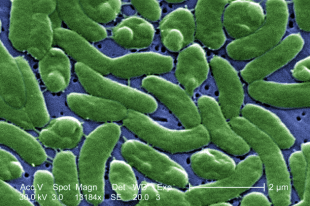
Vibrio_vulnificus_01

Vibrio vulnificus is an opportunistic bacterial pathogen, occurring in warm low-salinity waters. V. vulnificus wound infections due to seawater exposure are infrequent but mortality rates are high (~ 18%). Seawater bacterial concentrations are increasing but changing disease pattern assessments or climate change projections are rare. Here, using a 30-year database of V. vulnificus cases for the Eastern USA, changing disease distribution was assessed. An ecological niche model was developed, trained and validated to identify links to oceanographic and climate data. This model was used to predict future disease distribution using data simulated by seven Global Climate Models (GCMs) which belong to the newest Coupled Model Intercomparison Project (CMIP6). Risk was estimated by calculating the total population within 200 km of the disease distribution. Predictions were generated for different “pathways” of global socioeconomic development which incorporate projections of greenhouse gas emissions and demographic change. In Eastern USA between 1988 and 2018, V. vulnificus wound infections increased eightfold (10–80 cases p.a.) and the northern case limit shifted northwards 48 km p.a. By 2041–2060, V. vulnificus infections may expand their current range to encompass major population centres around New York (40.7°N). Combined with a growing and increasingly elderly population, annual case numbers may double. By 2081–2100 V. vulnificus infections may be present in every Eastern USA State under medium-to-high future emissions and warming. The projected expansion of V. vulnificus wound infections stresses the need for increased individual and public health awareness in these areas.

Research – Aflatoxins in Maize from Serbia and Croatia: Implications of Climate Change

MDPI

Abstract

Aflatoxins (AFs) represent the most important mycotoxin group, whose presence in food and feed poses significant global health and economic issues. The occurrence of AFs in maize is a burning problem worldwide, mainly attributed to droughts. In recent years, Serbia and Croatia faced climate changes followed by a warming trend. Therefore, the main aim of this study was to estimate the influence of weather on AFs occurrence in maize from Serbia and Croatia in the 2018–2021 period. The results indicate that hot and dry weather witnessed in the year 2021 resulted in the highest prevalence of AFs in maize samples in both Serbia (84%) and Croatia (40%). In maize harvested in 2018–2020, AFs occurred in less than, or around, 10% of Serbian and 20% of Croatian samples. In order to conduct a comprehensive study on the implications of climate change for the occurrence of AFs in maize grown in these two countries, the results of available studies performed in the last thirteen years were searched for and discussed.

Research – Will climate change increase the risk of aflatoxin in U.S. corn?

Science Daily

As climate change continues to alter weather patterns around the planet including the Midwest, researchers at Michigan State University are modeling the impact on crops such as corn.

“The United States is the largest exporter and donor of field corn around the world,” said Felicia Wu, a John A. Hannah Distinguished Professor and an international expert on food safety in the Department of Food Science and Human Nutrition and the Department of Agricultural, Food, and Resource Economics in the College of Agriculture and Natural Resources at MSU. “Here in the U.S., we consume field corn in the form of corn chips, corn flakes, corn grits and corn tortillas; as opposed to sweet corn, which is frozen, canned and eaten off the cob. Field corn is also used for animal feed and for ethanol production.”

The fungi Aspergillus flavus and Aspergillus parasiticus produce aflatoxin which can infect peanuts, tree nuts and corn. Aflatoxin not only degrades corn quality but can also cause health problems for humans and animals depending on the amount and length of time it is ingested. While aflatoxin contamination occurs annually in the southern United States because of the hot and dry climate, it has rarely been a serious problem in the Corn Belt region of the U.S.

“When we ran our near-term climate model scenarios, we found that between 2031-2040, aflatoxin is going to become more of a problem in the U.S. Corn Belt in the Midwest,” Wu said. “The last time there was a serious problem was in 2012 when we had an unusually hot and dry summer throughout the Midwest; particularly Iowa, Illinois and Indiana.”

Wu’s research was published April 5, 2022 in the journal Environmental Research Letters. Co-authors on the paper include her former doctoral student Jina Yu (Hong Kong Baptist University), David Hennessy (Iowa State University) and Jesse Tack (Kansas State University).

Hot and dry conditions encourage fungi spores to be airborne which increases their chances of contaminating crops. Water helps plants withstand stress that makes them vulnerable to harmful fungi. Steps growers, grain elevators and processors can take to reduce the risk of aflatoxin contamination include storing corn harvests in cool, dry conditions and keeping crops irrigated to the extent possible given declining water tables.

Researchers are already using both biotechnological and conventional breeding techniques to develop hybrid crops that can withstand drought, insect damage and fungal infections. In many parts of the world, corn growers are using biocontrol to reduce aflatoxin. Biocontrol infects plants with Aspergillus fungi which is unable to produce aflatoxin because this these fungi competitively exclude the fungi that produce aflatoxin.

Another possibility shifts crop production further north or further south geographically where the climate is cooler or wetter to reduce aflatoxin risk. That, however, impacts farms that have been passed down for generations.

For consumers concerned about eating field corn and their aflatoxin risk, Wu suggests eating your greens and garlic. “Green leafy vegetables are good for your overall health,” Wu said. “Chlorophyll has a sandwich molecular structure that traps aflatoxin molecules so that humans excrete them before the toxin can enter our bloodstream.”

Also, cruciferous vegetables like broccoli, cauliflower, kale and allium vegetables like garlic, onions and leeks can help detoxify carcinogens in our bodies.

“We predict seeing an increase in aflatoxin problems over the next 10-20 years,” Wu said. “So, we need to rely on technologies and a whole suite of interventions that can reduce the problem.”


Story Source:

Materials provided by Michigan State University. Original written by Emilie Lorditch. Note: Content may be edited for style and length.

Research – Probabilistic modelling of Escherichia coli concentration in raw milk under hot weather conditions

Science Direct

Abstract

Climate change is one of the threats to the dairy supply chain as it may affect the microbiological quality of raw milk. In this context, a probabilistic model was developed to quantify the concentration of Escherichia coli in raw milk and explore what may happen to France under climate change conditions. It included four modules: initial contamination, packaging, retailing, and consumer refrigeration.

The model was built in R using the 2nd order Monte Carlo mc2d package to propagate the uncertainty and analysed its impact independently of the variability. The initial microbial counts were obtained from a dairy farm located in Saudi Arabia to reflect the impact of hot weather conditions. This country was taken as representative of what might happen in Europe and therefore in France in the future due to climate change. A large dataset containing 622 data points was analysed. They were fitted by a Normal probability distribution using the fitdistrplus package. The microbial growth was determined across various scenarios of time and temperature storage reflecting the raw milk supply-chain in France. Existing growth rate data from literature and ComBase were analysed by the Ratkowsky secondary model. Results were interpreted using the nlstools package.

The mean E. coli initial concentration in raw milk was estimated to be 1.31 [1.27; 1.35] log CFU/ mL and was found to increase at the end of the supply chain as a function of various time and temperature conditions. The estimations varied from 1.73 [1.42; 2.28] log CFU/mL after 12 h, 2.11 [1.46; 3.22] log CFU/mL after 36 h, and 2.41 [1.69;3.86] log CFU/mL after 60 h of consumer storage. The number of milk packages exceeding the 2-log French hygiene criterion for E. coli increased from 10% [8;12%] to 53% [27;77%] during consumer storage. In addition, the most significant factors contributing to the uncertainty of the model outputs were identified by running a sensitivity analysis. The results showed that the uncertainty around the Ratkowsky model parameters contributed the most to the uncertainty of E. coli concentration estimates.

Overall, the model and its outputs provide an insight on the possible microbial raw milk quality in the future in France due to higher temperatures conditions driven by climate change.

Graphical abstract