Category Archives: Boil Water Notice

USA – Estimate of Burden and Direct Healthcare Cost of Infectious Waterborne Disease in the United States

CDC

Provision of safe drinking water in the United States is a great public health achievement. However, new waterborne disease challenges have emerged (e.g., aging infrastructure, chlorine-tolerant and biofilm-related pathogens, increased recreational water use). Comprehensive estimates of the health burden for all water exposure routes (ingestion, contact, inhalation) and sources (drinking, recreational, environmental) are needed. We estimated total illnesses, emergency department (ED) visits, hospitalizations, deaths, and direct healthcare costs for 17 waterborne infectious diseases. About 7.15 million waterborne illnesses occur annually (95% credible interval [CrI] 3.88 million–12.0 million), results in 601,000 ED visits (95% CrI 364,000–866,000), 118,000 hospitalizations (95% CrI 86,800–150,000), and 6,630 deaths (95% CrI 4,520–8,870) and incurring US $3.33 billion (95% CrI 1.37 billion–8.77 billion) in direct healthcare costs. Otitis externa and norovirus infection were the most common illnesses. Most hospitalizations and deaths were caused by biofilm-associated pathogens (nontuberculous mycobacteria, PseudomonasLegionella), costing US $2.39 billion annually.

At the beginning of the 20th century, diseases commonly transmitted by water, such as cholera and typhoid, were major causes of death in the United States (1). Reliable provision of treated, safe drinking water dramatically reduced the burden of these diseases and has been recognized as one of the greatest public health achievements of the 20th century (2). Despite this achievement, waterborne disease in the United States persists (35).

In the United States, outbreaks associated with large public drinking water systems have sharply declined in the past 40 years (3,6), likely the result of improvements in regulation and operation. However, transmission of disease via drinking water systems still occurs, often attributable to aging infrastructure, operational challenges, and the private or unregulated water systems (e.g., private wells) that serve an estimated 43 million persons (7). At the same time, the complexity and scope of water use has increased; drinking, sanitation, hygiene, cooling, and heating needs are supported by 6 million miles of plumbing inside US buildings (i.e., premise plumbing) (8,9). Premise plumbing water quality can be compromised by long water residency times, reduced disinfectant levels, and inadequate hot water temperatures, creating environments where pathogens (e.g., nontuberculous mycobacteria [NTM], Pseudomonas, and Legionella) can amplify in biofilms (10). People can be exposed to these pathogens through contact, ingestion, or inhalation of aerosols (e.g., from showerheads, building cooling towers, or decorative fountains).

As leisure time has increased, swimming pools, waterparks, water playgrounds, and hot tubs have proliferated (5). These venues rely largely on chlorination as the major barrier against disease transmission. Cryptosporidium has emerged as the major cause of outbreaks associated with treated aquatic venues because it is extremely chlorine resistant and has a low infectious dose (5,11,12). Warmer oceans have led to Vibrio-associated wound infections farther north than previously documented (13).

Estimates of the overall burden of foodborne disease in the United States, including both known and unknown agents, have been useful in directing prevention activities and setting public health goals (14,15). Quantifying the burden of infectious waterborne disease in the United States would also be beneficial.

Previous studies have attempted to estimate the burden of gastrointestinal illness (16,17) or all illness associated with drinking water (18) and untreated recreational water (19) in the United States, but the burden of disease from all water sources (drinking, recreational, environmental) and exposure routes (ingestion, contact, inhalation) has not been estimated. We present an estimate of the burden of waterborne disease in the United States that includes gastrointestinal, respiratory, and systemic disease; accounts for underdiagnosis; and includes all water sources and exposure routes.

New Zealand – E. coli detected in Waitaki

ODT

Private bore owners are being urged to get their water tested regularly, following E.coli being found in the Waitaki District.

The Otago Regional Council’s state of the environment monitoring bores detected elevated levels of E. coli in two locations on the lower Waitaki Plains.

The bore owners were immediately notified alongside the Southern District Health Board and Waitaki District Council.

The regional council said the results were a reminder for anyone using a private bore for drinking water to have it regularly tested and to ensure the bore head was well secured.

Water users should treat water with chlorination, ozonation, boiling, or adequate filtration, or access an alternative water source if they were uncertain about its safety.

E. coli is a subset of faecal bacteria. Any water that contains E. coli above drinking water standards is considered unsuitable to drink without treatment.

Anyone concerned about health risks should contact their GP, or call Healthline on 0800 611 116 for free advice from trained registered nurses.

Ireland – Withdrawal of Gold River Quality Mixed Salad Leaves due to the Possible Presence of Cryptosporidium

FSAI

Summary
Category 1: For Action
Alert Notification: 2020.42
Product: Gold River Quality Mixed Salad Leaves (Seasonal Salad Box); pack size: 1kg
Batch Code: All batch codes, all best before dates.
Country Of Origin: Ireland

Message:

All batches of Gold River Quality Mixed Salad Leaves (Seasonal Salad Box) are being withdrawn from sale as a precaution, due to the possible presence of Cryptosporidium.

Nature Of Danger:

Cryptosporidium is a microscopic parasite which causes cryptosporidiosis, a common form of gastroenteritis. Watery diarrhoea is the most common symptom of cryptosporidiosis, which can be particularly serious for young children, older people, pregnant women and people with weakened immune systems.

Action Required:

Inspectors:

EHOs are requested to notify the FSAI at foodincidents@fsai.ie, if the implicated batches are found to be in use at catering premises.

Manufacturers, wholesalers, distributors, caterers & retailers:

Caterers should not use the implicated batches.

Gold River Photos

Information – Legionella risks during the coronavirus outbreak

HSE

CDC legionella

Image CDC


Employers, the self-employed and people in control of premises, such as landlords, have a duty to identify and control risks associated with legionella.

If your building was closed or has reduced occupancy during the coronavirus (COVID-19) outbreak, water system stagnation can occur due to lack of use, increasing the risks of Legionnaires’ disease. This may particularly affect:

For detailed guidance on Legionella and safer working during the coronavirus outbreak visit the HSE website.

Research -Microbiological reduction strategies of irrigation water for fresh produce

JFP

Irrigation water can be a source of pathogenic contamination of fresh produce. The quality of the water used during primary production is important to control to ensure food safety and protect human health. Several measures to control the microbiological quality of irrigation water are available for growers, including preventative and mitigation strategies. However, clear guidance for growers on which strategies could be used to reduce microbiological contamination is needed. This study evaluates pathogenic microorganisms of concern in fresh produce and water, the microbiological criteria of water intended for agricultural purposes, as well as preventative and mitigative microbial reduction strategies. This article provides suggestions for control measures that growers can take during primary production to reduce foodborne pathogenic contamination coming from irrigation water. Results show that controlling the water source, regime, and timing of irrigation may help to reduce the potential exposure of fresh produce to contamination. Moreover, mitigation strategies like electrolysis, ozone, UV, and photocatalysts hold promise either as a single treatment, with pretreatments that remove suspended material, or as combined treatments with another chemical or physical treatment(s). Based on the literature data, a decision tree was developed for growers, which describes preventative and mitigation strategies for irrigation water disinfection based on the fecal coliform load of the irrigation water and water turbidity. It helps guide growers when trying to evaluate possible control measures given the quality of the irrigation water available. Overall, the strategies available to control irrigation water used for fresh produce should be evaluated on a case-by-case basis as one strategy or technology does not apply to all scenarios.

Sweden – Sweden ‘crypto’ outbreak update: Nearly 400 cases, Cases declining

Outbreak News Today

crypto

Image CDC


Since the last report on the Cryptosporidium outbreak in Sweden about two weeks ago, health officials say the number of reported cases has decreased in recent weeks.

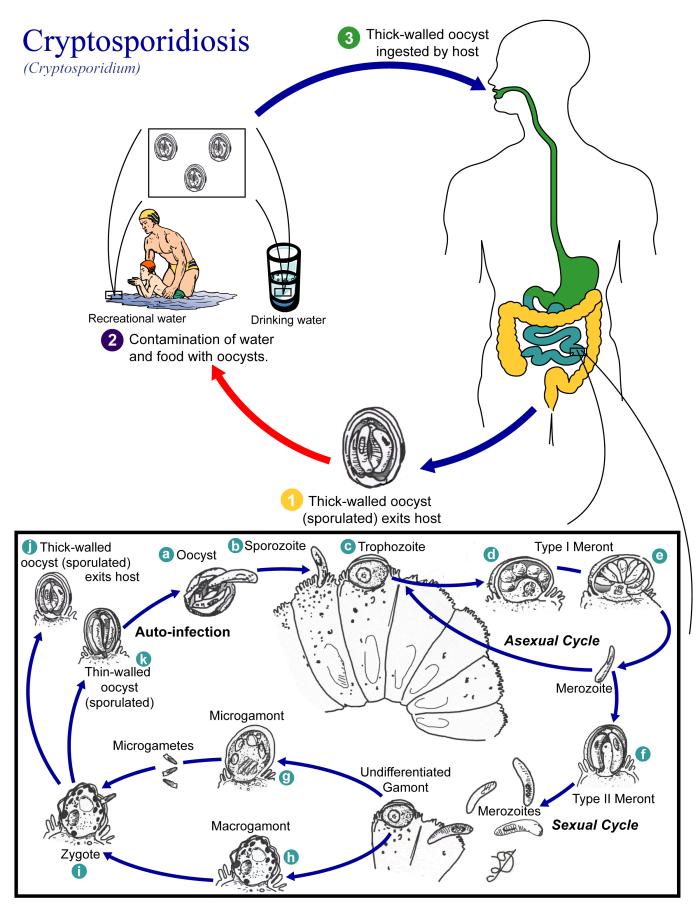
Cryptosporidium life cycle/CDC

While cases are declining, the number of cases reported per week remains slightly higher compared to the same period in previous years. To date, some 400 Cryptosporidium cases have been recorded.

Most cases have been reported from Stockholm, Östergötland, Västra Götaland, Halland, Jönköping and Uppsala.

The Public Health Authority analyzes samples from the cases to determine what type of cryptosporidium they have become ill from. Of the 202 samples analyzed so far, 93 have been shown to belong to subtype (A) and 58 belong to subtype B of Cryptosporidium parvum. In addition to this subtype, a number of different subtypes have been detected.

Sweden – Sweden -Cryptosporidium outbreak tops 300 cases since October

Outbreak News Today crypt

In a follow-up on a previous report on the Cryptosporidium outbreak in Sweden, the Public Health Authority, or Folkhalsomyndigheten, report more than 300 cases of cryptosporidiosis in October and November.

The good news is while the number of cases are still unusually high, the number of reported cases has decreased.


France -Cryptosporidium outbreak reported in Alpes-Maritimes, France

Outbreak News Today 

The Agence régionale de santé Provence-Alpes-Côte d’Azur (ARS Paca) is reporting (computer translated) a Cryptosporodium outbreak in Grasse and several surrounding municipalities of the Alpes-Maritimes.

Since October 7, at least 92 cases of diarrhea caused by a parasite. There is a suspicion of contamination in the Grasse sector, supplied with water by the Foulon canal (west of the Alpes-Maritimes), which could have been contaminated following heavy rainfall.

Officials recommended as a precaution to drink only bottled water or to boil the tap water before consume it or use it to prepare food.


Sweden -Sweden reports increase in Cryptosporidium, most in Stockholm

Outbreak News Today crypto

Swedish health officials, aka Folkhalsomyndigheten have reported an increase in the parasitic infection, cryptosporidiosis in recent weeks, particularly in November.

About half of the country’s regions have reported cases in all ages, but primarily in adults. Most cases are seen in the Stockholm region.

The Public Health Agency and the National Food Agency have started an outbreak investigation to identify if there are one or more common sources of infection that are unknown so far. As part of the investigation, cases are interviewed about what they ate and drank before they became ill.

Research – EU – Cryptosporidiosis – Annual Epidemiological Report for 2017

ECDC crypto

Executive summary

Key facts

  • For 2017, 21 EU/EEA countries reported 11 449 cryptosporidiosis cases, of which 11 418 were confirmed.
  • The notification rate was 3.2 confirmed cases per 100 000 population.
  • Germany, the Netherlands and the United Kingdom (UK) accounted for 71% of all confirmed cases, with the United Kingdom alone accounting for 44%.
  • Most of the cases were reported in September 2017, following the seasonal pattern of previous years.
  • Children aged 0–4 years had the highest notification rate of 12.5 cases per 100 000 population.

Download

Thumbnail