Category Archives: Bacillus cereus

Research – Foodborne Illness Outbreaks from Microbial Contaminants in Spices, 1973-2010

Science Direct

This review identified fourteen reported illness outbreaks attributed to consumption of pathogen-contaminated spice during the period 1973-2010. Countries reporting outbreaks included Canada, Denmark, England and Wales, France, Germany, New Zealand, Norway, Serbia, and the United States. Together, these outbreaks resulted in 1946 reported human illnesses, 128 hospitalizations and two deaths. Infants/children were the primary population segments impacted by 36% (5/14) of spice-attributed outbreaks. Four outbreaks were associated with multiple organisms. Salmonella enterica subspecies enterica was identified as the causative agent in 71% (10/14) of outbreaks, accounting for 87% of reported illnesses. Bacillus spp. was identified as the causative agent in 29% (4/10) of outbreaks, accounting for 13% of illnesses. 71% (10/14) of outbreaks were associated with spices classified as fruits or seeds of the source plant. Consumption of ready-to-eat foods prepared with spices applied after the final food manufacturing pathogen reduction step accounted for 70% of illnesses. Pathogen growth in spiced food is suspected to have played a role in some outbreaks, but it was not likely a contributing factor in three of the larger Salmonella outbreaks, which involved low-moisture foods. Root causes of spice contamination included contributions from both early and late stages of the farm-to-table continuum.


USA Research – Microbiology of RTE Foods In University Canteens – Control of Pathogens on Fresh Cut Fruit

Science Direct –

During a 10-year inspection survey (2001–2010), a microbiological study of ready-to-eat (RTE) foods and ready-to-bake frozen pastries from 15 canteens of the university campus was undertaken to determine their microbiological quality. The cumulative study revealed that the aerobic colony counts for the RTE product groups were as follows: from 106 to 108 CFU/g for 50% of sandwiches; under the detection limit (<10 CFU/g) for 88.6% of oven baked pastries; <105 CFU/g for 86.5% of desserts oven baked; from 103 to 109 CFU/g for desserts with dairy cream. The highest mean Enterobacteriaceae counts were recorded for desserts with dairy cream. The highest percentages of foodborne pathogens were: 20% Listeria monocytogenes and 12.5% Staphylococcus aureus in desserts with dairy cream; 17.5% Salmonella spp. and 8.5% presumptive Escherichia coli O157 in sandwiches; 14.6% Bacillus cereus in oven baked pastries. Aerobic colony counts were in the range 107–108 CFU/g for 48.8% of frozen pastries; whereas Enterobacteriaceae counts between 103 and 104 CFU/g were detected in 35.3%. Foodborne pathogens prevalences for frozen pastries were as follows: B. cereus, 31.8%; Salmonella spp., 28.6%; presumptive E. coli O157, 25%; S. aureus, 8.7%; L. monocytogenes, 8.7%. Improved sanitary conditions in the processing plants and precautionary measures are necessary for consumer protection.

Science Direct

The consumption of fresh-cut fruit has substantially risen over the last few years, leading to an increase in the number of outbreaks associated with fruit. Moreover, consumers are currently demanding wholesome, fresh-like, safe foods without added chemicals. As a response, the aim of this study was to determine if the naturally occurring microorganisms on fruit are “competitive with” or “antagonistic to” potentially encountered pathogens. Of the 97 and 107 isolates tested by co-inoculation with Escherichia coli O157:H7, Salmonella and Listeria innocua on fresh-cut apple and peach, respectively, and stored at 20 °C, seven showed a strong antagonistic capacity (more than 1-log unit reduction). One of the isolates, CPA-7, achieved the best reduction values (from 2.8 to 5.9-log units) and was the only isolate able to inhibit E. coli O157:H7 at refrigeration temperatures on both fruits. Therefore, CPA-7 was selected for further assays. Dose-response assays showed that CPA-7 should be present in at least the same amount as the pathogen to adequately reduce the numbers of the pathogen. From the results obtained in in vitro assays, competition seemed to be CPA-7’s mode of action against E. coli O157:H7. The CPA-7 strain was identified as Pseudomonas graminis. Thus, the results support the potential use of CPA-7 as a bioprotective agent against foodborne pathogens in minimally processed fruit.

European RASFF Alerts – Norovirus – Moulds – E.coli – Ochratoxin – Histamine

RASFF – Norovirus in Oysters in Italy sourced in France

RASFF – Moulds in Chocolate and Ornage Spread in France sourced in Denmark

RASSF – Histamine in Tuna in France sourced in Vietnam

RASFF – Histamine in Tune in Italy sourced in Spain

RASFF – E.coli in Clams in Italy sourced in Spain via France

RASFF – Ochratoxin in Figs in Germany source in Turkey

Greece – Bacillus cereus in Soy Cheese Cubes

UK – FSA Second Update Recall of Tofu – Bacillus cereus

FSAfood_standards_agency_logo

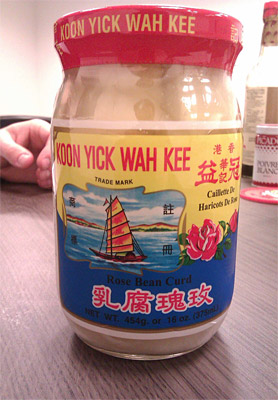
The Food Standards Agency is issuing a second updated Food Alert for Action on the Koon Yick Wah Kee rose bean curd (tofu) and chilli bean curd (tofu) originating from China via The Netherlands, because of confirmation that further tofu from the same company has high levels of Bacillus cereus.

The affected products have a best before date of 30 December 2013 but there are currently no distributions details available. The levels of the bacteria detected can cause vomiting or diarrhoea.

European Alerts – Extended Recall Tofu – Bacillus cereus – Dog Food – Salmonella – Cheese – Listeria

AFSAC – FrenchEnglish tofu

The Food Agency recommends not eating TOFU in sesame oil with or without chili brand KOON WAH KEE YICK following the detection of Bacillus cereus in this commodity. The product is sold in Asian specialty stores.

RASFF – Salmonella in Dog Food in Germany sourced in India

France – (English)

Following the detection of Listeria monocytogenes in certain lots of cheese, and as a precautionary measure, the company JUSSAC OF CHEESE shall withdraw the sale and recall of consumption of all cheeses.

The products covered by these measures were traded between 31 October 2012 and 26 December 2012.

Research : Inhibitory Effect of Cinnamon Powder on Pathogen Growth in Laboratory Media

ingentaconnect

Abstract:

There has been an increasing interest in the use of natural plant materials as alternative food preservatives. We examined the antimicrobial effects of natural plant materials used as additives against foodborne pathogens in laboratory media and Sulgidduk, oriental-style rice cakes. Cinnamon, mugwort, and garlic powder solutions (3%) were tested for their antimicrobial activities against pathogens in laboratory media. Sulgidduk prepared with different amounts of cinnamon powder (1, 3, and 6%) was inoculated with a Staphylococcus aureus or Bacillus cereus cocktail. The samples were air or vacuum packaged and stored at 22 ± 1°C for 72 h, and microbial growth was determined. Cinnamon powder showed more inhibitory properties against pathogens such as Salmonella enterica serovar Typhimurium, Escherichia coli O157:H7, Listeria monocytogenes, S. aureus, and B. cereus than did mugwort or garlic powder. The populations of S. aureus and B. cereus in Sulgidduk containing cinnamon powder were significantly lower than in the control during storage time. Different packaging methods did not result in a significant difference in pathogen growth. In a sensory evaluation, Sulgidduk containing 1 and 3% cinnamon powder did not significantly differ from the control sample in any of the attributes tested other than flavor. These results indicate that natural plant materials such as cinnamon powder could be used as food additives to improve the microbiological stability of rice cakes.

Hong Kong – Recall Bean Curd High Levels Bacillus cereus

Center for Food SafetyiStock_000008493122Small

The Centre for Food Safety (CFS) today (December 31) advised people not to
consume a kind of bottled fermented bean curd cubes imported from China which might have been contaminated with Bacillus cereus, a pathogen. The trade should immediately stop selling or using the product.

“A sample of bottled fermented bean curd cubes was collected at a food distributor for testing under the regular Food Surveillance Programme. The test result showed that the sample contained Bacillus cereus at an excessive level of 130,000 per gram,” a CFS spokesman said.

“According to the ‘Microbiological Guidelines for Ready-to-eat Food’, it is potentially hazardous to the health of consumers if 100,000 or more of Bacillus cereus per gram of food is detected,” he added.

Product details of the unsatisfactory sample are as
follows:

Product name: Shui Kou Preserved Bean Curd (Chilli)
(350 grams per bottle)
Best before date: December 30, 2013
Place of origin: Guangdong Province

Bacillus cereus is commonly found in the environment.
Unhygienic conditions in food processing and storage may give rise to its
growth. Consuming food contaminated with excessive Bacillus cereus may cause gastrointestinal upset such as vomiting and diarrhoea.

UK – FSA – Update on Tofu Recall – Bacillus cereus

FSABacillus_cereus_01

Heads of Environmental Health and Directors of Trading Standards will wish to be aware of this update to Food Alert for Action 07/2012 issued on 20 December 2012 concerning the recall associated with rose bean curd tofu and chilli bean curd tofu originating from China via The Netherlands. The Agency has now received further information confirming that other lots of tofu from the same Chinese producer are contaminated with high levels of Bacillus cereus. Based on the findings, the Dutch importer Liroy B.V. is recalling all the tofu products they have imported this year from the Chinese producer.

The affected products have been distributed widely throughout the UK.

The Dutch importer will contact all their customers regarding withdrawing all other rose bean curd tofu and chilli bean curd tofu as a precaution.

Identification of the affected products:

1. Koon Yick Wah Kee – Rose Bean Curd (Tofu) 454g Best Before Date 30.06.14 Lot number 023424

2. Koon Yick Wah Kee – Chilli Bean Curd (Tofu) 454g Best Before Date 30.06.14 Lot Number 023421

(Photo Courtesy of the CDC via Wiki)

UK – FSA Recall – Koon Yick Wah Kee Rose Bean Curd (Tofu) and Chilli Bean Curd (Tofu) due to contamination with Bacillus cereus and yeasts

FSA – food_standards_agency_logo

Heads of Environmental Health and Directors of Trading Standards will wish to be aware of a recall associated with rose bean curd tofu and chilli bean curd tofu originating from China via the Netherlands. The Dutch importer Liroy B.V, is recalling all affected batches.

The two affected products have shown to be contaminated with Bacillus cereus and several different yeast varieties. The affected products have been distributed widely throughout the UK. Pictures are attached for ease of identification.

The levels of Bacillus cereus detected render the product a potential health risk.

Identification of the affected products:

1) Koon Yick Wah Kee – Rose Bean Curd (Tofu) 454g. Best Before Date 30.12.14 Lot number 023424

2) Koon Yick Wah Kee – Chilli Bean Curd (Tofu) 454g. Best Before Date 30.12.14 Lot Number 023421

Actions to be taken by local authorities.

Local authorities are requested to identify and make contact with relevant retailers in their area who may sell the implicated product. If implicated products are found during the course of their investigations, enforcement officers should ensure that the specific lot code and ‘best before’ date are withdrawn from sale and destroyed, if necessary, using powers under the Food Safety Act 1990.

Local authorities should report any finding of the implicated product by emailing the FSA’s dedicated Food Incidents mailbox: foodincidents@foodstandards.gsi.gov.uk

RASFF/European Alerts – Salmonella – Bacillus cereus – Norovirus – Histamine – Ochratoxin – Moulds

RASFF – Histamine in Frozen Sardines in Italy sourced in Morocco

RASFF – Salmonella in Ham and Chicken Salad in Belgium

RASFF – Bacillus cereus and high count of yeasts  in  tofu in sesame oil with chilli in glass jar from China, in Finland via the Netherlands

RASFF – Salmonella in frozen beef trimmings from the Netherlands,  in Sweden via Germany

RASFF – Moulds in Raisins in the Czech Republic sourced in Iran

RASFF – Norovirus in Oysters in the Netherlands sourced in Ireland

RASFF – Ochratoxin in Dried Figs in Germany sourced in Turkey

RASFF – Salmonella in Frozen Chicken Breasts in Italy sourced in Brazil