Category Archives: Bacillus cereus

RASFF Alert – Bacillus cereus – Gnocchi

RASFF

Bacillus cereus in potato gnocchi from Italy in France

France- Paella Seafood – Bacillus cereus

Gov france

Identifying information for the recalled product

  • Product category Food
  • Product sub-category Prepared meals and snacks
  • Product brand name WITHOUT BRAND
  • Names of models or references Seafood Paella sold hot at the Rayon Rôtisserie Traditionnel on 07/20/2021 by CARREFOUR NICE TNL ONLY
  • Product identification
    GTIN Lot
    1111111111111 Seafood Paella sold hot at the Traditional Rotisserie Department of CARREFOUR NICE TNL ONLY on 07/20/2021
  • Packaging Product sold in the Traditional Rotisserie section on July 20, 2021
  • Start date / End of marketing From 07/20/2021 to 07/20/2021
  • Storage temperature Product to be stored in the refrigerator
  • Geographical sales area Nice
  • Distributors Carrefour Nice TNL ONLY

Practical information regarding the recall

  • Reason for recall Presence of Bacillus Cereus
  • Risks incurred by the consumer Bacillus cereus
  • Consumer behaviour Stop consuming
    Return the product to the point of sale
    Contact the consumer service
    Destroy the product
  • Sanitary recommendation Food poisoning caused by Bacillus cereus results in either diarrhoea often accompanied by abdominal pain, nausea and sometimes fever occurring within 8 to 16 hours after ingestion of the contaminated food, or vomiting occurring within 5 hours. hours after consumption. These symptoms may be aggravated in sensitive or immunocompromised people.
  • Contact number0969397000
  • Compensation modalities Repayment
  • End date of the recall procedure Monday 23 August 2021
  • Additional public information For any further information, you can contact the Carrefour Consumer Service by dialling Cristal number 09 69 39 7000 – non-surcharged call from Monday to Saturday from 9 a.m. to 7 p.m.

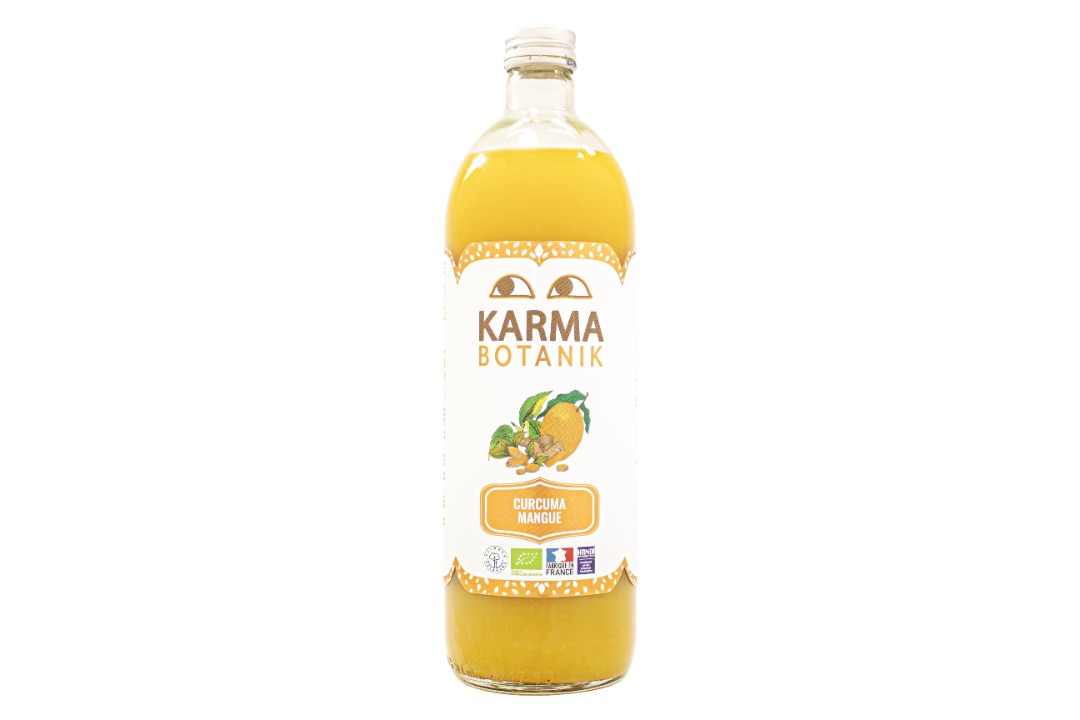
France – Karma Botanik Turmeric Mango – Bacillus cereus

Gov france

Identifying information for the recalled product

  • Product category Food
  • Product sub-category Soft drink
  • Product brand name Karma
  • Names of models or references Karma Botanik Turmeric Mango 75 cL
  • Product identification
    GTIN Lot Dated
    3760192492805 All lots Date of minimum durability 12/31/2022
  • Start date / End of marketing From 07/05/2021 to 07/22/2021
  • Storage temperature Product to be stored at room temperature
  • Geographical sales area Whole France
  • Distributors Organic Sector

Practical information regarding the recall

  • Reason for recall Evidence of development of Bacillus cereus.
  • Risks incurred by the consumer Bacillus cereus
  • Additional description of the risk Food poisoning caused by Bacillus cereus results in gastrointestinal disturbances sometimes accompanied by fever for 48 hours after consumption.
  • Consumer behavior Destroy the product
  • Sanitary recommendation Food poisoning caused by Bacillus cereus results in either diarrhea often accompanied by abdominal pain, nausea and sometimes fever occurring within 8 to 16 hours after ingestion of the contaminated food, or vomiting occurring within 5 hours. hours after consumption. These symptoms may be aggravated in sensitive or immunocompromised people.
  • Compensation modalities Refund
  • End date of the recall procedure Friday, September 10, 2021

Vietnam Research – Microbiological safety of ready-to-eat foods in hospital and university canteens in Hanoi, Vietnam

Journal of Food Protection

The aim of this study is to analyze and document the microbiological safety and quality of ready-to-eat foods in hospital and university canteens in Hanoi, Vietnam. A total of 420 ready-to-eat food products from 21 canteens were sampled in July 2018 and May 2019. The ratio of samples exceeding the unsatisfactory level for Total Plate Count (TPC) was 31%. Escherichia coli, Listeria and Staphylococcus aureus were detected in 35 (8.3%), 99 (24%), 46 (11%) samples, with 3%, 10% and 0% exceeding the unsatisfactory level, respectively. The Total Plate Count (TPC), Listeria, Bacillus cereus, E. coli, S. aureus ranged from below detection limit to 5×10 9 , 4.6×10 5 , 6.2×10 3 , 3.4×10 3 , 7.6×10 3 CFU/g, respectively. Listeria monocytogenes was isolated from 3/420 samples (0.7%). In addition, there were 21 out of 410 samples (5%) contaminated with Salmonella. Overall, our data indicate frequent problems with the microbiological quality and safety of these canteen foods in Hanoi, and provide a baseline measurement that will allow environmental health officers and food microbiologists to develop targeted intervention strategies to reduce the economical and public health risk associated with these foods.

Research – High Hydrostatic Pressure Treatment Ensures the Microbiological Safety of Human Milk Including Bacillus cereus and Preservation of Bioactive Proteins Including Lipase and Immuno-Proteins: A Narrative Review

MDPI

Breast milk is the nutritional reference for the child and especially for the preterm infant. Breast milk is better than donated breast milk (DHM), but if breast milk is not available, DHM is distributed by the Human Milk Bank (HMB). Raw Human Milk is better than HMB milk, but it may contain dangerous germs, so it is usually milk pasteurized by a Holder treatment (62.5 °C 30 min). However, Holder does not destroy all germs, and in particular, in 7% to 14%, the spores of Bacillus cereus are found, and it also destroys the microbiota, lipase BSSL and immune proteins. Another technique, High-Temperature Short Time (HTST 72 °C, 5–15 s), has been tried, which is imperfect, does not destroy Bacillus cereus, but degrades the lipase and partially the immune proteins. Therefore, techniques that do not treat by temperature have been proposed. For more than 25 years, high hydrostatic pressure has been tried with pressures from 100 to 800 MPa. Pressures above 400 MPa can alter the immune proteins without destroying the Bacillus cereus. We propose a High Hydrostatic Pressure (HHP) with four pressure cycles ranging from 50–150 MPa to promote Bacillus cereus germination and a 350 MPa Pressure that destroys 106 Bacillus cereus and retains 80–100% of lipase, lysozyme, lactoferrin and 64% of IgAs. Other HHP techniques are being tested. We propose a literature review of these techniques. View Full-Text

RASFF Alert – Bacillus cereus – Curry Powder

RASFF

Bacillus cereus in curry powder from India, packed in UK in Finland

Research – Bacteriophages for detection and control of foodborne bacterial pathogens—The case of Bacillus cereus and their phages

Wiley Online

Bacillus cereus is among the primary food‐poisoning pathogenic bacterium that causes diarrhea and emetic types of diseases throughout the world. Recent advances show that bacteriophages become important tools in detection and control of foodborne bacterial pathogens in foods. They gain the interest of researchers for the food industries mainly because they are host‐specific and harmless to humans. Studies showed that bacteriophages could be employed as natural or engineered, whole or part, and temperate or virulent type in designing a range of tools for the detection and control of foodborne bacterial pathogens. This article discusses the recent methods and advances in the utilization strategies of bacteriophages in detection and control of foodborne pathogens, with particular focus on B. cereus pathogen. Moreover, the article presents the latest and relevant information of B. cereus‐infecting phages with respect to their potential applications in foods to address food safety issues. It also reflects future research directions by indicating gap of studies on the area.

France – Product recall: Karma Botanik Aloe Ginger Lemon brand Karma – Bacillus cereus

Oulah

Product recall: Karma Botanik Aloe Ginger Lemon brand Karma

ENCOUNTERED PROBLEM

Evidence of development of Bacillus cereus

PROPOSED SOLUTION

Do not consume and destroy or return to point of sale for reimbursement.

Food poisoning caused by Bacillus cereus results in either diarrhea often accompanied by abdominal pain, nausea and sometimes fever occurring within 8 to 16 hours after ingestion of the contaminated food, or vomiting occurring within 5 hours. hours after consumption. These symptoms may be worsened in sensitive or immunocompromised people.

FURTHER INFORMATION

▸ Model names or references
Karma Botanik Aloe Ginger Lemon 75 cL

▸ Barcode
3760192492768

▸ DDM
• 01/18/2022
• 01/19/2022
• 09/10/2022

▸ Source
https://rappel.conso.gouv.fr/

Research – Bacterial Spore Inactivation in Orange Juice and Orange Peel by Ultraviolet-C Light

MDPI

Spore-forming bacteria are a great concern for fruit juice processors as they can resist the thermal pasteurization and the high hydrostatic pressure treatments that fruit juices receive during their processing, thus reducing their microbiological quality and safety. In this context, our objective was to evaluate the efficacy of Ultraviolet-C (UV-C) light at 254 nm on reducing bacterial spores of Alicyclobacillus acidoterrestrisBacillus coagulans and Bacillus cereus at two stages of orange juice production. To simulate fruit disinfection before processing, the orange peel was artificially inoculated with each of the bacterial spores and submitted to UV-C light (97.8–100.1 W/m2) with treatment times between 3 s and 10 min. The obtained product, the orange juice, was also tested by exposing the artificially inoculated juice to UV-C light (100.9–107.9 W/m2) between 5 and 60 min. A three-minute treatment (18.0 kJ/m2) reduced spore numbers on orange peel around 2 log units, while more than 45 min (278.8 kJ/m2) were needed to achieve the same reduction in orange juice for all evaluated bacterial spores. As raw fruits are the main source of bacterial spores in fruit juices, reducing bacterial spores on fruit peels could help fruit juice processors to enhance the microbiological quality and safety of fruit juices. View Full-Text

Research – Evaluation of ceftazidime as an antibiotic supplement of mannitol-yolk-polymyxin B agar used for the enumeration of Bacillus cereus in ready-to-eat vegetables

Journal of Food Protection

bacillus

Bacillus cereus, which causes foodborne disease, is detected using selective media. However, competing flora is the most common factor preventing the correct enumeration of B. cereus on selective agars. In this study, we aimed to improve the selectivity of mannitol-yolk-polymyxin B agar (MYPA) and its modified version containing trimethoprim (mMYPA) developed in our previous study by supplementation with ceftazidime (16 μg/mL). Ceftazidime-supplemented MYPA (C-MYPA16) and mMYPA (C-mMYPA16) were evaluated for bacteria recoverability and selectivity using three types of ready-to-eat vegetables. Four B. cereus and one B. thuringiensis strains were mixed and artificially inoculated into vegetable salad, radish sprouts, and sprout mix, and then recovered using MYPA, mMYPA, C-MYPA16, and C-mMYPA16. In all tested vegetables, mMYPA, C-MYPA16, and C-mMYPA16 exhibited similar recoverability of B. cereus / thuringiensis ( p > 0.05), whereas MYPA showed undistinguishable colonies in case of radish sprouts and sprout mix. At the same time, C-mMYPA16 provided the best selectivity compared with the other agars because it eliminated most of competing flora in the tested vegetables, especially in sprouts, without negatively affecting the recovery of B. cereus / thuringiensis . Our results indicate that the supplementation of mMYPA with ceftazidime may improve medium selectivity for B. cereus / thuringiensis in food testing.